The Federal Reserve enters its July 29, 2026 policy decision with an unusually wide gap between the outcome most economists expect and the outcome markets can no longer dismiss. The base case remains that the Federal Open Market Committee will leave the federal funds target range unchanged at 3.50% to 3.75%. Yet rate futures have assigned roughly a 30% probability to a quarter-percentage-point increase, turning what would normally be a routine summer meeting into a genuine two-way event.
The immediate question is whether the Fed raises rates. The more consequential question is what the decision reveals about Chair Kevin Warsh’s reaction function: how the central bank weighs persistent inflation, volatile energy prices, a cooling but not collapsing labor market, strong investment tied to artificial intelligence, and the costs of surprising financial markets. A hold can be hawkish. A hike can be interpreted as a one-off insurance move. The statement, vote, press conference and bond-market response will determine which reading survives.
That distinction matters because the policy rate itself is only one input into the cost of capital. Treasury yields, mortgage rates, corporate borrowing costs, equity discount rates and the U.S. dollar respond to the expected path of policy, inflation and growth—not merely to the first headline at 2:00 p.m. EDT. A surprise hike could initially lift the dollar and hurt stocks, but it could also pull longer-term yields lower if investors conclude that the Fed is acting early enough to contain inflation. A hold could produce the opposite combination if Warsh sounds insufficiently concerned about price pressures.
The timing compounds the risk. Microsoft and Meta Platforms are scheduled to report results after the U.S. market closes on July 29, with Apple and Amazon following on July 30. The Bank of England also publishes a policy decision on July 30, while the Bank of Japan meets July 30–31 as the yen trades close to four-decade lows. The Fed therefore sits at the center of a dense sequence of catalysts capable of changing rates, currencies, technology valuations and volatility within hours.
Last updated: July 29, 2026, 10:00 a.m. CEST. The Federal Reserve decision was still pending at the research cutoff.
Key Takeaways
What matters before the July Fed decision
- Base case: Most economists expect the Fed to hold the target range at 3.50%–3.75%, but futures pricing leaves a meaningful chance of a 25-basis-point increase.
- Inflation conflict: June headline CPI fell 0.4% month over month and core CPI was unchanged, yet headline CPI remained 3.5% above a year earlier and the Fed’s May PCE measure stood at 4.1%.
- Communication shift: Warsh has offered less explicit forward guidance than recent Fed chairs, making the statement and press conference more important—and harder to pre-price.
- Market transmission: The reaction of two-year and 10-year Treasury yields may matter more than the first move in stocks or the dollar.
- Forex focus: EUR/USD, GBP/USD, USD/JPY, USD/CHF and AUD/USD are the clearest channels for a repricing of U.S. rate expectations.
- Next tests: Second-quarter GDP and June PCE inflation arrive July 30, followed by the July employment report on August 7 and CPI on August 12.
Original sources: Federal Reserve FOMC calendar, U.S. Bureau of Labor Statistics CPI release, and Reuters Fed preview.
What the Federal Reserve is deciding on July 29
The FOMC’s scheduled two-day meeting concludes on Wednesday, July 29. The policy statement is due at 2:00 p.m. EDT, or 20:00 CEST, followed by Warsh’s press conference at 2:30 p.m. EDT. The meeting does not include a new Summary of Economic Projections, so markets will not receive a fresh “dot plot” showing individual officials’ preferred year-end policy rates. That removes one familiar reference point and places even more weight on the wording of the statement, the vote and the chair’s answers.
The Fed held the federal funds target range at 3.50% to 3.75% at its June 16–17 meeting in a unanimous 12–0 decision. The June statement said job gains had kept pace with the workforce and the unemployment rate had changed little, while inflation remained elevated. The accompanying projections showed that officials’ inflation outlook had worsened materially from March. The median forecast placed 2026 PCE inflation at 3.6% and core PCE inflation at 3.3%, while the median year-end federal funds rate was 3.8%.
That 3.8% median is important. Because the midpoint of the existing target range is 3.625%, a year-end median near 3.8% is broadly consistent with one 25-basis-point increase. The distribution was more revealing than the median: nine of 18 participants placed the appropriate 2026 year-end midpoint at 3.875% or higher, while eight were at 3.625%. In other words, the committee was already close to evenly divided between holding and tightening before the latest oil-price volatility and before June’s softer inflation reports.
The July decision is therefore not a sudden argument created by traders. It is the next stage of an internal debate visible in the June projections and minutes. Some officials see inflation as too persistent to tolerate, particularly when tariffs, energy costs and investment demand threaten to keep nominal spending strong. Others see a stable labor market, softer core inflation and a supply-driven energy shock that higher interest rates cannot directly repair. Both camps can cite current data. The challenge is deciding which risk deserves more weight now.
The Fed also must choose whether to use the meeting to change policy or to prepare markets for September. A hold paired with language emphasizing that inflation risks have intensified could raise the effective probability of a September hike without creating the abrupt repricing associated with immediate action. A hike would demonstrate urgency and make Warsh’s less-scripted approach tangible, but it would also force the committee to explain why it acted before receiving second-quarter GDP and June PCE data scheduled for the next morning.
Why this meeting became “live” so quickly
Two weeks before the meeting, rate futures placed only about a 10% probability on a July increase after June CPI came in softer than expected. By July 28, estimates based on CME FedWatch pricing had risen to roughly 29%–36%, depending on the observation time. Reuters reported that futures moved from about 16% a week earlier to 36% on July 27, while the Associated Press cited a 29% probability on July 28. The exact percentage is less important than the direction: markets moved from treating a hike as remote to treating it as a material tail risk.
Three developments drove the repricing.
First, oil prices became a daily macroeconomic variable again. The collapse of a fragile pause in U.S.–Iran hostilities raised the risk of supply disruption and renewed price spikes. Brent crude fell sharply on July 28 as hopes for de-escalation improved, then rebounded by nearly $3 a barrel in early July 29 trading after new strikes and missile attacks. The reversal illustrated why one month of lower gasoline prices cannot settle the inflation outlook when the geopolitical backdrop can change overnight.
Second, Warsh’s communication style has made it harder for investors to rule out an outcome simply because it was not telegraphed weeks in advance. Recent Fed regimes often sought to minimize surprise around the current decision while using speeches, interviews and projections to guide expectations. Warsh has emphasized the central bank’s reaction function rather than giving a precise road map. That does not mean he prefers surprise for its own sake. It means markets must infer how the Fed will respond to changing data instead of relying on a near-promise about the next meeting.
Third, the argument for higher rates is not solely about oil. The Fed’s preferred PCE price index was 4.1% higher in May than a year earlier, and the June projections showed officials expecting inflation to remain well above 2% through the end of 2026. AI-related capital expenditure, electricity demand, tariffs and resilient consumer activity can all keep nominal demand firm even when some monthly inflation components cool. The rate-hike case therefore rests on a broader claim: policy may not be restrictive enough to return inflation to target on an acceptable timetable.
Yet the bar for an immediate increase remains high. A Reuters poll of 104 economists published July 21 found unanimous expectations for no change in July. Most economists also expected the Fed to remain on hold through year-end, though those forecasting a move increasingly favored hikes rather than cuts. A central bank that surprises economists and markets must be confident that the benefits of acting now outweigh the costs of creating uncertainty about its process.
Warsh’s communication regime changes the meaning of a surprise
The debate around the July meeting is partly a debate about central-bank communication. Forward guidance refers to public communication about the likely future path of policy. It can move financial conditions before the central bank changes its overnight rate because households, businesses and investors make decisions based on expected future borrowing costs. The Federal Reserve has used increasingly explicit forms of guidance since the 1990s, especially when policy rates were near zero.
Warsh’s approach is better understood as a shift from outcome guidance toward reaction-function guidance. Instead of telling investors what the Fed will probably do at the next meeting, the central bank seeks to clarify which economic developments would cause it to act. That model can preserve flexibility and reduce the risk that policymakers feel trapped by earlier language. It can also make markets less certain in the short run, especially when the reaction function itself is still being learned.
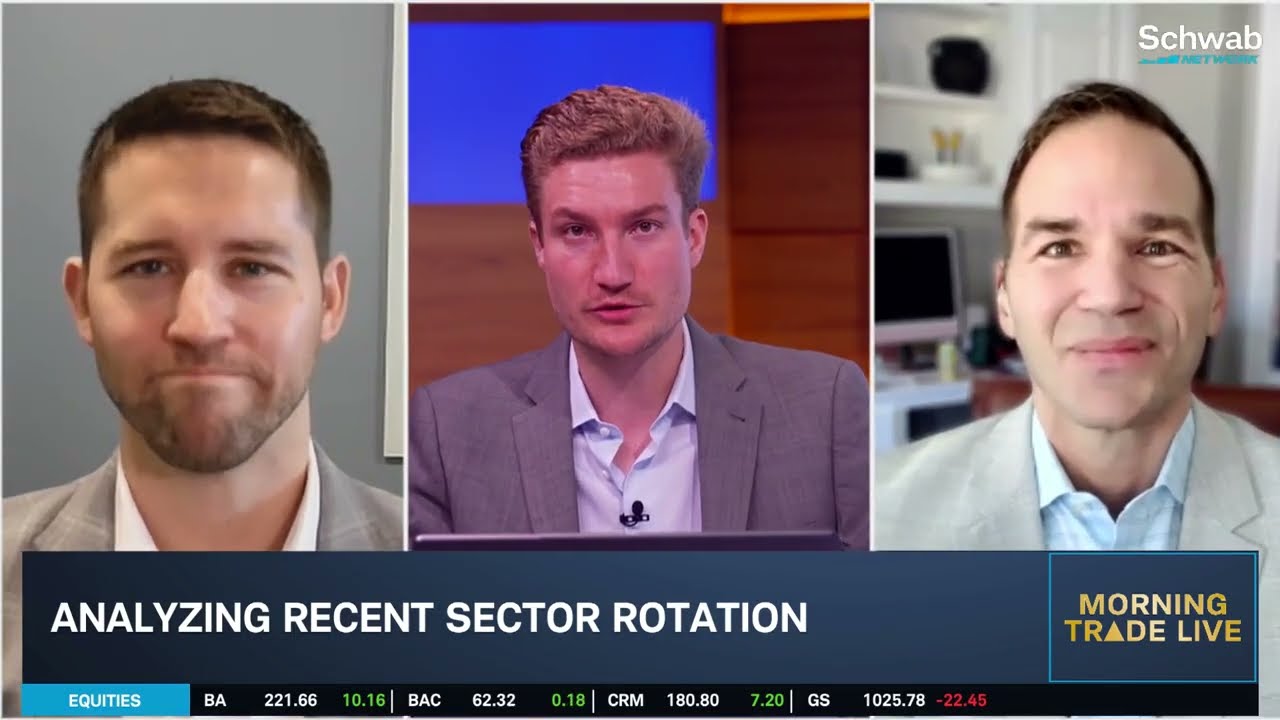
Zed Francis, chief investment officer and co-founder of Convexitas, framed the issue in a Schwab Network discussion as a question of policy effectiveness and credibility. His argument was that a modest surprise can have a larger effect than a fully anticipated move. If the market believes the Fed will respond to inflation rather than merely ratify futures pricing, the central bank may gain more influence over long-term expectations with a smaller adjustment.
There is economic logic behind that view. Research published by the Federal Reserve and the Federal Reserve Bank of San Francisco finds that FOMC communications affect Treasury yields, inflation expectations, stock prices and the dollar. The current rate decision is only one component of the news. Changes in the expected path of future policy—often conveyed through statements and press conferences—can matter more than the immediate move. Recent San Francisco Fed research also finds that post-meeting press conferences have become a particularly important source of policy information.
But a less-scripted regime carries a discipline of its own. Surprise is useful only when it communicates a coherent reaction function. If investors conclude that decisions are discretionary, politically motivated or inconsistent with the data, volatility rises without improving policy transmission. The value of uncertainty depends on whether the central bank is uncertain about the economy, appropriately flexible about its response, or simply unpredictable.
This is why a July hike would not automatically “bank credibility.” Markets would examine the explanation. A hike justified as a response to persistent underlying inflation and stronger demand might be seen as a durable policy signal. A hike justified mainly by a temporary oil spike could be criticized as an attempt to solve a supply problem with a demand-management tool. Credibility is not measured by how much the Fed surprises traders. It is measured by whether its decisions are consistent with its mandate and its stated framework over time.
The inflation data send two different messages
June CPI gave the Fed genuine evidence of improvement. The headline consumer price index fell 0.4% on a seasonally adjusted basis, the largest monthly decline since April 2020. Core CPI, which excludes food and energy, was unchanged after rising 0.2% in May. Shelter increased only 0.1%, its smallest monthly rise since January 2021. The 12-month core rate slowed to 2.6% from 2.9%.
Those figures support patience. They suggest that some of the stickiest components of inflation—notably housing-related costs—are cooling. A central bank that has already kept rates restrictive can reasonably wait to see whether the slowdown persists before tightening again. The June employment report also showed only 57,000 new payroll jobs and downward revisions totaling 74,000 for April and May, reducing the urgency to restrain demand.
The same CPI report also showed why the inflation problem is not solved. Headline CPI was still 3.5% above its June 2025 level. Energy prices, despite falling sharply during June, were 15.7% higher year over year, with gasoline up 26.7%. Food prices rose 3.0%. For households, the difference between a favorable monthly print and a still-high price level is not academic: prices remain substantially above the level that prevailed before the inflation surge, and the latest energy decline can reverse quickly.
Producer prices told a similarly mixed story. The PPI for final demand fell 0.3% in June as goods prices dropped 1.4%, while services prices rose 0.2%. Yet final-demand prices were 5.5% higher than a year earlier. The monthly decline reduced concern about immediate pipeline pressure, but the annual rate remained inconsistent with a comfortable return to 2% consumer inflation.
The Fed’s preferred PCE index had not yet incorporated June data at the time of the meeting. May PCE inflation was 4.1% year over year, and June PCE was scheduled for release at 8:30 a.m. EDT on July 30—less than 19 hours after the policy statement. That sequencing strengthens the case for waiting. It also creates a risk that the committee’s decision looks stale almost immediately if the new report materially surprises.
The central question is whether June marks the beginning of a sustained disinflation trend or a temporary pause created partly by falling gasoline prices. One month cannot answer that. The Fed must evaluate breadth, persistence and expectations. Core inflation is closer to target in CPI than in PCE, but the June projections show officials expecting core PCE inflation of 3.3% for 2026. A single benign report does not erase that forecast; neither does an oil rebound prove that inflation will accelerate across the broader basket.
Inflation Fact Box
The data available before the decision
- June CPI: −0.4% month over month; +3.5% year over year.
- June core CPI: 0.0% month over month; +2.6% year over year.
- June PPI final demand: −0.3% month over month; +5.5% year over year.
- May PCE inflation: +4.1% year over year.
- Fed June median projection: 2026 PCE inflation 3.6%; core PCE inflation 3.3%.
- Next major release: June PCE inflation and second-quarter GDP on July 30 at 8:30 a.m. EDT.
Original sources: BLS Consumer Price Index, BLS Producer Price Index, BEA PCE Price Index, and Federal Reserve June projections.
Why oil matters—and why the Fed cannot target crude prices
Energy is the most visible reason the July meeting became uncertain, but it is also the least straightforward reason to raise rates. Monetary policy works primarily by influencing demand. Higher rates can slow credit creation, investment, hiring and household spending. They cannot reopen a shipping lane, repair an oil facility or negotiate a ceasefire. If the inflation shock is purely a temporary reduction in energy supply, tighter policy can add economic pain without producing more barrels.
Central banks therefore often “look through” the first-round effect of volatile energy prices. Core inflation measures exclude energy for precisely this reason. The policy concern begins when the shock spreads. Businesses may raise prices to recover transportation and electricity costs. Workers may seek higher wages to offset lost purchasing power. Inflation expectations may move higher. Consumers may shift spending patterns, while governments may respond with subsidies or fiscal support that sustains demand.
The distinction between first-round and second-round effects is central to the July decision. June’s 5.7% monthly decline in the CPI energy index helped pull headline inflation lower. By late July, renewed U.S.–Iran tensions had pushed oil sharply higher again. Reuters reported Brent crude around $86.79 and West Texas Intermediate around $81.91 in early July 29 trading after a near-$3 rebound. Those prices were below the month’s most extreme levels but high enough to keep inflation risk in the foreground.
A hike based on oil alone would be difficult to defend. A hike based on evidence that oil is interacting with persistent service inflation, tariffs, strong investment and unanchored expectations would be more coherent. The Fed must judge whether the energy shock is an isolated relative-price change or a catalyst that could prolong broad inflation.
There is also an asymmetry in the public experience of energy prices. Gasoline declines can quickly lower headline inflation, but households may not view the improvement as durable when geopolitical news produces large daily reversals. That uncertainty can influence expectations even before it appears in survey data. Warsh’s challenge is to signal that the Fed will prevent second-round inflation without claiming that interest rates can control global commodity supply.
The bond market offers one clue. Reuters reported that the recent rise in Treasury yields was driven significantly by higher real yields, not only by higher inflation compensation. That suggests investors were pricing stronger growth and investment demand as well as oil risk. If true, the argument for tightening is broader than energy: an economy capable of sustaining high real borrowing costs may require a more restrictive policy stance to bring inflation down.
The labor market has cooled, but it has not delivered a recession signal
June payroll growth slowed to 57,000, and the unemployment rate was 4.2%. April and May payrolls were revised down by a combined 74,000. Professional and business services, social assistance and health care added jobs, while leisure and hospitality lost employment. This is weaker than the labor-market performance that supported earlier tightening, but it does not resemble an abrupt collapse.
For the Fed, the labor data reduce both the case for immediate action and the fear of acting. Slower hiring suggests demand is moderating, which supports waiting. At the same time, a 4.2% unemployment rate remains close to the Fed’s June median projection of 4.3% for the fourth quarter. Policymakers can argue that employment is near their expected path and that a modest increase would not represent an attempt to crush a rapidly deteriorating labor market.
The risk lies in lags. Monetary policy affects the economy gradually and unevenly. A rate increase announced in July would influence borrowing and spending over subsequent quarters, when the labor market could be weaker than it appears today. Payroll data are also revised, sometimes substantially. The June report’s downward revisions are a reminder that the apparent resilience of prior months can fade as more information arrives.
Employment is only one side of the dual mandate. If inflation remains materially above target while unemployment is close to estimates of full employment, the Fed can prioritize price stability. But if the slowdown in hiring becomes broad and unemployment rises, an additional increase could look unnecessary. The July decision therefore asks the committee to trade a visible inflation miss against a labor-market risk that is less certain but potentially costly.
Real GDP grew at a 2.1% annual rate in the first quarter, according to the BEA’s third estimate. The first estimate for the second quarter was scheduled for July 30. Forecasts centered on continued expansion, with AI-related investment and capital expenditure supporting growth. Yet consumer confidence had softened, and higher energy costs threaten household purchasing power. The economy is neither obviously overheating nor obviously contracting.
This ambiguity makes a “risk-management” decision plausible in either direction. Hawks can say that waiting until inflation reaccelerates would require larger moves later. Doves can say that acting before seeing GDP and PCE data creates avoidable risk. The committee’s vote will reveal which error it fears more.
Four scenarios for the Fed decision
1. Hold with clearly hawkish guidance
This is the most likely market consensus. The Fed leaves the target range at 3.50%–3.75% but strengthens language on inflation risks, acknowledges energy and tariff pressures, and indicates that a near-term increase remains possible. One or more dissents in favor of a hike would reinforce the message.
The initial dollar reaction could be positive if the statement raises the probability of a September move. Two-year Treasury yields would likely rise more than 10-year yields, flattening the curve, because the news would affect the expected policy path most directly. Stocks could weaken if investors interpret the hold as a brief delay rather than relief. The durability of the move would depend on Warsh’s press conference and the next morning’s GDP and PCE data.
2. Hold with balanced or softer guidance
A conventional hold that emphasizes softer core inflation, slower payroll growth and uncertainty around energy would challenge the hawkish positioning built into the dollar. Rate futures could remove some probability of a September hike. The two-year yield would likely fall, EUR/USD and GBP/USD could rise, and high-duration growth stocks might benefit from lower discount-rate expectations.
This scenario carries reversal risk. If Warsh resists sounding dovish but cannot offer a clear tightening signal, markets may alternate between interpretations. A softer statement followed by a hawkish press conference could produce a two-stage move rather than a clean trend.
3. A 25-basis-point hike with a continuing tightening bias
This is the clearest hawkish surprise. The target range would rise to 3.75%–4.00%, and the Fed would indicate that inflation risks could require further action. The dollar and short-term yields would probably jump, while equities and credit spreads would initially come under pressure. USD/JPY could move toward or through the 164 area, increasing the risk of Japanese intervention.
Long-term yields are less predictable. They could rise if investors see a higher inflation regime and a series of hikes. They could fall if the action convinces markets that the Fed will contain inflation, reducing the inflation premium embedded in longer maturities. That second possibility is the core of Francis’s argument: a front-end hike can be supportive for long-duration assets if it restores confidence in the inflation anchor.
4. A 25-basis-point hike framed as a one-off insurance move
The Fed could raise rates while signaling that it is not beginning a mechanical cycle. Such a decision would aim to lean against inflation expectations without committing to additional moves. The market reaction could be counterintuitive: the dollar might rise on the headline and then reverse if Warsh limits expectations for September, while stocks could recover if long-term yields decline.
This would be difficult to communicate. A one-off hike must explain why action is urgent today but not necessarily tomorrow. The committee would need to connect the decision to a risk-management objective rather than a new baseline forecast. Without a new dot plot, investors would depend heavily on Warsh’s language.
Why the yield curve may matter more than the policy headline
Financial markets often discuss a Fed decision as if the overnight policy rate directly determines every borrowing cost. It does not. The federal funds rate anchors the shortest end of the curve, but mortgages, corporate bonds, infrastructure financing and equity valuations depend on longer-term rates that reflect expected future policy, inflation, growth and term premiums.
The two-year Treasury yield is especially sensitive to expectations for the policy rate over the next several meetings. The 10-year yield incorporates a much longer horizon. Before the July decision, the 10-year Treasury traded around 4.61% in early European dealing, after briefly exceeding 4.7% the previous week. The rise helped push U.S. mortgage rates to an 11-month high. Freddie Mac reported a 30-year fixed mortgage average of 6.55% on July 16, and Reuters later cited 6.58% for the following week.
A surprise increase could produce three broad curve reactions.
- Bear flattening: Short yields rise more than long yields because the Fed is expected to tighten further. This is the textbook response to a hawkish surprise.
- Bull flattening after an initial shock: Short yields rise or remain firm while long yields fall because investors believe the Fed has improved the inflation outlook and increased the probability of slower future growth.
- Bear steepening: Long yields rise more because investors see the hike as insufficient, politically unstable or evidence that inflation is becoming embedded.
The second outcome is the one that could eventually support risk assets despite a rate increase. Long-duration equities are valued by discounting future cash flows. A lower 10-year yield can offset some of the damage from a higher overnight rate, particularly for profitable companies with distant cash flows. The same logic applies to corporate capital expenditure and mortgages. If the Fed raises the front end but lowers the market’s estimate of long-run inflation, broader financial conditions may not tighten as much as the headline suggests.
That result is possible, not guaranteed. Investors would need to believe the Fed’s action is credible, proportionate and sufficient. If the hike creates uncertainty about the reaction function or suggests that policy will chase volatile commodity prices, long yields may remain high. The market’s verdict will be visible in the curve within minutes and refined during the press conference.
A hold can also tighten financial conditions. If Warsh makes a September increase sound likely, the two-year yield can rise even without an immediate move. If he emphasizes persistent inflation and a higher neutral rate, the 10-year yield could rise as well. The effective stance of policy is therefore the combination of the current rate and the expectations the Fed creates.
Credibility is not the same as toughness
Fed credibility has become one of the most frequently used arguments for a July hike. The logic is straightforward: inflation has remained above target for years, Warsh has promised to restore price stability, and a willingness to tighten despite political pressure would demonstrate independence. Under this view, action would make future guidance more powerful because markets would know the Fed is prepared to follow words with policy.
There is merit to the independence argument. President Donald Trump appointed Warsh after repeatedly advocating lower rates. A hike at Warsh’s second meeting would be difficult to interpret as accommodation to the White House. It could reassure investors that the FOMC’s decisions are being made around its statutory goals rather than the preferences of elected officials.
Yet independence is demonstrated by process, not by choosing the option that politicians dislike. A data-dependent hold can be as independent as a hike. New York Fed President John Williams made that point in July, arguing that credibility is maintained by making the best decision based on the data, not by using policy to create an image of credibility. The most institutionally robust outcome is the one the committee can defend consistently across similar economic conditions.
Nor is toughness synonymous with credibility. A central bank that raises rates unnecessarily and reverses soon afterward can lose credibility. A central bank that waits too long and allows inflation expectations to drift can lose it as well. The relevant standard is whether the Fed’s framework produces decisions that are understandable, proportionate and aligned with the dual mandate.
Warsh’s reduced forward guidance increases the importance of explaining that framework. Markets do not need certainty about every meeting, but they need a reasonable model of how policymakers respond to inflation, employment and financial conditions. Without that model, each data release becomes a potential regime change, and risk premiums can rise.
The July press conference therefore has a broader institutional task. Warsh must explain whether the Fed is reacting to current inflation, expected inflation, inflation expectations, real activity, financial conditions or some combination. He must also separate the influence of volatile energy from the broader inflation process. A clear reaction function can preserve flexibility without making policy arbitrary.
The dollar enters the decision with hawkish expectations already embedded
The U.S. Dollar Index eased 0.15% to 101.27 in early July 29 trading, according to Reuters, after touching 101.63 on July 28—its highest level since June 25. EUR/USD traded near 1.1401, GBP/USD near 1.3298, USD/JPY near 163.38 and AUD/USD near 0.6954. The subdued moves suggested positioning ahead of the decision rather than a settled view.
The dollar’s prior advance matters because market reactions are measured against expectations, not against an abstract definition of hawkish or dovish. A hold can support the dollar if the statement and press conference validate expectations for a later hike. It can weaken the dollar if the Fed fails to confirm the tightening already priced. A hike can produce a smaller-than-expected gain—or even a reversal—if traders have accumulated large long-dollar positions and Warsh limits the prospect of further increases.
Rate differentials are the main channel. Higher expected U.S. yields make dollar assets more attractive relative to assets denominated in euros, pounds, yen, francs and Australian dollars. But currencies also respond to risk sentiment, commodity prices, intervention risk and the policy outlook of other central banks. The same Fed decision can therefore produce different moves across pairs.
Forex Snapshot
Indicative levels before the Fed decision
- U.S. Dollar Index: 101.27, down 0.15%; recent high 101.63 on July 28.
- EUR/USD: 1.1401.
- GBP/USD: 1.3298.
- USD/JPY: 163.38.
- AUD/USD: 0.6954.
- Market pricing: Approximately 30% probability of a 25-basis-point Fed increase at the observation time.
Source and timestamp: Reuters currency-market report, published July 29, 2026 at 00:37 UTC. Levels are delayed or indicative snapshots, not live quotations.
EUR/USD: the cleanest expression of the U.S. rate repricing
EUR/USD is often the most direct major-pair expression of a shift in U.S. rate expectations because the euro and dollar are the two largest components of global reserves and cross-border funding. The pair entered the meeting near a one-month low after the dollar strengthened on rising U.S. yields and Fed-hike speculation.
A surprise hike or a hold that clearly points to September would widen expected rate differentials in the dollar’s favor, all else equal. EUR/USD could test below its recent range if two-year Treasury yields rise and European yields do not match the move. The strength of the response would depend on whether the market views the Fed action as the start of a sequence or a one-off adjustment.
A softer hold would create a different setup. The dollar’s one-month advance means some hawkishness is already priced. If Warsh emphasizes cooling core inflation and avoids signaling a near-term increase, EUR/USD could rebound as traders reduce long-dollar positions. A sustained move would require confirmation from rates; a brief euro rise without a decline in U.S. yields would be vulnerable to reversal.
The European Central Bank’s own policy outlook also matters. EUR/USD is not a referendum on the Fed alone. Euro-area inflation, growth and ECB communication can either reinforce or offset the U.S. move. Still, during the first minutes after the FOMC statement, the U.S. side of the differential is likely to dominate.
GBP/USD: the Fed decision collides with the Bank of England
Sterling traded near its weakest level since July 1 before the Fed announcement. The Bank of England was scheduled to publish its July policy decision and Monetary Policy Report at noon London time on July 30. That creates a compressed sequence in which GBP/USD may respond first to the Fed and then to a domestic repricing less than 24 hours later.
A hawkish Fed could push GBP/USD lower, particularly if the U.S. move is accompanied by rising short-term yields and defensive demand for dollars. But traders must account for the possibility that the Bank of England also maintains a restrictive stance. The BoE held Bank Rate at 3.75% in June by a 7–2 vote, and renewed energy inflation gives U.K. policymakers their own reason for caution.
A dovish Fed hold could lift sterling, but the move may remain incomplete before the BoE. The pair therefore carries more event overlap than EUR/USD. A trader or corporate treasurer interpreting the move should separate the FOMC shock from the subsequent U.K. policy shock rather than attribute the full two-day change to one central bank.
USD/JPY: the most asymmetric and politically sensitive pair
USD/JPY is the most sensitive major pair because the yen was near a 40-year low and Japanese authorities had intensified warnings about excessive currency moves. Reuters reported the pair near 163.38 before the Fed, with analysts identifying 164 as a level that could increase intervention risk. Japan had already conducted record intervention in late April and early May, yet the yen remained weak.
A surprise Fed hike would widen the expected U.S.–Japan rate gap and could push USD/JPY higher. But that is not an ordinary breakout scenario. The closer the pair moves toward levels that trigger official action, the less reliable a simple rate-differential trade becomes. Intervention can create sharp, discontinuous moves that overwhelm normal technical levels and liquidity.
The Bank of Japan’s July 30–31 meeting adds another source of asymmetry. A hawkish BOJ signal could strengthen the yen even after a hawkish Fed. A cautious BOJ outcome could intensify pressure on Japanese officials to intervene directly. The sequence means that an initial USD/JPY rise after the FOMC may not represent the final move.
Japanese inflation, import costs and domestic politics make yen weakness more than a market issue. A weaker currency raises the local cost of energy and food, worsening household inflation. The Ministry of Finance controls intervention decisions, while the BOJ sets monetary policy. Their tools and objectives differ, and markets must watch both.
For risk management, 164 should be treated as an intervention-risk zone rather than a normal confirmation level. The pair can overshoot, but the potential for official action makes the distribution of outcomes unusually wide.
USD/CHF and the safe-haven crosscurrents
USD/CHF combines a U.S. rate trade with competition between two defensive currencies. A hawkish Fed generally supports the dollar through yield differentials. Renewed Middle East conflict can support both the dollar and Swiss franc through safe-haven demand, making the net move less obvious than in EUR/USD.
If a surprise hike damages equities and widens credit spreads, the franc may hold up better than lower-yielding currencies that lack the same defensive role. If the market interprets the hike as credibility-enhancing and long-term yields fall, risk sentiment could stabilize, allowing the rate differential to dominate in favor of the dollar.
A dovish hold could weaken the dollar, but a simultaneous deterioration in geopolitical risk could limit USD/CHF downside. The pair is therefore useful for distinguishing monetary-policy effects from broader risk aversion: a dollar rally against the euro and pound but not against the franc would suggest safe-haven demand is influencing the cross-section.
AUD/USD: Fed policy meets commodity and domestic inflation signals
The Australian dollar fell after Australian inflation data reduced expectations for further Reserve Bank of Australia tightening. That domestic repricing left AUD/USD vulnerable to a hawkish Fed. A U.S. increase would widen rate differentials and could pressure the pair further, especially if global equities weaken.
Commodity prices complicate the picture. Australia is a major commodity exporter, and higher energy or metals prices can support the currency through trade flows. Yet an oil shock that raises global inflation and damages risk appetite can hurt the Australian dollar because it is often treated as a higher-beta currency. The sign of the commodity effect depends on the nature of the shock and the broader market response.
A softer Fed outcome could produce a relatively strong AUD/USD rebound because the pair already absorbed dovish domestic inflation news. As with the euro and pound, confirmation from U.S. yields is essential. A headline move without a sustained rates response is less likely to persist.
How equities can fall on a hike and recover before the close
The first equity response to a surprise increase would likely be negative. Higher short-term rates reduce the present value of future profits, raise financing costs and challenge the assumption that policy will remain stable. Algorithmic strategies and options hedging can amplify the initial move.
That reaction does not determine the close. Investors will quickly evaluate whether long-term yields rise or fall, whether Warsh signals more hikes, and whether the action reduces inflation uncertainty. If the 10-year yield rallies in price and falls in yield, long-duration technology shares could recover. If both short and long yields rise, the pressure would be broader and more persistent.
The market entered the decision from a position of strength but not uniform strength. The S&P 500 closed July 28 at 7,428.78, up 0.21%, while the Dow rose 1.03% and the Nasdaq fell 0.22%. Chip stocks sold off sharply as investors questioned AI spending and competition, while several non-technology sectors gained. This rotation means the index-level response may conceal large differences beneath the surface.
Financial stocks can benefit from higher rates when net interest margins improve, but only if credit quality and the yield curve cooperate. Banks can suffer if the curve inverts further or recession risk rises. Insurers may benefit from higher reinvestment yields. Utilities, real estate investment trusts and highly leveraged companies are generally more sensitive to long-term yields. Energy shares respond to oil as well as rates. A single “stocks up or down” forecast misses these sector channels.
Market positioning also matters. A 30% probability of a hike means the event is not fully unexpected. Some investors have already reduced duration or increased dollar exposure. If the Fed holds, those hedges may unwind. If it hikes, the move may be smaller than a genuinely unpriced shock but still large enough to trigger systematic selling.
VIX near 18 suggests caution, not panic
The Cboe Volatility Index closed July 28 at 18.21 and was near 18.22 in delayed July 29 data before the U.S. cash open. That level is elevated enough to show demand for protection but far below the 52-week high of 35.30. Options markets were pricing uncertainty without signaling a full-scale stress event.
VIX measures the market’s expectation of S&P 500 volatility over roughly the next 30 days, derived from option prices. It is not a direct forecast of whether stocks will rise or fall. A Fed surprise can lift VIX because investors demand more protection, but the index can also decline after the event if uncertainty is resolved—even when the policy outcome is hawkish.
The meeting creates several paths for volatility:
- A hold with clear guidance could reduce event uncertainty and push VIX lower.
- A hold with an ambiguous press conference could keep volatility elevated because the September decision remains unresolved.
- A surprise hike with a coherent explanation could produce an initial spike followed by a decline.
- A hike that raises doubts about the Fed’s framework could lift both spot VIX and longer-dated volatility.
Francis’s broader point is that small bouts of volatility can help markets reprice risk before imbalances grow larger. That is plausible, but policymakers do not control volatility with precision. A limited surprise can become a larger shock when leverage, crowded positioning or thin liquidity amplifies the move. The Fed can explain its reaction function; it cannot guarantee an orderly repricing.
Big Tech earnings may overtake the Fed within hours
Microsoft and Meta are scheduled to release results after the market closes on July 29. Apple and Amazon follow on July 30. Together, these companies represent a large share of major U.S. equity indexes and an even larger share of the market’s AI investment narrative. Their capital expenditure, cloud demand, advertising trends, margins and guidance may matter more for index earnings than a single quarter-point policy move.
The collision of events creates an attribution problem. Suppose the Nasdaq falls after the Fed and then rebounds after Microsoft reports strong cloud growth. The closing move would reflect both catalysts. Conversely, a benign Fed decision may be overwhelmed by weak guidance or concern about AI capital intensity. Investors should avoid assigning the entire two-day move to monetary policy.
There is also a direct connection between the stories. AI data centers require enormous capital spending, electricity and financing. Higher long-term yields raise the hurdle rate for those investments. Strong earnings and evidence of attractive returns can justify spending despite elevated rates. Weak monetization or lower margins can make the same rate environment more punitive.
Microsoft’s fiscal fourth-quarter results and Meta’s second-quarter results will therefore provide a real-time test of the argument that AI investment is keeping U.S. demand and real rates high. Amazon’s announced expectation of roughly $200 billion in 2026 capital expenditure has already illustrated the scale of the buildout. The Fed must decide whether this investment boom is productive supply expansion, near-term demand pressure, or both.
A productive AI boom can raise potential growth by improving efficiency and expanding capacity. During the construction phase, however, it can also strain electricity grids, chips, construction labor and financing markets. Monetary policy must respond to the net effect on inflation, not to the label attached to the investment.
The earnings calendar is one reason the initial Fed reaction may not persist. By the next morning, markets will have new information about corporate profits, GDP, PCE inflation and the policy outlook abroad. The July FOMC event is dominant at 2:00 p.m. EDT, but it is not isolated.
Mortgages, corporate credit and the real economy
The Fed’s overnight rate does not set a household’s mortgage rate, but the policy outlook influences the Treasury and mortgage-backed securities markets from which lenders price loans. The 30-year fixed mortgage averaged 6.55% in Freddie Mac’s July 16 survey, and Reuters reported an 11-month high of 6.58% the following week. Those levels keep affordability strained even before accounting for home prices, taxes, insurance and closing costs.
A July hike would not automatically add 25 basis points to mortgage rates. If long-term Treasury yields decline because the action lowers expected inflation, mortgage rates could stabilize or fall. If investors expect a sustained hiking cycle or demand a larger term premium, mortgage rates could rise by more than the policy move. The transmission depends on the bond market’s interpretation.
Housing is particularly sensitive because monthly payments magnify small rate changes. At a 6.5% mortgage rate, a borrower financing $400,000 over 30 years faces principal and interest payments of roughly $2,528 per month. At 6.75%, the payment is about $2,594, an increase of approximately $66 per month before taxes and insurance. The change may look modest in isolation, but it affects qualification, bidding power and construction economics across millions of transactions.
Corporate borrowers face a similar distinction between the policy rate and the all-in cost of debt. Investment-grade companies typically borrow at a Treasury yield plus a credit spread. A credible anti-inflation move could lower the Treasury component while leaving spreads stable. A disruptive surprise could widen spreads as investors demand compensation for risk. Highly leveraged or lower-rated borrowers are more vulnerable because refinancing costs combine higher base rates with wider spreads.
Data-center financing deserves special attention. The AI buildout requires large investments in land, power infrastructure, chips, cooling and networking. Some projects are funded directly by technology companies with strong balance sheets; others depend on utilities, real estate developers, private credit and bond issuance. A higher 10-year yield changes the economics of projects whose cash flows arrive over decades.
Small businesses feel the policy stance through bank loans, credit lines and demand from customers. Many borrowing rates reset more directly with short-term benchmarks than mortgages do. A quarter-point increase can therefore pass through quickly to variable-rate debt. Yet the greater risk is cumulative: policy has been restrictive for an extended period, and each additional increase raises the chance that marginal projects are canceled or hiring slows.
The Fed must weigh these costs against the cost of allowing inflation to remain high. Persistent inflation also damages investment by increasing uncertainty, shortening planning horizons and raising nominal rates. The choice is not between painless inflation control and painless growth. It is between different distributions of cost across time.
The case for a July rate hike
The strongest argument for an immediate increase begins with the Fed’s own forecast. June projections placed 2026 headline PCE inflation at 3.6% and core PCE inflation at 3.3%, both far above the 2% goal. The median policy-rate projection rose to 3.8%, and half the participants saw at least one increase as appropriate by year-end. Waiting until September may not change the ultimate destination; it may simply delay the first step.
Hawks can also argue that the current target range is less restrictive than it appears. Nominal policy rates must be judged against inflation and the neutral real rate. If inflation is near 3%–4% and real economic growth remains solid, a 3.50%–3.75% target range may not be producing much restraint. Long-term real yields above 2% indicate tight market financing conditions, but the policy rate itself may still be close to neutral in real terms depending on the inflation measure used.
Persistent misses can change behavior. Businesses that expect inflation to remain above 2% may become more willing to raise prices. Workers may negotiate wages based on a higher inflation norm. Investors may demand a larger inflation premium in long-term bonds. Acting before those expectations become entrenched can reduce the size of later tightening.
The labor market gives the Fed room. Unemployment at 4.2% is below the June projection for the fourth quarter and does not indicate acute stress. Real GDP expanded 2.1% in the first quarter. AI investment, defense spending, tariffs and fiscal policy can sustain demand. A modest increase could be viewed as recalibration rather than a recession-inducing shock.
A hike would also make Warsh’s reaction function visible. If the chair has argued that markets should not expect a pre-written script, choosing the less-likely option when inflation risks rise would show that the framework has practical consequences. The move could reduce the market’s tendency to treat futures pricing as a constraint on the committee.
Finally, there is an argument for moving when markets have already assigned a meaningful probability to action. A 30% probability is not full preparation, but it is enough that the shock would be smaller than an entirely unexpected increase. If the Fed believes a hike will be needed soon, July may offer a window to act before September expectations become even more entrenched or new shocks complicate the decision.
The case for holding rates
The strongest case for a hold is that the data do not require immediate action. June core CPI was unchanged, shelter inflation slowed, PPI declined and payroll growth weakened. Those are precisely the developments restrictive policy is intended to produce. Raising rates before determining whether the improvement persists risks overtightening.
The Fed also lacks June PCE and second-quarter GDP data. Both were scheduled for release the next morning. A committee that can wait one meeting without losing control of inflation may prefer to act with a fuller information set. September would also include additional employment and inflation reports.
Oil is a poor target for interest-rate policy. A geopolitical supply shock raises prices while reducing real household income, a combination that already slows demand. Tightening in response can deepen the growth damage without repairing supply. The correct response may be to monitor second-round effects rather than react to the first move.
Market pricing itself can tighten conditions. The rise in Treasury yields, mortgage rates and the dollar has already increased borrowing costs. If financial conditions are restrictive, the Fed can obtain some of the desired slowing without changing the target range. An immediate hike could duplicate tightening already delivered by markets.
There is also a communication argument for patience. A surprise should be reserved for circumstances in which delay creates a clear risk. Using surprise to demonstrate independence or build credibility can blur the distinction between policy objectives and market theater. The Fed’s mandate is price stability and maximum employment, not the production of volatility.
Finally, the committee can deliver a hawkish hold. Stronger language, dissenting votes and a clear statement that September is live may preserve flexibility while reducing the risk of an abrupt market dislocation. If Warsh’s goal is to restore a reaction-function framework, he can explain the conditions for a hike without making the current decision the test.
A skeptical view of the “credibility hike” thesis
The idea that a surprise increase can lower long-term yields is theoretically plausible and historically observable in some circumstances. It should not be treated as the expected outcome. Long yields decline only if investors believe the move meaningfully improves the inflation outlook without creating new policy uncertainty.
One problem is identification. If long yields fall after a hike, the market may be pricing weaker growth rather than greater credibility. That can support bond prices while hurting the economy and corporate earnings. A decline in the 10-year yield is not automatically evidence that policy succeeded.
Another problem is scale. A 25-basis-point increase cannot offset a large oil shock, tariff regime or sustained fiscal impulse by itself. If the underlying forces are powerful, the move may look symbolic. Symbolic tightening can produce short-term volatility without changing expected inflation.
Credibility also depends on follow-through. If the Fed hikes in July and then reverses after weak data, investors may conclude that the decision was premature. The central bank could preserve optionality by holding now and acting later with stronger evidence.
The market’s reaction to Warsh’s communication is still being learned. Reduced forward guidance may improve flexibility, but it can also raise term premiums by making future policy harder to forecast. A central bank can lower expected inflation and still raise nominal long-term yields if investors demand more compensation for uncertainty. The result would tighten financial conditions in a less targeted way.
The best version of the credibility argument is therefore conditional: a modest surprise can improve policy transmission when it is clearly connected to a stable reaction function and supported by the data. Surprise alone has no durable value.
What to read in the FOMC statement
The first comparison will be against the June statement. Markets will examine changes in several phrases.
Inflation language
If the committee upgrades the description of inflation risks, mentions renewed energy pressure or emphasizes that progress has stalled, the hold may read as a delay before tightening. If it acknowledges lower core inflation and slower shelter costs, the statement may sound more balanced.
Labor-market language
The June statement said job gains had kept pace with the workforce and unemployment had changed little. A reference to slower hiring or downside employment risks would lean dovish. A description of the labor market as solid would give the Fed more room to tighten.
Risk balance
The committee can signal whether it sees risks to inflation and employment as balanced or tilted. An explicit shift toward inflation risk would matter even without a rate change. Investors will also watch whether the statement emphasizes uncertainty caused by geopolitical developments.
Future-adjustment language
The statement may retain flexible wording about assessing incoming data, the evolving outlook and the balance of risks. Small changes can matter when the chair has provided limited guidance. A phrase suggesting readiness to adjust policy “as appropriate” is standard; language indicating that further restraint “may be necessary” would be more consequential.
Balance-sheet policy
The June statement reaffirmed an ample-reserves framework. Any change to balance-sheet operations or reserve management would affect money markets, though the primary focus remains the policy rate. An unchanged implementation note would keep attention on the rate path.
Why the vote may be as important as the decision
The June decision was unanimous. A July hold with multiple dissents for a hike would reveal that the committee is closer to action than the unchanged rate suggests. A hike with dissents for holding would show concern about moving before the data justify it. The identity and number of dissenters can shape expectations for September.
Votes also help markets understand the committee’s internal distribution. The June projections showed nine participants favoring at least one increase by year-end, but not all participants vote at every meeting. A split vote can therefore reveal whether hawkish projections translate into current voting support.
A dissent is not a crisis. The FOMC has a long history of disagreement, and Warsh has spoken positively about internal debate. Transparent disagreement can improve accountability by showing that alternative views were considered. The risk arises when the chair cannot explain how the committee reached its decision or what evidence would change the balance.
Markets will listen for whether Warsh describes the decision as close. A “close call” hold can be more hawkish than a comfortable hold. A hike described as a consensus response to changed risks can be less destabilizing than a narrow, reluctant majority.
The press conference can reverse the statement reaction
The 30 minutes between the statement and the press conference are only the first phase of the event. Research on FOMC communications shows that press conferences have become a major source of policy news. The statement is negotiated language; the chair’s answers provide nuance about the committee’s reaction function.
Several questions are likely to determine the second move.
- How much weight does the Fed place on June’s softer CPI and PPI?
- Is the oil shock viewed as temporary, or are second-round effects already visible?
- Would the committee have acted differently if June PCE and second-quarter GDP had been available?
- Is September a genuinely live meeting?
- Does a July hike begin a sequence, or is each meeting independent?
- How does Warsh define the Fed’s reaction function without offering explicit forward guidance?
- What evidence would show that policy is restrictive enough?
- How does the Fed assess the slowdown in payroll growth?
- Does political pressure influence the committee’s communication strategy?
- How should markets interpret the June dot distribution after the latest data?
A hawkish statement can be softened if Warsh emphasizes optionality, temporary energy pressure and the need for more data. A hold can become more hawkish if he describes inflation patience as nearly exhausted. The most durable market move often comes after investors compare both stages.
Trading relevance without pretending the direction is certain
The event has high volatility potential and moderate directional confidence. A hold remains the base case, but the market has already priced a meaningful tightening probability and the dollar is near a one-month high. That combination creates asymmetric reactions rather than a simple binary.
The clearest confirmation signals are cross-market.
- Dollar Index: A sustained move above the recent 101.63 high would show that the market is validating a more hawkish Fed path. A break that reverses during the press conference would be weaker evidence.
- Two-year Treasury yield: This is the most direct signal of repricing for the next several meetings. A dollar move without a corresponding yield move may reflect positioning rather than a durable policy shift.
- Ten-year Treasury yield: Its direction helps distinguish a credibility interpretation from a broader inflation or term-premium shock.
- EUR/USD and GBP/USD: Similar moves across both pairs would indicate broad dollar repricing. Divergence may reflect ECB or BoE factors.
- USD/JPY: Follow-through above 164 would increase intervention risk and cannot be treated as a normal trend signal.
- VIX and credit spreads: A volatility spike accompanied by wider credit spreads would indicate a more disruptive shock than a brief equity selloff alone.
A neutral or no-trade outcome is possible when the statement and press conference conflict. For example, the Fed could hold with hawkish language, then Warsh could emphasize that higher oil prices are temporary and September is not predetermined. The first dollar rally might reverse. Waiting for the full communication sequence and the yield response can be more defensible than reacting to the headline alone.
Positioning is another source of invalidation. A surprise hike is bullish for the dollar in theory, but if speculative long-dollar positions are crowded, the move can become “buy the rumor, sell the fact.” A hold is dovish relative to the 30% hike probability, but if the statement raises September odds, the dollar may remain supported.
None of these scenarios is a recommendation to buy or sell a currency, bond or stock. They are a framework for interpreting how information moves through markets.
Why a 30% hike probability can still produce an outsized reaction
A market-implied probability is not a forecast of the size of the market move. It is a price-weighted estimate of the chance of an outcome under a particular set of assumptions. That distinction matters at a meeting where a hold is favored but a hike is no longer remote. Even when roughly seven participants out of ten expect no change, they still need to decide how much protection to buy against the other outcome, how expensive that protection has become and what the decision would imply for the path beyond July.
Suppose the policy headline has two simplified outcomes: no change or a 25-basis-point increase. A trader who assigns a 30% probability to a hike does not necessarily hold 30% of a normal “hike position.” The trader may instead remain largely neutral, own short-dated options, reduce leverage or hedge only the part of a portfolio most exposed to front-end rates. Other investors cannot adjust at all before the announcement because their mandates, benchmark rules or risk limits require them to respond only after an official decision. As a result, a meaningful probability can be embedded in derivatives pricing without being fully embedded in cash-market positioning.
The size of the reaction also depends on the information contained in the outcome. A hike that merely validates the upper end of existing expectations is different from a hike accompanied by language indicating that further increases are likely. A hold that postpones action until September is different from a hold that signals confidence that inflation is cooling. The first 25 basis points are therefore only one element of the surprise. The larger repricing may come from how investors revise the expected terminal rate, the duration of restrictive policy and the likelihood that the Fed will tolerate slower growth to regain price stability.
This is why the same headline can produce opposite moves at different maturities. Front-end yields may rise because the current policy rate is higher than expected. Ten-year yields may fall if investors conclude that firmer action now reduces future inflation, weakens demand or lowers the eventual peak in long-run nominal rates. The dollar may initially rise with two-year yields, then surrender gains if the press conference convinces markets that the move is isolated. Equities may sell off on the headline, recover as long-term yields decline and then change direction again when large technology companies report earnings.
Options markets add another layer. Implied volatility usually rises before a known event because investors pay for protection against a range of outcomes. After the decision, that event premium can collapse even when the underlying asset moves sharply. A trader can therefore be correct about direction and still lose money if the move is smaller than the option price implied. Conversely, a portfolio that looks hedged in ordinary conditions can behave differently when correlations jump: stocks may fall, the dollar may rise and rate volatility may increase at the same time.
Dealer positioning can amplify or absorb the first move. Market makers who have sold options may need to buy or sell the underlying asset as prices cross key strikes. That hedging flow can accelerate a breakout for several minutes. In other configurations, dealers trade against the move and dampen it. Publicly available price action cannot reveal every dealer’s book, so claims that a particular move is “caused by gamma” should be treated cautiously. The useful point is narrower: the mechanical response to options exposure can make the immediate reaction larger or smaller than the change in fundamental expectations alone would suggest.
Liquidity is equally important. The FOMC statement arrives at a fixed time when many investors are waiting to transact. Order books can thin seconds before publication, bid-ask spreads can widen and automated systems can react to selected words before human readers have interpreted the complete statement. The press conference then creates a second information event. A market move that looks decisive at 2:03 p.m. EDT can be reversed by 2:45 p.m. if the chair changes the perceived policy path.
For readers, the practical lesson is that “30% priced in” does not mean a hike would move the dollar, Treasury yields or stocks by only 30% of a conventional surprise. Nor does it mean a hold is irrelevant. The price response reflects positioning, liquidity, options hedging and—most important—the revision to the expected path of policy after July.
How the Fed decision travels through the financial system
The federal funds target is an overnight policy rate, but the economic effect of an FOMC decision spreads through a chain of market prices and institutional decisions. Understanding that chain helps explain why a quarter-point move can matter even though households and companies do not normally borrow directly at the federal funds rate.
Step one: overnight rates and money markets
The first transmission point is the cluster of overnight rates influenced by the Fed’s administered-rate framework. Money-market funds, banks, government-sponsored enterprises and securities dealers compare returns across Treasury bills, repurchase agreements and other very short-term instruments. A change in the target range alters the opportunity cost of holding cash and resets the reference point for floating-rate contracts. The immediate move is usually clearest in instruments tied closely to expected overnight rates.
That adjustment affects more than institutional cash management. Returns on money-market funds, some savings products and floating-rate loans tend to follow short-term benchmarks with varying lags. The pass-through is not one-for-one: banks can choose how quickly to change deposit rates, credit spreads can widen or narrow, and contractual reset dates differ. Still, a higher policy rate generally increases the return available on low-duration dollar assets while raising the cost of debt that reprices frequently.
Step two: expectations for the next several meetings
Markets then revise the expected sequence of future decisions. A July hike can be interpreted as the start of a new tightening phase, a single risk-management adjustment or a delayed response to inflation already visible in the data. The statement, vote and press conference determine which interpretation becomes dominant. This expected path is more important for many borrowers than the current overnight rate because loans, swaps and bonds are priced from anticipated rates over months or years.
A hawkish hold can therefore tighten financial conditions without an immediate increase. If investors move expected September and December rates higher, two-year Treasury yields and short-dated swap rates can rise. A hike paired with reassuring guidance can have the opposite curve effect: the current rate rises, but expectations for additional moves decline. The policy headline and the financial-conditions result are related, not identical.
Step three: Treasury yields and the benchmark curve
U.S. Treasury securities provide the risk-free reference curve for a large part of global finance. Their yields incorporate expected short-term rates, inflation compensation, term premium, growth expectations and demand for safe assets. Corporate bonds, mortgages and many valuation models are priced as a spread over some point on that curve.
The long end does not take instructions mechanically from the FOMC. Ten- and 30-year yields can rise after a hike if investors see persistent inflation, heavier future Treasury supply or a central bank falling behind the curve. They can fall if the move is seen as credible insurance against inflation or as a policy action that will slow future growth. That ambiguity is the foundation of Zed Francis’s argument that a front-end hike could eventually support risk assets by producing a rally in longer-duration bonds. It is a plausible scenario, but not an automatic consequence.
Step four: corporate credit and capital expenditure
Companies feel monetary policy through both the benchmark yield and the credit spread investors demand above it. A high-quality borrower financing a data center, factory or acquisition may issue debt at a fixed Treasury yield plus a spread reflecting default risk, liquidity and market appetite. A lower ten-year Treasury yield can reduce the all-in cost even if the overnight rate rises. But a surprise hike that damages risk sentiment can widen credit spreads enough to offset the benchmark decline.
The effect varies by business model. Cash-rich companies with long-dated fixed-rate debt may be relatively insulated. Highly leveraged firms, private borrowers and companies dependent on revolving credit or near-term refinancing can experience faster pressure. The same rate decision can therefore be manageable for a large investment-grade technology company and restrictive for a smaller business with floating-rate debt.
Step five: mortgages and household borrowing
Thirty-year fixed mortgage rates are influenced more directly by longer-term Treasury yields, mortgage-backed-security spreads, prepayment expectations and lender capacity than by the overnight policy rate alone. A Fed hike does not mechanically add 25 basis points to a new mortgage. Mortgage rates can even decline after a hike if long yields fall and mortgage spreads remain stable. Adjustable-rate mortgages, home-equity credit and other floating-rate products may respond more directly.
Households also face indirect effects. Higher short-term rates can improve returns on cash but raise borrowing costs on credit cards and variable-rate debt. Lower equity prices can reduce wealth and confidence. A stronger dollar can make imports cheaper, while weaker demand can slow employment growth. These channels operate with different delays, which is one reason central banks cannot fine-tune the economy with precision.
Step six: the dollar and international balance sheets
The dollar responds to relative, not isolated, policy. A U.S. rate increase matters most when it changes the expected return on dollar assets compared with euro-, yen-, sterling-, franc- or Australian-dollar assets. That is why the Bank of England and Bank of Japan meetings immediately following the Fed are part of the same trading landscape. A hawkish Fed signal may have a muted effect on GBP/USD if the BOE is equally hawkish, while it may have a larger effect on USD/JPY if Japanese rates remain comparatively low.
Dollar moves also affect companies and governments outside the United States. Borrowers with dollar-denominated debt but local-currency revenue face a larger repayment burden when the dollar appreciates. U.S. multinationals translate foreign revenue into fewer dollars. Commodity prices, trade invoices and hedging costs can shift. These balance-sheet effects can feed back into global risk appetite even when the original policy change is only 25 basis points.
Step seven: equity valuation and earnings expectations
Stocks are affected through the discount rate applied to future cash flows and through the outlook for those cash flows. Higher long-term real yields generally reduce the present value of distant earnings, which can weigh most heavily on richly valued growth companies. Yet a rate increase that anchors inflation expectations and lowers long yields can ease that valuation pressure. At the same time, tighter credit and slower demand can reduce revenue or margins. The net result depends on which channel dominates.
This meeting is unusually difficult to isolate because the largest technology earnings releases can change cash-flow expectations almost immediately after the Fed changes discount-rate expectations. A strong cloud or advertising report could overwhelm a modestly hawkish policy signal. Weak guidance could deepen a selloff that began with the Fed. The market’s closing level will reflect the combination, not a clean laboratory test of monetary policy.
The transmission chain also explains why a single market indicator is insufficient. Two-year yields provide useful information about the expected policy path. Ten-year real yields matter for valuation and financing. Credit spreads show whether investors perceive greater economic or default risk. The dollar reveals relative-rate and safe-haven demand. Equities and VIX reveal risk appetite and hedging demand. A coherent reaction across these markets carries more information than an isolated move in one ticker.
Historical context: the Fed has not always tried to eliminate surprise
The modern expectation that the Fed should pre-announce its next move is relatively recent. In February 1994, the FOMC raised the federal funds target by 25 basis points, the first increase since 1989, and issued a brief post-meeting statement. The episode marked the beginning of a tightening cycle and a new era of more explicit communication, but markets still faced substantial uncertainty about the path.
Over subsequent decades, the Fed expanded its communication toolkit through statements, balance-of-risk language, projections, press conferences and forward guidance. The goal was not merely to make traders comfortable. Clear communication can move long-term rates immediately, allowing policy to influence the economy before the overnight rate changes.
The 2008 financial crisis and the period near the zero lower bound increased the importance of guidance. When the policy rate could not be reduced much further, the Fed used communication and asset purchases to affect longer-term conditions. That experience reinforced a market culture in which central-bank language became an asset-class catalyst of its own.
Warsh’s approach does not return the Fed to secrecy. The central bank still publishes statements, minutes, projections and press-conference transcripts. The change is one of emphasis: less commitment to a near-term outcome and more focus on how policy responds to conditions. Whether that improves transmission depends on the clarity of the reaction function.
Historical comparisons should be used carefully. The 1994 economy, financial system and communication framework differ from 2026. Market leverage, algorithmic trading, global dollar funding and the size of the Treasury market have changed. A surprise of the same number of basis points can produce a different reaction because the starting conditions and expectations differ.
The relevant lesson is not that surprise is inherently good or bad. It is that markets respond to both the action and the information contained in the action. A rate increase can communicate that inflation is worse than investors understood, or that the Fed is more determined than they believed. Those signals have opposite implications for long-term yields.
Timeline of the July policy debate
- June 16–17: The FOMC holds the target range at 3.50%–3.75% in a unanimous vote. Updated projections show a 3.8% median year-end policy rate and materially higher inflation forecasts.
- July 2: The June employment report shows payroll growth of 57,000, unemployment at 4.2% and downward revisions to April and May.
- July 8: Minutes from the June meeting confirm growing inflation concern and a divided distribution of views on the appropriate policy path.
- July 14: June CPI falls 0.4% month over month; core CPI is unchanged. Futures reduce the probability of a July increase to around 10%.
- July 15: June PPI falls 0.3% month over month, but the annual rate remains 5.5%.
- Mid-to-late July: Warsh and several policymakers emphasize concern about persistent inflation while avoiding a firm near-term road map.
- July 21–28: Oil volatility, renewed geopolitical tension and higher Treasury yields lead markets to restore a material probability of a July increase.
- July 28: The FOMC begins its two-day meeting. The S&P 500 closes modestly higher, the Nasdaq lower and VIX at 18.21.
- July 29, 2:00 p.m. EDT: Scheduled policy statement.
- July 29, 2:30 p.m. EDT: Scheduled Warsh press conference.
- July 29 after the close: Microsoft and Meta scheduled to report earnings.
- July 30, 8:30 a.m. EDT: Scheduled release of second-quarter GDP and June PCE inflation.
- July 30: Bank of England policy decision; Apple and Amazon scheduled to report after the U.S. close.
- July 30–31: Bank of Japan monetary policy meeting.
- September 15–16: Next scheduled FOMC meeting, with a new Summary of Economic Projections.
What happens next after the July decision
The decision will not settle the policy debate because the most important confirming data arrive almost immediately. Second-quarter GDP and June PCE inflation are scheduled for July 30. Strong growth and sticky core PCE would reinforce a hawkish interpretation. Weak growth or a broad inflation slowdown would support patience.
The July employment report follows on August 7. Markets will assess whether June’s 57,000 payroll gain was an isolated weak month or evidence of a broader slowdown. The next CPI report arrives August 12, followed by PPI on August 13. Together, those releases will shape the September meeting.
Energy prices remain an uncontrolled variable. A durable de-escalation in the Middle East could lower headline inflation and Treasury yields. Renewed disruption around the Strait of Hormuz or oil infrastructure could reverse that improvement. The Fed’s reaction will depend on whether the shock spreads into expectations and non-energy prices.
The Bank of England and Bank of Japan decisions will affect the dollar’s cross rates. A hawkish BOJ could strengthen the yen and reduce intervention pressure. A cautious outcome could leave USD/JPY near politically sensitive levels. The BoE’s assessment of energy inflation will help determine whether GBP/USD follows the U.S. rate story or becomes dominated by U.K. policy.
Corporate earnings will test the growth side of the equation. Strong cloud demand, advertising revenue and AI monetization could support the view that investment remains resilient despite high rates. Weak margins or cautious guidance could show that financing costs and capital intensity are beginning to bite.
The September FOMC meeting includes new projections. By then, policymakers will have several additional inflation and employment reports. If July ends with a hold, September becomes the natural point for a data-backed adjustment. If July produces a hike, September will reveal whether the move was the beginning of a cycle or a one-off recalibration.
Frequently Asked Questions
What time is the July 2026 Federal Reserve decision?
The FOMC statement is scheduled for July 29, 2026 at 2:00 p.m. EDT, or 20:00 CEST. Chair Kevin Warsh’s press conference is scheduled for 2:30 p.m. EDT, or 20:30 CEST.
What is the current federal funds target range?
Before the July decision, the target range is 3.50% to 3.75%. The Fed maintained that range at its June 16–17 meeting.
Is the Fed expected to raise rates in July 2026?
No. A hold remains the majority expectation. Economists surveyed by Reuters unanimously expected no change, while futures pricing assigned roughly a 30% probability to a 25-basis-point increase shortly before the meeting.
Why is a rate hike being discussed after softer inflation data?
June CPI and PPI were softer month over month, but annual inflation remained above target. Oil prices rebounded, the Fed’s May PCE measure was 4.1%, and June projections showed policymakers expecting 2026 inflation well above 2%. The debate concerns persistence and future risks, not one monthly report.
Would a surprise hike automatically strengthen the dollar?
It would usually support the dollar initially by raising U.S. short-term yields. The move could reverse if Warsh signals that the hike is a one-off, if long-dollar positioning is crowded, or if long-term yields fall sharply on weaker growth expectations.
Why could long-term Treasury yields fall after a rate hike?
If investors believe the Fed is acting decisively enough to reduce future inflation, they may require less inflation compensation in long-term bonds. Bond prices would rise and yields fall. That outcome is conditional on credibility and is not guaranteed.
Which currency pair carries the highest intervention risk?
USD/JPY. The yen was near a 40-year low before the Fed decision, and Japanese authorities had warned about excessive moves. A rise toward or above 164 per dollar would increase intervention risk.
How does the Fed decision affect mortgage rates?
Mortgage rates follow longer-term bond yields and mortgage-backed securities more closely than the overnight policy rate. A hike can raise mortgage rates, but they could also decline if long-term yields fall because inflation expectations improve.
Why are Microsoft and Meta earnings relevant to the Fed reaction?
Both companies report after the July 29 market close. Their results can quickly overtake the Fed as an equity catalyst and provide evidence about AI investment, cloud demand, capital expenditure and the profitability of the technology sector.
What data arrive after the Fed meeting?
Second-quarter GDP and June PCE inflation are scheduled for July 30. The July employment report follows August 7, CPI on August 12 and PPI on August 13.
When is the next FOMC meeting?
The next scheduled meeting is September 15–16, 2026. It will include a new Summary of Economic Projections.
What is the most important market signal after the announcement?
The joint response of the two-year and 10-year Treasury yields is more informative than the first move in stocks or the dollar. It shows whether markets are repricing the near-term policy path, long-run inflation, growth or all three.
Final assessment
The July 2026 Fed decision is important because it tests a new communication regime under conditions that support more than one defensible policy choice. A hold is justified by softer core inflation, slower payroll growth and the limitations of using interest rates against an oil supply shock. A hike is justified by persistent above-target inflation, a strong investment cycle and the risk that waiting normalizes a prolonged miss.
The strongest evidence against treating the meeting as routine is the Fed’s own June projection set. Officials raised their inflation forecasts and split nearly evenly between holding and tightening by year-end. The market’s shift from roughly 10% to around 30% odds of a July increase reflects that internal debate, renewed energy risk and uncertainty about Warsh’s reaction function.
The strongest case for a hike is not that surprise is inherently valuable. It is that a modest adjustment, clearly tied to persistent inflation and resilient demand, could lower the probability of larger future moves. The strongest concern is that the Fed would be responding to volatile energy prices before receiving GDP and PCE data, creating tighter conditions without addressing the source of the shock.
The market verdict will not be contained in the first headline. A credible hike could lower long-term yields. A hawkish hold could strengthen the dollar. A dovish hold could initially lift stocks but weaken confidence in the inflation anchor. The yield curve, press conference, vote and cross-currency response will determine which interpretation prevails.
For businesses and investors, the practical lesson is to avoid treating the target-rate decision as a self-contained event. The Fed is followed within hours by megacap earnings, U.S. GDP, PCE inflation, the Bank of England and the Bank of Japan. July 29 begins a repricing sequence; it does not end one.
This article is provided for general informational purposes and does not constitute financial, investment, tax, or legal advice.
Sources
- Federal Reserve: FOMC meeting calendars and information
- Federal Reserve: July 2026 calendar
- Federal Reserve: June 17, 2026 FOMC statement
- Federal Reserve: Minutes of the June 16–17, 2026 FOMC meeting
- Federal Reserve: June 2026 Summary of Economic Projections
- Federal Reserve: What is forward guidance?
- Federal Reserve research: The emergence of forward guidance as a monetary policy tool
- Federal Reserve Bank of San Francisco: Fed communications and inflation expectations
- Federal Reserve Bank of San Francisco: Financial-market effects of FOMC communication
- U.S. Bureau of Labor Statistics: Consumer Price Index, June 2026
- U.S. Bureau of Labor Statistics: Producer Price Index, June 2026
- U.S. Bureau of Labor Statistics: Employment Situation, June 2026
- U.S. Bureau of Economic Analysis: First-quarter 2026 GDP, third estimate
- U.S. Bureau of Economic Analysis: PCE Price Index
- U.S. Bureau of Economic Analysis: Release schedule
- Reuters: Bar to a Fed rate hike remains high even as markets see a chance
- Reuters: U.S. bond market avoids big rate bets before the Fed
- Reuters: Dollar eases ahead of the Fed decision
- Reuters: S&P 500 closes higher before tech earnings and the Fed
- Reuters: Oil rises as U.S.–Iran tension escalates
- Associated Press: Fed expected to keep rates unchanged for now
- Associated Press: Warsh faces pressure to combat inflation
- Cboe: VIX Index data and methodology
- Freddie Mac: Primary Mortgage Market Survey
- U.S. Treasury: July 2026 daily Treasury yield curve rates
- Microsoft: Fiscal 2026 fourth-quarter earnings release date
- Meta Platforms: Second-quarter 2026 earnings release date
- Apple: Fiscal third-quarter 2026 earnings call
- Amazon: Second-quarter 2026 results conference call
- Bank of England: July 2026 Monetary Policy Summary publication
- Bank of Japan: 2026 monetary policy meeting schedule
Affiliate disclosure: Businessfinance.news may earn compensation from qualifying actions completed through selected links on this website, at no additional cost to the reader. Affiliate relationships do not influence our editorial reporting, analysis, or conclusions.