Last updated: July 29, 2026, 3:35 p.m. Eastern Time.
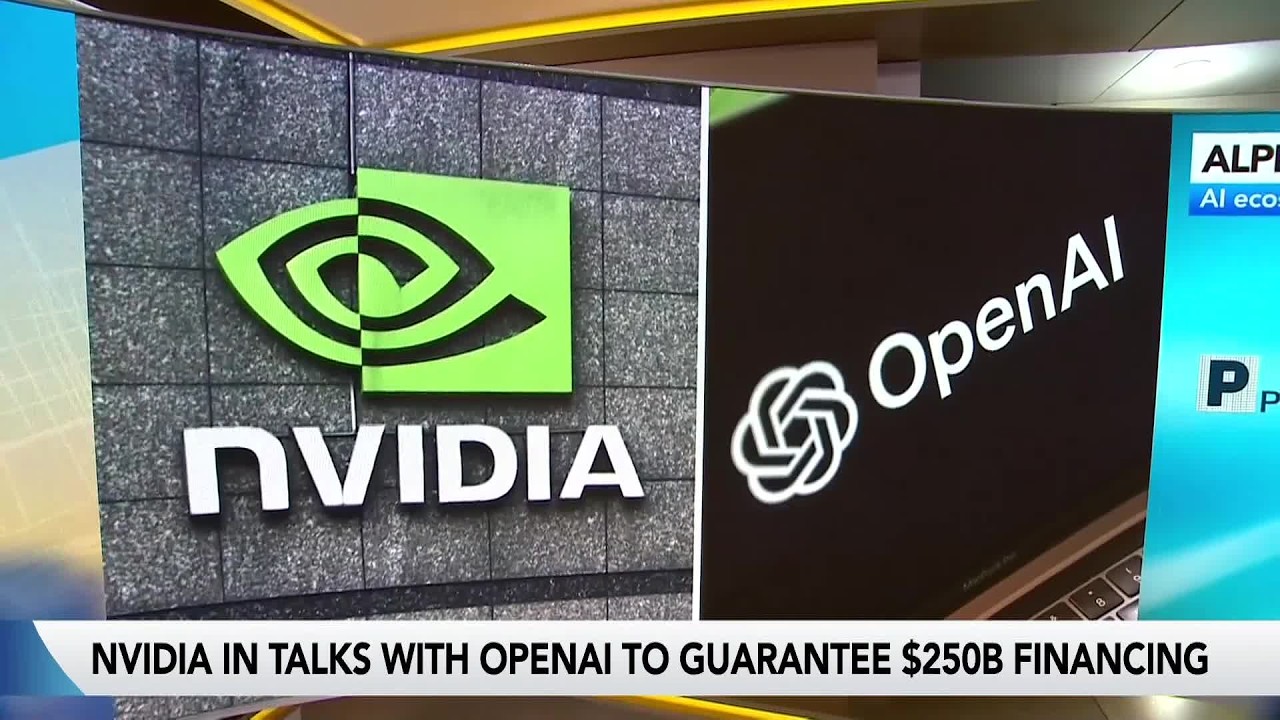
Global markets were forced to process three different kinds of risk at once on July 29: a renewed military escalation involving Iran, the United States and Saudi Arabia; a violent reversal in semiconductor shares after record-breaking results from SK Hynix failed to meet extraordinary expectations; and a divided Federal Reserve decision that kept interest rates unchanged while three policymakers voted for an increase.
The immediate answer to why markets fell is not that one headline suddenly invalidated the global expansion. The more useful explanation is that several assumptions supporting elevated asset prices were challenged simultaneously. Oil traders had to price a higher probability of disruption around the Strait of Hormuz and other regional transport routes. Equity investors had to reconsider how much future AI demand was already embedded in semiconductor valuations. Bond investors had to absorb evidence that the Federal Reserve was more concerned about inflation than a conventional risk-off session might normally imply.
Those forces do not point in the same direction for every asset. Higher oil prices can support energy producers while pressuring airlines, transport groups, manufacturers and consumers. A semiconductor correction can hurt technology-heavy indexes even when banks, miners and industrial companies report strong profits. A central bank hold can appear supportive at first glance, yet the details can be restrictive when dissenters favor a hike and the official statement emphasizes energy-driven inflation.
That is why the July 29 global market selloff was more than a simple flight from risk. It was a repricing of the price of energy, the cost of capital and the expected return on one of the largest investment cycles in modern corporate history.
Key Takeaways
- Middle East escalation: U.S. Central Command said U.S. and Saudi forces conducted precision strikes in Iraq on July 28 against Iran-aligned groups that it said had been directed to attack U.S. forces and Saudi energy infrastructure.
- Oil response: Brent crude jumped sharply on July 29 as traders reassessed the risk to regional production, tanker traffic and critical shipping routes.
- Federal Reserve: The FOMC kept the federal funds target range at 3.50% to 3.75% in a 9–3 vote; Beth Hammack, Neel Kashkari and Lorie Logan preferred a quarter-point increase.
- SK Hynix paradox: The company reported record quarterly revenue of 79.3187 trillion won and operating profit of 60.5426 trillion won, yet its shares fell because the market had expected even more and remained uneasy about capital intensity and shareholder returns.
- Broader rotation: Banks and miners offered evidence that the economy was not uniformly weakening, but their strength was insufficient to offset the pressure from oil, bonds and technology.
- What matters next: The durability of the oil spike, the flow of ships through Hormuz, incoming inflation data, Big Tech capital-spending guidance and the behavior of long-term bond yields will determine whether the repricing becomes a correction or remains a volatile rotation.
Fact Box
The July 29 Market Reset
- The Federal Reserve held its policy rate at 3.50%–3.75%.
- Three FOMC members dissented in favor of a 0.25 percentage-point increase.
- SK Hynix reported 257% year-over-year revenue growth and 557% operating-profit growth.
- The South Korean market triggered volatility controls during an exceptionally sharp selloff.
- Oil prices rose as renewed fighting challenged hopes that a pause would lead quickly to de-escalation.
Original sources: Federal Reserve July 29 statement and SK Hynix second-quarter results
Why Markets Fell on July 29, 2026
Markets fall for many reasons, but the most severe sessions often begin when investors discover that risks they had treated separately are connected. The Middle East conflict mattered not only because it raised the probability of further military action. It also mattered because energy prices feed directly into inflation, household purchasing power, corporate margins and central-bank policy. The SK Hynix disappointment mattered not only because one Korean chipmaker missed an exceptionally high forecast. It also challenged the assumption that large AI-related expenditures will be rewarded quickly and consistently. The Federal Reserve decision mattered not only because rates stayed unchanged. It showed that a meaningful minority of policymakers believed inflation risks were serious enough to justify tightening during an already volatile geopolitical episode.
Each development therefore amplified the others. A sustained oil shock could make the Fed less willing to cut rates. Higher bond yields make the distant profits used to justify premium technology valuations less valuable in present terms. Falling technology shares can tighten financial conditions even when the central bank does nothing. If households face higher fuel bills at the same time, the burden spreads beyond investors into the real economy.
The session also exposed how different the major equity benchmarks had become. Technology-heavy indexes were vulnerable to a reversal in AI optimism, while markets with greater weight in banks, energy and mining had more support from current cash flows and commodity prices. That divergence is not evidence that one region is immune. It is evidence that index composition can dominate the headline narrative during a rotation.
A useful way to interpret the day is to separate three questions. First, has the expected path of corporate cash flow changed? For airlines, transport companies and energy-intensive manufacturers, a higher oil price can reduce expected cash flow. For oil producers, the opposite may be true. Second, has the discount rate changed? The Fed’s divided hold and rising Treasury yields pointed to a higher-for-longer risk. Third, has the probability of extreme outcomes changed? Renewed attacks and uncertainty around Hormuz raised the perceived chance of a supply disruption that standard earnings models cannot treat as a routine fluctuation.
When all three questions receive less favorable answers at the same time, markets can reprice abruptly even when the underlying economy remains operational and many companies are still profitable.
What Is Confirmed About the U.S.-Saudi Strikes and Iranian Attack
The most important discipline in reporting a fast-moving conflict is to distinguish official claims, independently confirmed events and unresolved accounts. According to Reuters’ report on the U.S. military statement, U.S. Central Command said U.S. and Saudi armed forces conducted precision strikes in Iraq on July 28 against Iran-aligned groups. CENTCOM said the Islamic Revolutionary Guard Corps had directed those groups to attack American forces and Saudi energy infrastructure, and that the attempted attacks on U.S. forces were unsuccessful.
That statement establishes what the U.S. military said and confirms that Washington publicly acknowledged a coordinated operation with Saudi Arabia. It does not, by itself, independently establish every detail about targeting, casualties, command relationships or responsibility for each preceding attack. Iraqi authorities and armed groups may offer different accounts, and casualty estimates in conflict zones can change. A careful market analysis does not need to resolve every military dispute to understand the financial significance: the threshold for openly coordinated U.S.-Saudi action in Iraq had been crossed, and the risk of retaliation had increased.
The renewed escalation followed a short period in which oil prices had fallen on hopes that a pause in U.S.-Iran strikes might open space for negotiations. That sequence is crucial. Markets had removed part of the geopolitical premium from crude on July 28. When fighting resumed, traders were not merely adding a new risk; they were reversing a position built around de-escalation. Reversals of that kind can produce larger percentage moves because hedges, short positions and option exposures must be adjusted rapidly.
The involvement of Saudi Arabia added another layer. Saudi Arabia is not only a regional military actor but also the world’s most important holder of readily deployable spare oil-production capacity. A threat to Saudi energy infrastructure affects the market differently from a conflict limited to remote military sites. Even when physical output is not immediately lost, insurance costs, tanker routing, refinery planning and inventory behavior can change.
Iraq’s position is equally sensitive. The country is a major oil producer and a political arena in which state institutions coexist with powerful armed groups that have varying ties to Iran. Strikes on Iraqi territory can create pressure on Baghdad, complicate the status of foreign forces and increase the possibility that infrastructure or export routes become exposed to retaliation. For financial markets, the concern is not only the first strike. It is the chain of responses that might follow.
Why an attack can move oil even without immediate supply loss
Oil prices are forward-looking. Futures contracts reflect expected availability over coming months, the willingness of commercial users to hold inventories and the price sellers require to accept delivery risk. A missile interception or strike can therefore move crude before any official production data show a decline. Traders assess whether future cargoes will load on time, whether tankers will accept charters, whether insurers will continue coverage and whether governments will release strategic stocks.
The market also distinguishes between a temporary outage and a chokepoint event. A damaged facility may be repaired or replaced. A disruption to a narrow shipping lane can affect multiple producers simultaneously. That is why Hormuz has an outsized psychological and financial role even when individual headlines concern Iraq, Jordan, Saudi Arabia or the Red Sea.
The Strait of Hormuz Is the Central Financial Transmission Channel
The Strait of Hormuz connects the Persian Gulf with the Gulf of Oman and the Arabian Sea. Its significance is not rhetorical. The U.S. Energy Information Administration estimated that roughly 20 million barrels per day of oil moved through the strait in 2024, equivalent to about 20% of global petroleum-liquids consumption. The EIA also emphasizes that practical alternatives are limited.
That concentration creates a nonlinear risk. A modest decline in one producer’s exports might be offset by spare capacity elsewhere. A broad restriction on passage through Hormuz would affect cargoes from several major exporters at once and would be difficult to replace quickly. Saudi Arabia and the United Arab Emirates have pipelines that can bypass part of the route, but bypass capacity is much smaller than total flows through the strait. The difference between total transit and realistic alternatives is the economic reason the market reacts so forcefully to signs of closure, interference or military confrontation.
Asia bears the greatest direct exposure because a large majority of crude and condensate moving through Hormuz is destined for Asian markets. China, India, Japan and South Korea are major recipients. That helps explain why a Middle East energy shock can appear simultaneously in Korean equities, Japanese currency markets, Chinese industrial expectations and global shipping rates. The United States is less dependent on Persian Gulf crude than it was before the shale boom, but it is not insulated from the world price. Gasoline, diesel, jet fuel and petrochemicals are priced in globally connected markets.
Fact Box
Why Hormuz Matters
- About 20 million barrels per day transited the strait in 2024.
- That volume was roughly 20% of global petroleum-liquids consumption.
- Most Hormuz crude and condensate shipments serve Asian buyers.
- Bypass pipelines can reduce, but not eliminate, the exposure.
- A disruption can raise freight, insurance and inventory costs before production itself falls.
Original source: U.S. EIA world oil transit chokepoints analysis
Oil is not the only commodity at risk
Hormuz is also important for liquefied natural gas, refined products and petrochemical feedstocks. A disruption could affect European and Asian gas balances, fertilizer prices, plastics and industrial production. The first-order market move usually appears in crude because it is liquid and continuously traded. The second-order effects can emerge more slowly through freight contracts, utility costs and purchasing-manager surveys.
Shipping risk is particularly important because the region contains more than one vulnerable route. The Strait of Hormuz is the exit from the Persian Gulf, while Bab el-Mandeb connects the Red Sea with the Gulf of Aden. When both areas are threatened, rerouting becomes more complicated and expensive. Vessels may travel around the Cape of Good Hope, adding distance, fuel consumption and time. Those costs can be absorbed temporarily by shipowners, charterers, refiners or consumers, but they do not disappear.
For businesses, the practical issue is not simply whether Brent trades at $85, $90 or $100 on one afternoon. It is how long the increase lasts, whether the futures curve signals near-term scarcity, whether crack spreads widen and whether suppliers begin adding geopolitical surcharges. A one-day spike may have limited effect on quarterly margins. A multi-month disruption can change production schedules and pricing strategies.
Oil’s July 29 Surge Reintroduced an Inflation Problem
Reuters reported that Brent crude rose sharply on July 29 as escalating airstrikes revived concern about supply disruptions. Intraday figures changed through the session, which is why any precise price must be attached to a time. The broader point is more durable: the oil market reversed the previous day’s de-escalation trade and restored a significant war premium.
The inflation effect of oil operates through several channels. Gasoline and heating fuels can raise headline consumer-price measures directly. Diesel affects trucking, agriculture and construction. Jet fuel influences airline costs and ticket prices. Petrochemical feedstocks enter packaging, textiles and manufactured goods. Natural-gas prices affect electricity and fertilizer. Higher energy costs can therefore spread even when core inflation measures exclude food and energy.
Central banks usually look through a short-lived energy shock if inflation expectations remain anchored and wage growth is contained. The difficulty in 2026 is that the Federal Reserve’s own statement said inflation remained elevated relative to its 2% goal. An oil shock arriving on top of existing inflation pressure is different from an isolated rise during a period of very low underlying inflation.
The distinction between the price level and inflation rate also matters. If crude jumps and then stays flat, the year-over-year inflation effect eventually fades. If oil continues rising, or if the shock triggers second-round wage and pricing behavior, the policy problem becomes more persistent. Markets must estimate both paths without knowing how the conflict will develop.
That uncertainty tends to raise the inflation risk premium embedded in longer-term bonds. Investors may demand extra compensation for holding fixed-rate securities when future purchasing power is harder to forecast. Higher nominal yields can then pressure interest-sensitive sectors such as housing, commercial real estate and highly valued growth stocks.
The Federal Reserve Held Rates, but the Vote Was Hawkish
The video that prompted this analysis aired before the July Federal Reserve decision. By the time U.S. markets were trading in the afternoon, the forecast had become a confirmed event. The Federal Open Market Committee kept the federal funds target range at 3.50% to 3.75% in a 9–3 vote.
The hold itself was widely expected. The surprise was the scale and direction of dissent. Beth M. Hammack, Neel Kashkari and Lorie K. Logan preferred to raise the target range by 0.25 percentage point. Dissent does not determine the next decision, but three votes for a hike reveal a committee that is more divided over inflation than the unchanged rate alone suggests.
The statement said economic activity was expanding at a solid pace despite elevated uncertainty partly related to the Middle East conflict. It described productivity growth and capital investment as strong, said job gains had kept pace with the workforce and noted that unemployment had changed little. It also said inflation remained elevated relative to the 2% goal and specifically referred to supply shocks that had driven price increases in sectors including energy.
That combination explains the policy tension. A conventional recession scare would usually weaken demand, reduce inflation pressure and give the Fed room to cut. The July shock looked more stagflationary: energy prices rose while risk assets weakened. Stagflation does not require a full recession and high double-digit inflation. In market language, it describes an unfavorable mix in which growth risks increase without providing immediate relief from prices.
The implementation note maintained the interest rate on reserve balances at 3.65% and preserved the operational settings consistent with the target range. Those technical details matter because they show the Fed did not merely issue a rhetorical hold. It maintained the administered rates and market operations used to keep the effective federal funds rate within the chosen corridor.
Fact Box
Federal Reserve Decision
- Date: July 29, 2026
- Decision: Target range held at 3.50%–3.75%
- Vote: 9–3
- Dissenters: Beth M. Hammack, Neel Kashkari and Lorie K. Logan
- Dissenting preference: A 0.25 percentage-point increase
- Next scheduled meeting: September 15–16, 2026
Original source: Federal Reserve FOMC statement
Why a hold can still tighten financial conditions
Monetary policy affects the economy through more than the overnight rate. If investors interpret a statement as reducing the chance of future cuts, Treasury yields can rise. Mortgage rates, corporate borrowing costs and discount rates can then move higher even though the current target range is unchanged. In that sense, a hawkish hold can tighten financial conditions.
The July vote also complicates the market’s usual response to geopolitical stress. Investors often assume the central bank will cushion a risk-off event. But the Fed cannot directly produce oil, reopen a shipping lane or repair supply chains. If the shock raises inflation, the central bank may be less willing to offset falling asset prices. That weakens the perceived policy backstop sometimes described as a “Fed put.”
There is also an institutional point. A 9–3 vote communicates disagreement, but not paralysis. The majority chose to wait, likely valuing flexibility and additional data. The dissenters signaled that waiting carries its own cost when inflation remains high. Both positions are defensible within the Fed’s dual mandate. For markets, the consequence is a wider range of plausible outcomes at the September meeting.
What the Fed will watch before September
The next decision will depend on more than oil. Policymakers will examine monthly inflation data, wages, employment, consumer spending, business investment and financial conditions. They will also need to judge whether the energy shock is temporary or broadening. A decline in crude could reduce urgency. Continued shipping disruption, rising inflation expectations or faster wage growth could strengthen the case for a hike. A sharp slowdown in hiring or credit could push in the opposite direction.
That is why investors should avoid treating the three dissents as a promise of an increase. They are evidence of pressure within the committee, not a predetermined September outcome.
SK Hynix Reported Record Results—and Still Disappointed
The semiconductor story was striking because the reported numbers were extraordinary by conventional standards. In its official second-quarter release, SK Hynix said revenue reached 79.3187 trillion won, operating profit reached 60.5426 trillion won and net profit reached 93.9226 trillion won. Revenue rose 257% from the year-earlier quarter and operating profit rose 557%.
The company attributed the performance to strong demand for AI infrastructure, high-value DRAM products including high-bandwidth memory, and enterprise solid-state drives. It said both DRAM and NAND prices increased significantly from the previous quarter. Cash and cash equivalents rose to 88 trillion won, debt declined to 18.6 trillion won and the company ended the quarter with a large net cash position.
Those figures make clear that the market selloff was not a simple response to weak demand or an unprofitable business. It was a response to the gap between actual results and expectations, as well as concern about what the company would need to spend to sustain its position. In a momentum-driven market, a result can be excellent in absolute terms and disappointing relative to the price investors already paid.
This is the central paradox of late-cycle growth investing. Early in a cycle, evidence that demand is rising can lift both earnings estimates and valuation multiples. Later, the market may assume continued perfection. A company then needs not only to grow but to exceed a rapidly rising benchmark, preserve margins, provide visibility, control capital expenditure and return cash to shareholders. Missing one part of that package can outweigh a large year-over-year increase.
Why net profit exceeded revenue
SK Hynix reported a net profit larger than revenue, an unusual relationship that requires explanation. Operating profit reflects the profit generated from the core business before certain non-operating items and taxes. Net profit can exceed operating profit when investment gains, valuation changes, foreign-exchange effects or other non-operating items are exceptionally large. Investors therefore should not extrapolate the net margin mechanically as a sustainable operating margin.
The operating figures are more informative about the economics of selling memory products during the quarter. Even there, a 76% operating margin reflects an unusually favorable pricing environment and product mix. Memory is historically cyclical. High prices encourage investment, investment adds supply, and supply can eventually reduce prices. AI demand may extend the cycle and change its structure, but it does not abolish the economics of capacity.
The importance of high-bandwidth memory
High-bandwidth memory, or HBM, is designed to move large amounts of data quickly between memory and processors. It is essential for many advanced AI accelerators because training and inference workloads require enormous data throughput. HBM packages are more complex and valuable than conventional memory, and supply has been constrained by manufacturing difficulty, packaging capacity and qualification requirements.
SK Hynix has built a strong position in HBM, which helped transform its profitability. The company said it had begun HBM4 shipments and was negotiating or finalizing long-term agreements with around 10 customers. Multi-year contracts can reduce volume uncertainty and support planning. They do not eliminate pricing risk, execution risk or customer concentration.
The market’s concern is that the next phase may require very large investments in fabrication plants, equipment, advanced packaging and research. If capacity expands faster than end demand, returns can fall. If the company invests too cautiously, it could lose share. Management therefore faces a difficult optimization problem: invest enough to protect a strategic lead without creating the oversupply that damages the industry.
Fact Box
SK Hynix Q2 2026
- Revenue: 79.3187 trillion won
- Operating profit: 60.5426 trillion won
- Operating margin: 76%
- Net profit: 93.9226 trillion won
- Revenue growth: 257% year over year
- Operating-profit growth: 557% year over year
- Cash and cash equivalents: 88 trillion won at quarter-end
- Total debt: 18.6 trillion won at quarter-end
Original source: SK Hynix financial-results release
Why a 557% Profit Increase Was Not Enough
The simplest answer is that markets price the future, not the past. The year-over-year comparison was against a much lower base. Investors were focused on the next several years of AI infrastructure demand, the margin durability of HBM, the scale of capital spending and the company’s willingness to return surplus cash.
A second reason is valuation asymmetry. When a stock has risen rapidly, the downside from a modest disappointment can be much larger than the upside from a modest beat. Investors who bought earlier may use earnings day to realize gains. Short-term traders may have positioned for a larger surprise. Derivative hedging can accelerate the move. None of these mechanisms proves that the long-term thesis is wrong, but they can dominate a single session.
A third reason is that the result arrived during a broader reassessment of AI spending. Investors were preparing for earnings from Microsoft, Meta and other large technology companies whose capital budgets support demand for accelerators, memory, networking equipment, power systems and data-center construction. If hyperscalers continue increasing expenditure while free cash flow deteriorates, shareholders may demand clearer evidence of monetization. That pressure travels backward through the supply chain.
A fourth reason is the difference between structural growth and cyclical pricing. AI may create a lasting increase in memory requirements, but current profits also reflect tight supply and high prices. If customers double-order, build inventories or later slow deployments, the cycle can turn faster than expected. The market’s task is to estimate how much of current profitability is durable and how much is scarcity rent.
A fifth reason is shareholder-return expectations. Companies that generate exceptional cash can reinvest, reduce debt, pay dividends or repurchase shares. Investors may support investment when expected returns are high, but they become skeptical when spending rises without specific capacity, contract and return targets. The selloff suggested that broad assurances about discipline were not enough for a market that wanted detailed evidence.
The KOSPI Rout Showed How Leverage Can Amplify a Narrative Change
The pressure extended far beyond SK Hynix. Reuters reported that the South Korean market suffered an historic wipeout, with the KOSPI falling sharply and volatility controls interrupting trading. The index had been one of the world’s strongest performers before the reversal.
South Korea’s market is unusually sensitive to semiconductors because SK Hynix and Samsung Electronics carry large weights and because export growth is closely linked to the technology cycle. When memory shares fall, the index effect is mechanical. When foreign investors sell the won can weaken, which can prompt additional hedging. When retail investors hold leveraged products, daily declines can force rebalancing and margin calls.
Circuit breakers are designed to pause trading during extreme moves, allowing orders and information to stabilize. They do not guarantee a rebound. A pause can reduce disorderly execution, but if investors still wish to sell after trading resumes, the decline can continue. The appearance of a circuit breaker is therefore a symptom of volatility, not a valuation signal.
Leverage matters because losses compound faster than gains. A two-times leveraged product seeks to deliver twice the daily return, not twice the long-term return. In volatile markets, path dependence can erode value even when the underlying asset eventually recovers. A severe one-day move can also force product providers to rebalance near the close, adding to demand for selling or buying at the worst point in the session.
The Korean episode illustrates a broader lesson. Market structure can turn a reasonable change in expectations into an exceptional price move. Concentrated indexes, leveraged products, systematic strategies and crowded positions create feedback loops. Fundamental analysis remains necessary, but it is not sufficient to predict the path of prices during forced deleveraging.
The AI Trade Is Becoming a Capital-Discipline Trade
For much of the AI investment cycle, the market rewarded companies for increasing capacity. The assumption was that access to compute would be the principal bottleneck and that demand would exceed supply. By mid-2026, the conversation had changed. Investors still recognized strong demand, but they increasingly asked whether additional capital expenditure would earn an adequate return.
That question reaches every layer of the ecosystem. Cloud platforms buy accelerators and networking equipment. Chip designers reserve foundry capacity. Memory manufacturers add HBM and advanced packaging. Utilities build generation and transmission. Data-center developers secure land and power. Equipment companies expand factories. Mining groups invest in copper, aluminum and lithium. A dollar spent by one company becomes revenue for another, but the system ultimately requires end customers willing to pay for AI services.
The strongest bullish case is that AI is a general-purpose technology comparable to electrification, computing or the internet. Under that interpretation, today’s investment is building infrastructure that will support decades of productivity gains. Near-term free-cash-flow pressure is the cost of entering a large market early.
The skeptical case is not that AI lacks value. It is that too much capital may chase the opportunity at once. Technologies can transform society while producing poor returns for some investors. Railroads, fiber-optic networks and early internet companies all created useful infrastructure, yet periods of overbuilding caused bankruptcies and write-downs. The distinction between technological success and shareholder return is essential.
Capex is not automatically a negative
Capital expenditure should be evaluated by expected return, useful life and financing. Spending that creates durable capacity under long-term contracts may be attractive. Spending based on extrapolated spot prices is more vulnerable. A company with net cash and strong operating cash flow can tolerate volatility better than a leveraged competitor. The market should therefore examine project-level economics rather than treating every capex increase as reckless.
For SK Hynix, long-term agreements and a strong balance sheet support the investment case. The counterweight is that memory equipment is expensive, technology changes quickly and customers have bargaining power. If competitors catch up in HBM or if AI architectures reduce memory requirements per unit of computation, projected returns could fall.
Free cash flow is the new proof point
Revenue growth demonstrates demand, but free cash flow shows whether the business generates cash after investment. Large technology companies can report strong earnings while free cash flow declines because capital expenditure rises. That does not necessarily signal weakness; depreciation accounting spreads the cost of assets over time, while cash is paid earlier. It does mean investors must be patient and confident that those assets will produce future revenue.
The market’s changing tolerance for spending is visible in the reaction to companies that miss revenue or margin expectations while maintaining aggressive investment plans. The penalty can be severe because the valuation depended on both high growth and high returns. If either assumption weakens, the multiple can contract before analysts reduce earnings forecasts.
Big Tech Earnings Became the Next Test
The July 29 session occurred before several major U.S. technology companies released quarterly results. That timing increased uncertainty. Semiconductor suppliers depend on the capital budgets of hyperscalers, while hyperscalers depend on demand from enterprises, developers and consumers. Guidance from Microsoft, Meta, Amazon, Alphabet and others therefore helps investors assess whether the AI supply chain is supported by actual usage and revenue.
The market will focus on four issues. The first is the absolute level of capital expenditure. The second is the growth of AI-related revenue. The third is whether depreciation and operating costs are pressuring margins. The fourth is management’s explanation of returns: are new data centers fully utilized, are customers signing longer contracts and are AI features increasing prices or engagement?
Investors should also distinguish among business models. A cloud provider can monetize compute directly. An advertising platform may use AI to improve targeting and engagement. A software company can charge for AI assistants. A consumer-device company may benefit indirectly through replacement demand. The same capital-spending figure can have different implications depending on how revenue is generated.
Supplier diversification is another consideration. Hyperscalers are developing custom chips, using multiple accelerator vendors and optimizing software. That can expand the total market while reducing the bargaining power of any single supplier. Memory demand may remain strong even as the mix changes, but pricing and qualification dynamics can shift.
Wall Street’s Reaction Was Mixed, Not a Uniform Panic
Reuters’ afternoon market report showed a divided tape after the Fed decision. The S&P 500 was lower, the Dow fell more sharply and the Nasdaq was near flat at the time cited, even as the semiconductor index declined. Intraday readings can change before the close, so they should not be confused with final returns.
The mixed performance matters. A true indiscriminate liquidation usually pushes most sectors lower together and creates severe stress in funding markets. July 29 looked more like a forceful repricing and rotation. Energy benefited from higher oil. Some financial companies were supported by strong earnings and the prospect of sustained net interest income. Parts of technology held up better than the semiconductor supply chain. Defensive sectors attracted demand.
That does not make the decline harmless. A market can rotate for weeks while the index appears resilient. If leadership narrows, passive investors may not feel the full change immediately. Conversely, broadening into banks, industrials and materials can improve market health if earnings justify the shift. The key is whether the rotation is driven by constructive growth or by inflation and geopolitical stress.
The Treasury market is a useful discriminator. If stocks fall and long-term yields decline, investors may be pricing weaker growth. If stocks fall while yields rise, inflation or fiscal risk may be dominant. On July 29, higher oil and a hawkish Fed split complicated the normal safe-haven relationship.
Banks and Miners Showed the Economy Was Not One Story
The same broadcast that focused on oil and chips also highlighted strong results from Standard Chartered, UBS and Rio Tinto. Those companies provide a useful counterpoint. Their performance suggested that financial activity, wealth management, commodity demand and industrial investment remained substantial even as technology valuations corrected.
Standard Chartered said in its second-quarter and half-year release that operating income rose and announced a new $1 billion share buyback. The bank’s geographic exposure to Asia, the Middle East and Africa gives it a different sensitivity from a domestic U.S. lender. Higher rates can support net interest income, while market volatility can increase trading activity. At the same time, geopolitical risk, credit impairment and capital rules remain important.
UBS reported a profit increase and indicated plans for additional share repurchases. The bank continues to integrate Credit Suisse, which creates both cost-saving opportunities and execution risk. Wealth-management revenue can benefit from higher client assets and transaction activity, but market declines can reduce fee bases and risk appetite.
Strong bank earnings do not prove that monetary policy is harmless. Banks can initially benefit from wider spreads, yet prolonged high rates may weaken borrowers and increase defaults. The quality of credit, deposit behavior and capital requirements matter more than one quarter’s headline profit.
Rio Tinto Connected the AI Boom to the Physical Economy
Rio Tinto’s results illustrated that AI is not only a software and semiconductor story. The company reported a 28% increase in underlying EBITDA and a 75% increase in free cash flow in the first half of 2026, according to its official results announcement. It also increased its interim dividend.
Chief Executive Simon Trott emphasized the role of copper, aluminum, lithium and steel inputs in data-center construction. That argument is economically sound at a high level. Data centers require electrical wiring, transformers, cooling systems, structural materials, backup power and grid connections. The expansion of AI infrastructure therefore supports demand beyond chips.
Copper is especially important because of its conductivity and use in electrical networks. Data centers themselves consume copper, but the larger demand may come from generation and grid investment needed to supply them. Aluminum is used in transmission, structures and equipment. Steel remains fundamental to construction. Lithium demand is more directly tied to batteries and storage, which can support power systems and electric vehicles.
The bullish interpretation is that digital infrastructure and electrification create a multi-year demand cycle for critical minerals. Supply is difficult to expand because mines require permits, financing, construction and community support. If demand grows faster than supply, prices and margins can remain high.
The skeptical interpretation is that miners are still cyclical. High prices encourage new projects and substitution. Chinese property weakness can offset some demand. Mining projects face cost inflation, geopolitical risk and operational setbacks. A diversified miner may benefit from multiple trends, but it cannot escape commodity volatility.
Why Rio Tinto and SK Hynix can rise and fall on the same AI theme
The two companies occupy different positions in the investment cycle. SK Hynix sells a technologically differentiated product into a fast-moving market where capacity and product generations change rapidly. Rio Tinto develops long-lived assets with slower supply responses. Investors may therefore worry about semiconductor overinvestment while remaining constructive on copper scarcity.
Valuation also differs. A high-growth technology supplier may be priced on distant earnings and market share. A miner is often priced on commodity curves, asset quality, costs and shareholder distributions. Higher interest rates can compress a growth multiple more severely than a cash-generative value stock, even when both benefit from AI demand.
This divergence helps explain the rotation away from expensive technology and toward banks, materials and energy. It is not necessarily a rejection of AI. It may be a preference for businesses that sell the physical inputs or financing around the boom while generating cash today.
The Strongest Bullish Interpretation
The constructive case begins with the observation that the global economy remained capable of producing record corporate results. SK Hynix’s revenue and operating profit were not hypothetical. They reflected real orders, higher prices and demand for advanced memory. Rio Tinto’s cash flow reflected commodity prices and improved operations. Banks generated profits and returned capital. The Fed described economic activity as expanding at a solid pace.
Under this interpretation, the market selloff was a valuation adjustment rather than the beginning of a broad economic contraction. The AI cycle is transitioning from indiscriminate enthusiasm to a phase in which companies must demonstrate returns. That process can be healthy. Capital flows toward the strongest operators, weaker projects are canceled and valuations become more realistic.
The oil shock could also prove temporary. Military escalations often produce sharp price spikes that fade when physical supply continues and diplomacy resumes. Producers may reroute cargoes, use inventories or increase output elsewhere. If crude retreats, inflation fears could ease and the Fed could remain on hold without tightening further.
South Korea’s selloff may have been amplified by leverage and concentration rather than by a collapse in semiconductor demand. Forced selling can push prices below fundamental value. If Big Tech companies confirm strong AI usage and maintain disciplined spending, confidence could recover.
Finally, broader sector strength could improve the durability of the equity market. A rally supported by banks, industrials, materials and energy is less dependent on a small group of technology companies. If earnings broaden while inflation stabilizes, the rotation could become constructive rather than defensive.
The Strongest Skeptical Interpretation
The skeptical case is that markets are confronting the late stage of several crowded trades at once. AI investment has grown so large that suppliers need extraordinary demand merely to meet expectations. Oil risk is adding inflation at the wrong time. The Fed’s three dissents show that policy may need to tighten further. High valuations leave little room for error.
In this reading, SK Hynix’s result is a warning. If a 557% operating-profit increase cannot support the share price, expectations have become detached from any plausible steady state. Capacity additions may eventually produce oversupply. Hyperscalers may slow spending once depreciation, power costs and investor pressure rise. Suppliers could face order delays and price normalization.
The geopolitical risk could also be more persistent than markets assume. Repeated pauses and resumptions undermine confidence in negotiations. The involvement of proxies and multiple states raises the chance of miscalculation. Even without a full closure of Hormuz, recurring attacks can keep insurance and freight costs elevated. That can sustain inflation and weaken consumer demand.
The Fed may then face an unattractive choice. Raising rates could pressure employment and asset prices. Holding rates could allow inflation expectations to rise. Cutting rates could weaken the currency or reinforce price pressure. Policy uncertainty would remain high.
Leverage creates an additional danger. Sharp losses in Korean equities demonstrate how rapidly crowded positions can unwind. Similar positioning may exist in U.S. AI shares, private-credit funds, options strategies or data-center financing. A correction can spread through collateral and risk limits even when the initiating fundamental shock is contained.
What the Market Is Pricing—and What It Is Not
Market prices are probabilities, not forecasts with certainty. The oil spike implied a higher probability of supply disruption, not certainty that Hormuz would close. The SK Hynix selloff implied lower confidence in the expected return on AI investment, not proof that AI demand had ended. The bond-market reaction implied concern about inflation and policy, not a guaranteed rate increase.
This distinction matters because investors often convert price action into a narrative after the fact. A stock falls, so the business must be deteriorating. Oil rises, so a closure must be imminent. Yields rise, so the Fed must hike. Those conclusions can be wrong. Prices may reflect hedging, liquidity and positioning as much as new information.
At the same time, dismissing price action as irrational is equally dangerous. A violent move reveals where portfolios are vulnerable and where expectations were concentrated. The market can identify a risk before reported earnings or economic data fully capture it. The correct approach is to use price action as evidence about expectations, then test those expectations against fundamentals.
How Higher Oil Prices Affect U.S. Companies and Consumers
The United States produces large amounts of oil, but consumers and businesses pay prices linked to global benchmarks. Refiners can export products, and crude qualities differ. A disruption overseas can therefore raise domestic fuel costs even when U.S. production is stable.
For households, gasoline is the most visible channel. Higher pump prices reduce disposable income available for restaurants, travel and discretionary goods. The burden is often larger for lower-income and rural households because fuel represents a greater share of spending and alternatives are limited.
Airlines face higher jet-fuel costs, though hedging and ticket pricing can delay the effect. Trucking companies may pass fuel surcharges to customers. Delivery networks and retailers face higher transport costs. Chemical companies can experience changes in feedstock prices. Utilities are affected differently depending on fuel mix and regulation.
Energy producers may benefit from higher realized prices, but they also face service-cost inflation, political pressure and uncertainty about future demand. Refiners can benefit or suffer depending on the relationship between crude and product prices. A higher oil price is therefore not uniformly positive for the energy sector.
The macroeconomic effect depends on duration. A short spike shifts income toward producers and may have limited aggregate impact. A sustained increase transfers purchasing power from consumers to energy companies and exporting countries, raises inflation and can reduce demand elsewhere.
How Higher Yields Affect Technology Valuations
Equity valuation often relies on discounting expected future cash flows. The further in the future those cash flows occur, the more sensitive present value is to the discount rate. High-growth companies with modest current cash flow can therefore be particularly vulnerable when Treasury yields rise.
The relationship is not mechanical. Strong growth can offset higher rates. A company with pricing power and high returns on capital may remain attractive. But when valuation multiples are already elevated, a higher risk-free rate reduces the margin of safety.
AI infrastructure companies face an additional issue: they may be spending cash now for returns expected years later. Higher financing costs increase project hurdle rates. Some data centers or power projects that appeared attractive under lower rates may be delayed. That could moderate demand for chips and equipment at the margin.
Conversely, companies with abundant cash can gain a competitive advantage because they need less external financing. Balance-sheet quality becomes more important as rates remain high. SK Hynix’s net cash position is therefore a meaningful strength, even though it did not prevent an earnings-day decline.
What Businesses Should Watch in Their Own Operations
The July 29 market shock has practical implications beyond investment portfolios. Companies exposed to transport, energy or imported components should monitor contract terms and supply-chain contingencies. The first sign of stress may appear in lead times, insurance clauses or freight quotes rather than spot commodity prices.
- Fuel exposure: Determine which costs are hedged, which can be passed through and how quickly customer prices can be adjusted.
- Shipping routes: Identify cargoes dependent on Hormuz, the Red Sea or Gulf ports, and estimate the cost of alternative routing.
- Working capital: Higher inventories can protect production but consume cash. Businesses should balance resilience against financing cost.
- Interest-rate sensitivity: Review floating-rate debt, refinancing dates and covenant headroom.
- Customer concentration: AI suppliers should assess whether demand depends on a few hyperscalers or a broader customer base.
- Capital projects: Update return assumptions for power, equipment, construction and financing costs.
- Currency exposure: Energy shocks and risk aversion can move the dollar, won, yen and emerging-market currencies, changing import and export economics.
Scenario planning should be specific. “Geopolitical risk” is too broad to guide action. A company should model a one-week shipping delay, a 15% fuel increase, a quarter-point rate rise or a temporary component shortage. Those scenarios can be linked to cash flow and operational decisions.
What Investors Should Watch Without Treating Volatility as a Signal to Trade
This article does not recommend buying or selling any security. The following indicators are useful because they help distinguish among competing explanations for the market move.
1. Physical tanker flows
Statements and threats matter, but vessel traffic, loading schedules and insurance conditions show whether the oil shock is becoming physical. A sustained reduction in flows would be more significant than a temporary futures spike.
2. The oil futures curve
When near-term prices rise relative to later contracts, the curve can signal immediate scarcity. A broad rise across maturities suggests a more persistent repricing. The curve should be interpreted alongside inventories and OPEC+ policy.
3. Inflation expectations
Market-based measures and consumer surveys can show whether the energy shock is changing beliefs about future inflation. A temporary rise in gasoline is less dangerous to policy if expectations remain anchored.
4. Treasury real yields
Nominal yields can rise because of inflation expectations or real rates. Higher real yields are particularly relevant for growth-stock valuations and borrowing conditions.
5. Big Tech capex and AI revenue
Investors should compare spending growth with revenue attributable to AI, utilization rates and free cash flow. Management commentary should be tested against disclosed numbers rather than accepted as proof.
6. Memory contract prices and inventories
Spot prices can be volatile. Contract pricing, customer inventories and shipment volumes provide a better view of the memory cycle. HBM and conventional DRAM may follow different paths.
7. Credit spreads
If corporate-bond spreads remain contained, the episode is more likely an equity and commodity repricing. A sustained widening would indicate broader financial stress.
8. Market breadth
A rotation can coexist with a stable index. Breadth measures show how many stocks are participating. Improving breadth outside technology would support the constructive case; broad deterioration would support the skeptical one.
Historical Comparisons: Useful but Imperfect
Investors naturally compare a Middle East oil shock with the 1970s, the Gulf wars, the 2019 Abqaiq attack or more recent Red Sea disruptions. Each comparison offers a lesson, but none is a template.
The 1970s involved structural dependence on imported oil, wage-price dynamics and policy regimes very different from today. The Gulf wars occurred with different spare capacity, inventories and financial-market structures. The 2019 Abqaiq attack caused a large immediate price jump, but Saudi output recovered faster than many feared. Red Sea disruptions have shown that shipping can reroute, though at higher cost.
The semiconductor cycle also has historical analogues. Memory producers have repeatedly moved from shortage to oversupply. What is different now is the value of HBM, the concentration of AI demand and the scale of hyperscaler balance sheets. The cycle may be longer and more profitable than past ones, but it is still exposed to capacity and pricing.
The dot-com era is often invoked for AI. The comparison is useful because transformative technology and excessive valuation can coexist. It is imperfect because many current AI leaders are highly profitable, cash-rich incumbents rather than unproven startups. The better question is not whether 2026 is “another 2000,” but which parts of the capital chain are earning returns and which depend on indefinite expansion.
What Happened After the Video Was Published
The most important subsequent development was the Federal Reserve decision. Before the announcement, market participants debated a hold and the possibility of a hike. At 2:00 p.m. Eastern Time, the Fed confirmed the hold at 3.50% to 3.75%, with three dissents for a quarter-point increase. That outcome strengthened the article’s central theme: the oil shock was occurring while inflation concerns were already strong enough to divide the FOMC.
U.S. equities remained under pressure after the decision, though sector performance was mixed. Semiconductor shares continued to reflect the reassessment triggered by SK Hynix and broader concern about AI spending. The market awaited large technology earnings after the close, which meant the day’s final interpretation remained dependent on new corporate guidance.
Oil remained elevated during the U.S. session as traders monitored military statements and regional shipping. Because the conflict was developing, exact intraday prices and casualty reports were subject to change. The confirmed structural facts were more important than any single tick: renewed acknowledged strikes, a critical chokepoint, elevated crude prices and a central bank unwilling to ease preemptively.
What Happens Next
The next stage will be determined by events with different time horizons.
Within days
- Further military retaliation or evidence of de-escalation.
- Tanker movements, port operations and insurance decisions.
- Big Tech earnings and capital-spending guidance.
- Semiconductor stabilization or further forced selling in Asia.
- Daily changes in crude inventories and refinery operations.
Within weeks
- U.S. inflation and labor-market reports.
- Changes in consumer inflation expectations.
- Analyst revisions to chip, cloud and data-center forecasts.
- OPEC+ production decisions and evidence of spare-capacity deployment.
- Corporate updates on freight, fuel and input costs.
By the September Fed meeting
- Whether the oil shock persisted long enough to affect core prices.
- Whether financial conditions tightened materially through yields and equity declines.
- Whether the labor market remained resilient.
- Whether the three July dissenters gained support for a hike.
- Whether renewed conflict changed the balance between inflation and growth risks.
None of these outcomes is predetermined. The most important analytical task is to update probabilities as evidence arrives rather than anchoring to the most dramatic scenario.
A Cross-Asset Map of the July 29 Shock
One reason the session felt unusually complicated was that the same headline produced different effects across asset classes. A higher oil price is not simply “risk off.” It improves the revenue outlook for some producers while increasing costs for users. A more hawkish Federal Reserve can support the dollar, pressure bonds and reduce equity multiples, yet it can also improve the earnings outlook for some lenders. A semiconductor correction can damage a technology index while leaving a commodity-heavy benchmark comparatively resilient.
Understanding those relationships requires separating the first-order reaction from the second-order economic effect. The first-order reaction is the immediate repricing: crude rises, airline shares fall, energy shares rise and inflation breakevens widen. The second-order effect depends on duration. If the oil spike fades in a week, corporate behavior may change little. If it lasts a quarter, companies revise budgets, households reduce discretionary spending and the Fed may alter its reaction function.
Crude oil and refined products
Brent is the most widely used international benchmark and therefore the clearest immediate measure of geopolitical risk in the Gulf. West Texas Intermediate reflects U.S. market conditions and infrastructure as well as global developments. The two can move by different amounts when shipping, quality or regional inventory conditions change. Refiners and consumers are affected by product prices such as gasoline, diesel and jet fuel, not crude alone. A rise in crude may be absorbed partly by narrower refining margins, or it may be magnified if refinery capacity is constrained.
The futures curve matters because it reveals how the market distributes scarcity through time. A sharply higher front month with smaller increases later can indicate immediate disruption risk. A parallel shift across the curve suggests a longer-lasting change in expected supply. Commercial users frequently hedge with contracts beyond the nearest month, so the shape of the curve influences real budgets.
Government bonds
Government bonds respond to growth, inflation and policy expectations. During a conventional geopolitical shock, safe-haven buying may lower yields. During an energy shock, inflation concerns can push yields higher. The net result depends on which force dominates. The July 29 Fed statement strengthened the inflation channel by explicitly referring to energy-related supply shocks and by revealing three votes for a hike.
The yield curve provides additional information. Short maturities are closely linked to the expected policy rate. Long maturities incorporate expected inflation, real growth, fiscal supply and term premium. If two-year yields rise after a Fed statement, markets may be pricing tighter policy. If ten- and thirty-year yields rise more, investors may be demanding greater compensation for long-term inflation or fiscal risk.
The U.S. dollar and Asian currencies
The dollar often strengthens when global investors seek liquidity or when U.S. rate expectations rise. That can create a second tightening for countries and companies that borrow in dollars. A weaker local currency increases the domestic cost of imported oil, even when the dollar price of crude is unchanged. South Korea therefore faced a difficult combination: falling technology shares, potential foreign outflows and a higher energy import bill.
The Japanese yen can behave differently because of Japan’s low historical rates and its role in funding trades. Risk reduction can strengthen the yen when investors unwind borrowing, but higher imported energy costs can weaken Japan’s trade balance. The outcome depends on positioning and Bank of Japan expectations.
Gold and other perceived havens
Gold can benefit from geopolitical uncertainty, but it is also sensitive to real interest rates and the dollar. A stronger dollar and higher real yields can offset safe-haven demand. That is why gold’s reaction should not be interpreted as a simple referendum on war risk. It reflects the interaction of fear, inflation hedging and the opportunity cost of holding a non-yielding asset.
Credit markets
Corporate credit often moves more slowly than equities. Investment-grade companies may have fixed-rate debt and ample liquidity, limiting the immediate effect of a one-day shock. High-yield issuers, airlines, transport firms and highly leveraged technology suppliers can be more sensitive. A sustained widening in credit spreads would indicate that investors expect weaker cash flow or greater refinancing risk, not merely lower equity valuations.
Volatility and options
Options markets translate uncertainty into implied volatility. When investors rush to buy protection, implied volatility can rise even before the underlying index falls sharply. Skew—the relative price of downside puts—can reveal demand for crash protection. In crowded sectors such as semiconductors, dealer hedging may amplify moves when prices cross important strike levels.
These relationships explain why the July 29 global market repricing cannot be reduced to one index percentage. The important signal was the combination: oil and inflation risk rose, technology leadership weakened, bond investors saw less room for easing and sector performance diverged.
How to Read the Quality of SK Hynix Earnings
Headline growth rates can be misleading when the comparison base is unusually weak or when non-operating items dominate net income. A more rigorous earnings analysis asks how the company generated profit, how much cash it retained and what commitments are required to sustain the result.
Revenue quality
SK Hynix’s revenue growth reflected both volume and price. The company said DRAM and NAND prices increased significantly quarter over quarter and that high-value AI products supported the mix. Price-led growth can be extremely profitable because much of a semiconductor manufacturer’s cost base is fixed over short periods. Once factories are running, a higher selling price can flow disproportionately to operating profit.
The risk is that price-led growth reverses if supply catches up. Volume growth supported by long-term contracts may be more durable, but contract details matter. Agreements can specify volumes without fixing prices, include renegotiation clauses or depend on customer qualification. The company’s announcement of agreements with around 10 customers is encouraging, but public investors still lack the complete economics of those contracts.
Operating leverage
The increase in operating margin demonstrates powerful operating leverage. Semiconductor fabs require large upfront investments and continue incurring depreciation, labor and utility costs regardless of whether every wafer is sold at an optimal price. When utilization and pricing improve, profit can rise much faster than revenue. The reverse is also true. A modest decline in pricing can cause a much larger decline in operating profit.
This asymmetry is one reason memory stocks trade as cyclical assets even when long-term demand grows. Investors are not only forecasting unit demand; they are forecasting the balance between supply, utilization and price.
Cash conversion
The increase in cash and reduction in debt were meaningful because they showed that strong accounting profit translated into financial flexibility. A net-cash balance gives management more options: fund new fabs, absorb a downturn, support research, pay dividends or repurchase shares. It also reduces refinancing risk if credit conditions tighten.
However, quarter-end cash is not the same as freely distributable cash. Planned capital expenditure, working capital, taxes and strategic commitments may consume a large amount. Investors therefore focus on free cash flow over a full cycle rather than a single balance-sheet snapshot.
Capital expenditure and depreciation
New fabrication and packaging assets create cash outflow immediately but are expensed through depreciation over years. During a rapid investment phase, reported operating profit can remain high while free cash flow falls. Later, depreciation rises even if cash spending moderates. Analysts must therefore examine both current capex and the future depreciation burden.
The useful life of equipment is another issue. Advanced tools may remain productive for years, but leading-edge processes can become less competitive quickly. Equipment can sometimes be repurposed for older products, though at lower returns. The economic life may therefore differ from the accounting life.
Customer concentration
HBM demand is linked to a relatively small number of accelerator designers, cloud platforms and systems companies. Concentration can support close technical partnerships and long contracts, but it gives customers bargaining power. A delay in one platform generation or a change in supplier allocation can have a material effect.
Diversification across AI memory, conventional DRAM, NAND and enterprise storage reduces dependence on one product. Yet those categories share exposure to the broader data-center cycle. True diversification must be judged by end demand, not only product labels.
Technology risk
HBM performance depends on bandwidth, power efficiency, yield and packaging. A supplier can lose share if it misses qualification windows or if competitors improve yields. At the same time, customers may redesign systems to use memory more efficiently. Better software, compression or architecture could reduce memory per unit of output, though total demand may still rise if AI usage grows faster.
The quality of SK Hynix’s quarter was therefore high in an operational sense, but the market’s questions were rational. Record profit confirms strong present economics. It does not, by itself, establish the return on the next 31 trillion won or any other large investment program discussed by market participants.
The Semiconductor Supply Chain Beyond SK Hynix
A memory-company earnings report can affect businesses far beyond Korea. The AI hardware chain includes chip designers, foundries, memory suppliers, packaging specialists, equipment manufacturers, materials companies, networking vendors, power suppliers and cooling providers. Expectations in one layer influence orders in the others.
Foundries and advanced packaging
AI accelerators are commonly produced at advanced foundries and combined with HBM through complex packaging. Packaging capacity can become a bottleneck even when wafer capacity is available. Investment in one stage therefore may not generate revenue until the rest of the chain expands. Delays can create temporary inventory imbalances.
Foundries face their own capital-allocation problem. Leading-edge fabs cost tens of billions of dollars and require high utilization. Customers may reserve capacity years in advance, but forecasts can change. Government subsidies and strategic-policy goals can encourage additional capacity that is not justified solely by near-term demand.
Semiconductor equipment
Equipment suppliers benefit when manufacturers add capacity, but their orders can be volatile. A memory producer may postpone tools if prices weaken or yields improve more than expected. Export controls can restrict access to certain markets. Long lead times mean suppliers can report strong backlogs shortly before customers become more cautious.
Networking and interconnect
AI clusters require high-speed networking to connect large numbers of accelerators. As models grow, the efficiency of communication becomes as important as raw compute. That supports demand for switches, optical components and specialized interconnects. It also increases power consumption and complexity.
Power and cooling
Data centers cannot operate without reliable electricity and heat management. Power availability is becoming a binding constraint in several regions. Utilities, turbine makers, grid-equipment suppliers and cooling companies therefore participate in the AI cycle. Their economics depend on regulation, construction timelines and local power prices rather than semiconductor pricing alone.
Cloud customers and utilization
The final test is utilization. A data center filled with expensive equipment produces a return only if customers use and pay for the capacity. Cloud providers may initially build ahead of demand to protect market share. That strategy can be rational, but low utilization reduces returns. Investors should watch cloud backlog, committed contracts and service revenue rather than hardware orders alone.
The supply-chain perspective helps explain the market’s sensitivity to capex guidance. Each layer may report strong demand based on orders from the next layer, creating a circular appearance of confirmation. Sustainable demand ultimately requires external revenue from businesses and consumers using AI services.
Why the Federal Reserve Cannot Treat Oil Like a Normal Demand Shock
Monetary policy is most effective when inflation comes from excessive demand. Higher rates reduce borrowing, investment and spending. A supply shock is harder because higher rates do not create oil or open shipping lanes. Tightening can reduce second-round inflation, but it does so by weakening other parts of the economy.
That trade-off explains the July committee split. Policymakers who preferred a hike may have judged that inflation expectations and credibility required action. The majority may have believed that the existing 3.50%–3.75% range was already restrictive enough and that waiting would provide information without unnecessary damage.
First-round and second-round effects
The first-round effect is the direct increase in energy prices. Central banks often look through it because the price may reverse. The second-round effect occurs when workers demand higher wages, companies raise prices broadly or expectations become unanchored. Monetary policy is more concerned with the second round.
Data arrive with lags, which complicates the decision. By the time a broad inflation effect appears in official statistics, contracts and expectations may have changed. Acting preemptively risks overtightening if the shock fades. Waiting risks allowing persistence.
Financial conditions as an unofficial policy channel
A falling stock market, stronger dollar and wider credit spreads can tighten conditions without a formal rate increase. The Fed may view that as reducing the need to hike. But if long-term yields rise because of inflation, financial conditions can tighten in a disorderly way while price pressure remains. The composition of tightening matters.
Communication risk
Central-bank language must acknowledge inflation without implying a predetermined path. Too much confidence can undermine credibility if data worsen. Too much alarm can destabilize markets. The concise July statement left considerable interpretation to investors, which increased the importance of the vote and subsequent public remarks.
For businesses, the practical implication is that the policy rate may remain high even if growth slows modestly. Financing plans should not depend on an immediate sequence of cuts. For investors, the implication is that bad news for growth may not automatically be good news for bonds or technology shares when energy inflation dominates.
Scenario Analysis for the Next Quarter
Scenario analysis is more useful than a single forecast because the conflict, oil market and AI cycle can develop in several plausible ways. The following scenarios are editorial frameworks, not predictions.
Scenario One: Rapid de-escalation and stable shipping
In the most constructive scenario, military exchanges subside, Oman or another intermediary revives negotiations and commercial shipping continues without major disruption. Oil gives back much of the war premium. Inflation expectations stabilize, allowing the Fed to maintain rates without a hike. Big Tech reports enough AI revenue to support continued investment, while management teams emphasize discipline.
Under this scenario, semiconductor shares could recover part of their losses, though valuations may not return immediately to prior extremes. Banks and miners may continue performing if global growth remains solid. The market rotation broadens rather than reverses completely.
Scenario Two: Persistent low-intensity conflict
A middle scenario involves recurring strikes, periodic tanker incidents and elevated insurance costs without a complete closure of Hormuz. Oil remains volatile in a wide range. Inflation data improve slowly, and the Fed stays on hold while preserving the option to hike. Companies absorb some costs and pass through others.
This environment would favor active sector differentiation. Energy and defense could remain supported, while airlines, transport and rate-sensitive growth shares face pressure. Semiconductor demand may stay strong, but valuation multiples remain lower because discount rates and risk premiums are higher.
Scenario Three: Major shipping disruption
In the severe scenario, traffic through Hormuz falls materially or regional energy infrastructure suffers sustained damage. Oil rises further, refined-product markets tighten and governments consider strategic-stock releases. Inflation expectations increase and consumer confidence weakens.
The Fed would face a difficult choice. It might hold to avoid worsening the growth shock, but markets could price higher long-term inflation. Credit spreads could widen, especially for fuel-intensive and leveraged companies. Equity weakness would likely broaden beyond technology.
Scenario Four: AI capex slowdown independent of geopolitics
Even if oil stabilizes, Big Tech could signal slower growth in capital expenditure or weaker-than-expected monetization. That would pressure semiconductor, networking, power and data-center suppliers. Memory contract prices might remain strong temporarily because orders were placed earlier, creating a lag between guidance and reported results.
This scenario would test whether the broader market can absorb a technology earnings recession. Banks and materials might outperform relatively, but a large enough capex slowdown would eventually affect industrial demand.
Scenario Five: Strong AI earnings offset macro pressure
Large technology companies could report rapid AI revenue, high utilization and convincing returns on investment. That would validate part of the supply-chain spending and distinguish the SK Hynix selloff as an expectations reset rather than a demand warning. Semiconductor shares might recover even if oil remains elevated.
The limitation is that strong AI demand can itself keep capital investment and electricity demand high, supporting inflation and bond yields. A positive earnings outcome does not guarantee lower discount rates.
Why Sector Rotation Can Be Both Healthy and Dangerous
Market commentators often describe rotation as healthy because it broadens leadership. That is true when investors move toward companies with improving earnings and reasonable valuations. It is less reassuring when rotation is driven by an inflation shock that harms the overall economy.
Banks can benefit from higher rates, but only until credit losses and funding costs rise. Energy companies can benefit from higher oil, but political intervention and demand destruction can follow. Miners can benefit from commodity scarcity, but higher fuel and financing costs can reduce project returns. Defensive companies may outperform because earnings are stable, not because growth is strong.
The quality of rotation should therefore be judged by earnings revisions and credit conditions. If analysts raise forecasts across industrials, financials and materials while spreads remain stable, broadening is constructive. If those sectors merely fall less than technology while aggregate forecasts decline, the market is becoming defensive.
Index levels can conceal this distinction. A benchmark may remain near a record because gains in a few large sectors offset severe declines elsewhere. Investors should examine equal-weight indexes, advance-decline measures and sector earnings rather than relying on the headline alone.
Editorial Limits and Areas of Uncertainty
Several claims in a developing conflict cannot be treated as final. Military statements identify what governments say occurred, but independent verification may be incomplete. Casualty figures can change. Responsibility for drone or missile attacks may be disputed. Negotiations can be private and proposals may not be published.
Market data are also time-sensitive. Intraday oil prices, stock-index levels and bond yields can change within minutes. This article uses dated information and emphasizes structure rather than presenting a temporary quote as a permanent outcome.
Corporate guidance is forward-looking. SK Hynix’s expectations for structural memory demand and long-term contracts reflect management’s assessment, not guaranteed results. Rio Tinto’s view of data-center mineral demand is commercially informed but also aligned with its interest as a producer. Bank buyback authorizations do not mean all shares have already been repurchased.
Finally, a market reaction does not prove a single cause. July 29 included company earnings, macroeconomic expectations, positioning and geopolitical news. The evidence supports the conclusion that oil, chips and the Fed were major drivers, but other factors also influenced individual securities.
Frequently Asked Questions
Why did global markets fall on July 29, 2026?
Markets were pressured by renewed Middle East fighting and higher oil prices, a severe semiconductor selloff after SK Hynix results, and a Federal Reserve decision that kept rates unchanged but included three dissents in favor of a hike.
What did the Federal Reserve decide?
The FOMC kept the federal funds target range at 3.50% to 3.75% on July 29, 2026. The vote was 9–3, with Beth Hammack, Neel Kashkari and Lorie Logan preferring a 0.25 percentage-point increase.
Why did oil prices jump?
Oil rose because U.S.-Saudi strikes and an attempted Iranian attack increased the perceived risk to regional energy infrastructure and shipping. The move also reversed optimism that a pause in fighting would lead quickly to negotiations.
How important is the Strait of Hormuz?
The U.S. EIA estimated that about 20 million barrels per day moved through Hormuz in 2024, roughly 20% of global petroleum-liquids consumption. Alternative routes can bypass only part of that volume.
Did SK Hynix report weak earnings?
No. The company reported record revenue and operating profit. The disappointment was relative to very high expectations and reflected concern about future spending, margin durability and shareholder returns.
How much revenue did SK Hynix report?
SK Hynix reported second-quarter 2026 revenue of 79.3187 trillion won, up 257% from the year-earlier quarter.
Why was SK Hynix net profit higher than revenue?
Net profit can include non-operating gains, investment effects and other items that do not arise from selling products. Operating profit is more useful for assessing the quarter’s core business performance.
Does the chip selloff mean the AI boom is over?
Not necessarily. It shows that investors are demanding stronger evidence that AI capital spending will produce durable cash returns. Demand can remain strong while valuations and expectations decline.
Why were banks and miners stronger than technology?
Banks and miners were supported by current earnings, shareholder distributions and commodity exposure. Their valuations are also generally less dependent on distant growth than premium technology shares.
Could higher oil force the Fed to raise rates?
It could strengthen the case for a hike if the increase persists and affects broader inflation or expectations. A temporary spike would be less likely to determine policy by itself.
What is the next Federal Reserve meeting?
The next scheduled FOMC meeting is September 15–16, 2026.
What should businesses monitor first?
Businesses should monitor physical shipping conditions, fuel and freight contracts, working-capital needs, refinancing exposure and customer demand. Operational data may matter more than a single day’s market price.
Final Assessment
The July 29 market shock mattered because it challenged three powerful assumptions at the same time. The first was that the Middle East conflict was moving toward a durable pause. The second was that extraordinary AI-related earnings would continue to justify extraordinary valuations. The third was that weakening risk assets would automatically lead the Federal Reserve toward easier policy.
The verified evidence does not support a simple collapse narrative. SK Hynix produced record results and strengthened its balance sheet. Rio Tinto generated higher cash flow. Banks reported solid profits. The Fed described economic activity as expanding at a solid pace. Those facts support the view that the global economy and corporate sector retained substantial strength.
But the concerns are equally real. Oil supply risk can raise inflation without improving growth. The semiconductor market may have priced years of flawless execution. A 9–3 Fed vote showed that inflation pressure was strong enough for three officials to favor a hike during a volatile session. Leverage and index concentration amplified losses in South Korea.
The most defensible conclusion is that markets entered a more demanding phase. Investors were no longer willing to reward growth without capital discipline, geopolitical calm without evidence or a rate hold without examining the vote. The next direction will depend less on slogans such as “AI boom” or “risk off” and more on physical oil flows, free cash flow, contract economics, inflation data and the cost of financing.
That shift does not decide whether the next major move is higher or lower. It changes the burden of proof. Companies and policymakers must now demonstrate that growth can absorb higher energy costs, that AI investment can produce durable returns and that inflation can moderate without a damaging tightening cycle. Until those questions are answered, volatility is likely to remain a rational feature of the market rather than a temporary anomaly.
Sources
- Reuters: U.S. and Saudi forces struck Iran-aligned groups in Iraq
- Reuters: Oil rises after renewed Middle East escalation
- U.S. Energy Information Administration: World Oil Transit Chokepoints
- Federal Reserve: July 29, 2026 FOMC statement
- Federal Reserve: July 29, 2026 implementation note
- SK Hynix: Second-quarter 2026 financial results
- Reuters: South Korean stock rout after SK Hynix earnings
- Reuters: U.S. market reaction after the Federal Reserve decision
- Standard Chartered: Second-quarter and half-year 2026 results
- UBS: Quarterly reporting and second-quarter 2026 materials
- Rio Tinto: First-half 2026 results announcement
Affiliate disclosure: Businessfinance.news may earn compensation from qualifying actions completed through selected links on this website, at no additional cost to the reader. Affiliate relationships do not influence our editorial reporting, analysis, or conclusions.