Last updated: August 4, 2026, 5:45 a.m. EDT
Semiconductor stocks are volatile because the market is no longer asking whether artificial-intelligence infrastructure demand exists. The evidence says it does. The harder questions are how long today’s extraordinary spending can continue, which chip suppliers will capture the economics, whether cloud customers can convert AI usage into durable revenue, and how much good news is already embedded in valuations after an exceptionally strong run.
That distinction explains why chip shares can fall even when hyperscalers raise capital-expenditure plans, cloud growth accelerates, memory remains tight and leading suppliers report record revenue. A rising order book supports the industry’s fundamentals, but a stock price reflects expectations about the future. When expectations rise faster than reported results, a merely strong quarter can disappoint. When a crowded trade unwinds, technical selling can temporarily overpower business performance. When a new competitor emerges in China, investors may price a supply threat years before it appears in income statements.
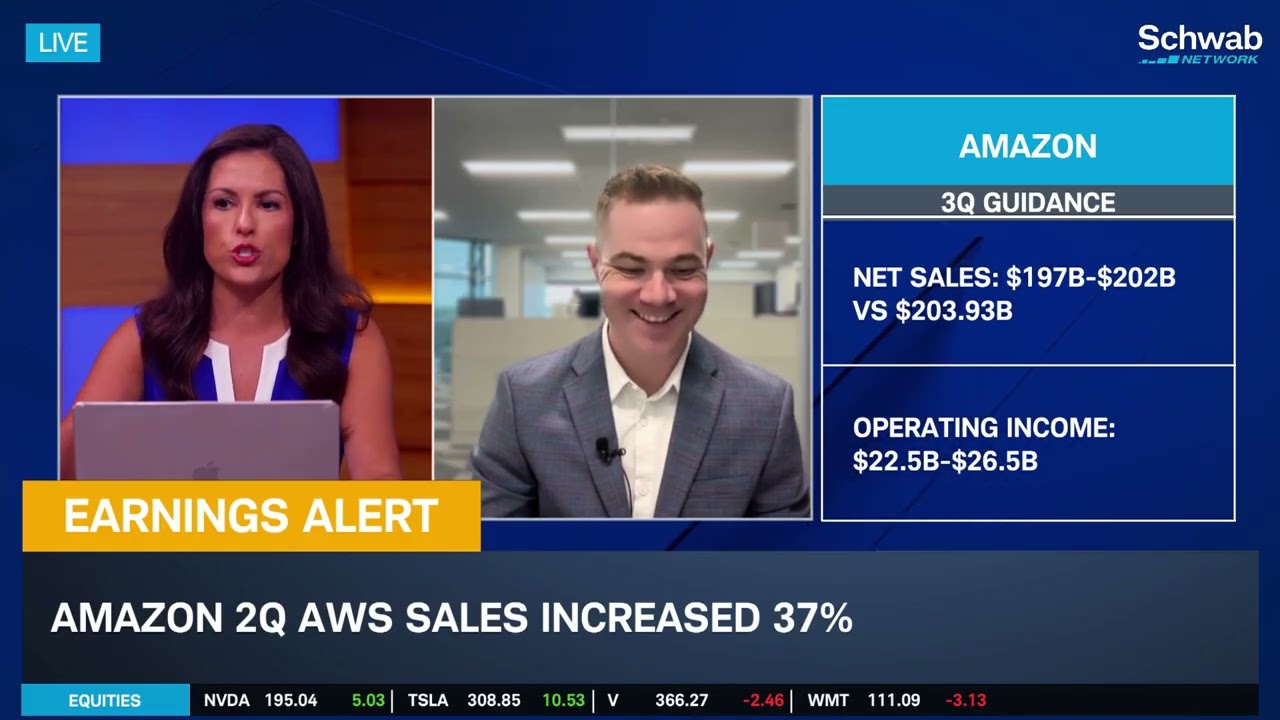
The latest earnings season reinforces both sides of the argument. Amazon reported 37% year-over-year growth at Amazon Web Services and raised its 2026 cash-capital-expenditure expectation to roughly $220 billion, according to management commentary reported after its July 30 results. Alphabet increased its 2026 capital-expenditure outlook to $195 billion to $205 billion as Google Cloud revenue rose 82%. Microsoft said Azure growth accelerated to 43% and disclosed $678 billion of commercial remaining performance obligations. Meta Platforms kept expanding infrastructure spending while its advertising business continued to grow.
Yet the same reports also showed why investors are becoming more selective. Amazon’s trailing-12-month free cash flow moved to a $7.6 billion outflow as purchases of property and equipment surged. Alphabet posted negative free cash flow for the quarter. Meta generated only $784 million of quarterly free cash flow, down sharply from a year earlier, while costs rose faster than revenue. Microsoft remained highly profitable, but it also described an unusually intense period of supply constraint and said near-term infrastructure investment would continue to climb.
The semiconductor stocks outlook therefore cannot be reduced to “AI demand is strong” or “the AI trade is broken.” Demand is strong, but the market is trying to determine the return on the next dollar of spending, not the return on the first. The most useful framework is to separate four issues: current demand, monetization, supply response and valuation. The first is clearly favorable. The other three are more complicated.
Key Takeaways
- AI infrastructure demand remains exceptionally strong: Amazon, Alphabet, Microsoft and Meta all reported rising cloud or advertising activity alongside large 2026 infrastructure budgets, and several said demand still exceeds available capacity.
- Higher capital expenditure is not automatically higher shareholder value: free cash flow, depreciation, operating margins and the useful life of AI hardware determine whether spending creates attractive returns.
- Chip-sector volatility reflects expectations as much as fundamentals: the Philadelphia Semiconductor Index entered July after an extraordinary advance, making the sector vulnerable to profit-taking, leverage unwinds and small changes in perceived growth.
- The AI supply chain is broader than graphics processors: custom accelerators, high-bandwidth memory, networking, foundry capacity, advanced packaging, power management and storage are all participating in the buildout.
- China is a longer-term competitive and policy risk: ChangXin Memory Technologies’ blockbuster Shanghai listing highlighted China’s ability to fund domestic capacity, even though a large valuation does not immediately erase technology, yield and ecosystem gaps.
- The next phase is enterprise deployment and inference: evidence from cloud backlogs, paid AI seats and production workloads suggests monetization is real, but investors still need proof that usage can scale faster than infrastructure costs.
- The strongest bullish case is not that volatility will disappear: it is that the earnings base continues to expand while the market periodically resets expectations.
The Central Answer: Demand Is Strong, but the Burden of Proof Is Rising
A recent Schwab Network discussion featuring Joseph DeYonker, founder and chief executive of PurePlay ETFs, and Stephen Sopko, semiconductor and deep-technology analyst at HyperFRAME Research, framed the pullback as a market confusing technical consolidation with fundamental deterioration. Both argued that chip production remains stretched, hyperscaler spending remains robust and AI adoption is moving from model training toward active deployment.
That interpretation is supported by much of the operating evidence. The largest cloud platforms are not announcing broad cancellations, empty data centers or collapsing AI utilization. They are reporting capacity constraints, higher cloud revenue, large backlogs and continuing purchases of processors, memory, networking equipment and data-center infrastructure. TSMC’s second-quarter 2026 revenue rose 33.7% from a year earlier in U.S. dollar terms. Nvidia’s fiscal first-quarter data-center revenue rose 92%. Broadcom’s AI semiconductor revenue grew 143%. Micron said data-center revenue exceeded $25 billion in its fiscal third quarter and that DRAM and NAND demand continued to exceed industry supply.
But “fundamentals are intact” is only the first half of the analysis. A semiconductor cycle can remain strong while individual stocks decline. Investors do not buy current demand in isolation; they buy a stream of expected future profits. If the market has already priced several years of rapid growth, a stock can fall because the growth rate is expected to slow, because margins may normalize, because a competitor could add supply, or simply because investors require a higher return for taking risk.
There is also no single AI capital-expenditure cycle. Training frontier models, serving inference requests, building enterprise applications, upgrading networking, expanding memory production and constructing power infrastructure have different economics and different beneficiaries. A dollar spent on a leading-edge accelerator does not create the same margin for every vendor. A dollar spent on a leased data center does not flow through a cloud company’s financial statements in the same way as a cash purchase of servers. A dollar of reported capital expenditure can support growth, replace depreciating equipment or merely prevent a platform from losing competitive ground.
This is why the market’s debate has advanced. In 2023 and 2024, investors mainly asked whether generative AI would create enough demand to justify a new hardware cycle. In 2026, the answer is visibly yes. The debate now concerns duration, returns and distribution: How durable is the spending? Who earns the highest margins? How quickly do customers generate revenue from the capacity? What happens when supply catches up? And what valuation is reasonable for a business whose earnings are rising at a pace that cannot continue indefinitely?
Fact Box
Four Questions Behind Semiconductor Volatility
- Demand: Are cloud providers, enterprises and sovereign customers still ordering AI infrastructure?
- Monetization: Are those customers producing recurring revenue, productivity gains or advertising improvements?
- Supply: How quickly can foundries, memory makers, packaging providers and Chinese competitors add capacity?
- Valuation: How much growth and margin durability are already reflected in market prices?
Original sources: Schwab Network discussion and the company filings listed in this article.
What the Schwab Network Panel Argued
DeYonker’s central claim was that recent volatility looked more like momentum-driven profit-taking and headline anxiety than a structural break in AI spending. He pointed to higher capital-expenditure plans at Amazon and Alphabet, argued that cloud providers still lacked enough capacity to satisfy demand, and described the transition from training to inference as evidence that customers are beginning to run production workloads rather than merely experiment.
Sopko made a related argument from an industry perspective. He said chip producers were manufacturing as much as they could, demand remained voracious and investors were imposing a “penalty for good behavior” on companies that had repeatedly raised expectations. In that framework, excellent execution creates a harder comparison: once a supplier has conditioned the market to expect upside surprises, meeting a high bar may no longer be enough.
Both points are credible, but they require qualification. First, DeYonker is not a disinterested observer of the Nvidia ecosystem. PurePlay ETFs launched the PurePlay Nvidia Ecosystem Picks & Shovels Index ETF in June 2026, designed to track companies across Nvidia’s value chain. That does not invalidate his analysis, but readers should understand the commercial context surrounding a bullish interpretation of the supply chain.
Second, production can be tight today while future supply risk rises. Semiconductor investment decisions have long lead times. New fabs, clean rooms, packaging facilities and memory capacity take years to build and qualify. The market often reacts well before physical supply reaches customers because equity prices discount expected conditions. A new Chinese memory producer does not need to displace the leading high-bandwidth-memory suppliers immediately to affect valuations; investors may respond to the possibility that added commodity DRAM supply eventually weakens pricing power.
Third, enterprise monetization is not uniform. Microsoft can point to more than 30 million paid Microsoft 365 Copilot seats, a rapidly growing GitHub Copilot business and a large commercial backlog. Alphabet can point to accelerating Google Cloud revenue and a backlog above $500 billion. Amazon can point to strong AWS growth and large AI and chip businesses. Meta can connect AI investment to advertising relevance and engagement. Those are meaningful indicators, but they do not prove that every enterprise customer has found a high-return application or that every AI software provider has a sustainable business model.
The panel’s strongest contribution is therefore its separation of short-term market action from current operating demand. Its weakest point is the tendency to treat macro and technical volatility as “noise.” Market prices can overreact, but they can also identify a genuine change in the distribution of future outcomes before management teams acknowledge it. The correct response is not to dismiss volatility. It is to identify which variables would convert a temporary consolidation into fundamental deterioration.
A Timeline of the 2026 Chip-Sector Shakeout
The summer weakness did not emerge from one disappointing earnings report. It developed through a sequence of positioning, macroeconomic and competitive shocks.
June 23: A Sharp Risk-Off Move
U.S. technology shares sold off as investors weighed interest-rate concerns and technology valuations. Reuters reported that the Philadelphia Semiconductor Index fell 7.9% in a single session, while the Nasdaq Composite declined 2.21%. A one-day move of that size is difficult to explain through a sudden change in chip orders. It is more consistent with a broad reduction in risk, amplified by concentrated positioning in high-beta securities.
Late June: Record Fund Outflows
Funds tracking U.S. semiconductor shares recorded roughly $11 billion of outflows in the week ended June 24, according to LSEG Lipper data cited by Reuters. The reported total was the largest weekly outflow of the century for the category. Flows do not establish intrinsic value, but they help explain why selling can become self-reinforcing. When thematic funds, leveraged products and momentum strategies reduce exposure simultaneously, the price decline can exceed any immediate change in earnings expectations.
July: Valuation and Duration Anxiety
By July 13, the Philadelphia Semiconductor Index had fallen more than 11% from its June record, though it remained up roughly 83% for the year, Reuters reported. That combination is crucial. A pullback can look severe over several weeks and still represent only a partial reversal of an extraordinary advance. Investors were not debating whether AI existed; they were debating how long an extreme rate of earnings growth could persist.
Mid-July: The Pullback Deepens
Reuters later reported that the index had dropped about 10% in a week and more than 20% from its June peak. The selloff spread internationally and was intensified by leveraged single-stock products in South Korea, where chipmakers carry unusually large index weights. This became a market-structure event as well as a fundamental debate.
July 27–28: CXMT Changes the China Narrative
ChangXin Memory Technologies, or CXMT, raised approximately 57.92 billion yuan, equivalent to about $8.6 billion, in Asia’s largest initial public offering of 2026. Its shares surged 466% in their Shanghai debut, giving the company a market value of roughly $539 billion at the opening price and briefly making it China’s most valuable listed company. The valuation was not evidence that CXMT had matched the scale, yields or profitability of established global leaders. It was evidence that domestic capital markets could provide an enormous funding platform for China’s semiconductor ambitions.
The following day, South Korea’s KOSPI suffered its worst session in roughly five months as Samsung Electronics and SK Hynix plunged. Reuters reported that Samsung fell 14.4%, its steepest one-day decline since 2008. Analysts cited by the news agency emphasized that the concern was less about CXMT’s present earnings than its ability to accelerate capacity expansion and technology development after the IPO.
July 29–30: Hyperscaler Earnings Reassert Demand
Microsoft, Meta, Amazon and Alphabet delivered earnings that broadly strengthened the case for continued AI infrastructure investment. Cloud growth accelerated, backlogs expanded and capital-expenditure plans rose or remained elevated. The reports did not eliminate valuation concerns, but they weakened the argument that a broad spending collapse was already underway.
August 3–4: Stabilization, Not Resolution
Chip shares stabilized as investors absorbed strong cloud results and new AI forecasts. The sector’s recovery did not settle the central debate. It demonstrated that positive operating evidence can attract buyers after a technical washout, while leaving duration, free-cash-flow and supply questions intact.
The Hyperscaler Spending Scorecard
The headline capital-expenditure totals are enormous, but direct comparisons require care. Companies differ in fiscal calendars, definitions and accounting treatment. Some include finance-lease principal payments, some discuss cash capital expenditure, and Microsoft’s 2026 calendar-year estimate was affected by a change in the useful-life assumption for certain assets. The table below is therefore a directional comparison, not a claim that each dollar is measured identically.
| Company | Latest operating signal | 2026 infrastructure indication | Main caution |
|---|---|---|---|
| Amazon | AWS revenue of $42.2 billion, up 37% year over year in Q2 2026 | Management raised expected cash capital expenditure to roughly $220 billion | Trailing-12-month free cash flow was a $7.6 billion outflow |
| Alphabet | Google Cloud revenue of $24.8 billion, up 82%, with backlog of $514 billion | Full-year capital-expenditure outlook increased to $195 billion–$205 billion | Quarterly free cash flow was negative and third-party capacity may pressure margins |
| Microsoft | Azure revenue growth of 43%; commercial remaining performance obligations of $678 billion | Calendar-2026 capital spending discussed at roughly $175 billion after an accounting-life adjustment | Investment is still rising, and near-term capacity remains unusually constrained |
| Meta | Revenue of $60.8 billion, up 28%, with ad revenue up 27% | Full-year capital expenditure expected at $130 billion–$145 billion | Operating margin fell and quarterly free cash flow declined to $784 million |
Sources: company earnings releases and earnings-call materials for the quarters ended June 30, 2026, except where each company’s fiscal calendar differs. Capital-expenditure definitions are not identical.
Amazon: Strong AWS Demand Meets a Free-Cash-Flow Test
Amazon’s second-quarter report offered some of the clearest evidence that AI infrastructure demand remains strong. Net sales increased 20% to $200.6 billion. AWS sales rose 37% to $42.2 billion, and AWS operating income increased to $16.6 billion from $10.2 billion a year earlier. Management described both its AI business and its chip business as exceeding a $25 billion annual revenue run rate.
The quality of the cloud result matters. AWS growth had slowed materially earlier in the AI cycle as customers optimized existing workloads. A return to 37% growth suggests that new capacity and AI demand are now overcoming the drag from optimization. AWS also generated more than 60% of Amazon’s consolidated operating income in the quarter, demonstrating why management is willing to commit vast sums to infrastructure.
Amazon’s reported net income requires a major adjustment in interpretation. Net income rose to $62.6 billion, but the quarter included $53.4 billion of pretax other income, primarily related to investments in Anthropic. That non-operating gain should not be treated as recurring earnings from retail, advertising or cloud computing. Operating income of $27.5 billion is a more useful measure of the underlying quarter, though even operating income does not capture the full cash cost of the infrastructure buildout.
The cash-flow statement presents the central risk. Trailing-12-month operating cash flow rose 33% to $161.4 billion, but free cash flow fell to a $7.6 billion outflow. Amazon attributed the decline primarily to a $66.1 billion year-over-year increase in purchases of property and equipment, net of sales and incentives. This does not mean the investments are unproductive. It means the return has to arrive later, through higher revenue, better utilization and durable margins.
Amazon’s decision to raise expected 2026 cash capital expenditure by roughly $20 billion to about $220 billion was partly linked to higher memory costs. That detail is important for semiconductor investors. Higher spending can reflect greater physical capacity, but it can also reflect inflation in the cost of the same capacity. If memory prices rise sharply, suppliers may benefit while the buyer’s economics become more demanding.
The bullish reading is straightforward: AWS is growing rapidly, demand exceeds supply and Amazon has enough operating cash flow to fund a strategic buildout. The skeptical reading is that the company is committing capital at a pace that has already pushed free cash flow negative, while the economic life and residual value of advanced AI hardware remain uncertain. Both can be true at once.
Alphabet: Cloud Acceleration Provides the Clearest Revenue Bridge
Alphabet’s second-quarter results strengthened the argument that AI is moving from experimentation into paid cloud workloads. Google Cloud revenue increased 82% to $24.8 billion, operating income reached $8.8 billion and the segment’s operating margin was approximately 35.6%. Cloud backlog increased by more than $50 billion sequentially to $514 billion.
A backlog is not the same as recognized revenue, and the timing of recognition can vary. It nevertheless provides evidence that customers have signed commitments extending beyond a single quarter. Alphabet also said its model application-programming interfaces were processing roughly 22 billion tokens per minute, up from 16 billion in the prior quarter. Token volumes are not a financial metric, but they indicate rising utilization across models and products.
Alphabet increased its 2026 capital-expenditure outlook to $195 billion–$205 billion from $180 billion–$190 billion. Second-quarter capital expenditure was $44.9 billion, with roughly 60% directed to servers and 40% to data centers and networking. That mix illustrates why AI spending reaches beyond accelerator designers. Networking silicon, optical components, memory, storage, power systems, cooling equipment and construction all compete for the same budget.
The company also acknowledged the cost of being supply constrained. Third-party capacity can bridge demand when owned infrastructure is unavailable, but rented or externally sourced capacity may carry lower margins. Alphabet’s negative quarterly free cash flow shows the near-term burden of expanding faster than internal cash generation, even as operating income remains strong.
Alphabet’s evidence of monetization is stronger than a generic claim that AI will eventually improve productivity. Cloud customers are paying, backlog is rising and the segment is profitable. The remaining question is whether cloud growth and operating leverage can stay ahead of depreciation, energy expense and the increasing cost of keeping models competitive.
Microsoft: Enterprise Adoption Is Becoming Measurable
Microsoft provides the most developed enterprise-monetization case among the large platforms. For the quarter ended June 30, revenue rose 18% to $90.0 billion, Microsoft Cloud revenue increased 27% to $59.3 billion and Azure revenue grew 43%. Commercial remaining performance obligations reached $678 billion, up 84% from a year earlier.
The composition of that backlog matters. Management said all sequential growth in remaining performance obligations came from customers outside the frontier-model laboratories, and that the total excluding OpenAI grew 25%. It also said nearly 90% of cloud revenue came from customers other than frontier-model companies. Those disclosures directly address the concern that AI infrastructure demand is concentrated only among a handful of labs purchasing from one another.
Microsoft reported more than 30 million paid Microsoft 365 Copilot seats, roughly 50 million GitHub Copilot users and more than 100,000 customers using its Foundry platform. Management said Foundry revenue more than doubled and GitHub Copilot revenue increased 60% sequentially. These figures do not reveal unit economics or renewal rates, but they show that enterprise AI products are moving beyond free trials.
The company spent $41 billion on capital expenditure in the quarter, including finance leases, with about two-thirds directed toward shorter-lived assets such as CPUs and GPUs. Cash purchases of property and equipment were $35.8 billion, and free cash flow was $19.6 billion. Unlike Amazon, Microsoft still generated substantial quarterly free cash flow after capital spending, although the level was far below operating cash flow of $55.4 billion.
Microsoft’s roughly $175 billion calendar-2026 capital-spending estimate needs context. Management explained that a change in the accounting useful life of certain assets affected the way some lease-related spending was discussed; it did not represent a reduction in the underlying investment program. The company expected capital expenditure to grow again in fiscal 2027 and indicated that first-quarter fiscal 2027 spending would exceed $50 billion.
The bullish interpretation is that enterprise adoption is already visible across cloud infrastructure, software seats and developer tools. The skeptical interpretation is that demand is being served during an “extreme” period of supply constraint, when high utilization can temporarily flatter pricing and returns. Microsoft also noted that shorter-lived CPU and GPU purchases can be slowed if conditions change, meaning today’s spending commitment is large but not irrevocable.
Meta: AI Can Improve the Core Business Without Producing Immediate Free Cash Flow
Meta’s second quarter demonstrates why investors must distinguish monetization from cash conversion. Revenue increased 28% to $60.8 billion, including $59.4 billion of advertising revenue, up 27%. Ad impressions rose 14% and the average price per ad increased 12%, evidence that demand, engagement and auction economics remained healthy.
At the same time, costs and expenses rose 55% to $42.0 billion. The quarter included legal charges and severance, so the increase was not purely infrastructure-related. Even so, operating income declined 8% to $18.8 billion, operating margin fell to 31% from 43%, and net income declined 14% to $15.8 billion. Capital expenditure, including principal payments on finance leases, reached $31.1 billion. Free cash flow fell to $784 million from $8.5 billion a year earlier.
Meta expects 2026 capital expenditure of $130 billion–$145 billion, partly to support Meta Superintelligence Labs and the core business. The company’s AI return is not limited to selling cloud capacity. Better recommendation systems can raise time spent, ad relevance and conversion. More efficient advertising tools can increase advertiser demand. Internal coding and content-review systems can reduce costs or improve product velocity.
Those gains are real only if they exceed the rising cost base. Meta’s quarter suggests that AI can support revenue growth while infrastructure, compensation and other expenses temporarily compress profit. This is not evidence that spending has failed. It is evidence that the path from usage to shareholder return can be uneven and company-specific.
What the Chip Suppliers Are Actually Reporting
The hyperscalers’ budgets establish demand from buyers. Supplier results show where that demand is landing. The evidence is unusually broad: accelerators, networking, foundry services and memory have all reported strong growth. That breadth reduces the probability that the cycle is supported by one product or one accounting artifact.
Nvidia: Data-Center Growth Remains the Center of Gravity
Nvidia reported fiscal first-quarter 2027 revenue of $81.6 billion for the quarter ended April 26, up 85% from a year earlier and 20% sequentially. Data-center revenue reached $75.2 billion, up 92% year over year. Under the company’s former submarket presentation, data-center compute revenue was $60.4 billion, up 77%, while data-center networking revenue was $14.8 billion, up 199%.
The networking growth is strategically important. Modern AI systems are clusters, not isolated processors. Their performance depends on moving data between accelerators, memory and storage with minimal latency. As model sizes and inference volumes rise, the network can become the constraint. Nvidia’s ability to sell networking alongside compute increases its share of the system budget and strengthens customer dependence on its architecture.
Nvidia’s gross margin was 74.9%, an exceptional level for a hardware company. Such profitability is evidence of product scarcity, ecosystem strength and pricing power. It is also a target. Customers have a strong incentive to develop custom accelerators, negotiate alternatives and improve software efficiency. Competitors have a strong incentive to enter. The market’s task is not to decide whether Nvidia is currently dominant; it is to estimate how much of today’s margin structure persists as supply expands and customer silicon matures.
The company’s next scheduled earnings report on August 26, 2026, will be a major test for the sector. Investors will focus on shipment growth, networking demand, gross-margin direction, product transitions and any change in exposure to China. Because Nvidia sits at the center of the AI supply chain, a change in its delivery schedule can affect expectations for foundries, memory suppliers, packaging providers, equipment makers and cloud platforms.
Broadcom: Custom Accelerators and Networking Broaden the Trade
Broadcom’s fiscal second-quarter results demonstrate that the AI buildout is not confined to merchant GPUs. Revenue for the quarter ended May 3 rose 48% to $22.2 billion. The company said AI semiconductor revenue increased 143% to $10.8 billion, driven by custom AI accelerators and networking. It forecast fiscal third-quarter AI semiconductor revenue of approximately $16.0 billion, more than 200% above the prior-year period.
Custom accelerators matter because the largest cloud companies can optimize silicon for specific workloads. A custom chip may sacrifice general-purpose flexibility in exchange for lower cost, higher efficiency or tighter integration with a platform’s software. This does not necessarily eliminate demand for Nvidia. Frontier training, rapidly changing workloads and broad developer support can continue to favor general-purpose accelerated computing. But custom silicon can capture portions of inference and internal workloads, limiting how much of the total market flows to one supplier.
Broadcom also benefits from the network. Large clusters require switching, routing, interconnects and optical connectivity. A diversified AI budget therefore creates multiple revenue pools: processors, high-bandwidth memory, network interfaces, switches, optical components, storage and power systems. Investors who treat “AI chips” as a synonym for graphics processors miss much of the economic chain.
Broadcom generated $10.3 billion of free cash flow in the quarter, equal to roughly 46% of revenue. That cash conversion distinguishes it from some infrastructure buyers that are currently absorbing the cost of the buildout. It also illustrates the asymmetry of the cycle: suppliers can recognize revenue and cash before their customers have fully monetized the installed capacity.
TSMC: Foundry Results Confirm Leading-Edge Utilization
Taiwan Semiconductor Manufacturing Company reported second-quarter 2026 revenue of $40.2 billion, up 33.7% from a year earlier and 12% sequentially. Gross margin was 67.7%, operating margin was 60.3% and net profit margin was 55.6%. For the third quarter, management guided to revenue of $44.6 billion–$45.8 billion.
TSMC is a valuable industry cross-check because it manufactures chips for many different designers. Strong results are not proof that every customer or end market is healthy, but they are consistent with high utilization at advanced nodes. The company also sits at the intersection of the industry’s most important constraints: leading-edge process technology, advanced packaging, geographic concentration and the capital intensity of new fabs.
TSMC’s margins show that scarcity is not limited to the chip designers with the most visible brands. The foundry can capture attractive economics when customers compete for capacity. Yet it carries risks that are different from those of a fabless designer. Overseas fabs may dilute margins, foreign-exchange movements affect reported results, capital requirements are enormous and Taiwan’s geopolitical exposure remains a material concern for the global technology system.
The company’s third-quarter guidance indicated continuing growth rather than a near-term demand collapse. The market can still discount a future slowdown, but the latest foundry data do not support the claim that customers have broadly stopped ordering advanced chips.
Micron: Memory Has Become a Strategic Constraint
Micron’s fiscal third quarter ended May 28 produced revenue of $41.46 billion, up from $23.86 billion in the previous quarter and $9.30 billion a year earlier. The company reported $25.39 billion of operating cash flow and $18.3 billion of adjusted free cash flow after $7.1 billion of net capital expenditure.
Micron said data-center revenue exceeded $25 billion in the quarter, equivalent to an annualized run rate above $100 billion. Data-center solid-state-drive revenue exceeded $5 billion and more than doubled sequentially. Management said DRAM and NAND demand continued to exceed industry supply.
These figures underscore a major change in the AI economics. Memory was once treated as a highly cyclical commodity input whose suppliers competed largely on cost and manufacturing scale. AI systems have elevated memory bandwidth, capacity and proximity to compute. High-bandwidth memory is integrated closely with accelerators, while larger context windows, retrieval systems and inference workloads increase demand for DRAM, NAND and enterprise storage.
The opportunity is accompanied by classic memory-cycle risk. High prices encourage capital expenditure. Customers redesign systems to use memory more efficiently. Competitors expand capacity. Product mixes shift between high-bandwidth and conventional memory. When supply catches up, pricing can fall faster than unit demand. The current shortage supports earnings, but the market is already trying to anticipate the point at which scarcity peaks.
Fact Box
Supplier Evidence From the Latest Reported Quarters
- Nvidia: $75.2 billion of data-center revenue, up 92% year over year.
- Broadcom: $10.8 billion of AI semiconductor revenue, up 143%.
- TSMC: $40.2 billion of quarterly revenue, up 33.7% in U.S. dollar terms.
- Micron: more than $25 billion of data-center revenue and continued memory demand above supply.
Original sources: Nvidia fiscal Q1 2027 results, Broadcom fiscal Q2 2026 results, TSMC Q2 2026 results and Micron fiscal Q3 2026 results.
The AI Semiconductor Stack Is Larger Than Any One Company
A modern AI data center is an integrated industrial system. The processor receives most of the attention, but its useful output depends on dozens of complementary technologies. A shortage in one layer can limit the entire cluster, which is why the spending cycle has broadened so quickly.
Accelerators and Custom Compute
Accelerators perform the matrix operations that dominate machine-learning workloads. General-purpose platforms offer flexibility and mature software ecosystems. Custom chips can be optimized for a narrower set of operations, improving power efficiency or reducing cost at scale. The likely market structure is coexistence rather than a simple winner-take-all outcome: merchant accelerators for flexibility and frontier work, custom silicon for stable high-volume workloads, and CPUs for orchestration and tasks that do not require acceleration.
High-Bandwidth and Conventional Memory
Compute capacity is wasted if processors wait for data. High-bandwidth memory places stacks of DRAM close to the accelerator and connects them through advanced packaging. Conventional DRAM supports servers and hosts, while NAND stores model weights, training data, embeddings and checkpoints. As inference becomes more common, the memory hierarchy can become as economically important as raw processor throughput.
Networking and Optical Connectivity
Large models train across thousands of accelerators. The system must synchronize work and move parameters at high speed. Ethernet, proprietary interconnects, switches, network-interface cards and optical components determine whether the cluster behaves like one machine or a collection of underutilized devices. Networking growth at Nvidia and Broadcom is therefore not incidental; it is part of the core scaling problem.
Foundry and Advanced Packaging
Leading-edge chips require advanced process nodes, but manufacturing does not end when the wafer is fabricated. AI processors combine compute dies, memory stacks and interconnects in complex packages. Packaging capacity, substrates, testing and thermal design can all become bottlenecks. This creates opportunities for foundries and outsourced assembly-and-test providers while also extending lead times.
Power, Cooling and Analog Semiconductors
AI data centers consume extraordinary amounts of electricity. Power-management integrated circuits, voltage regulators, silicon-carbide devices, backup systems and cooling controls are necessary to convert grid power into stable energy at the rack. Analog and foundational chips may be less glamorous than accelerators, but a failure in power delivery can make the most advanced processor irrelevant.
Storage and Data Movement
Training and retrieval require large datasets. Inference systems increasingly use retrieval-augmented generation, vector databases and caches. Enterprise storage, high-speed solid-state drives and controllers become part of the AI cost structure. Micron’s rapid data-center SSD growth is one sign of this expansion.
A Semiconductor Industry Association study produced with Deloitte estimated that an AI server rack contains more than 4,500 packaged semiconductors and that chips account for roughly 95% of the rack’s value. The industry group projected more than $4 trillion of global AI data-center infrastructure investment through 2028, including as much as $2.8 trillion for semiconductors. It also projected that annual semiconductor revenue from AI data centers could exceed $1.2 trillion by 2028.
Those are industry-sponsored forecasts, not guaranteed outcomes. They depend on adoption, power availability, equipment pricing and the definition of an AI data center. Their value lies in showing the breadth of the system, not in providing a precise future revenue figure.
From Training to Inference: Why the Deployment Phase Matters
The first phase of generative AI spending centered on training frontier models. Training is capital intensive, concentrated among a small number of organizations and episodic. A model may require a massive cluster for weeks or months, followed by a period of evaluation and refinement. Inference is different. It occurs every time a model responds to a user, analyzes a document, generates code, ranks an advertisement or controls an automated process.
If AI becomes embedded in daily work, inference can create recurring compute demand. A coding assistant used by millions of developers generates requests throughout the day. A customer-service agent may handle every interaction. A recommendation system can evaluate billions of pieces of content. The revenue opportunity becomes tied to usage rather than occasional training runs.
This transition supports the panel’s argument that the market is moving into deployment. Microsoft’s paid Copilot seats, GitHub usage and Foundry customers provide direct enterprise indicators. Alphabet’s token-processing growth and cloud backlog show increasing model activity. Amazon’s AWS acceleration suggests customers are deploying more workloads. Meta’s ad results imply that AI is influencing a high-volume commercial system rather than remaining an experimental product.
Inference can also weaken the hardware thesis if efficiency improves faster than demand. Models become smaller, quantization reduces precision requirements, caching avoids repeated calculations and specialized chips lower the cost per token. A tenfold decline in unit cost does not necessarily reduce total semiconductor demand if usage grows more than tenfold. It does mean that investors must estimate both sides of the equation.
The key economic variable is not token volume alone. It is revenue or cost savings per dollar of compute. A cloud provider can process more tokens while earning lower margins if price competition is intense. An enterprise can deploy an AI assistant widely while failing to improve productivity enough to justify the subscription. A model company can generate rapid usage growth while subsidizing customers. The deployment phase validates demand, but it also exposes business-model quality.
Enterprise Adoption: The Evidence Is Real but Uneven
Enterprise demand tends to move more slowly than consumer excitement. Large companies must integrate AI with existing software, secure sensitive data, comply with regulation, establish governance, retrain employees and measure return on investment. These frictions are often presented as obstacles. They can also make adoption durable once systems are embedded in workflows.
Software development is one of the earliest measurable use cases. Coding assistants can suggest functions, explain legacy code, generate tests and help developers navigate unfamiliar systems. The benefit is not simply fewer labor hours. Faster iteration can shorten product cycles and increase the number of experiments a company can run. Microsoft’s reported growth at GitHub Copilot supports this use case, although independent productivity studies continue to show variation across tasks and skill levels.
Customer support is another large market. AI systems can summarize conversations, retrieve policies, draft responses and automate routine requests. The economic benefit depends on accuracy and escalation rates. A low-cost automated answer that creates a costly customer problem is not productive. The winning systems will combine automation with monitoring and clear handoffs to human employees.
Advertising provides perhaps the clearest immediate monetization because small improvements in prediction can affect enormous transaction volumes. Meta and Alphabet can use AI to improve content ranking, ad targeting, creative tools and auction performance. Their existing businesses provide a direct mechanism for converting better models into revenue. That advantage may explain why these companies can justify large internal infrastructure budgets even before selling every AI feature as a separate product.
Regulated industries present a slower path. Banks, insurers, healthcare providers and government agencies require auditability, security and reliable outputs. Adoption can still become substantial, but the infrastructure mix may favor private clouds, sovereign systems and specialized deployment. That broadens the market beyond the largest public clouds while increasing demand for networking, security, storage and power efficiency.
The evidence therefore supports a migration from frontier laboratories toward enterprises. It does not support the stronger claim that all enterprise spending has reached mature, high-return production. The market will continue to reward disclosures that connect AI usage to revenue, renewal, margins or measurable cost savings.
Why Good Earnings Can Still Produce Falling Stocks
A share price is not a report card on the latest quarter. It is a discounted estimate of future cash flows. Several mechanisms allow strong earnings and weak stock performance to coexist.
Expectations Rise Faster Than Results
When a company repeatedly exceeds estimates, analysts and investors raise the bar. The next quarter may deliver record revenue and still disappoint if the market expected an even larger beat. This is the “penalty for good behavior” described by Sopko: success becomes the new baseline.
Growth Rates Eventually Normalize
No large business can compound at triple-digit rates indefinitely. Investors may sell when they believe the rate of deceleration is approaching, even while absolute revenue continues to rise. A supplier growing from $10 billion to $20 billion adds $10 billion; growing from $20 billion to $30 billion adds the same amount but produces a lower percentage rate.
Valuation Compresses
Higher interest rates or a rise in required returns reduces the present value of profits expected far in the future. A company can increase earnings while its valuation multiple falls. Semiconductor stocks are especially sensitive because much of their value may depend on several future years of above-normal growth.
Positioning Unwinds
Momentum funds, options dealers, leveraged ETFs and risk-parity strategies can amplify moves. When volatility rises, investors may reduce exposure mechanically. Selling becomes a function of risk limits rather than a new view of end demand.
Customers Gain Bargaining Power
Rapid spending attracts alternatives. Cloud companies develop custom silicon, negotiate longer contracts and diversify suppliers. A growing market can still become less profitable for an incumbent if customers capture more of the value.
Supply Arrives Before Demand Disappears
Semiconductor stocks often turn before the operating cycle. Investors sell when they expect supply growth to outpace demand in the future, not after inventories have already accumulated. CXMT’s IPO mattered because it increased confidence that Chinese memory capacity could grow, even though current memory conditions remained tight.
Cash Flow Trails Accounting Earnings
Revenue from infrastructure can rise while the buyer’s free cash flow falls because payment for servers, buildings and equipment occurs before the full economic return. Investors may become less willing to capitalize distant benefits when current cash conversion deteriorates.
China and CXMT: Near-Term Headline or Structural Threat?
China’s semiconductor strategy is both a technology program and a capital-allocation program. Export restrictions have limited access to certain advanced equipment and processors, while state-backed funds, local governments, domestic banks and public markets have supported local alternatives. Constraints can slow progress, but they also increase the incentive to innovate, substitute and build redundant capacity.
CXMT was founded in 2016 and has become China’s leading producer of DRAM. Reuters estimated its global DRAM share at 7.7% in 2025, making it the fourth-largest producer. Its $8.6 billion IPO gave it a powerful source of capital and a highly visible domestic valuation. The first-day surge reflected scarcity and policy enthusiasm as much as current earnings.
The immediate threat should not be overstated. Advanced memory requires manufacturing yield, process control, packaging integration, customer qualification and long-term reliability. High-bandwidth memory is not interchangeable with commodity DRAM. Leading suppliers have deep relationships with accelerator designers and cloud customers. A newly public company cannot purchase those capabilities overnight.
The longer-term risk is more credible. Capital can fund additional clean-room space, research, talent, equipment and ecosystem development. Even if CXMT first expands in less advanced products, added supply can affect global pricing. Revenue from commodity memory can finance investment in higher-value products. Domestic customers can accept early-generation products, helping the company improve yields and learn at scale.
CXMT also changes bargaining dynamics. Global buyers may use the possibility of Chinese supply to negotiate with incumbent vendors. Chinese device makers may prioritize domestic content for policy or supply-security reasons. Export controls can fragment the market, producing one ecosystem for China and another for U.S.-aligned markets.
The market’s sharp reaction therefore contained both overstatement and insight. A 466% first-day stock increase did not transform CXMT’s technology in one session. It did reveal that China can mobilize capital on a scale capable of changing the industry over time.
Export Controls Can Slow China and Accelerate Its Incentives
U.S. semiconductor policy aims to restrict China’s access to the most advanced computing capability while preserving legitimate trade in less sensitive products. The implementation is difficult because the technology stack is global, products evolve rapidly and restrictions can create commercial incentives for substitutes.
The Commerce Department’s Bureau of Industry and Security rescinded the prior administration’s Artificial Intelligence Diffusion Rule in May 2025 and announced a different approach focused on strengthening chip-related export controls. Entity List decisions, licensing requirements and country-specific rules remain subject to change. Reuters reported in June 2026 that U.S. officials had held off adding more than 100 Chinese entities, including CXMT and DeepSeek, to a blacklist despite interagency consideration.
For U.S. and allied suppliers, controls can reduce access to a large market and complicate product planning. Nvidia has repeatedly adjusted offerings for China, while equipment makers must assess whether tools and services require licenses. For Chinese firms, restrictions can delay access to frontier technology but create a protected domestic market for alternatives.
The policy creates a difficult trade-off. Broad restrictions may slow China’s immediate progress but encourage self-sufficiency and reduce the long-term market share of U.S. vendors. Narrow restrictions may preserve commercial ties but leave pathways for advanced capability. Investors should treat policy headlines as material because a licensing change can affect revenue, product design, inventory and competitive strategy quickly.
Sopko’s observation that constraint drives innovation is therefore directionally sound. It should not be interpreted to mean constraints are ineffective. They can impose real cost and delay. Their strategic side effect is to increase the value of domestic substitution, which can attract capital far beyond what near-term economics alone would justify.
The Strongest Case That the Pullback Is a Consolidation
The constructive interpretation begins with the income statements. Demand has not merely been promised; it has appeared in reported revenue across cloud platforms, accelerators, custom silicon, networking, foundry services and memory. A broad set of suppliers is growing simultaneously, which is difficult to reconcile with the idea that the infrastructure cycle has already broken.
Capacity constraints provide a second piece of evidence. Amazon, Alphabet and Microsoft have all described situations in which available infrastructure limits how quickly they can serve demand. A company can exaggerate opportunity in its language, but constraints that appear across multiple independent platforms and suppliers are harder to dismiss. TSMC’s margins, Micron’s pricing environment and Nvidia’s revenue growth are consistent with scarcity.
Third, the buyer base is broadening. Microsoft’s disclosures show that most cloud revenue and sequential backlog growth come from customers outside the frontier laboratories. Alphabet’s cloud backlog is expanding. AI functionality is appearing in developer tools, advertising systems, productivity software, customer service and data analytics. That progression is what an infrastructure investor would expect if a technology were moving from research into deployment.
Fourth, the largest buyers are financially capable. Amazon, Alphabet, Microsoft and Meta generate enormous operating cash flow, possess substantial liquidity and operate profitable incumbent businesses. The telecom-equipment boom of the late 1990s depended heavily on indebted carriers and speculative entrants. Today’s leading AI buyers have stronger balance sheets and existing customer relationships. They can sustain investment longer than a fragile startup ecosystem could.
Fifth, the spending is producing strategic benefits even before every product is separately monetized. Better ad ranking, faster software development, improved search, lower customer-support costs and stronger cloud differentiation can justify infrastructure internally. The return may appear as higher revenue, lower cost or defensive preservation of market share.
Finally, the selloff displayed classic technical features. The sector entered summer after enormous gains. Fund outflows were unusually large. Leveraged products contributed to international volatility. A 7.9% one-day fall in a broad semiconductor index is unlikely to represent a precisely measured revision to long-term cash flows. It looks more like a crowded position being repriced rapidly.
Under this interpretation, volatility is not evidence of a broken cycle. It is the mechanism by which an overheated market reduces leverage, resets valuation multiples and distinguishes companies with visible cash returns from those valued mainly on theme exposure.
The Strongest Skeptical Case
The skeptical view does not require an immediate collapse in chip demand. It requires only that current expectations are too high or that the eventual returns on infrastructure are lower than the market assumes.
Capital Intensity Is Rising Faster Than Free Cash Flow
Amazon’s free cash flow moved negative on a trailing-12-month basis. Alphabet’s quarterly free cash flow was negative. Meta’s quarterly free cash flow fell to less than $1 billion. These companies can fund the spending, but funding capacity is not the same as economic attractiveness. If infrastructure must be refreshed quickly, depreciation and replacement spending can absorb a large portion of future operating cash flow.
Hardware Becomes Obsolete Quickly
AI accelerators improve rapidly. A cluster purchased today may remain useful for years, but its relative efficiency can fall as newer systems deliver more output per watt and per dollar. The accounting useful life of a server is an estimate, not a guarantee of economic competitiveness. If customers demand the newest hardware, older equipment may be pushed into lower-value workloads earlier than planned.
Model Efficiency Can Reduce Unit Demand
Smaller models, sparsity, quantization, distillation and better software can reduce compute required for a given task. Efficiency often expands usage, but it can also pressure pricing. The relationship between lower cost and higher volume is uncertain. Semiconductor forecasts that extrapolate current chip intensity without allowing for optimization risk overstating demand.
Customer Concentration Is Extreme
A small group of cloud and technology companies accounts for a large share of advanced AI infrastructure spending. Their balance sheets are strong, but their purchasing decisions are correlated. If several conclude that capacity has moved ahead of demand, suppliers could face a sudden order adjustment. Concentration gives buyers negotiating leverage and increases the impact of any budget revision.
Custom Silicon Can Redistribute Profit
Hyperscalers are not passive customers. They design accelerators, networking components and systems around their own software. Custom silicon may not replace leading merchant processors across all workloads, but it can capture the most predictable high-volume inference jobs. The total market can grow while the profit pool shifts away from today’s dominant supplier.
Memory Cycles Usually Invite Supply
Micron’s extraordinary margins and cash flow reflect a severe imbalance between supply and demand. Such conditions attract capacity. New fabs take time, but public markets discount future output. CXMT’s capital raise, expansions by incumbents and technological improvements can eventually bring supply closer to demand. When memory prices turn, earnings can normalize quickly.
Power and Construction Are Real Constraints
Servers cannot be deployed without electricity, substations, cooling, permitting and skilled construction. Delays can strand purchased equipment or force cloud providers to use expensive third-party capacity. Power scarcity can shift value toward utilities and infrastructure providers while reducing returns for the owner of the compute.
AI Revenue May Be Partly Circular
The ecosystem includes investments, capacity commitments and commercial relationships between cloud providers and model companies. A cloud platform may invest in an AI laboratory that commits to use its infrastructure. These arrangements can be strategically rational, but they complicate the assessment of independent end-customer demand. Investors should distinguish revenue generated by broad enterprise use from revenue tied to financed counterparties.
Valuation Can Be Wrong Even When the Technology Is Right
The internet transformed the economy, but many internet-era stocks were still poor investments at extreme prices. A correct technology thesis does not establish a correct valuation. Semiconductor earnings can grow while shareholder returns disappoint if the entry multiple assumed even faster growth.
A Better Historical Comparison Than “This Is Another Dot-Com Bubble”
The late-1990s technology and telecom boom offers useful warnings, but the comparison is often used carelessly. The present AI cycle resembles that period in capital intensity, narrative enthusiasm and investor willingness to discount distant demand. It differs in the financial strength of the largest buyers and the immediate profitability of leading suppliers.
During the telecom boom, carriers borrowed heavily to construct fiber networks based on forecasts of explosive internet traffic. Equipment suppliers recognized rapid revenue as networks were built. When financing tightened and capacity exceeded near-term demand, orders collapsed. The physical infrastructure remained valuable, but many companies and shareholders did not survive the financial adjustment.
Today’s hyperscalers are not speculative carriers. Microsoft, Alphabet, Amazon and Meta own mature, cash-generative businesses. They can integrate AI into existing cloud, advertising and software products. Leading chip suppliers generate substantial profit and cash rather than relying on distant projections. Those differences reduce the probability of a simple replay.
The similarity is that capital spending can move ahead of monetization. A useful technology does not guarantee that every capacity owner earns an attractive return. Fiber built during the telecom boom later supported enormous economic activity, but the timing and financing destroyed value for many original investors. AI infrastructure could follow a milder version of the same pattern: enduring social value, falling unit costs and uneven returns across owners.
Another historical comparison is the memory supercycle. Memory suppliers periodically enjoy strong pricing when demand accelerates and capacity is constrained. High margins then finance new investment, customers optimize usage and supply catches up. AI may make memory demand structurally larger, but it does not abolish the economics of commodity capacity.
The cloud-computing buildout provides a more constructive precedent. Early capital expenditure looked excessive relative to nascent revenue, but utilization rose and platforms developed recurring, high-margin businesses. The winners combined infrastructure scale with software ecosystems and customer distribution. The lesson is that capital intensity can create durable advantage when demand compounds and switching costs rise.
The most reasonable historical conclusion is not “bubble” or “no bubble.” It is that transformative infrastructure cycles produce both genuine economic progress and periods of overinvestment. The task is to identify which companies own differentiated technology, which have low-cost capital, which can maintain utilization and which are selling undifferentiated capacity at the peak of a cycle.
Valuation Matters More After an Extraordinary Run
Valuation is often treated as a separate topic from fundamentals, but it is the bridge between a good company and a good investment outcome. A stock represents a claim on future cash flows. The higher the price, the more growth, margin and duration are required to justify it.
Semiconductor valuation is difficult because earnings are cyclical and product transitions are rapid. A low price-to-earnings ratio at the top of a cycle can be misleading if earnings are temporarily inflated by scarcity. A high ratio can be reasonable if a company is gaining share in a durable market with strong returns on capital. Investors need normalized assumptions rather than a single reported multiple.
Three valuation questions are especially important in 2026.
- What is the sustainable growth rate? Revenue growth above 50% can persist for a period, but a trillion-dollar market cannot double indefinitely. Forecasts should decline toward rates consistent with the size of the addressable market.
- What is the sustainable margin? Scarcity supports price and gross margin. Competition, customer negotiation and supply expansion can reduce both. A model that assumes today’s peak margin forever is fragile.
- How much reinvestment is required? Free cash flow after capital expenditure matters more than operating profit alone. A business that must spend most of its cash simply to maintain technological relevance may deserve a lower multiple than one that converts revenue into distributable cash.
Valuation also explains why the same earnings report can produce different stock reactions. A company with modest expectations can rise on a solid quarter. A market favorite priced for perfection can fall after an exceptional result because guidance was only slightly above consensus. The stock reaction is evidence about prior expectations, not a definitive judgment on the business.
Where the Economics Are Strongest Across the Supply Chain
The AI buildout creates revenue opportunities across the stack, but the quality of those opportunities differs.
Proprietary Platforms
A supplier with differentiated hardware, software and developer tools can earn high margins and create switching costs. Nvidia is the clearest example. The risk is that exceptional margins accelerate customer and competitor efforts to find substitutes.
Custom-Silicon Enablers
Companies that help hyperscalers design specialized processors can participate even as customers reduce dependence on merchant chips. Broadcom’s results show the appeal of this position. The risk is customer concentration and the bargaining power of a few enormous buyers.
Foundries
Leading foundries benefit from demand across multiple designers. Their process technology and manufacturing scale are difficult to replicate. The risks are capital intensity, geography, customer concentration at advanced nodes and margin dilution from overseas expansion.
Memory Suppliers
High-bandwidth memory and data-center storage are strategic bottlenecks. Current scarcity produces strong pricing and cash flow. The risk is that memory remains more cyclical and substitutable than proprietary compute platforms.
Networking and Optics
Network bandwidth rises with cluster size and model complexity. This category can benefit from both merchant and custom accelerators. The risks are technology transitions, customer concentration and pricing pressure as standards evolve.
Power and Cooling
Electricity availability may be the binding constraint on data-center growth. Power-management chips, transformers, cooling systems and grid equipment can enjoy long order books. Their growth may be slower than that of accelerators, but demand can be less dependent on one model architecture.
Cloud Platforms
Cloud providers can earn recurring revenue by renting infrastructure and selling higher-level services. Their advantage is distribution and integration. Their risk is that competition reduces prices while capital spending and depreciation remain high.
The strongest economic position usually combines scarcity, intellectual property, switching costs, pricing power and manageable reinvestment. Revenue growth alone is insufficient.
The Indicators That Will Decide the Semiconductor Stocks Outlook
Investors do not need to predict every model release. They need a disciplined set of indicators that reveal whether the cycle is broadening, peaking or deteriorating.
Hyperscaler Capital-Expenditure Revisions
Upward revisions support near-term supplier demand. Flat guidance after repeated increases may still represent enormous spending, but it can signal that the acceleration phase is ending. Reductions would be more serious if several companies acted simultaneously.
Cloud Revenue and Backlog
Capital spending is easier to justify when cloud revenue accelerates and contracted backlog expands. Slowing cloud growth alongside rising capex would indicate weaker utilization or pricing.
Free Cash Flow and Depreciation
Operating cash flow must eventually exceed infrastructure spending by a comfortable margin. Rising depreciation can pressure reported profit after the cash outlay occurs. Investors should track the ratio of capital expenditure to revenue, free-cash-flow margins and changes in asset useful lives.
AI Product Revenue and Renewal
Paid seats, active customers and token volumes are useful. Renewal rates, net revenue retention and gross margins are better. Companies that disclose a clear link between usage and revenue will reduce uncertainty.
GPU, HBM and Packaging Lead Times
Falling lead times can mean supply is improving, demand is weakening or both. The interpretation depends on pricing and utilization. Stable prices with shorter lead times may be healthy; falling prices and inventory growth would be more concerning.
Memory Pricing and Bit Supply
Memory is a key swing factor. Watch contract prices, supplier capital expenditure, clean-room additions, high-bandwidth-memory mix and customer inventory. Strong bit demand can coexist with lower revenue if prices fall sharply.
Custom-Silicon Adoption
Announcements are less informative than deployed volume. The key is whether custom processors capture meaningful production workloads, improve cost per token and reduce purchases from merchant suppliers.
Power Availability
Interconnection queues, grid contracts, data-center completion dates and energy prices can determine when purchased equipment becomes productive. Delays can shift revenue between quarters and raise the cost of capital.
China Policy and Domestic Capacity
Entity List changes, licensing decisions, equipment restrictions and Chinese capital raises can alter addressable markets and supply expectations. Investors should separate immediate revenue effects from long-term industrial-policy consequences.
Customer Concentration
Growth is more durable when enterprise and sovereign demand expands beyond a few frontier laboratories. Backlog composition and revenue from customers outside related-party or financed ecosystems are valuable disclosures.
Fact Box
What Would Signal a Genuine Fundamental Break?
- Coordinated capital-expenditure cuts by several hyperscalers.
- Slowing cloud revenue combined with rising unused capacity.
- Material inventory growth and falling prices across accelerators, memory and networking.
- Rapid deterioration in free cash flow without a credible utilization ramp.
- Customer cancellations, shorter contracts or falling backlog.
- A sustained decline in enterprise AI renewal or production usage.
Assessment: The latest reported data do not show this combination, but several cash-flow and supply indicators deserve close attention.
Company-by-Company Questions for the Next Earnings Cycle
Nvidia
The central questions are whether data-center growth remains broad, whether networking keeps outpacing compute, how gross margin develops through product transitions and how China restrictions affect the addressable market. Investors should also watch customer concentration and the balance between frontier training and inference.
Broadcom
The market will focus on whether custom accelerator and networking guidance converts into reported revenue, whether the customer base broadens and whether free-cash-flow conversion remains exceptional. Custom projects can be large but lumpy.
TSMC
Advanced-node utilization, packaging capacity, third-quarter revenue, overseas-fab dilution and capital-spending plans will indicate whether supply remains structurally tight. Geographic diversification may improve resilience while reducing margins in the near term.
Micron
Memory pricing, high-bandwidth-memory qualification, data-center mix, capital expenditure and supply agreements will determine whether the current earnings surge is durable. Any evidence that conventional DRAM supply is expanding faster than demand could pressure the cycle before AI demand weakens.
Amazon
AWS growth and operating income must be weighed against capital intensity. Investors will want evidence that the $220 billion spending plan produces capacity that is quickly utilized and that free cash flow begins to recover.
Alphabet
Cloud backlog conversion, model usage, server spending and third-party capacity costs will reveal whether the 82% cloud growth rate can remain profitable. Advertising improvements provide a second monetization channel.
Microsoft
Paid Copilot growth, Azure capacity, commercial backlog and free-cash-flow margins are the clearest measures of enterprise deployment. The company’s ability to slow shorter-lived hardware purchases provides flexibility if demand changes.
Meta
Meta needs to show that AI-driven ad and engagement gains continue to outrun the rise in infrastructure and talent costs. Free cash flow and operating margin are as important as revenue growth.
What the Current Data Still Cannot Prove
The latest earnings provide strong evidence of demand, but they do not settle several questions that matter for long-term returns.
First, company disclosures do not reveal the profitability of every AI workload. Cloud segments combine mature services with newer AI products. A fast-growing workload can be subsidized by established storage, database or software revenue. Segment margins show the combined economics, not the contribution of each model or accelerator type.
Second, backlogs are not equivalent across companies. Contract duration, cancellation rights, minimum commitments and revenue-recognition schedules differ. A large remaining-performance-obligation figure is evidence of contracted business, but it is not cash in the bank. Investors should look for conversion into revenue and operating cash flow.
Third, paid seats do not reveal active usage. An enterprise may purchase a broad software license and deploy only a portion of the available AI seats. High renewal and expansion rates would be stronger evidence than an initial purchase. Companies rarely disclose enough detail to calculate a complete return on AI software investment.
Fourth, reported capital expenditure does not map neatly to semiconductor revenue. Data centers include land, buildings, power equipment, cooling, networking, storage and construction. Finance leases and third-party capacity complicate the relationship further. A $20 billion increase in a cloud company’s budget does not mean chip orders rise by $20 billion.
Fifth, supplier revenue can include inventory building. Customers may order ahead of need to secure scarce components or protect against policy changes. Strong shipments are healthier when end usage and cloud revenue rise alongside them. The present cycle shows that alignment, but the distinction should remain part of the analysis.
Sixth, market prices do not disclose a single cause. A stock can move because of earnings, rates, currency, options positioning, geopolitical news and portfolio rebalancing on the same day. Statements that investors sold “because of” one headline should be treated cautiously unless supported by trading data or attributed market commentary.
These limitations do not negate the evidence. They define the remaining uncertainty. The strongest analysis identifies what is known without turning incomplete disclosure into false precision.
How to Separate a Healthy Reset From a Deteriorating Cycle
A healthy reset generally contains three features. Prices fall faster than earnings estimates, valuation multiples compress and operating indicators remain stable. Companies continue to report rising orders, high utilization and strong cash generation. The correction reduces expectations without changing the business trajectory.
A deteriorating cycle looks different. Order growth slows across several layers of the supply chain. Customers delay deployments. Inventory rises. Lead times shorten because demand is weaker rather than because supply is more efficient. Pricing falls, gross margins decline and capital-expenditure guidance is cut. Cloud revenue fails to absorb installed capacity.
The current evidence is closer to a healthy reset, but not uniformly. Supplier revenue and cloud demand remain strong. Backlogs are high and capacity is constrained. The warning signs are concentrated in buyer free cash flow, expense growth and the possibility that future memory supply expands. That combination supports a constructive fundamental view with a more cautious valuation view.
The distinction can change quickly. Semiconductor cycles are reflexive: high prices encourage supply, high profits attract competition and customer anxiety encourages over-ordering. By the time reported revenue weakens, share prices may already have anticipated the downturn. Monitoring leading indicators matters more than waiting for a definitive declaration from management.
Three Scenarios for the Next Phase of the AI Chip Cycle
The semiconductor stocks outlook can be organized into three practical scenarios. These are not predictions or price targets. They identify the operating conditions that would make the bullish, balanced or bearish interpretation more credible.
Scenario One: Demand Broadens Faster Than Supply
In the most constructive scenario, hyperscaler investment remains high while enterprise, sovereign and industrial customers absorb a growing share of capacity. Paid AI products renew at strong rates, cloud backlogs convert into revenue and inference usage expands as unit costs fall. Accelerators remain scarce enough to support pricing, while networking, memory and packaging capacity increases without creating excess inventory.
This scenario does not require capital expenditure to accelerate forever. Spending can level off at a high absolute amount while utilization and revenue catch up. Free cash flow improves because the infrastructure already installed begins producing recurring cloud, software and advertising returns. Depreciation rises, but operating income grows faster.
Custom silicon expands the market rather than simply taking share. Hyperscalers use specialized processors for predictable inference workloads while continuing to purchase merchant accelerators for frontier training, flexible enterprise workloads and rapid product development. Nvidia’s software ecosystem remains a competitive advantage, Broadcom captures custom and networking growth, TSMC maintains high advanced-node utilization and memory suppliers benefit from rising content per system.
China becomes an additional source of global demand and a separate competitive ecosystem, but its capacity growth does not immediately destabilize high-end pricing. Export controls create regional product variants without causing a broad collapse in revenue. Under this scenario, the summer selloff is remembered as a valuation reset during a multiyear infrastructure expansion.
Scenario Two: Growth Continues but Returns Normalize
The middle scenario is arguably the most realistic. AI demand keeps growing, but the rate slows as comparisons become more difficult. Supply constraints ease, delivery times shorten and pricing becomes more competitive. Hyperscalers continue investing because AI is strategically necessary, yet they demand lower component prices and direct a larger share of workloads to custom chips.
Cloud revenue rises, but not fast enough to preserve every current margin. Third-party capacity, energy expense and depreciation weigh on profitability. Enterprise adoption broadens, though many customers negotiate lower software prices or use smaller models. Token volumes surge while revenue per token declines.
In this environment, industry revenue can reach records while stock returns diverge. Companies with differentiated software, networking or manufacturing capabilities retain attractive economics. Suppliers dependent on a narrow product or a small number of customers experience greater volatility. Memory pricing normalizes from shortage levels, reducing extraordinary margins without producing a full downturn.
This scenario would validate the technology while disappointing investors who extrapolated peak growth and scarcity indefinitely. The sector remains economically important, but valuation discipline becomes decisive. Earnings growth continues; valuation multiples compress; free cash flow replaces headline revenue as the market’s preferred measure.
Scenario Three: Capacity Runs Ahead of Monetization
The bearish scenario begins when large buyers conclude that infrastructure has expanded faster than profitable use. Cloud backlog growth slows, customers delay deployments and paid AI seats fail to renew at expected rates. Model efficiency lowers hardware requirements faster than usage expands. Hyperscalers reduce short-lived CPU and GPU purchases while completing only the data centers already under construction.
Supplier lead times fall rapidly. Inventory accumulates in accelerators, memory and networking components. Memory producers continue adding capacity based on shortage-era prices, while CXMT and other Chinese firms expand conventional DRAM output. Contract prices decline and customers renegotiate commitments.
Cash-flow pressure becomes more visible at infrastructure buyers. Depreciation rises after the spending has occurred, but incremental cloud revenue is insufficient to preserve margins. Companies respond by slowing orders, extending replacement cycles and using older hardware for more workloads. Private AI laboratories face financing pressure, exposing any demand that depended on strategic investments from cloud providers.
This would not mean AI disappears. The installed infrastructure could support useful applications for years, just as overbuilt fiber later became economically valuable. The financial damage would arise from timing, price and ownership. Suppliers valued on perpetual scarcity would experience the largest reset, while customers with low-cost infrastructure might benefit from cheaper capacity.
Which Scenario Fits the Evidence Today?
The reported evidence as of August 4, 2026 falls between the first and second scenarios. Demand is broadening, cloud growth is strong and supplier results do not show excess inventory. At the same time, buyer free cash flow is under pressure, memory economics are attracting new capacity and valuation has already produced violent corrections.
The third scenario remains a risk rather than the current base case. It would become more credible if cloud growth slowed across several platforms, capital-expenditure guidance fell, memory prices weakened and enterprise renewals disappointed at the same time. One weak stock session or one Chinese headline would not be sufficient.
This scenario framework also explains why a single market label is unhelpful. The AI cycle can remain intact while the return profile shifts from scarcity-driven gains to more normal competition. It can produce record semiconductor sales while individual stocks decline. It can create enormous productivity and still generate poor returns for owners who paid too much for capacity or securities.
Frequently Asked Questions
Why are semiconductor stocks volatile in 2026?
Semiconductor stocks entered the summer after an exceptional advance and were priced for rapid AI growth. Profit-taking, fund outflows, interest-rate sensitivity, leveraged products, China competition and concern about the durability of hyperscaler spending amplified volatility. The latest operating data still show strong demand, so the volatility reflects expectations and positioning as well as fundamentals.
Is AI chip demand slowing?
The latest reported results do not show a broad slowdown. Nvidia, Broadcom, TSMC and Micron reported strong growth, while Amazon, Alphabet and Microsoft described capacity constraints and accelerating cloud demand. That evidence covers current conditions. It does not guarantee that growth will remain at the same rate in future quarters.
How much are the largest technology companies spending on AI infrastructure?
The four largest U.S. platforms discussed in this article indicated 2026 infrastructure plans totaling hundreds of billions of dollars. Amazon raised expected cash capital expenditure to roughly $220 billion. Alphabet guided to $195 billion–$205 billion. Microsoft discussed roughly $175 billion for calendar 2026 after an accounting-life adjustment. Meta guided to $130 billion–$145 billion, including principal payments on finance leases. The definitions are not identical, so adding them produces only an approximate scale, not a precise comparable total.
Does higher AI capital expenditure guarantee higher chip-stock prices?
No. Higher spending can increase supplier revenue, but stock prices also depend on valuation, margins, competition and expectations. Investors may already have priced in the spending. Buyers can also spend more because components cost more, which may reduce their returns even while helping suppliers.
What is the difference between AI training and inference?
Training adjusts a model’s parameters using large datasets and intensive computing. Inference occurs when a trained model produces an answer, recommendation, prediction or action. Training is concentrated and episodic; inference can become recurring and widespread if AI is embedded in daily products and business processes.
Why is memory important to artificial intelligence?
Processors need rapid access to model parameters and data. High-bandwidth memory feeds accelerators, conventional DRAM supports servers and NAND stores model weights, datasets and retrieval indexes. A shortage of memory can leave expensive processors underutilized, which is why memory has become a strategic part of the AI stack.
Is CXMT an immediate threat to Micron, Samsung and SK Hynix?
CXMT is a significant long-term competitor, but its IPO valuation does not establish immediate parity in high-bandwidth memory, manufacturing yields or customer qualification. The near-term threat is larger in expectations and commodity-memory supply. Over time, the $8.6 billion capital raise can finance capacity and technology development that increase competitive pressure.
Are export controls stopping China’s semiconductor development?
Export controls can restrict access to advanced equipment and chips, raising costs and delaying progress. They also strengthen China’s incentive to fund domestic alternatives. The result is a continuing contest between technological constraint and industrial substitution, not a simple end to Chinese development.
What would show that AI spending is becoming a bubble?
The clearest warning would be rising infrastructure spending without corresponding cloud revenue, usage or cash returns. Other signals include widespread customer cancellations, excess inventory, falling prices across the stack, repeated capital-expenditure cuts and aggressive financing of customers that cannot support demand independently.
What would support the bullish semiconductor outlook?
Continued cloud acceleration, broader enterprise adoption, stable or rising supplier margins, strong free-cash-flow conversion and a smooth increase in memory and packaging supply would support the constructive case. The best outcome is demand broadening faster than capacity while unit costs decline enough to expand usage.
When is Nvidia’s next earnings report?
Nvidia scheduled its fiscal second-quarter 2027 results for August 26, 2026. The report will be important for data-center demand, networking growth, gross margins, product-transition execution and China exposure.
Do strong chip-industry sales forecasts eliminate cyclical risk?
No. The World Semiconductor Trade Statistics organization projected that global semiconductor sales would reach approximately $1.5 trillion in 2026, reflecting extraordinary AI and memory demand. Industry sales can reach a record while individual product categories, companies or stocks enter corrections. Forecasts are also subject to revision.
Final Assessment
The most defensible semiconductor stocks outlook is more nuanced than either extreme in the market debate. The AI infrastructure cycle is not showing evidence of a broad demand collapse. Cloud platforms are expanding, backlogs are rising, enterprise products are gaining paid users, foundry revenue is growing and suppliers across compute, networking and memory are reporting extraordinary results. The central argument advanced by Joseph DeYonker and Stephen Sopko—that recent weakness has reflected consolidation and headline anxiety more than a sudden disappearance of demand—is supported by the latest operating data.
The market’s skepticism is still rational. The scale of the buildout has pushed free cash flow lower at several major buyers. Hardware improves quickly, custom silicon is gaining relevance, customer concentration remains high and memory scarcity will eventually attract supply. China’s semiconductor program has gained a powerful financing platform through CXMT’s public listing. Valuations after an exceptional run require more than strong current revenue; they require durable margins and attractive returns on the next wave of capital.
The dividing line is monetization. AI usage must become recurring revenue, measurable productivity or defensible improvement in an existing business. Microsoft’s enterprise backlog and paid seats, Alphabet’s cloud growth, Amazon’s AWS acceleration and Meta’s advertising performance show that this process has begun. Their cash-flow statements show that it remains expensive.
Investors should therefore resist two common mistakes. The first is assuming that every pullback means the technology cycle has failed. The second is assuming that record spending makes every semiconductor exposure attractive at any price. A transformative market can contain overvalued stocks, temporary overcapacity and sharp corrections without losing its long-term importance.
The next evidence will come from the same places that created the current debate: Nvidia’s August results, hyperscaler capital-expenditure revisions, cloud backlog conversion, memory pricing, advanced-packaging capacity, enterprise renewal and free cash flow. If demand remains broad and cash returns begin to catch up with spending, the summer volatility will look like a reset within a continuing expansion. If capacity grows while monetization stalls, the market’s early warning will prove more fundamental than technical.
Sources
- Schwab Network: The State of the Chip Trade
- Amazon: Second Quarter 2026 Results
- Reuters: Amazon Raises Spending as AWS Growth Accelerates
- Alphabet Investor Relations: 2026 Second-Quarter Earnings Materials
- Microsoft: Fiscal 2026 Fourth-Quarter Results
- Microsoft: Fiscal 2026 Fourth-Quarter Earnings Call
- Meta Platforms: Second Quarter 2026 Results
- Nvidia: Fiscal 2027 First-Quarter Results
- Broadcom: Fiscal 2026 Second-Quarter Results
- TSMC: Second Quarter 2026 Results
- Micron: Fiscal 2026 Third-Quarter Results
- Semiconductor Industry Association: 2026 State of the Industry Report
- Semiconductor Industry Association and Deloitte: Powering AI
- World Semiconductor Trade Statistics: Spring 2026 Market Forecast
- Reuters: Chip Stocks Hit a Rocky Patch
- Reuters: CXMT’s Shanghai Market Debut
- Reuters: How CXMT Became China’s DRAM Champion
- Reuters: South Korean Chipmakers Slide Amid Global Selloff
- U.S. Bureau of Industry and Security: AI Diffusion Rule Rescission and Chip Controls
- Reuters: U.S. Holds Off Blacklisting Additional Chinese Technology Firms
- Nasdaq: Launch of the PurePlay Nvidia Ecosystem Picks & Shovels Index ETF
This article is provided for general informational purposes and does not constitute financial, investment, tax, or legal advice.
Affiliate disclosure: Businessfinance.news may earn compensation from qualifying actions completed through selected links on this website, at no additional cost to the reader. Affiliate relationships do not influence our editorial reporting, analysis, or conclusions.