The Federal Reserve’s July 29, 2026 decision looked uneventful in the first line and anything but uneventful underneath it. The Federal Open Market Committee left the federal funds target range unchanged at 3.50% to 3.75%, yet three voting officials wanted an immediate quarter-point increase. New Chair Kevin Warsh used the press conference to promise an uncompromising return to 2% inflation, defend a sharp reduction in forward guidance, and argue that financial markets had already tightened conditions even without a formal rate increase. Investors answered by driving long-term Treasury yields higher, steepening the yield curve and intensifying questions about whether the Fed had done enough to restore price stability.
The central answer for households, companies and investors is this: the Fed did not declare victory over inflation and did not signal a conventional pause. It chose to keep its policy rate unchanged while it studies whether elevated market yields, supply shocks, artificial-intelligence investment and the still-solid labor market are changing the amount of restraint already working through the economy. That decision preserved flexibility for the September 15–16 meeting, but it also transferred more of the immediate tightening burden to bond markets. The result is a policy regime in which borrowing costs can rise substantially even when the overnight rate does not move.
That distinction matters. The federal funds rate is only one price in a large financial system. Mortgage rates, corporate bond yields, Treasury yields, bank lending standards, the dollar and equity valuations can all change before the Fed acts again. Warsh’s experiment is to let those markets form a more independent view of the economy instead of repeatedly steering them with forecasts, interest-rate projections and verbal hints. The potential benefit is a cleaner market signal and a less theatrical central bank. The risk is that markets interpret silence as ambiguity, demand more compensation for inflation and fiscal uncertainty, and tighten conditions in a disorderly way.
The first full day of information after the meeting made the debate harder rather than easier. The Commerce Department reported that real gross domestic product grew at a 1.5% annual rate in the second quarter, down from 2.1% in the first. Yet a measure of underlying private demand was much stronger, and business spending on information-processing equipment and intellectual property remained robust. At the same time, June personal-consumption-expenditures inflation was 3.7% from a year earlier and core PCE inflation was 3.3%, both well above the Fed’s 2% objective. Slower headline growth and persistent inflation are precisely the combination that divides a committee between patience and pre-emption.
Last updated: July 30, 2026, 11:15 a.m. EDT. Market prices and policy probabilities can change rapidly.
Fed decision at a glance
- Decision: The FOMC held the federal funds target range at 3.50% to 3.75%.
- Vote: 9–3, with Beth Hammack, Neel Kashkari and Lorie Logan preferring a 25-basis-point increase.
- Inflation backdrop: June PCE inflation was 3.7% year over year; core PCE was 3.3%.
- Growth backdrop: Second-quarter real GDP rose at a 1.5% annual rate, while private domestic final demand advanced much faster.
- Labor backdrop: June payrolls increased by 57,000 and unemployment was 4.2%.
- Market signal: The 30-year Treasury yield moved above 5.20%, while the curve steepened and investors increased the probability of a September hike.
- Next major dates: July employment data on August 7, July CPI on August 12, July FOMC minutes on August 19, Jackson Hole on August 27–29, and the next policy meeting on September 15–16.
What the Federal Reserve actually decided
The official policy statement was deliberately compact. The committee said economic activity continued to expand at a solid pace, productivity and capital investment remained strong, job gains had kept pace with labor-force growth, and inflation was still elevated. It also acknowledged supply shocks, including energy disruptions, without treating those shocks as a reason to relax the 2% objective. The decision maintained both the target range and the policy of supplying ample reserves to the banking system.
The vote is what transformed a hold into a consequential event. Three dissents are unusual in any modern FOMC decision, and especially striking early in a new chair’s tenure. The dissenters did not want a softer policy. They wanted the target range raised by 25 basis points, to 3.75% to 4.00%. That means the disagreement was not about whether inflation remained too high. It was about whether the Fed should respond immediately with its primary instrument or allow more time for market tightening and new data to do part of the work.
The official statement named the dissenters, but it did not present their individual arguments. Warsh appropriately left them to explain their own views. Still, the macroeconomic logic is visible. Inflation has exceeded the Fed’s objective for years, headline relief in June was heavily influenced by energy, the labor market remained close to balance rather than recession, and market rates had risen in anticipation that the central bank would eventually have to tighten. From that perspective, raising the policy rate would have aligned the Fed’s instrument with the message it was receiving from the bond market.
The majority’s logic was different. Market interest rates had already moved materially higher between meetings. Real yields as well as nominal yields had increased. The committee had received one encouraging CPI report, faced uncertainty about the persistence of supply-driven inflation, and wanted a better reading on the interaction between artificial-intelligence investment, productivity and aggregate supply. A rate increase on July 29 might therefore have compounded a tightening already underway before policymakers could judge its effect.
Warsh resisted the word “pause.” In ordinary central-bank language, a pause implies that policymakers have been moving in one direction and have temporarily stopped. His description was more active: the committee conducted a rigorous review, debated the full range of choices and decided that holding the overnight rate was appropriate at that moment. Financial markets, he emphasized, had not paused. Long yields, real yields and the dollar had continued to react to economic news.
That framing is more than semantics. It asks the public to evaluate monetary policy as a combination of the Fed’s administered rate and the financial conditions created by private markets. If the ten-year Treasury yield rises, mortgage rates and corporate financing costs can increase even with the funds rate unchanged. If equities fall and credit spreads widen, the wealth and financing channels can restrain demand. If the dollar strengthens, imported inflation may ease while exporters face more pressure. The stance of policy is therefore broader than one number announced eight times a year.
A new chair, an old credibility problem
Kevin Warsh took office as Federal Reserve chair on May 22, 2026, returning to an institution where he had served as a governor from 2006 to 2011. His early message has been that the Fed must be judged by performance rather than promises. That emphasis reflects the credibility damage caused by a prolonged period of inflation above target. Households do not experience inflation as a theoretical deviation from a statistical objective; they experience it as a higher recurring cost of food, housing, insurance, energy, transportation and services.
Warsh’s most forceful claim was that there is no “soft” inflation target. The Fed’s formal longer-run strategy defines 2% inflation, measured by the annual change in the PCE price index, as most consistent with maximum employment and price stability over time. But years of overshooting can create what economists call a revealed-preference problem. If a central bank repeatedly accepts inflation above its stated goal, businesses and households may reasonably conclude that the true goal is higher than the official one.
Expectations matter because they can influence wage negotiations, price-setting, long-term contracts and bond yields. A company that assumes costs will rise 4% rather than 2% may build larger price increases into its budget. A worker who expects faster inflation may demand a higher nominal wage. A bond investor who doubts the central bank’s commitment may require a larger yield to hold a long-dated fixed payment. Those responses can make inflation more persistent even if the original shock came from energy, tariffs or supply constraints.
Credibility, however, cannot be restored by rhetoric alone. That was the uncomfortable point several reporters pressed at the news conference. A chair can say the target is firm, but markets ultimately ask whether policy is restrictive enough to deliver it. The 9–3 vote made that question unavoidable. Three policymakers believed a higher rate was already warranted. The majority believed waiting was consistent with the same goal. Both positions can be intellectually coherent, but the burden is on the majority to show why delay will not allow inflation to become more entrenched.
The bond market’s reaction suggested that investors were not fully satisfied. Long-term yields rose while shorter yields behaved differently, producing a steeper curve. That pattern is not a simple referendum on one factor. It can reflect expectations of stronger nominal growth, a larger inflation risk premium, more Treasury supply, a higher term premium, reduced confidence in future policy restraint or some combination of all five. The crucial point is that investors demanded more compensation to lend to the government for decades.
A rising long bond can therefore carry two opposing messages. It may say the economy is resilient enough to tolerate higher real rates, which supports Warsh’s view that markets are responding constructively to data. It may also say investors fear the Fed is behind the curve, which undermines the claim that the central bank’s credibility is strengthening. The same price move can contain both information and protest.
Why three dissents matter
FOMC dissents are not inherently a sign of dysfunction. A committee that never disagrees can appear disciplined, but it can also suppress useful information. Warsh openly encouraged what he called a “family fight,” arguing that robust internal debate improves decisions. In that respect, the July meeting achieved his stated cultural goal: members tested assumptions instead of presenting a false consensus.
Still, the timing and direction of the dissents are important. Reuters reported that three dissents this early in a chair’s tenure were the most since Arthur Burns in 1970. The comparison does not mean the current committee will repeat the inflation experience of the 1970s. Economic structures, operating frameworks, data, institutions and policy tools are different. But the historical echo is uncomfortable because the modern Fed is explicitly trying to prove that it will not tolerate another extended inflation drift.
The dissenters also represented a hawkish alternative rather than a call for easier policy. That tells investors the center of gravity inside the committee may be moving toward tightening. A 9–3 vote is still a clear majority, but it is not the same signal as a unanimous hold. It raises the probability that one or more majority voters could switch if the next employment and inflation reports remain firm.
The internal disagreement likely spans at least three dimensions. The first is diagnosis: how much of current inflation is a sequence of relative-price shocks and how much is a generalized process? The second is transmission: how much restraint is already coming from higher market yields, the balance sheet and lending conditions? The third is timing: what is the cost of waiting one meeting compared with the cost of tightening prematurely?
Those questions cannot be answered by one data release. A sharp monthly decline in energy prices can lower headline CPI without proving that services inflation, wages, rents or business pricing have returned to a 2% regime. Conversely, a high year-over-year PCE reading can include past shocks that are already reversing. Policymakers must infer the underlying trend from imperfect and sometimes conflicting indicators.
The vote also matters for communication. Under a forward-guidance-heavy regime, officials might spend the weeks before a meeting aligning market expectations with the intended decision. Warsh’s Fed intentionally reduced that signaling. The result was more uncertainty about the outcome and more informational value in the vote itself. Investors learned on decision day that a quarter of the voters preferred an increase. That is exactly the type of information a less scripted regime reveals, but it can produce larger price moves.
Warsh’s communication experiment: “Play the ball, not the referee”
The most distinctive element of the new chair’s strategy is his retreat from continuous forward guidance. Warsh’s metaphor was that market participants should play the ball rather than the referee. In practical terms, investors should respond to inflation, employment, productivity, fiscal conditions and supply shocks rather than trying to decode every adjective in a speech or every shift in a dot plot.
Forward guidance became central to monetary policy when short-term rates were near zero and central banks needed another way to influence longer-term borrowing costs. By indicating that rates would remain low for an extended period, the Fed could pull down expected future short rates and support current demand. The tool was particularly useful in crisis conditions, when reassurance and clarity could prevent a collapse in confidence.
Outside a crisis, forward guidance has costs. It can create an illusion of precision in an uncertain economy. It can encourage one-way positioning. It can make markets echo the central bank’s own forecast back to it, depriving policymakers of an independent signal. It can also turn every official remark into a tradable event, placing the Fed at the center of financial attention even when private information should dominate.
Warsh’s alternative is not silence. The Fed still publishes a decision, explains its mandate, releases minutes, testifies before Congress and holds press conferences. The difference is that it is less willing to preview the next rate move. Its reaction function, as Warsh described it, is intentionally broad: when underlying inflation rises while employment is near balance, a central banker becomes more inclined to tighten; when inflation falls and the employment side of the mandate is secure, the inclination moves toward easing.
That sounds obvious, and that is partly the point. Warsh is resisting demands for a mechanical rule that converts every data point into a promised action. But an obvious reaction function does not eliminate uncertainty about how officials define “underlying” inflation, how much weight they assign to market conditions, or how quickly they will act. Investors still need to estimate thresholds that the Fed no longer wants to specify.
The benefit is optionality. Policymakers can enter a meeting without feeling trapped by a market probability they helped create. The cost is a larger surprise risk. Warsh said surprise is not the objective, yet refusing to spoon-feed markets makes surprise more likely when private expectations diverge from the committee’s judgment. That can be healthy if it restores two-way risk. It can be destabilizing if the market cannot distinguish principled flexibility from indecision.
The July press conference exposed that tension. Warsh argued that the rise in yields was useful information generated by a more independent market. Several reporters asked what the Fed heard in that signal and why it did not follow the message by raising its own rate. His answer was that markets inform but do not dictate policy. That is defensible, but it leaves a difficult circularity: the Fed uses market prices as information while its own communication choices influence those prices.
What the Treasury market was saying
Immediately after the decision and through the press conference, the most important market move was not at the very front of the curve. It was in longer maturities. Reuters reported that the 30-year Treasury yield crossed 5.20% for the first time since the middle of 2007. The ten-year yield rose toward 4.64%, while the two-year yield declined in parts of the session. That combination steepened the yield curve.
To understand why that matters, it helps to separate the curve into components. A two-year yield is heavily influenced by expectations for the policy rate over the next several meetings. A 30-year yield contains those expectations, but it also includes assumptions about long-run inflation, real growth, government borrowing and the term premium investors demand for holding duration. When the long end rises relative to the short end, the move can indicate concern that extends beyond the next Fed meeting.
One interpretation is constructive. Strong productivity and capital investment may raise the economy’s long-run growth potential and the neutral real interest rate. If artificial intelligence enables companies to produce more with the same labor and capital, equilibrium real yields could be higher than in the pre-pandemic decade. Under that scenario, the long bond is not mainly warning about policy failure. It is repricing a stronger economy with higher real returns.
A second interpretation is inflationary. Years of above-target inflation, renewed energy pressure and supply constraints may have increased uncertainty about the purchasing power of long-dated fixed payments. Investors then require an additional inflation risk premium. The Fed’s decision to hold despite three hawkish dissents can reinforce that concern, especially when the chair offers fewer near-term commitments.
A third interpretation is fiscal and supply-driven. Long-term Treasury yields respond to the volume of debt the market must absorb, the maturity of issuance, foreign demand, dealer balance sheets and the Fed’s own holdings. A larger term premium can arise even if expected inflation is stable. Monetary policy cannot directly solve fiscal arithmetic, though its balance-sheet policy can influence the amount of duration held by the private sector.
A fourth interpretation is credibility. If investors believe the Fed will eventually have to raise rates more sharply because it waited too long, long yields can rise before the policy rate does. This is the “behind the curve” reading. It is not proven by one session, but it is the skeptical interpretation Warsh must overcome.
These explanations are not mutually exclusive. A yield is a market-clearing price produced by millions of decisions. Warsh is correct that central bankers should observe it rather than pretend to know its exact decomposition. But policymakers cannot avoid making a judgment about which components matter. A rise caused by stronger productivity may require a different response from a rise caused by unanchored inflation expectations.
Can market tightening substitute for a Fed rate hike?
The majority’s strongest defense is that monetary policy works through financial conditions, not through the policy rate in isolation. If Treasury yields, mortgage rates and corporate borrowing costs rise, the economy can experience tighter policy even when the federal funds range is unchanged. The relevant question is therefore not “Did the Fed hike?” but “Did the cost and availability of money become more restrictive?”
There is substantial truth in that argument. The Fed itself explains that higher long-term rates make mortgages, auto loans, business equipment financing and other credit more expensive. Higher rates encourage saving, reduce the present value of future cash flows and can cool interest-sensitive demand. If those channels are already strengthening, an additional 25 basis points at the overnight end may not be necessary immediately.
But market tightening is not a perfect substitute. First, it can reverse. If investors decide that growth is weakening or the Fed will not follow through, yields can fall quickly. A policy-rate increase is a deliberate and durable action until the committee reverses it. Market pricing is provisional.
Second, the composition of tightening matters. A rise in real yields can restrain demand without necessarily damaging inflation credibility. A rise in inflation compensation can increase nominal borrowing costs while signaling a policy problem. A rise in the term premium caused by heavy Treasury issuance may squeeze private borrowers but does not necessarily move expected short rates in the direction the Fed wants.
Third, relying on markets creates feedback. The Fed holds because markets tightened; markets may then assume the Fed is comfortable outsourcing restraint and demand an even larger premium. Alternatively, investors may conclude that higher yields have done enough and reverse the move. The central bank must decide how much of the market response to validate and how much to offset.
Fourth, different sectors feel the same yield change differently. Large technology companies with abundant cash can fund investment internally. Small businesses dependent on bank credit may face much greater stress. Homebuyers can be priced out by a modest mortgage-rate increase. Banks holding long-duration securities can suffer mark-to-market pressure. A broad financial-conditions index may hide concentrated pain.
The fairest conclusion is that market tightening can buy the Fed time, but it cannot replace a coherent policy strategy. If inflation remains above target and market restraint does not slow nominal demand, the committee will still need to use its instruments. If market yields rise far enough to damage activity while inflation is easing, the Fed may need to prevent excessive tightening. Observation is a temporary posture, not a final policy.
The inflation picture: encouraging CPI, uncomfortable PCE
The committee’s hardest problem is that inflation data are simultaneously improving in some places and persistently high in others. The June consumer price index fell 0.4% from May, a striking monthly decline driven largely by a 5.7% drop in energy prices. On a 12-month basis, CPI inflation was 3.5%. Core CPI, excluding food and energy, was a more moderate 2.6% from a year earlier. That report gave the majority a reason not to rush.
Yet the PCE price index—the measure named in the Fed’s longer-run strategy—sent a less reassuring message. June headline PCE inflation was 3.7% from a year earlier, down from 4.1% in May but still nearly twice the target. Core PCE inflation was 3.3%, little changed from the prior two months. The difference between CPI and PCE is not a statistical error. The indexes use different weights, formulas and scopes, and they can diverge meaningfully when energy, housing, health care or other components move sharply.
For policy, the key question is not which single index tells the “true” story. It is whether the broad trend in prices is converging toward 2% in a sustainable way. A favorable monthly CPI report can reduce near-term pressure, but it cannot erase several years of overshoot. At the same time, a high year-over-year PCE rate can be influenced by earlier months that may no longer represent current momentum. The committee must inspect shorter annualized windows, diffusion across categories, wages, rents, margins and expectations without overreacting to noise.
Warsh said the formal objective remains 2% PCE inflation, while also making clear that he looks at a wider set of price measures. That is sensible. No single statistic perfectly captures the generalized change in the cost of living or the prices relevant to monetary policy. Trimmed-mean measures, median inflation, market-based services, producer prices, import prices and surveys can all add information. The danger is that a broader dashboard becomes an excuse to select whichever indicator supports a preferred policy.
The new chair also invoked the spirit of Goodhart’s law and the Lucas critique: once a measure becomes a policy target, behavior can change in ways that reduce its informational value. That is a useful warning against mechanical policymaking, but it should not weaken accountability. The public needs a stable benchmark against which to judge performance. A flexible analytical lens works only if the formal objective remains clear and the Fed explains why deviations are temporary.
How supply shocks complicate the decision
The July statement attributed part of the inflation backdrop to supply shocks, including energy disruptions. Warsh expanded the list to pandemic-era supply strains, military conflicts, energy constraints, higher tariffs and the AI investment boom. These shocks differ in origin and transmission. A refinery disruption, a tariff and a shortage of advanced memory chips can all raise prices, but they do not affect output, employment and expectations in the same way.
Traditional monetary policy cannot produce oil, fabricate semiconductors or remove a tariff. Higher interest rates reduce demand; they do not directly repair supply. That is the strongest argument against reflexively hiking in response to every price increase. If the Fed responds too aggressively to a temporary supply shock, it can suppress employment and investment after the shock fades.
But “supply shock” is not a safe harbor. A one-time price increase can spread through wages, contracts, transportation, insurance and business margins. Repeated shocks can become a persistent inflation process. A household does not care whether each increase began in a different sector if the combined result is a steadily rising cost of living. The Fed’s responsibility is to prevent relative-price changes from becoming generalized inflation.
The practical test is breadth and persistence. Are price increases concentrated in energy and AI hardware, or are they appearing across unrelated services and goods? Are wage gains consistent with productivity, or are they creating an ongoing unit-labor-cost problem? Are long-term expectations stable? Are firms reporting that they can pass through higher costs without losing demand? Those questions require more than a monthly headline.
Why five years above target changes the standard of proof
After a brief overshoot, a central bank can reasonably look through a shock. After years of above-target inflation, the presumption changes. The public has less reason to grant the institution the benefit of the doubt, and the cost of another mistake is larger. That does not mean every meeting requires a hike. It means the majority must show stronger evidence that patience will not entrench the problem.
This is where the dissenters’ case is strongest. Inflation expectations can remain apparently anchored until they are not. Waiting for unmistakable de-anchoring is dangerous because restoring credibility afterward may require a deeper slowdown. A modest preventive increase while employment is solid can be less costly than a larger sequence later.
The majority can answer that expectations are influenced by the total stance of policy, including market yields. If the curve has already tightened sharply, adding a funds-rate hike could overdo restraint. The correct choice depends on the persistence of the market move and the sensitivity of the economy to it. That evidence will arrive with a lag.
What the July 30 GDP report changed
The advance estimate for second-quarter GDP arrived the morning after the Fed decision and immediately became part of the September debate. Real output grew at a 1.5% annual rate, slower than the first quarter’s 2.1%. On the surface, that supports the decision to wait. A central bank facing decelerating growth should be cautious about tightening based on backward-looking inflation.
The composition, however, was stronger than the headline. The Bureau of Economic Analysis reported that real final sales to private domestic purchasers—a measure that strips out inventories, government and net exports—rose at a 3.9% annual rate. Consumer spending, equipment investment and intellectual-property investment increased. Information-processing equipment and software and research-and-development spending were notable sources of strength.
That divergence matters because headline GDP can be distorted by volatile inventories and trade. A company that draws down stock reduces measured inventory investment even if final demand remains healthy. Imports and exports can swing quarter to quarter. Private final demand provides a cleaner view of the domestic engine relevant to inflation.
The report therefore offered ammunition to both sides. Doves could point to slower aggregate growth and the uncertainty created by financial tightening. Hawks could point to strong private demand, resilient consumption and an investment boom that suggests the economy is not close to contraction. The Fed’s description of solid activity remained defensible even though the top-line number softened.
The price data embedded in the GDP release were also uncomfortable. The PCE price index rose at a 5.1% annual rate during the quarter, while core PCE prices increased at a 3.4% rate. Quarterly annualized figures can be volatile, but they reinforce the message that inflation pressure did not disappear with the June CPI decline.
Growth is slower, but not necessarily weak
A 1.5% annualized quarter is below the pace many Americans would associate with a boom, yet it is not by itself a recession signal. The unemployment rate remained low, private demand was firm and business investment was strong. The economy appears to be growing unevenly rather than collapsing.
That distinction is crucial for monetary policy. The Fed does not need to choose between fighting inflation and preventing an imminent downturn if the labor market and private demand are still resilient. It can maintain or increase restraint with less immediate employment cost than in a recession. On the other hand, monetary policy affects the economy with delays, and higher long-term yields may slow housing and business activity later in the year.
The GDP report also illustrates why Warsh is wary of over-forecasting. The headline, private-demand measure and price indexes tell different stories. A detailed reaction function that promised a specific response to one growth number would be misleading. But uncertainty does not remove the need for judgment. The committee must decide which components are most persistent and most relevant to its mandate.
The labor market is balanced enough to permit a fight over inflation
June payroll employment increased by 57,000, the unemployment rate held at 4.2%, and average hourly earnings were 3.5% higher than a year earlier. Revisions reduced the combined April and May payroll gain by 74,000. The data depict a labor market that has cooled substantially from its post-pandemic pace but has not broken.
Warsh repeatedly said employment was close to equilibrium. That judgment explains why inflation dominated the press conference. When unemployment is low and job gains broadly keep pace with labor-force growth, the Fed has more room to focus on price stability. It does not have to choose between stopping a collapse in employment and restraining inflation.
Yet “equilibrium” is not directly observable. The participation rate was 61.5%, payroll growth was modest and previous months were revised lower. A committee that tightens because the unemployment rate looks stable could discover later that labor demand was weakening more quickly than real-time data showed. The employment report is frequently revised, and turning points are difficult to identify.
The wage data offer another mixed signal. A 3.5% annual increase is well below the fastest post-pandemic gains and can be compatible with 2% inflation if productivity is strong enough. But wage growth alone does not determine inflation. Unit labor costs, margins, labor composition and sector productivity matter. If AI investment lifts output per hour, the economy could sustain stronger nominal wage growth without equivalent price pressure.
The next employment report, scheduled for August 7, is therefore high leverage. Another weak payroll number with downward revisions would strengthen the case for holding in September. A rebound in hiring, stable unemployment and firm wages would give the hawks more confidence that a quarter-point increase could be absorbed.
AI capital spending is both an inflation problem and a productivity promise
One of the most original parts of Warsh’s framework is his treatment of artificial-intelligence investment as a monetary-policy variable rather than merely a stock-market theme. He highlighted four-quarter growth near 20% in AI-related high-tech equipment and software. In congressional testimony earlier in July, he cited even faster growth using a somewhat different category and data vintage. The precise number can vary with definitions and revisions, but the direction is clear: business spending on computing infrastructure is exceptionally strong.
This boom affects monetary policy through several channels. In the near term, it raises demand for data centers, semiconductors, memory, networking equipment, electricity, construction, cooling systems and skilled labor. Those bottlenecks can lift prices. Warsh specifically asked whether higher prices for memory and logic chips are confined relative-price changes or signs of a broader inflation dynamic.
In the medium term, the same investment can expand supply. Better software, automation and computing can raise productivity, allowing companies to produce more output with fewer inputs. If productivity growth persists, wages and profits can rise without the same inflation pressure. The economy’s potential growth rate and neutral interest rate may also increase.
The timing mismatch is the challenge. Capital expenditures occur before the productivity payoff is known. A data center consumes materials, power and financing today; its contribution to economy-wide efficiency may take years. Monetary policy must respond to current demand without suppressing investment that could improve future supply.
Big Tech’s spending scale
The scale of corporate commitments makes the issue macroeconomic. Microsoft reported fiscal 2026 capital spending of about $175 billion and roughly $41 billion in its latest quarter as it expanded cloud and AI capacity. Meta narrowed its 2026 capital-expenditure outlook to a range of $130 billion to $145 billion. Reuters has reported that the largest technology groups are collectively planning hundreds of billions of dollars in annual data-center and chip investment.
These companies are unusual because several can finance much of the buildout from operating cash flow. That reduces their sensitivity to bank lending and short-term policy rates. A quarter-point Fed hike may have a larger effect on a homebuilder, regional manufacturer or venture-backed startup than on a cash-rich platform company ordering servers. Monetary restraint can therefore cool ordinary investment while leaving the AI boom relatively intact.
At the same time, even the largest firms face a cash-flow trade-off. Reuters analysis has shown that AI spending is absorbing an increasing share of operating cash flow across the technology sector. Free cash flow, buybacks, margins and credit needs can all be affected. If returns disappoint, capital spending could slow abruptly. If demand remains strong, competition for equipment and power may persist.
Chip inflation and the wider economy
Advanced memory and logic chips are not isolated inputs. A shortage can affect servers, phones, personal computers, vehicles, industrial equipment and networking systems. Morgan Stanley research reported by Reuters warned that AI-driven memory inflation could spread from data centers to consumer devices. That is a classic example of a sector shock with the potential to broaden.
The Fed should not try to set semiconductor prices. It should ask whether the shock is changing generalized inflation behavior. If firms across the economy raise prices because components cost more, and if workers then seek compensation for those increases, a relative-price adjustment can become persistent. If instead supply expands rapidly and substitution occurs, the pressure may fade without aggressive monetary action.
The policy implication is not automatically hawkish or dovish. Strong AI investment can justify higher real yields because expected returns and potential growth are higher. It can also justify patience if future productivity will relieve inflation. But it can justify tightening if current demand is overwhelming constrained supply. The committee’s task forces on productivity, jobs, data and inflation are designed to clarify exactly these trade-offs.
The balance sheet: the quiet policy instrument behind the rate debate
Warsh’s fourth major question concerned the Federal Reserve’s balance sheet. If the federal funds rate is the primary instrument, how much accommodation remains embedded in the securities portfolio? That question matters because the Fed’s assets were approximately $6.75 trillion in late July, still far above pre-pandemic levels in nominal terms.
Large-scale asset purchases work through several channels. By removing longer-duration Treasury and agency securities from private portfolios, the Fed can reduce term premiums and longer-term yields. Purchases can also signal an intention to keep short rates low. When the balance sheet shrinks or stops expanding relative to the economy, those effects can unwind.
The July statement said the committee would continue to supply ample reserves. “Ample reserves” is an operating framework: banks hold enough reserve balances that the Fed controls the funds rate primarily through administered rates rather than by creating day-to-day scarcity. It does not, by itself, determine the ideal size or maturity composition of the securities portfolio.
Warsh’s question is whether the remaining portfolio is still easing financial conditions at a time when inflation is above target. If it is, the Fed could be running a mixed policy: a restrictive overnight rate paired with residual balance-sheet accommodation. Reducing that accommodation could tighten longer-term conditions without relying exclusively on a higher funds rate.
That route has risks. Balance-sheet changes can affect Treasury market liquidity, mortgage spreads, bank reserves and money markets. The 2019 reserve episode showed that the minimum comfortable level of reserves is difficult to estimate. Rapid runoff can produce stress even when the aggregate balance sheet looks large. The Fed must therefore distinguish between shrinking duration exposure and preserving an efficient operating framework.
There is also a communication issue. If the Fed says the policy rate is primary but changes the balance sheet to influence longer yields, markets may struggle to separate monetary-policy objectives from technical operations. A clear framework is essential. The balance sheet should not become a hidden substitute for a rate decision that the committee is unwilling to make openly.
The strongest case for holding rates
The majority’s decision deserves to be evaluated on its best arguments, not dismissed as inertia. There are at least six credible reasons to hold.
1. Financial conditions had already tightened
Nominal and real Treasury yields rose materially between meetings. Higher long rates affect mortgages, corporate debt and asset valuations. A quarter-point hike could have added to a tightening whose full economic effect had not yet appeared in data.
2. The June CPI report contained real improvement
Headline CPI declined on the month, core CPI was 2.6% from a year earlier, and housing-services inflation had moderated compared with the previous year. The report did not prove victory, but it provided evidence that some pressure was easing. Waiting for confirmation can be prudent when policy is already restrictive.
3. Growth slowed at the headline level
Second-quarter GDP growth of 1.5% was weaker than the first quarter. Monetary policy works with lags, and market tightening in July had not yet affected most spending decisions. The committee could reasonably avoid adding restraint immediately before learning whether growth was decelerating more broadly.
4. Supply shocks distort conventional signals
Energy, tariffs and AI-related bottlenecks can raise prices without reflecting excessive aggregate demand. A rate hike cannot produce oil or chips. The Fed must prevent spillovers, but it should not automatically respond to every supply-driven increase as if it were demand inflation.
5. AI investment may be increasing productive capacity
The high-tech investment boom raises current demand but may also lift future supply. If productivity growth is accelerating, the economy can sustain stronger wages and output with less inflation. Tightening based on an outdated estimate of potential growth could unnecessarily suppress a beneficial expansion.
6. One meeting of delay preserves information value
By September, the committee will have new employment, CPI, producer-price, retail-sales and other data, as well as the July minutes and several additional weeks of market behavior. The cost of waiting seven weeks may be small if expectations remain anchored and financial conditions stay firm.
Combined, these points form a serious case. The hold was not necessarily a retreat from the inflation target. It was a judgment that the marginal value of more information exceeded the marginal benefit of an immediate 25-basis-point move.
The strongest case for raising rates
The dissenters’ position is equally serious and arguably easier to communicate. Inflation is above target, employment is stable, private demand is strong and the Fed says credibility is paramount. Why wait?
1. PCE inflation remained far above 2%
Headline PCE inflation of 3.7% and core inflation of 3.3% are not close calls. A central bank that has overshot for years may need to demonstrate its commitment through action rather than another promise.
2. Private demand was stronger than headline GDP
The 3.9% increase in real final sales to private domestic purchasers suggests domestic momentum remained robust. Equipment and intellectual-property investment were strong. The economy did not appear too fragile to absorb a quarter-point increase.
3. Market yields may be warning that the policy rate is too low
The funds rate sat below the two-year Treasury yield by a meaningful margin. While the Fed should not mechanically follow the market, the configuration suggested investors expected tighter policy. Holding can create an inconsistency between the administered rate and the broader rate structure.
4. Waiting risks a larger move later
If inflation remains persistent, the committee may have to raise rates in September or beyond. A preventive July hike could have reduced the need for more aggressive action. The cost of moving too late can exceed the cost of a small early adjustment.
5. Credibility requires observable performance
Warsh emphasized that the Fed is in the performance business. A hike would have aligned the instrument with that message. Holding while long yields surged allowed skeptics to argue that markets, not the central bank, were doing the inflation-fighting work.
6. The labor market offered room
Unemployment at 4.2% and wage growth of 3.5% did not indicate acute labor distress. If the dual mandate was not in conflict, the committee could prioritize inflation before employment deteriorated.
The hawkish case is ultimately about insurance. A 25-basis-point move would not have solved inflation, but it would have reduced the risk that another delay was interpreted as tolerance. The dissenters likely judged that the credibility benefit outweighed the incremental growth cost.
How markets reacted—and why the reaction was broader than one Fed headline
The July 29 session was volatile across bonds, equities, currencies and commodities. Reuters reported that the ten-year Treasury yield rose to about 4.64% in the immediate reaction, the dollar index declined, and federal-funds futures assigned roughly a 60% probability to a September increase by the end of the session. The 30-year yield’s move above 5.20% was the clearest symbol of the market’s concern about the long-run mix of inflation, growth, debt supply and monetary credibility.
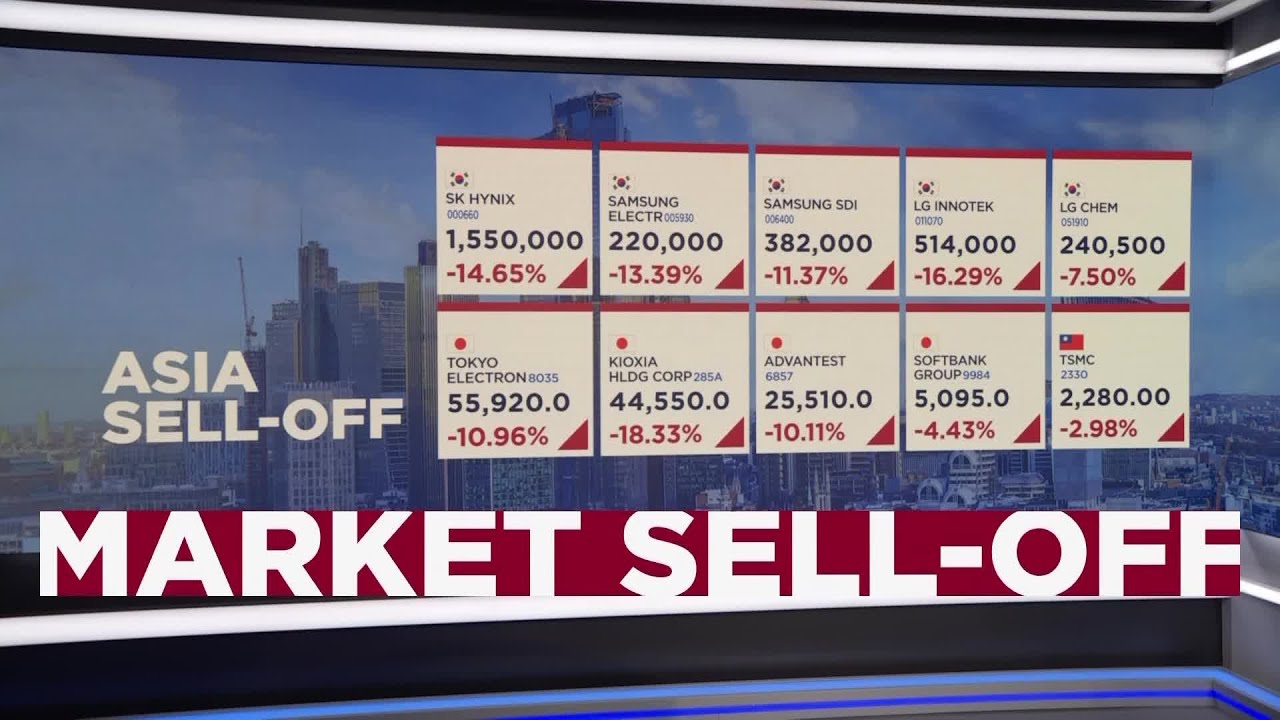
U.S. equities also fell sharply. The S&P 500 lost 1.5%, the Dow Jones Industrial Average declined 2.2%, and the Nasdaq Composite fell 1.7%, according to the Associated Press. Those moves cannot be attributed solely to the Fed. Energy prices, company earnings, geopolitical developments and positioning all influenced the day. Still, a higher discount rate at the long end puts pressure on the valuation of future corporate profits, particularly for companies whose expected cash flows are far in the future.
The curve’s steepening deserves more attention than the direction of the stock indexes. A conventional hawkish surprise often pushes short yields higher as investors price a more aggressive path for the funds rate. The July reaction was more complicated: the committee held, near-term expectations shifted only partially, and long yields rose. That is consistent with the market demanding compensation for uncertainty that the Fed’s reduced guidance did not resolve.
The dollar’s decline was also informative. A more hawkish Fed would ordinarily support the currency, all else equal. The weaker dollar suggested that investors did not interpret the decision as an unambiguous tightening signal, even as Treasury yields rose. That combination can be uncomfortable for the inflation outlook because a weaker currency can make imports more expensive while higher yields raise domestic financing costs.
Again, no single session proves a durable regime change. Markets often reverse after new data, auction results or position adjustments. Warsh’s experiment should be judged over months, not hours. But the first major test showed that less guidance does not remove the Fed from the center of attention. It changes the form of attention from parsing promised paths to interpreting uncertainty premiums.
What the decision means for households
Most households do not borrow directly at the federal funds rate. They encounter monetary policy through mortgage rates, credit-card annual percentage rates, auto loans, deposit yields, employment conditions, asset prices and the cost of living. The July decision therefore cannot be reduced to “rates stayed the same.” Different household rates can move in opposite directions.
Mortgage rates and housing affordability
Freddie Mac’s latest available weekly survey before the article’s cutoff showed the average 30-year fixed mortgage rate at 6.58% on July 23 and the 15-year rate at 5.96%. Mortgage pricing follows longer-term Treasury yields and mortgage-backed-security spreads more closely than the overnight funds rate. A sustained rise in the ten- and 30-year Treasury yields could therefore push mortgage rates higher even though the Fed held.
For a buyer, small rate changes have large monthly effects. On a $400,000 30-year fixed mortgage, the principal-and-interest payment is about $2,530 at 6.5%, about $2,661 at 7.0% and about $2,797 at 7.5%, before property taxes, insurance and other costs. The difference between 6.5% and 7.5% is roughly $267 a month and more than $96,000 over 30 years if the loan is held to maturity. This illustration is not a quote or recommendation; it shows why the long end of the curve matters to housing more than a single FOMC headline.
Higher mortgage rates can reduce demand, pressure homebuilder activity and lock existing owners into lower-rate loans. That lock-in effect limits the supply of homes for sale, which can keep prices elevated even as affordability worsens. Monetary tightening may therefore cool transactions before it meaningfully lowers shelter costs.
Credit cards and variable-rate debt
Credit-card rates are typically tied more closely to the prime rate, which moves with the federal funds target. Because the Fed held, borrowers did not receive an immediate policy-driven increase in the benchmark. But existing card rates were already high, and the absence of a cut means relief is not arriving. If the committee raises rates in September, variable-rate balances could reprice relatively quickly.
Federal Reserve data showed total consumer credit was little changed in May, with revolving credit declining at a 4.7% annual rate and nonrevolving credit increasing 1.6%. One month does not establish a trend, but the decline in revolving balances may indicate more cautious borrowing, repayment or tighter credit availability. Households carrying expensive balances remain highly exposed to any additional increase.
Auto loans and other installment credit
Auto loans depend on Treasury yields, bank funding costs, credit quality, vehicle incentives and lender competition. A higher long end can increase financing costs even without a funds-rate move. Borrowers with weaker credit are likely to feel the effect first because lenders add a larger risk premium when economic uncertainty rises.
Nonrevolving consumer credit includes auto and student loans, though federal student-loan accounting can complicate interpretation. Slower nonrevolving growth can reflect high borrowing costs, cautious households or weaker big-ticket demand. For the Fed, that is part of the transmission mechanism it wants to observe before deciding whether more restraint is necessary.
Savings accounts, money-market funds and certificates of deposit
Savers received a different message. The hold preserves relatively high short-term yields on Treasury bills, money-market funds and competitive deposit products. Banks do not pass policy rates through uniformly, so customers still need to compare offers. If the market expects a September hike, short-dated yields may remain elevated. If growth weakens and expectations reverse, savings yields could fall before or after the Fed acts.
For retirees and conservative savers, the return of positive nominal interest income is meaningful. The relevant question is the real return after inflation. A 4% yield does not protect purchasing power if inflation is 4%. Warsh’s credibility campaign matters to savers because stable inflation makes nominal income more reliable.
Employment and wage security
The household cost of tighter policy is not limited to loan payments. If financial conditions become too restrictive, companies may slow hiring, reduce hours or cut staff. That is why the Fed’s dual mandate matters even when unemployment is low. A successful policy reduces inflation without causing unnecessary labor damage; an unsuccessful one either leaves inflation high or creates a deeper downturn than needed.
Warsh rejects the idea that price stability and full employment are normally in conflict. In the long run, that is persuasive: high and variable inflation damages planning and can ultimately produce worse employment outcomes. In the short run, however, the path matters. Tighter credit often works by reducing demand, and reduced demand can reach the labor market. The committee cannot assume away that channel.
What the decision means for businesses
Companies face the Fed through their liability structure, customer demand and input costs. A cash-rich technology platform and a leveraged regional retailer can experience the same yield curve very differently. The July decision widened that divergence.
Refinancing risk
Businesses that issued long-term fixed-rate debt before 2022 may still be insulated. The pressure appears when those obligations mature. A company refinancing at a substantially higher coupon can see interest expense rise even if revenue is stable. That reduces free cash flow available for investment, hiring, acquisitions and shareholder returns.
The 30-year Treasury yield above 5.20% is not a direct corporate borrowing rate. Companies pay a spread over government securities based on credit quality, liquidity, maturity and market conditions. A strong investment-grade issuer may pay a modest spread; a highly leveraged borrower may pay several percentage points more. Rising benchmarks can therefore be amplified for weaker credits.
Small businesses and banks
Small and midsize firms depend more heavily on bank loans, floating-rate credit and owner financing. They often lack direct access to bond markets. A higher prime rate, tighter underwriting or weaker collateral values can reduce available credit. Even without a July hike, banks may respond to the yield curve, funding costs and economic uncertainty by becoming more selective.
Banks themselves face a complicated mix. Higher long yields can support asset yields over time, but sudden increases can reduce the market value of existing securities and fixed-rate loans. A steeper curve can improve future net interest margins if funding costs remain controlled. It can also expose duration mismatches. The health of bank deposits and liquidity therefore matters to the Fed’s balance-sheet decisions.
Capital budgeting and hurdle rates
When the risk-free rate rises, companies increase the return required for new projects. Investments that looked attractive at a 4% discount rate may fail at 6% or 7%. This affects factories, commercial real estate, acquisitions, renewable-energy projects and software development. Projects with distant payoffs are especially sensitive.
The AI boom is an important exception and test case. Strategic competition may compel companies to invest despite high financing costs. If management believes falling behind in computing capacity is an existential risk, the hurdle rate becomes less binding. That can keep aggregate investment strong while rate-sensitive sectors slow.
Pricing power and margin strategy
Inflation affects companies differently depending on pricing power. A firm with a differentiated product can pass higher energy, tariff or chip costs to customers. A commoditized business may absorb those costs in margins. Monetary tightening seeks to reduce the ease with which companies can raise prices without losing volume.
Warsh’s emphasis on market signals is relevant here. If higher yields reduce demand, companies may become less willing to pass through cost increases. But if supply is constrained and demand remains strong, margins and prices can continue rising. Corporate earnings calls and business surveys will help reveal which dynamic dominates.
Commercial real estate
Commercial property is highly sensitive to long-term rates because values are often estimated from capitalized income and transactions rely on debt. A higher risk-free rate can raise capitalization rates and reduce valuations unless rents and occupancy improve enough to offset it. Refinancing is the immediate risk for properties purchased with low-cost debt.
Office, retail, multifamily, industrial and data-center properties should not be treated as one market. Data centers may benefit from AI demand but face power and equipment constraints. Office buildings remain exposed to hybrid work and local supply. Apartments face regional rent and construction cycles. The Fed’s hold does not eliminate these differences; the higher long end can intensify them.
What the decision means for investors
The July meeting did not create a simple “higher rates are bad” trade. It changed the distribution of outcomes. Investors must now consider not only whether the Fed will hike in September but also whether reduced forward guidance raises volatility and term premiums between meetings.
Treasury investors
Long-duration bonds lose market value when yields rise. The 30-year move demonstrated that duration risk can be substantial even without a policy-rate change. Investors who hold an individual Treasury to maturity still receive the promised principal and coupons, subject to the government’s credit, but those who need to sell earlier face market-price risk.
Short-term bills provide less duration exposure and reflect expected policy more directly. Their yields may remain high if a September increase is likely. Yet reinvestment risk is larger: when the bill matures, the next available yield could be lower. There is no universally superior maturity; the choice depends on liabilities, time horizon and risk tolerance.
Equities and valuation
A higher discount rate reduces the present value of future cash flows. That tends to weigh most on high-duration equities—companies valued largely on profits expected years from now. Profitable firms with strong current cash generation can be more resilient, though no sector is immune to a broad increase in the cost of capital.
The AI investment cycle complicates the usual relationship. Technology companies are driving the capex boom, but their earnings can also benefit from demand for cloud and AI services. Investors must separate companies selling scarce infrastructure, companies buying it, and companies promising future productivity gains. Rising yields can punish all three in the short term while their operating fundamentals diverge.
Financial stocks
Banks can benefit from a steeper curve if asset yields rise faster than deposit costs, but they also carry securities and loans whose values fall when rates rise. Credit quality becomes more important if households and companies struggle with refinancing. Insurers may earn more on new fixed-income investments while facing portfolio mark-to-market changes. Asset managers can benefit from money-market balances but suffer if bond and equity values decline.
The dollar, multinational earnings and commodities
The dollar’s immediate decline showed that higher Treasury yields do not automatically mean a stronger currency. Relative policy expectations, risk sentiment and confidence matter. A weaker dollar can support the translated earnings of U.S. multinationals and commodity prices, but it can also add import-price pressure.
Gold often responds to real yields, the dollar, inflation uncertainty and geopolitical risk. Those forces can conflict. Higher real yields generally increase the opportunity cost of holding a non-yielding asset, while credibility concerns and a weaker dollar can support gold. The July decision therefore did not create a one-factor signal.
Credit markets
Corporate credit combines Treasury rates and spreads. If yields rise because growth is strong and default risk remains low, spreads can stay tight even as all-in borrowing costs increase. If yields rise because credibility deteriorates and recession risk grows, spreads may widen too. That second scenario is more damaging because companies face both a higher benchmark and a larger risk premium.
Investors should therefore watch financing conditions rather than the funds rate alone: new-issue concessions, high-yield spreads, leveraged-loan prices, bank lending standards and refinancing volumes. Those indicators reveal whether market tightening is orderly or becoming a credit event.
Fed independence, outside advisers and the new task-force model
Warsh has established five task forces covering communications, balance-sheet policy, data, productivity and jobs, and inflation frameworks. The groups include external subject-matter experts supported by Federal Reserve staff. Their purpose is to challenge established practices and provide analysis for the Board and FOMC, which retain decision-making authority.
The model has potential benefits. A central bank can become insular, particularly after a long period in which its forecasts and frameworks failed to anticipate important changes. Bringing in economists, technologists and market practitioners can expose blind spots. Deliberately appointing people with conflicting views can reduce groupthink.
It also raises governance questions. Reporters asked about the political activity and industry interests of outside advisers, including those connected to the AI sector. Expertise often comes with experience and exposure, but those ties can create perceived or real conflicts. The Fed must disclose membership, remit, process and outputs sufficiently for the public to evaluate independence.
Warsh’s response was that advisers inform rather than determine policy. That is necessary but not sufficient. Transparency about evidence, dissenting views and how recommendations are used will matter. A task force should not become a parallel policymaking body outside normal accountability, nor should it provide selective intellectual cover for decisions already made.
The communications task force is especially relevant after July. If reduced forward guidance is to improve policy, the Fed needs a disciplined replacement: clear objectives, accurate descriptions of current conditions and transparent explanations of decisions without promising a future path. Less quantity of communication can be better, but only if the remaining communication is precise.
Is this a return to 1970s-style monetary uncertainty?
The combination of multiple dissents, high inflation, energy shocks and a reference to Arthur Burns makes the comparison tempting. It should be handled carefully. The 1970s featured very different labor institutions, regulation, energy intensity, monetary frameworks and inflation expectations. Today’s Fed has an explicit 2% objective, pays interest on reserves, publishes extensive data and operates in a more globalized financial system.
Still, the historical lesson is relevant: repeated accommodation of inflation can damage credibility, and stop-start policy can increase the eventual cost of stabilization. Policymakers who treat each shock as temporary may miss the cumulative process. They can also face political pressure to protect near-term growth at the expense of long-term price stability.
Warsh’s rhetoric is designed to reject that path. He emphasizes ownership of inflation, refuses to blame shocks as an excuse, and says the committee will deliver 2%. The skeptical question is whether holding rates while inflation remains above target resembles the caution he criticizes. The supportive answer is that modern policy must account for market tightening and avoid mechanically fighting supply shocks.
The best historical comparison is therefore not a claim that the 1970s are repeating. It is a warning about process. Credibility is lost gradually, through a sequence of decisions that each appear defensible in isolation. The July hold will be judged by what follows. If inflation declines and growth remains stable, it will look patient and sophisticated. If inflation persists and the Fed later has to move more aggressively, it will look like a missed opportunity.
What Warsh may say at Jackson Hole
The Federal Reserve Bank of Kansas City’s 2026 Jackson Hole Economic Policy Symposium is scheduled for August 27–29. Warsh said his speech remained a blank page after the July meeting. He identified two possible approaches: a broad examination of productivity, demographics and the global economy, or a more traditional setup for policy decisions between September and year-end.
The symposium’s announced theme is financial innovation and its implications for payments and policy. That gives Warsh an opening to connect AI, data, market structure and central-bank communication. But investors will listen primarily for clues about September, regardless of how conceptual the speech is.
A successful speech would avoid recreating the forward guidance he is trying to reduce. It could explain the decision framework without precommitting to an outcome: how the Fed distinguishes supply shocks from generalized inflation, how it evaluates financial conditions, what role the balance sheet plays, and which evidence would demonstrate that inflation expectations remain anchored.
A less successful speech would repeat the 2% pledge without explaining the July hold, or introduce new frameworks faster than markets can understand them. Warsh’s challenge is to be clear without being predictive. That is harder than either silence or a conventional rate-path signal.
The road to September: five questions that can change the decision
The next FOMC meeting is scheduled for September 15–16. Between now and then, the committee will receive enough information to change the balance of the debate, but not enough to eliminate uncertainty. Five questions are especially important.
1. Does the labor market keep cooling without breaking?
The July employment report on August 7 will provide the first major test. The committee will look beyond the payroll headline to unemployment, participation, hours, temporary help, revisions and wage growth. A labor market that adds jobs slowly while unemployment remains near 4.2% would support continued patience. A sharp deterioration would make a hike harder to justify. A strong rebound would reinforce the dissenters’ view that employment can withstand more restraint.
Revisions may matter as much as the initial print. June’s modest gain became more concerning when April and May were revised lower. If that pattern continues, the economy may be losing momentum faster than contemporaneous data suggest. Conversely, upward revisions would reduce recession concerns.
2. Was June’s CPI decline a turning point or an energy-driven interruption?
The July CPI release on August 12 will show whether disinflation broadened. The committee will examine shelter, services excluding housing, goods, food, energy and measures of price diffusion. A second benign core reading would strengthen the argument that the June improvement was not a one-off. Renewed core pressure would make a September increase much more likely.
Energy will remain difficult to interpret because geopolitical and supply developments can move quickly. The Fed cannot ignore the effect on household expectations, but it will want evidence that energy prices are spreading into other categories before treating the shock as generalized inflation.
3. Do long-term yields stay high?
Warsh placed unusual weight on market tightening. That makes the persistence of the yield move a policy input. If the 30-year yield remains above 5% and mortgage and corporate rates rise, the majority can argue that restraint is building. If yields reverse because investors expect the Fed to remain too easy, the committee loses part of its justification for holding.
Officials will also watch the composition of the move. Inflation compensation, real yields and term-premium estimates can point in different directions. No decomposition is perfect, but a rise dominated by inflation risk would be more troubling than one dominated by stronger expected real growth.
4. Is AI investment producing measurable productivity?
The August 6 productivity report and incoming company data may offer clues, though economy-wide effects will remain uncertain. Strong productivity can reconcile robust demand with moderating unit costs. Weak productivity alongside massive capex would suggest that the investment boom is adding demand faster than supply.
The committee should be cautious about extrapolating from a few technology companies. AI may raise productivity in some sectors while creating bottlenecks in others. The relevant measure is not the number of data centers built but the sustained increase in output per hour across the economy.
5. Does the market believe the 2% commitment?
Survey expectations, inflation swaps, Treasury inflation-protected securities and business pricing plans will help answer this question. Expectations do not need to be perfectly stable every day. The concern is a persistent upward shift, especially at longer horizons.
Credibility will also be inferred from behavior. If firms lengthen contracts with larger price escalators or investors demand a structurally higher inflation premium, words will have less power. The Fed may then need to demonstrate commitment with its instruments.
Three plausible September scenarios
The purpose of scenarios is not to predict the committee’s decision with false precision. It is to show how different combinations of evidence could support different outcomes.
Scenario one: a quarter-point hike
A September increase becomes the most defensible outcome if core inflation reaccelerates, payroll growth rebounds, unemployment remains stable and long-term inflation compensation rises. In that environment, the July hold would look like a brief information-gathering interval. The three July dissenters would have a stronger case, and some majority voters could join them.
A hike would move the target range to 3.75% to 4.00%. The market reaction would depend on communication. If investors already priced the move, the announcement itself might be less important than whether Warsh suggests further action. Under his new approach, he may avoid that suggestion and instead explain that future decisions remain contingent on underlying inflation and financial conditions.
The risk is cumulative tightening. If long yields remain elevated, a policy hike could reinforce pressure on housing, credit and small businesses. The committee would need to show that the inflation benefit outweighs those costs.
Scenario two: another hold with a firmer explanation
A second hold is plausible if inflation improves modestly, employment cools and market yields remain restrictive. The committee could argue that total financial conditions are doing enough while it continues to study supply dynamics and productivity. It might still have hawkish dissents.
The communication burden would be heavier than in July. Repeating that the Fed is committed to 2% without clarifying why another hold is consistent with that objective could deepen credibility concerns. Warsh would need to explain which evidence shows policy is working and what would cause the committee to act.
The risk is that investors interpret another hold as tolerance. Long yields could rise further, creating the paradox of a central bank that keeps the overnight rate unchanged while private markets tighten aggressively. At some point, that can become a less controlled and less equitable form of restraint.
Scenario three: a dovish hold because growth deteriorates
If payrolls weaken sharply, unemployment rises, credit spreads widen and inflation continues to moderate, the committee may hold with increased concern about employment. A rate cut by September would require a much more abrupt deterioration than the current data show, but the Fed’s reaction function is not one-way.
Under this scenario, the July decision would look prudent because the committee avoided tightening immediately before a downturn. Long-term yields might fall as investors price weaker growth. Mortgage rates could decline, but that relief would be offset by employment and income concerns.
The risk is stagflation: growth weakens while PCE inflation remains above 3%. That would create the cruel choice Warsh says is not structurally necessary, at least in the short run. The committee would have to judge whether inflation or employment presented the greater risk to the mandate.
A timeline of the policy shift
| Date | Development | Why it matters |
|---|---|---|
| May 22, 2026 | Kevin Warsh takes office as Federal Reserve chair. | Begins a new communication and policy-review approach after years of above-target inflation. |
| June 16–17 | Warsh chairs his first regular FOMC meeting. | The committee begins pulling back from extensive forward guidance. |
| July 2 | June jobs report shows 57,000 payroll gains and 4.2% unemployment. | Signals cooling but not collapsing employment. |
| July 14 | Warsh testifies to Congress and emphasizes strong high-tech investment and new task forces. | Frames AI productivity and institutional reform as core policy questions. |
| July 15 | June CPI shows a 0.4% monthly decline, 3.5% headline inflation and 2.6% core inflation year over year. | Provides evidence for patience, though energy drives much of the monthly relief. |
| July 29 | FOMC holds 3.50%–3.75% by a 9–3 vote; three officials favor a hike. | Reveals the strongest early internal resistance to a new chair in decades and pushes long yields higher. |
| July 30 | Second-quarter GDP is reported at 1.5%; June PCE inflation is 3.7% and core is 3.3%. | Adds a mixed combination of slower headline growth, strong private demand and persistent inflation. |
| August 7–19 | July jobs and CPI data arrive; July FOMC minutes are released. | Provides the next evidence on labor, inflation and the arguments behind the dissents. |
| August 27–29 | Jackson Hole symposium. | Offers Warsh a chance to explain the framework without committing to a September result. |
| September 15–16 | Next scheduled FOMC meeting. | The committee must decide whether market tightening and incoming data justify a hike or another hold. |
What would prove Warsh’s strategy is working?
The new framework should be judged by outcomes and decision quality, not by whether market volatility disappears. A market that independently processes information will sometimes move sharply. The goal is not a perfectly calm curve; it is a better allocation of risk and a central bank that makes sound decisions without creating artificial certainty.
Several developments would support the strategy. Inflation would continue moving toward 2% across multiple measures. Long-term expectations would remain stable. Market yields would respond primarily to growth and inflation data rather than to speculation about individual officials. Financial conditions would tighten or ease in an orderly way. The committee would explain decisions clearly without promising a path it cannot know.
Institutional evidence matters too. The task forces would publish rigorous analysis, disclose disagreements and lead to understandable reforms. The balance-sheet framework would distinguish reserve adequacy from duration policy. Data revisions and alternative indicators would be incorporated transparently rather than selectively.
The strategy would be failing if inflation remained high while the Fed repeatedly deferred action to markets, if long-term inflation compensation drifted upward, or if communication uncertainty created unnecessary financial instability. It would also fail if officials quietly returned to unofficial signaling through leaks and speeches while claiming forward guidance had ended.
The ultimate test is the one Warsh set himself: performance. The Fed must deliver stable prices while preserving maximum employment over time. A new vocabulary, new task forces and more market autonomy are means, not ends.
Five common misunderstandings about the July decision
Misunderstanding one: holding the policy rate means monetary conditions were unchanged
The overnight target range was unchanged, but the economic price of credit was not. Treasury yields, mortgage benchmarks, corporate funding costs, equity valuations and the dollar moved between meetings and again after the decision. A central bank influences demand through this broader network of prices. The July hold therefore occurred inside a tightening financial environment.
That does not prove the stance became sufficiently restrictive. It simply means the policy rate is an incomplete measure. A household deciding whether to buy a home cares about the mortgage quote, not the wording of the FOMC statement. A company refinancing a bond cares about the Treasury benchmark and credit spread. A bank cares about funding costs, deposit behavior and the value of its assets.
The correct debate is about the total amount, composition and persistence of restraint. A temporary jump in yields may fade. A durable rise in real borrowing costs may do much of the work of a rate increase. The Fed must determine which one it is observing.
Misunderstanding two: a higher long-term yield automatically validates the Fed
Warsh treated higher yields as evidence that markets were responding independently to economic information. That can be healthy, but the direction of a market move does not automatically endorse the central bank. A long yield can rise because investors expect stronger real growth, because they anticipate future rate increases, because Treasury supply is heavy, or because they demand protection from inflation and policy uncertainty.
Only some of those explanations are comforting. Higher real growth and productive investment can support higher equilibrium yields. A rising inflation risk premium or credibility premium is a warning. The same observed yield can combine both effects, which is why the Fed cannot simply point to a higher number and call it successful transmission.
The committee needs corroborating evidence from inflation-protected securities, surveys, auction demand, credit spreads and economic data. Markets are a diagnostic tool, not a scorecard with a single reading.
Misunderstanding three: calling inflation supply-driven means the Fed should ignore it
Monetary policy cannot produce energy, remove tariffs or expand chip fabrication overnight. That limits what a rate hike can achieve against the source of a supply shock. But the Fed is responsible for the secondary effects. If businesses pass higher costs across many categories, workers seek compensation and expectations adjust upward, a sector shock becomes generalized inflation.
The distinction is between accommodating a relative-price change and accommodating an inflation process. Some goods must become more expensive relative to others when supply is scarce. The overall price level does not need to keep accelerating indefinitely. The Fed’s task is to allow the economy to reallocate resources without validating repeated broad price increases.
After years above target, repeated shocks are especially dangerous because each one arrives before the previous effects have fully faded. Patience must therefore be paired with evidence that spillovers are narrowing.
Misunderstanding four: the AI boom is automatically disinflationary
Artificial intelligence may eventually lower costs and raise productivity, but the buildout is inflationary in some markets today. Data centers require scarce chips, memory, power, land, cooling, construction and specialized labor. Companies competing for those inputs can push up prices before software improvements increase output elsewhere.
The productivity payoff is also uncertain. Some investment will generate large returns; some will duplicate competitors’ capacity or become obsolete. Economy-wide productivity requires adoption, organizational change and complementary skills, not merely the purchase of hardware. The transition can take years.
For the Fed, AI is a two-sided shock. It can increase both demand and supply. The policy error would be to count future productivity with certainty while ignoring current bottlenecks, or to suppress all investment because near-term demand is strong. Better data and sector-level analysis are necessary.
Misunderstanding five: returning to 2% inflation means prices will return to their old level
The Fed’s objective is a rate of inflation, not a promise to reverse the cumulative price increases of recent years. If inflation falls to 2%, the general price level still rises, but more slowly. A return to the prices households paid five years earlier would require broad deflation, which is not the stated goal and could create severe economic problems.
This distinction explains public frustration. Officials can report progress because the inflation rate is falling while families still face permanently higher grocery, rent and insurance bills. Wage and income growth determine whether purchasing power catches up. Price stability helps by making future increases slower and more predictable; it does not erase past losses.
Warsh’s credibility challenge is therefore partly communicative. “Delivering 2%” must be explained honestly as stabilizing the rate of change. The public will judge success through real incomes and affordability as well as an index.
Frequently asked questions
Why did the Federal Reserve hold interest rates on July 29, 2026?
The majority concluded that keeping the federal funds target range at 3.50% to 3.75% was appropriate while it assessed a substantial rise in market interest rates, mixed inflation signals, slower headline GDP growth and the uncertain effects of supply shocks and AI investment. Warsh argued that financial conditions had tightened even without an official rate increase because nominal and real Treasury yields were higher across the curve.
The committee also had one encouraging June CPI report, in which headline prices fell 0.4% from May and core inflation was 2.6% from a year earlier. At the same time, the Fed knew the inflation problem was not solved: June PCE inflation was later reported at 3.7% and core PCE at 3.3%. The majority’s decision was therefore a judgment about timing, not a declaration that policy was easy enough or inflation was under control.
Warsh rejected the description of a passive pause. His position was that the committee actively debated whether and how to tighten, while markets continued to adjust borrowing costs. The next meeting in September allows officials to incorporate additional employment, inflation, productivity and financial-market data.
Who voted for a rate increase?
Beth Hammack, Neel Kashkari and Lorie Logan dissented from the July decision. Each preferred to raise the target range by 25 basis points, which would have placed it at 3.75% to 4.00%. The official statement did not provide separate essays explaining their reasoning, and Warsh declined to speak for them in detail.
The broad hawkish logic is nevertheless clear. Inflation remained well above the Fed’s 2% objective, the labor market was not in recession, private domestic demand was strong, and Treasury markets were pricing a higher rate structure. The dissenters likely judged that an immediate increase would better protect credibility and reduce the risk of needing more forceful action later.
Their votes do not mean the committee disagreed about the mandate. Warsh said members shared the goal of restoring price stability and differed more over the best instrument, timing and strategy. A dissent is therefore a public record of alternative judgment, not evidence that a policymaker rejects the institution’s objective.
Does a 9–3 vote mean the Federal Reserve is divided?
It means the committee had a meaningful disagreement about the July action, but “divided” can overstate the situation if it implies institutional paralysis. Nine voters supported the hold, which is a clear majority. Three preferred a hike. Warsh described the discussion as vigorous and said members agreed on the 2% objective, legal authority and responsibility to deliver price stability.
The vote matters because three dissents are rare and because they occurred early in a new chair’s term. It signals that the threshold for a hike may be close for several officials. If incoming data show renewed inflation or stronger employment, some members of the majority could shift.
A healthy committee can contain disagreement. In fact, dissent may improve policy by forcing the majority to answer the strongest counterargument. The concern would arise if repeated splits reflected incompatible objectives, political blocs or an inability to explain decisions. The July evidence instead points to a common destination with different views about speed and route.
Will the Fed raise rates in September 2026?
A September increase is plausible but not predetermined. Federal-funds futures assigned roughly a 60% probability to a hike after the July meeting, according to Reuters, but those probabilities change with every important data release and market move. The Fed has deliberately reduced forward guidance, so market pricing should not be treated as a promise.
A hike becomes more likely if July core inflation accelerates, payroll growth rebounds, unemployment remains stable and long-term inflation expectations rise. Another hold becomes more likely if inflation broadens its decline, employment weakens and higher Treasury yields continue to restrain housing and credit.
The July minutes on August 19 may clarify how close the majority was to raising rates and which evidence members wanted to see. Warsh’s Jackson Hole remarks on August 27–29 could explain the framework, though he may avoid signaling a specific vote. The decisive information will be the trend across inflation, labor and financial conditions rather than any single speech.
Why did long-term Treasury yields rise when the Fed did not hike?
Long-term yields incorporate much more than the current federal funds rate. They reflect expected future short rates, long-run inflation, real growth, government debt supply and a term premium for holding a long-duration asset. Investors can therefore push the 30-year yield higher even when the Fed leaves the overnight rate unchanged.
In July, several interpretations were possible. Strong AI investment and productivity may imply higher long-run real growth. Persistent inflation and energy uncertainty may require a larger inflation premium. Heavy Treasury issuance can raise the term premium. Some investors may also have concluded that the Fed would need to tighten later because it did not act immediately.
The curve steepened because the long end rose relative to shorter maturities. That pattern suggested concern or repricing beyond the next meeting. Warsh viewed the move as useful market information generated with less Fed guidance. Skeptics viewed it as a warning that investors were not convinced by the hold. Both interpretations can be partly true.
Does the Federal Reserve target CPI or PCE inflation?
The Fed’s formal 2% longer-run objective is defined using the personal-consumption-expenditures price index, not the consumer price index. PCE covers a broader range of expenditures and uses weights that adjust more readily when consumers change what they buy. CPI uses a different scope and weighting method and is often more directly familiar to households.
Policymakers still study CPI closely because it arrives earlier and contains detailed information about shelter, food, energy, goods and services. They also examine core measures, trimmed means, wages, producer prices, import prices and expectations. Warsh said the official objective remains 2% PCE inflation while his analytical lens is broader.
The June divergence shows why the distinction matters. CPI fell 0.4% from May and core CPI was 2.6% year over year, while headline PCE was 3.7% and core PCE 3.3% from a year earlier. Neither release should be ignored; together they show improvement in some categories but inflation still above the formal objective.
Did the June CPI report show that inflation was defeated?
No. It was encouraging, but one monthly report cannot establish a durable return to price stability. The 0.4% monthly CPI decline was heavily influenced by a 5.7% drop in energy prices. Core inflation was more moderate, and shelter inflation had cooled, but the broader PCE measures remained above 3%.
Energy relief benefits households immediately and can reduce inflation expectations. The Fed should not dismiss it. The policy question is whether disinflation spreads to services, housing, goods and wages, and whether it persists when energy stabilizes. Repeated benign readings would be more persuasive than one sharp monthly decline.
The history of the past five years also raises the standard of proof. After a prolonged overshoot, officials need evidence that inflation is moving toward 2% across a range of measures. The June CPI report justified caution; it did not justify complacency.
How can artificial-intelligence spending affect interest rates?
AI investment can push rates in both directions through different time horizons. In the near term, spending on chips, memory, data centers, electricity, networking equipment, construction and skilled labor adds demand. When supply is constrained, that can raise prices and justify tighter financial conditions.
Over time, AI can increase productivity. If workers and companies produce more output per hour, the economy can grow faster without equivalent inflation. Higher productivity can support wages and profits, expand supply and reduce unit costs. It may also raise the economy’s neutral real interest rate because the return on investment is higher.
The difficulty is timing. Capital spending occurs now, while productivity gains are uncertain and delayed. The Fed must decide whether the current demand impulse is inflationary before it can observe the full supply payoff. That is why Warsh made AI capex central to the policy discussion and created task forces focused on productivity, data and inflation frameworks.
What is forward guidance, and why is Warsh reducing it?
Forward guidance is central-bank communication about the likely future path of policy. The Fed used it extensively after the 2008 crisis and during other periods when rates were near zero. By promising or strongly indicating that rates would remain low, policymakers could influence longer-term yields and current spending.
Warsh believes the tool can be overused in more normal conditions. Detailed guidance may create false precision, encourage investors to trade the Fed rather than economic fundamentals and cause market prices to repeat the central bank’s own forecast. He wants a more independent signal from buyers and sellers.
Reducing guidance does not mean ending communication. The Fed still announces decisions, explains its mandate, publishes minutes and testifies before Congress. The change is that it is less willing to preview the next move. The benefit is flexibility and two-way market risk. The cost is greater uncertainty and the possibility of larger surprises.
Will mortgage rates fall because the Fed held?
Not necessarily. Mortgage rates follow longer-term Treasury yields and mortgage-backed-security spreads more closely than the overnight federal funds rate. The Fed held on July 29, but long Treasury yields rose. If that move persists, mortgage rates can increase despite the unchanged policy range.
Freddie Mac’s latest survey available before the article’s cutoff put the average 30-year fixed rate at 6.58% on July 23. The next weekly reading could move in either direction depending on the bond market, inflation data, Treasury supply and lender pricing. A Fed hold prevents an immediate increase in the overnight benchmark, but it does not cap mortgage rates.
Borrowers should also distinguish market rates from the quote they receive. Credit score, down payment, loan type, property, points and lender fees affect the final offer. The policy decision is one influence among many.
What does the decision mean for savings rates and credit cards?
The hold keeps the short-term policy benchmark elevated. Competitive savings accounts, Treasury bills, money-market funds and certificates of deposit may therefore continue offering relatively high nominal yields. Individual banks set deposit rates differently, and some may reduce rates in anticipation of future easing while others compete aggressively for funding.
Credit-card rates are usually variable and linked to the prime rate, which tends to move with the federal funds target. Because the Fed did not hike, there was no immediate policy-driven increase in prime. But borrowers did not receive relief either. Existing annual percentage rates remain expensive, and a September hike could pass through quickly.
The real benefit to savers depends on inflation. A high nominal yield can still produce a weak real return when prices rise rapidly. The Fed’s promise to restore 2% inflation is therefore as important as the level of deposit rates.
What economic releases matter most before the next meeting?
The July employment report on August 7 and July CPI on August 12 are the two most visible releases. The committee will also examine productivity and costs on August 6, producer prices on August 13, retail sales, industrial production, housing data, consumer expectations and financial conditions.
The minutes of the July 28–29 meeting are scheduled for August 19. They may reveal how members evaluated the rise in market yields, why the majority preferred a hold and how broadly the three dissenters’ concerns were shared. The minutes will not be a transcript and may not identify individual views beyond the recorded vote.
Jackson Hole on August 27–29 is the final major communication event before the September 15–16 meeting. Markets will seek a policy clue, but Warsh may focus on framework questions. Because he has reduced forward guidance, incoming data and market behavior are likely to carry more weight than a single phrase in the speech.
Is the Fed relying too much on financial markets?
That is the most important criticism of Warsh’s approach. Market prices aggregate vast amounts of information, but they are not neutral or infallible. They reflect leverage, liquidity, regulation, Treasury supply, positioning and expectations about the Fed itself. Using them as a source is sensible; treating them as an independent verdict would be dangerous.
Warsh explicitly said markets inform but do not dictate decisions. The committee still uses official data, surveys, models, business contacts and staff analysis. The concern is circularity: the Fed holds because markets tightened, markets tighten because they expect the Fed to act later, and the central bank interprets that response as evidence that current policy is sufficient.
The safeguard is a clear mandate and transparent judgment. Market tightening should buy time only when inflation, employment and credit evidence support that choice. If the Fed repeatedly delegates restraint to the bond market while avoiding action, credibility can deteriorate and financial conditions can become less orderly.
Conclusion: a hold that increased, rather than reduced, the stakes
The July 2026 FOMC decision was not a quiet continuation of existing policy. It was the first large-scale test of Kevin Warsh’s attempt to run a less scripted Federal Reserve. The committee held the federal funds target range at 3.50% to 3.75%, three officials voted to raise it, and the chair insisted that markets should respond to the economy rather than wait for the Fed to preview every move.
The strongest evidence supporting the hold is that financial conditions had already tightened, June CPI showed genuine relief, headline GDP growth slowed and supply shocks complicated the inflation signal. The strongest evidence supporting a hike is that PCE inflation remained above 3%, private domestic demand was strong, employment was stable and years of overshooting have made credibility more fragile. Neither side is arguing from an obviously weak position.
Warsh’s most useful contribution is to broaden the policy conversation. AI investment is both current demand and future supply. The balance sheet may influence longer rates even when the funds rate is primary. Forward guidance can distort the market signal it is meant to manage. A serious committee should debate these questions rather than reduce policy to a single monthly data point.
His greatest risk is that complexity becomes delay. Markets can tighten conditions, but they cannot assume the Fed’s democratic and legal responsibility for price stability. Outside task forces can improve analysis, but they cannot replace accountable decisions. A forceful 2% pledge helps expectations only when subsequent actions make it credible.
The bond market’s response was therefore not a side effect; it was part of the event. The 30-year yield above 5.20% showed that investors were repricing the long-run outlook even though the overnight rate did not change. That can be read as evidence that markets are finally playing the ball. It can also be read as a warning that the referee’s new restraint has increased the premium for uncertainty.
The July 30 data did not settle the argument. Growth slowed to 1.5%, but private domestic demand remained robust. Headline PCE inflation eased from May but stayed at 3.7%, and core PCE remained at 3.3%. The economy is neither weak enough to make tightening unthinkable nor disinflationary enough to make it unnecessary.
Between now and September, the key evidence will be whether labor-market cooling remains orderly, whether core inflation improves beyond one month, whether long yields stay restrictive, and whether AI investment begins to show a measurable productivity payoff. The Fed’s July minutes and Warsh’s Jackson Hole speech will help explain the framework, but the new chair has made clear that no speech should substitute for the data.
The most defensible judgment is that the hold bought information at the price of a tougher credibility test. If inflation broadens its decline while employment stays near balance, the decision will look disciplined. If inflation persists and the committee raises rates later under greater market pressure, the dissenters will look prescient. Either way, the next chapter will be judged not by how confidently the Fed describes its target, but by whether borrowing conditions, expectations and actual prices begin moving toward it.
There is a broader institutional lesson. Central-bank communication can never eliminate uncertainty because the economy itself is uncertain. The relevant standard is whether communication helps the public understand objectives, trade-offs and evidence. Warsh is right to challenge a culture in which markets demand a continuously updated answer key. But the Fed must not replace excessive guidance with an accountability gap. Less prediction should be accompanied by more clarity about how current decisions serve the mandate.
The July meeting also marked a shift in where policy risk resides. Under heavy forward guidance, the risk was that the Fed would commit to a path that became inappropriate. Under the new regime, the risk is that markets will impose a large uncertainty premium before officials act. Neither system is costless. A durable framework will probably combine Warsh’s preference for flexibility with enough transparency to prevent avoidable confusion about the committee’s diagnosis.
For the remainder of 2026, the question is not simply whether the next move is up or down. It is whether the Fed can make the funds rate, its balance sheet, its communication and its 2% objective operate as one coherent strategy. July showed that markets will test any inconsistency among those elements immediately. September will show whether the committee can convert an intense internal debate into a decision the public can understand—even if investors disagree with it. That is the practical meaning of credibility: not unanimity or calm markets, but a clear mandate supported by evidence, tools and timely action.
Sources
- Federal Reserve: July 29, 2026 FOMC statement
- Federal Reserve: Kevin Warsh’s July 29 opening statement
- Federal Reserve: Kevin Warsh biography
- Federal Reserve: Warsh congressional testimony on monetary policy
- Federal Reserve: monetary-policy task forces
- Federal Reserve: Statement on Longer-Run Goals and Monetary Policy Strategy
- Federal Reserve: explanation of forward guidance
- Federal Reserve: H.4.1 factors affecting reserve balances
- Bureau of Economic Analysis: second-quarter 2026 GDP advance estimate
- Bureau of Economic Analysis: PCE price index
- Bureau of Economic Analysis: core PCE price index
- Bureau of Labor Statistics: June 2026 CPI report
- Bureau of Labor Statistics: June 2026 employment report
- Bureau of Labor Statistics: August 2026 release schedule
- Freddie Mac: Primary Mortgage Market Survey
- Federal Reserve: consumer credit statistical release
- Reuters: Treasury-market reaction to the Fed decision
- Reuters: analyst reaction to the 9–3 rate hold
- Reuters: historical context for the three dissents
- Associated Press: July 29 U.S. market close
- Reuters: Microsoft cloud growth and capital spending
- Reuters: Meta AI capital-expenditure outlook
- Reuters: AI investment and Big Tech free cash flow
- Reuters: AI chip inflation and wider-economy risks
- Federal Reserve: 2026 FOMC calendar and upcoming dates
- Federal Reserve Bank of Kansas City: 2026 Jackson Hole symposium
Affiliate disclosure: Businessfinance.news may earn compensation from qualifying actions completed through selected links on this website, at no additional cost to the reader. Affiliate relationships do not influence our editorial reporting, analysis, or conclusions.