The Federal Reserve left its benchmark interest-rate target unchanged on July 29, 2026, but the decision was considerably more divided than the word “hold” might suggest. The Federal Open Market Committee voted 9–3 to maintain the federal funds rate in a range of 3.5% to 3.75%, with Cleveland Fed President Beth Hammack, Minneapolis Fed President Neel Kashkari and Dallas Fed President Lorie Logan preferring an immediate quarter-percentage-point increase. :contentReference[oaicite:0]{index=0}
The early answer to the dominant question is therefore straightforward: the Fed did not raise or cut interest rates. The more important development was the emergence of a coordinated hawkish minority at Kevin Warsh’s second policy meeting as chair. Three voting officials concluded that inflation risks were serious enough to justify tightening now, while the majority chose to wait for additional evidence on inflation, employment, economic growth and the consequences of the renewed energy shock.
The decision did not reassure every corner of the financial system. Short-term Treasury yields fell after the Fed declined to validate the market’s pre-meeting probability of a hike, but longer-term yields rose. The official Treasury curve for July 29 closed with the two-year yield at 4.22%, the 10-year yield at 4.67% and the 30-year yield at 5.20%. That steepening suggested that investors were simultaneously removing some immediate tightening risk and demanding more compensation for longer-run inflation, fiscal and policy uncertainty. :contentReference[oaicite:1]{index=1}
For households and businesses, that distinction matters. The Fed directly controls an overnight policy rate, not the 30-year mortgage rate, the 10-year Treasury yield or the cost of issuing long-term corporate debt. A rate hold can provide modest relief at the front end of the market while mortgage rates and other long-term borrowing costs remain elevated—or even rise—if investors become less confident that inflation will return sustainably to 2%.
Last updated: July 30, 2026, 4:15 a.m. EDT. The research cutoff precedes the scheduled July 30 releases of second-quarter GDP and June personal income, spending and PCE inflation.
Key Takeaways
- Main decision: The Federal Reserve maintained the federal funds target range at 3.5%–3.75% in a 9–3 vote.
- Dissenters: Beth Hammack, Neel Kashkari and Lorie Logan wanted a 25-basis-point rate increase.
- Inflation backdrop: June headline CPI fell 0.4% from May, but remained 3.5% higher than a year earlier. Core CPI was unchanged for the month and up 2.6% over 12 months.
- Preferred inflation gauge: The latest available core PCE index, for May, was 3.4% higher than a year earlier—well above the Fed’s 2% goal.
- Labor market: June payrolls rose by only 57,000, unemployment was 4.2%, and April–May job growth was revised down by a combined 74,000.
- Bond-market response: Two-year yields declined after the hold, while the long end sold off; the official 30-year Treasury yield finished July 29 at 5.20%.
- Mortgage context: Freddie Mac’s latest available survey put the average 30-year fixed mortgage rate at 6.58% on July 23.
- Next major meeting: The FOMC meets September 15–16, when it will also publish a new Summary of Economic Projections.
- What changes the outlook: The July and August employment and inflation reports, oil prices, inflation expectations, long-term yields and evidence that supply-driven price increases are spreading into broader inflation.
Federal Reserve Decision Snapshot
July 29, 2026 FOMC Meeting
- Target range: 3.5%–3.75%, unchanged
- Vote: 9 in favor, 3 against
- Dissenters: Beth Hammack, Neel Kashkari and Lorie Logan
- Dissenting preference: A 25-basis-point increase
- Interest on reserve balances: 3.65%, unchanged
- Primary credit rate: 3.75%, unchanged
Original sources: Federal Reserve FOMC statement and July 29 implementation note.
What the Federal Reserve Decided
The FOMC’s formal action was to preserve the monetary-policy setting that has been in place since December 2025. The target range for the federal funds rate remains 3.5%–3.75%, and the Fed continues to operate an ample-reserves framework for the banking system. The Board of Governors also kept the interest rate paid on reserve balances at 3.65% and retained a 3.75% primary credit rate. :contentReference[oaicite:2]{index=2}
The accompanying policy statement was unusually compact. It described economic activity as expanding at a solid pace despite elevated uncertainty linked partly to the Middle East conflict. It highlighted strong productivity and capital investment, said job gains had kept pace with workforce growth, and characterized the unemployment rate as little changed. On prices, the committee acknowledged that inflation remained above its 2% objective, partly because of supply shocks affecting sectors such as energy.
The statement did not provide conventional forward guidance about the likely direction, timing or conditions for the next rate move. It did not promise a September increase, rule one out, identify a numerical inflation threshold or rank employment risks against inflation risks. Its most forceful sentence was an institutional pledge that the committee would deliver price stability. :contentReference[oaicite:3]{index=3}
That combination—a rate hold, a forceful inflation promise and no explicit path forward—was the central source of the market’s unease. It allowed both hawkish and dovish interpretations. A patient reading is that the Fed sees current rates and higher market yields already restraining demand, making an immediate hike unnecessary. A skeptical reading is that the Fed has promised to defeat inflation without explaining when it will use its primary tool to do so.
Chair Kevin Warsh acknowledged the split but portrayed the policy discussion as serious and constructive. In his prepared remarks, he emphasized that inflation had been above target for more than five years and rejected the idea that the Fed had quietly accepted a target higher than 2%. His clearest message was that the official objective remained unchanged and that the institution’s credibility would ultimately depend on results. :contentReference[oaicite:4]{index=4}
Warsh also argued that the Fed’s reduced use of forward guidance may have encouraged markets to respond more directly to economic information. His memorable instruction was that investors should “play the ball, not the referee.” In practice, however, the July reaction showed that removing guidance does not remove the Fed from market pricing. It transfers more of the interpretive burden to investors, who then demand a larger margin for uncertainty when the policy framework is difficult to infer.
Why the 9–3 Vote Was More Important Than the Rate Hold
Most economists expected the Fed to leave rates unchanged. A Reuters poll conducted before the meeting found all 104 participating forecasters expected a hold, although market pricing assigned a meaningful probability to an immediate increase. The surprise was therefore not the decision itself but the size and direction of the dissent. :contentReference[oaicite:5]{index=5}
All three dissenters wanted tighter policy. There was no offsetting vote for a rate cut. That makes the division more informative than a split containing disagreements in both directions. It indicates that a recognizable bloc within the committee believes the cost of waiting has risen and that inflation risks currently outweigh the danger of weakening employment or growth through an additional rate increase.
Beth Hammack, Neel Kashkari and Lorie Logan are presidents of regional Federal Reserve Banks rather than members of the Washington-based Board of Governors. That distinction matters for institutional interpretation. The board remained aligned behind the chair’s decision, while a majority of the five rotating regional-bank voters on the 2026 committee opposed it. The result therefore signaled substantial internal pressure without yet suggesting that Warsh had lost support among governors responsible for the central administration of the Federal Reserve System.
The last time three officials dissented from an FOMC policy decision in the same direction was September 2016. The historical comparison should not be overstated: the inflation environment, policy level, institutional leadership and economic risks were different. The useful point is simply that coordinated three-person dissents are unusual in a committee that generally works toward a strong consensus before announcing policy. :contentReference[oaicite:6]{index=6}
The vote also arrived unusually early in Warsh’s tenure. Reuters’ historical review found that three dissents at a new chair’s second meeting represented the largest number of early dissents faced by an incoming Fed leader since 1970. That does not necessarily imply weak leadership. It may instead reflect Warsh’s stated preference for a more openly deliberative institution, one in which officials are less pressured to disguise substantive disagreement. :contentReference[oaicite:7]{index=7}
Still, dissents carry information because they reveal where the committee may travel if the data fail to improve. A 9–3 hold can become an 8–4 or 7–5 vote at the next meeting without much movement. One or two members of the majority may have supported waiting in July while remaining open to tightening in September. The published statement does not reveal how many nonvoting officials preferred an increase or how many voting members considered the decision a close call.
Minutes from the July meeting will provide additional detail when they are released three weeks after the decision, although minutes rarely identify individual participants by name when summarizing the discussion. Speeches from officials after the communications blackout may offer earlier clues. The three dissenters will be especially important because they can explain whether they viewed the July decision as an error, a matter of timing or a judgment that the Fed needed a small insurance move against inflation expectations becoming less anchored.
What the Bloomberg Discussion Captured—and What Changed Afterward
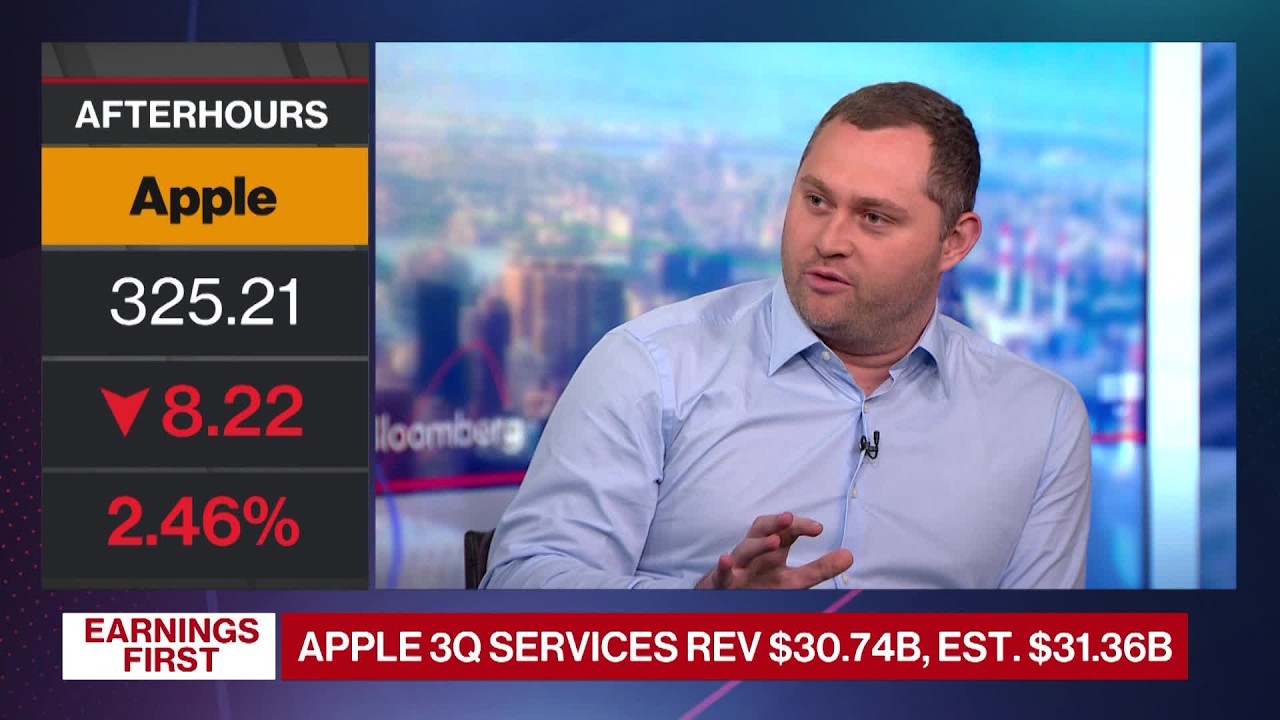
The supplied Bloomberg Television discussion accurately captured the extraordinary uncertainty immediately before the decision. Participants debated whether a rate increase could strengthen inflation credibility, whether a hike aimed at an energy shock would cause unnecessary damage to employment, and whether markets understood Warsh’s policy reaction function. Those themes remained central after the statement and press conference. :contentReference[oaicite:8]{index=8}
The segment also identified a crucial distinction between short-term policy rates and long-term borrowing costs. A central bank can raise an overnight interest rate and, under some conditions, cause longer-term yields to fall if investors interpret the move as decisive evidence that future inflation will be contained. The opposite can also happen: a central bank can hold its policy rate steady, only to see longer-term yields rise because markets demand greater inflation or uncertainty compensation.
That second pattern appeared after the July decision. Two-year yields declined as traders removed part of the immediate hiking premium. Ten- and 30-year yields moved higher, steepening the curve. The response indicated that the market was not simply celebrating easier policy. It was differentiating between the probability of a near-term move and the longer-term cost of inflation, debt supply, fiscal uncertainty and reduced policy guidance. :contentReference[oaicite:9]{index=9}
The broadcast’s pre-decision discussion also raised the possibility that an energy-driven inflation shock would be poorly suited to conventional monetary tightening. That remains one of the hardest questions confronting the FOMC. Higher interest rates cannot create oil, reopen shipping lanes, repair energy infrastructure or directly reduce geopolitical risk. They can, however, restrain second-round effects by weakening demand, reducing firms’ ability to pass on costs, slowing wage growth and signaling that the Fed will not accommodate a permanent rise in the general price level.
What changed after the video was the emergence of confirmed facts. The Fed held rates steady. Three officials wanted a hike. Warsh defended reduced forward guidance. The Treasury curve steepened. U.S. stocks closed sharply lower. Oil settled substantially higher, and Microsoft and Meta released new information about the enormous scale of artificial-intelligence investment after the closing bell. These developments made the article’s central question less speculative: it is no longer whether the July meeting might divide the Fed, but how the division will affect September and long-term financing conditions.
The Inflation Evidence Was Mixed, Not Benign
June’s consumer-price report provided the strongest argument for waiting. The overall Consumer Price Index declined 0.4% from May, the largest monthly decrease since April 2020. The core index, which excludes food and energy, was unchanged. On a 12-month basis, headline CPI slowed to 3.5% from 4.2%, while core CPI slowed to 2.6% from 2.9%. :contentReference[oaicite:10]{index=10}
Those figures were better than the preceding trend and suggested that some of the earlier inflation acceleration had not broadened into every category. Core goods prices fell 0.1% in June, shelter rose only 0.1%, transportation services fell 0.3% and medical-care services declined 0.1%. Services excluding energy were unchanged for the month, though still 3.2% higher than a year earlier.
Yet the report did not establish that inflation had been defeated. Headline CPI remained 3.5% above its year-earlier level. Energy was 15.7% more expensive than in June 2025, including a 26.7% increase in gasoline. Food prices were 3% higher. A single monthly decline driven heavily by a 5.7% fall in energy can reverse quickly when crude oil rebounds—as it did on the day of the Fed meeting. :contentReference[oaicite:11]{index=11}
The Fed also gives substantial weight to the Personal Consumption Expenditures price index, which uses different category weights and adapts more readily to changes in household spending. At the research cutoff, the latest monthly PCE report covered May. Headline PCE inflation was 4.1% year over year, and core PCE inflation was 3.4%. Both were substantially above 2%. The headline index rose 0.4% in May, and core prices rose 0.3%. :contentReference[oaicite:12]{index=12}
The gap between June CPI and May PCE partly reflects different reference months, methodologies and expenditure weights. It should not be read as evidence that one measure is right and the other wrong. It means the Fed entered its July meeting with an incomplete picture: one important report showed meaningful monthly relief, while its preferred underlying measure had most recently shown inflation running well above target.
June PCE inflation was scheduled for release at 8:30 a.m. EDT on July 30, after this article’s cutoff. The same release was due to include updated personal-income and consumer-spending data. Because those figures were not yet public, any claim about June core PCE at the time of writing would be a forecast rather than a confirmed result. :contentReference[oaicite:13]{index=13}
Inflation Fact Box
Latest Confirmed Inflation Data at the Research Cutoff
- June CPI, monthly: –0.4%
- June CPI, 12 months: +3.5%
- June core CPI, monthly: 0.0%
- June core CPI, 12 months: +2.6%
- May PCE, 12 months: +4.1%
- May core PCE, 12 months: +3.4%
Original sources: Bureau of Labor Statistics June CPI report and Bureau of Economic Analysis May PCE report.
Why One Soft Inflation Month Was Not Enough
Monetary policy responds to trends and expected future inflation, not only to the latest monthly observation. A weak energy component can lower headline inflation temporarily without resolving persistent price pressure in housing, labor-intensive services, insurance, food away from home or other categories. Conversely, a temporary oil surge can lift headline inflation without necessarily implying that domestic demand is excessive.
The committee therefore had to evaluate the composition of inflation, not just the top-line number. The most favorable interpretation of June CPI is that underlying inflation momentum cooled dramatically and that earlier supply-driven increases were beginning to reverse. The less favorable interpretation is that June represented a temporary pause before renewed oil pressure, tariffs, infrastructure demand and elevated services costs pushed inflation higher again.
The three dissenters evidently placed more weight on the latter risk. The majority appears to have concluded that current policy was already restrictive enough to justify observing more data. Because the policy statement did not reveal the members’ detailed reasoning, the minutes and subsequent speeches will be required to determine whether the disagreement concerned the inflation outlook, the estimated restrictiveness of current rates, the expected effect of an additional 25 basis points or the credibility cost of delaying action.
The Labor Market Gave the Fed a Reason to Wait
The June employment report was not recessionary, but it was softer than the headline stability described in the FOMC statement might imply. Nonfarm payroll employment increased by 57,000, approximately half the pace many forecasters had expected. The unemployment rate was unchanged at 4.2%, while the labor-force participation rate declined by 0.3 percentage point to 61.5%. :contentReference[oaicite:14]{index=14}
Revisions also weakened the recent history. April payroll growth was revised from 179,000 to 148,000, and May was revised from 172,000 to 129,000. Combined employment growth for those two months was therefore 74,000 lower than previously reported. Average hourly earnings rose 0.3% in June and 3.5% from a year earlier, suggesting that wage growth remained positive but was not obviously accelerating into an uncontrolled wage-price spiral.
The industry distribution was uneven. Professional and business services added 36,000 jobs, social assistance gained 25,000 and health care added 22,000. Leisure and hospitality lost 61,000 jobs, partly because seasonal hiring was weaker than usual. Employment in several other major industries changed little.
For the majority, these figures strengthened the argument for patience. Monetary policy operates with lags, and employment data are revised. Raising rates immediately after a weak payroll report could magnify a slowdown that is not yet visible in the unemployment rate. A central bank that waits six or seven weeks can review another employment report, more inflation data and updated evidence about oil and financial conditions before acting.
For the hawkish minority, the same report may not have been weak enough to outweigh inflation. Unemployment remained low by historical standards, layoffs were limited, wage growth was positive, and the Fed’s statement said job creation had kept pace with workforce expansion. If labor supply is growing slowly, a payroll increase of 57,000 may be more consistent with stability than it would have been in a faster-growing workforce.
This is why the dual mandate does not produce an automatic answer. A 4.2% unemployment rate and 3.4% core PCE inflation can support opposing recommendations depending on the policymaker’s estimate of neutral interest rates, labor-market equilibrium, inflation persistence and the probability that supply shocks spread into expectations. The July vote exposed that disagreement rather than resolving it.
Growth Was Resilient, but the Details Were Less Conclusive
The latest confirmed GDP estimate available at the decision showed the U.S. economy expanding at a 2.1% annualized rate in the first quarter of 2026, up from 0.5% in the fourth quarter of 2025. Investment, exports, government spending and consumer spending contributed to growth. Information services, the federal government, professional and technical services, and durable-goods manufacturing were leading industry contributors. :contentReference[oaicite:15]{index=15}
That headline supported the Fed’s description of solid activity. The economy had absorbed elevated interest rates, tariff disruptions, geopolitical uncertainty and rising energy costs without falling into contraction. Corporate profits from current production increased by $74.4 billion in the quarter, according to the BEA’s third estimate.
However, the measure of real final sales to private domestic purchasers grew at a more moderate 1.7% annualized rate. That gauge strips out exports, imports, inventories and government spending to provide a narrower view of underlying private demand. Real gross domestic income rose 1.2%, and the average of GDP and GDI increased 1.7%. Those details point to continued expansion but not an obviously overheated economy.
Price measures embedded in the first-quarter GDP accounts were more concerning. The PCE price index rose at a 4.6% annualized rate during the quarter, and core PCE increased at a 4.4% annualized rate. These quarterly annualized figures are not directly interchangeable with 12-month inflation rates, but they show why some officials were reluctant to treat inflation as a solved problem.
The advance estimate of second-quarter GDP was scheduled for July 30 at 8:30 a.m. EDT, after the article’s research cutoff. That timing made the July meeting particularly awkward: officials completed their decision only hours before the publication of a major growth report. They had access to extensive staff estimates and private data, but not the final public release that households, companies and markets would use to reassess the economy. :contentReference[oaicite:16]{index=16}
A stronger-than-expected second-quarter figure would reinforce the case that the economy can tolerate higher rates. A weaker result would increase concern that the Fed risks tightening into slowing private demand. Either outcome would arrive too late to change the July vote but early enough to influence September expectations.
Oil Complicated the Federal Reserve Interest Rate Decision
The July meeting took place amid another violent repricing of energy. Brent crude settled July 29 at $90.74 a barrel, up $6.65, or 7.91%, while West Texas Intermediate gained $5.20, or 6.56%, to $84.46. Reuters attributed the surge to renewed Middle East airstrikes, threats to regional supply and data showing low U.S. crude inventories. :contentReference[oaicite:17]{index=17}
In early trading on July 30, Brent climbed further to $92.22 and WTI to $84.89 as of 7:07 GMT. The market remained highly volatile because traders were weighing renewed military action against the possibility of diplomatic progress and continued tanker movements through critical shipping routes. :contentReference[oaicite:18]{index=18}
Energy inflation presents central banks with an uncomfortable choice. Raising rates does not increase the physical supply of petroleum. It cannot reduce the geopolitical risk premium embedded in crude prices, protect a tanker, secure a pipeline or accelerate refinery maintenance. A policy hike can lower aggregate demand, but that is an indirect and costly route to offsetting a supply loss.
Ignoring an energy shock is not risk-free either. Higher gasoline and utility costs reduce households’ real purchasing power. Businesses may pass higher transportation, electricity, petrochemical and logistics expenses into final prices. Workers may seek larger wage increases to recover lost purchasing power. If households and firms begin to assume that inflation will remain high, the shock can become more persistent than the original supply disruption.
The relevant question is therefore not simply whether oil caused inflation. It is whether the price shock is temporary and contained or broad, persistent and capable of changing behavior. A central bank may reasonably look through the first-round effect on gasoline while tightening against second-round pressure in wages, services, rents and inflation expectations.
June CPI illustrated the volatility. The energy index fell 5.7% in one month but remained 15.7% higher than a year earlier. Gasoline declined 9.7% from May while still standing 26.7% above its June 2025 level. The July crude rally raised the probability that some of June’s headline relief would reverse, although the eventual effect on retail gasoline depends on refining margins, taxes, distribution and the duration of the oil move. :contentReference[oaicite:19]{index=19}
The majority’s decision to wait can be defended as an attempt to avoid using demand destruction against a supply shock. The dissenters’ position can be defended as an effort to prevent a sequence of “temporary” shocks from changing the public’s inflation psychology. Neither argument is inherently unserious. The dispute concerns the probability and cost of second-round effects.
Kevin Warsh’s Communication Strategy Is Now Part of Monetary Policy
Warsh’s approach differs from the highly guided style that dominated much of the post-financial-crisis era. Rather than publishing a detailed policy narrative at every opportunity, he has emphasized shorter statements, less reliance on forecasts and a greater willingness to let market participants form their own judgments from incoming data.
His July opening remarks described the statement as conveying “just the facts” and deliberately steering clear of forecasting. He welcomed the fact that Treasury yields had moved substantially between meetings without being directed by fresh Fed projections or a coordinated speaking campaign. He argued that markets were responding to economic developments rather than waiting for policymakers to lead them. :contentReference[oaicite:20]{index=20}
There is a coherent case for that strategy. Forward guidance can become counterproductive when economic conditions change rapidly. A projected rate path may be mistaken for a promise, causing investors to discount risks or take excessive positions around an outlook that was never certain. Officials can become reluctant to change course because they fear surprising markets, even when the data warrant a change.
Less guidance can restore two-way risk. Markets must analyze inflation, employment, productivity, fiscal policy and global developments rather than treating each public appearance as an encoded rate signal. Asset prices may become more informative if they reflect decentralized judgment instead of an attempt to front-run the central bank’s preferred narrative.
The drawback is that a central bank’s reaction function is itself economically important. Businesses deciding whether to build a factory, households considering a mortgage and investors financing long-lived assets need some basis for estimating how policy will respond to inflation and employment. They do not require a guaranteed rate path, but they benefit from understanding the principles that convert data into decisions.
When that framework is unclear, markets may attach more uncertainty premium to long-term assets. The result can be higher real yields, wider credit spreads and more volatile financing conditions even when the Fed leaves its overnight rate unchanged. Reuters reported that Bank of America economists interpreted the July curve steepening as evidence that markets were questioning Fed credibility and argued that the reaction could increase pressure for a September hike. :contentReference[oaicite:21]{index=21}
Warsh’s position is that actions and eventual results matter more than constant explanation. That is true in the long run. If inflation returns to 2% without an employment shock, the communication strategy will look disciplined. If inflation remains elevated while the Fed repeatedly declines to tighten, silence will be interpreted less as strategic restraint and more as an absence of a workable framework.
The Difference Between Forward Guidance and a Reaction Function
Forward guidance tells markets something about the likely future path of policy. A reaction function explains the conditions under which policy is likely to change. The first can be highly specific—such as suggesting that rates will remain unchanged for a period. The second can remain flexible while still identifying priorities.
For example, a reaction function might state that the committee would be more likely to tighten if three- or six-month core inflation accelerated, inflation expectations rose, labor demand remained strong and financial conditions eased. It might also state that the committee would be more likely to wait if employment weakened materially, inflation slowed broadly or oil-driven headline inflation showed little evidence of spreading.
Such an explanation would not bind the Fed to a date or rate. It would help markets distinguish meaningful information from noise. The criticism of Warsh is therefore not necessarily a demand that the Fed “hold the market’s hand.” It is a request to explain how conflicting facts are weighted.
At the July press conference, Warsh offered broad principles but limited numerical specificity. He reiterated the 2% target, acknowledged that a central banker facing a stable labor market and rising underlying inflation could be inclined to tighten, and said interest rates could form part of the solution if inflation remained elevated. He declined to identify a precise trigger. Reuters summarized the result as leaving markets unsure what action the Fed was prepared to take. :contentReference[oaicite:22]{index=22}
The Fed’s Five Task Forces Add Opportunity—and Uncertainty
Warsh has organized five task forces to examine communications, balance-sheet policy, economic data, productivity and jobs, and inflation frameworks. The Fed says the groups will be co-led by outside advisers, supported by central-bank staff and asked to produce rigorous findings for the FOMC. :contentReference[oaicite:23]{index=23}
The communications group is reviewing how the Fed explains deliberations and decisions under uncertainty. The balance-sheet group is examining the costs and benefits of the ample-reserves regime. The data group is considering whether policymakers can obtain timelier economic signals. The productivity and jobs group is studying technologies such as artificial intelligence. The inflation-framework group is reassessing how the Fed understands and responds to different inflation drivers.
These are legitimate subjects. The pandemic, global supply disruptions, tariffs, energy shocks, changes in labor supply and the AI investment boom have challenged models calibrated to a more stable economic period. A framework that treats every inflation increase as an excess-demand problem may recommend unnecessary economic weakness. A framework that labels every price increase temporary may allow inflation to become embedded.
The institutional risk is that task-force work becomes a substitute for near-term decisions. Research into better policy cannot eliminate the need to set today’s rate using imperfect information. If the public hears repeated references to future analytical improvements while inflation remains above target, the exercise may be interpreted as delay.
The better interpretation is that the task forces and ordinary policy decisions operate on different timelines. July’s rate hold must stand on the existing evidence. The task forces should improve future analysis, but their eventual findings cannot retroactively justify the current stance. Warsh’s credibility will depend on demonstrating that institutional reform sharpens decision-making rather than diffusing accountability.
Why the Bond Market Sent a More Complicated Message Than Stocks
The immediate reaction to the statement looked superficially dovish. The Fed did not deliver the hike that had been assigned roughly a one-in-three probability. Two-year Treasury yields, which are particularly sensitive to expectations for the policy rate over the next several meetings, fell.
The official Treasury close showed a two-year yield of 4.22%, below the 4.26% level recorded on July 28. However, the 10-year yield increased from 4.61% to 4.67%, and the 30-year yield rose from 5.09% to 5.20%. The 20-year yield reached 5.21%. :contentReference[oaicite:24]{index=24}
This pattern is known as curve steepening: the difference between longer- and shorter-maturity yields increases. In this case, it contained at least two signals. First, the probability of an immediate or near-immediate hike declined. Second, investors required more compensation to hold long bonds exposed to inflation, fiscal borrowing, policy uncertainty and changes in the supply of competing assets.
A 30-year bond is sensitive to far more than the next FOMC decision. Its yield incorporates expectations for decades of short-term rates, inflation, economic growth and a term premium compensating investors for duration risk. It also reflects supply and demand. Heavy Treasury issuance, large corporate borrowing needs and reduced demand from price-sensitive investors can lift long yields even when the policy rate is unchanged.
The July response therefore challenged the simple claim that holding rates is automatically good for borrowers. It was beneficial relative to an unexpected hike for borrowers tied directly to short-term benchmarks. It was not necessarily beneficial for households seeking a new fixed-rate mortgage or companies issuing long-duration bonds.
Reuters reported that the 30-year yield crossed 5.20% for the first time since 2007. It also noted that market-implied odds of a September increase fell to about 57% after the decision, down from the near-certainty that had been priced conditional on no July move. Those odds represented a snapshot, not a forecast guarantee, and were subject to immediate revision as oil, economic data and official comments changed. :contentReference[oaicite:25]{index=25}
Market Fact Box
Official Treasury Closing Yields on July 29, 2026
- One-year: 4.04%
- Two-year: 4.22%
- Five-year: 4.37%
- 10-year: 4.67%
- 20-year: 5.21%
- 30-year: 5.20%
Original source: U.S. Treasury daily par yield curve rates.
What Higher Long-Term Yields May Be Saying
One interpretation is that the market expects the Fed eventually to raise rates and keep them elevated. Another is that investors believe inflation will remain above target for longer. A third is that fiscal borrowing and private-sector capital needs are raising the equilibrium cost of long-term financing independently of monetary policy.
These explanations are not mutually exclusive. A large federal deficit can increase Treasury supply at the same time that hyperscale technology companies borrow or spend heavily to construct data centers. Investors must allocate finite capital among government debt, corporate bonds, equities, infrastructure and international assets. Attractive yields may be required to clear the market.
Higher real yields can also emerge when growth expectations improve. Warsh highlighted strong capital investment and productivity. If investors believe AI and other technologies will increase the economy’s long-run productive capacity, they may expect stronger real growth and a higher neutral interest rate. That would push long yields upward without necessarily implying unanchored inflation.
The July curve therefore did not deliver a single verdict. It delivered a warning that the long end was not comforted by the rate hold. For the Fed, the challenge is to determine whether that represents healthy market price discovery, as Warsh suggested, or an emerging credibility and financing problem.
Mortgage Rates Did Not Receive a Direct Fed Cut
The federal funds rate is not the mortgage rate. Most U.S. home loans are fixed for 15 or 30 years, so their pricing is influenced more heavily by long-term Treasury yields, expectations for inflation, mortgage-backed securities spreads, lender capacity and borrower-specific risk than by the overnight rate alone.
Freddie Mac’s Primary Mortgage Market Survey showed the average 30-year fixed-rate mortgage at 6.58% as of July 23, up from 6.55% a week earlier and 6.49% on July 9. The 15-year fixed rate averaged 5.96%. The next weekly survey was due after the Fed meeting, so those figures do not yet include the full July 29 bond-market reaction. :contentReference[oaicite:26]{index=26}
The rise in the 10- and 30-year Treasury yields after the Fed decision created upward rather than downward pressure on mortgage pricing, all else equal. The eventual effect depends on subsequent trading, mortgage-backed securities demand and lender margins, but the direction of the long-end move illustrates why a Fed hold does not guarantee cheaper home loans.
Could a Fed hike have lowered mortgage rates? In theory, yes. If an unexpected increase convinced investors that inflation would return to target sooner, long yields could fall even as the overnight rate rose. That outcome would require the credibility effect to outweigh expectations of a higher future policy path. It is possible but not automatic.
The reverse is also possible. A hike could cause investors to price additional increases, lift recession risk or increase rate volatility, keeping mortgage costs high. The effect depends on the message, the economic context and whether the market views the action as sufficient, excessive or overdue.
For prospective homebuyers, the practical conclusion is that the July hold did not materially reset affordability. Monthly payments remain determined by home prices, down payments, taxes, insurance and mortgage rates that are still above 6%. Existing homeowners with fixed-rate loans are largely insulated from immediate changes, while borrowers using adjustable-rate mortgages or home-equity lines may be more directly exposed to short-term benchmarks.
Housing is also part of the Fed’s policy dilemma. Elevated mortgage rates weaken transaction volumes, construction incentives and affordability, yet cutting rates before inflation is controlled could lower long-term credibility and ultimately keep mortgage yields higher. The central bank cannot sustainably deliver low mortgage rates merely by reducing the overnight rate if bond investors expect persistent inflation.
What the Decision Means for Credit Cards, Auto Loans and Savings
Credit-card rates are typically linked more closely to the prime rate, which in turn responds to changes in the federal funds target. Because the Fed held steady, the decision did not create an immediate policy-driven reduction in revolving borrowing costs. Cardholders with balances therefore should not expect automatic relief from the July meeting.
Home-equity lines of credit and some variable-rate business loans are similarly sensitive to short-term benchmarks. Their base rates generally remain elevated while the Fed’s target range stays at 3.5%–3.75%. Individual loan pricing also includes credit spreads and contractual reset schedules, so changes may not occur on the day of an FOMC announcement.
Auto loans combine short- and medium-term market rates with borrower credit quality, vehicle values, lender competition and securitization conditions. A rate hold prevents an additional immediate increase in the policy component, but it does not reverse accumulated borrowing costs or guarantee that lenders will offer lower rates.
Savers receive the opposite effect. Money-market funds, Treasury bills and high-yield deposit accounts have benefited from elevated short-term rates. Holding the target steady supports those returns, although institutions can adjust deposit rates independently and may reduce them if markets begin to anticipate future easing.
The distributional effect is therefore uneven. Borrowers with variable-rate debt generally prefer lower policy rates. Savers and holders of short-term securities benefit from higher yields. Fixed-rate borrowers are insulated until they refinance or take on new debt. Businesses with immediate working-capital needs respond to the front end, while infrastructure projects and acquisitions may depend more on long-term rates and credit spreads.
Stocks Initially Found Relief, Then Closed Sharply Lower
U.S. equities briefly pared their losses after the Fed held rates steady, reflecting relief that the committee did not deliver an immediate increase. That reaction did not last. The S&P 500 closed down 1.52%, the Nasdaq Composite fell 1.74% and the Dow Jones Industrial Average declined 2.19%. Reuters reported that the Nasdaq 100 dropped 2.1%, extending a retreat from its June record. :contentReference[oaicite:27]{index=27}
The Fed was not the only driver. Semiconductor and other AI-linked shares had already been weakening amid concern about capital expenditure, valuations and the timing of returns from massive infrastructure programs. Oil’s sharp rise added pressure by increasing the risk of renewed inflation and higher operating costs. The combination of elevated long-term yields, expensive technology valuations and energy uncertainty made the rate hold insufficient to restore confidence.
The market’s initial and closing reactions answer different questions. The first move compared the actual decision with the probability of an immediate hike. The later move incorporated Warsh’s press conference, the rise in long yields, oil, sector-specific selling and positioning ahead of major earnings reports.
Investors therefore should not treat the day’s index decline as a clean measure of whether the hold was “good” or “bad.” Financial markets process multiple shocks simultaneously. A stock can decline because its expected cash flows weaken, because the discount rate applied to those cash flows rises, because positioning is crowded or because another asset becomes more attractive.
The July session was especially sensitive to discount rates. Long-duration growth companies derive a large share of their valuation from earnings expected many years into the future. Higher real and nominal bond yields reduce the present value of those distant cash flows, even when the company’s near-term revenue outlook is unchanged.
Microsoft and Meta Showed Why AI Investment Matters to the Fed
Warsh repeatedly highlighted the scale of high-technology capital expenditure. In his congressional testimony earlier in July, he said equipment investment had increased roughly 8% over the year ending in the first quarter and that high-tech spending had grown nearly 25% on a four-quarter basis. In his July 29 opening statement, he cited nearly 20% four-quarter growth in AI-related equipment and software using more recent data. :contentReference[oaicite:28]{index=28}
The economic effect is ambiguous. Building data centers, power infrastructure and computing capacity supports construction, manufacturing, engineering employment and demand for semiconductors. Over time, successful AI deployment could increase productivity, expand potential output and allow faster growth without equivalent inflation.
In the near term, however, the investment boom can strain supplies of chips, electricity, transformers, cooling equipment, skilled labor and construction capacity. If demand expands faster than supply, prices rise. The Fed must decide whether those increases are narrow relative-price changes or evidence of a broader inflation process.
Microsoft and Meta reported after the July 29 close, underscoring the scale of the issue. Microsoft rose modestly in extended trading after reporting cloud growth above Wall Street expectations. Meta fell after increasing the lower end of its 2026 capital-expenditure forecast to $130 billion while retaining an upper end of $145 billion. Reuters noted that investors were questioning whether AI spending was reducing free cash flow faster than new revenue could justify. :contentReference[oaicite:29]{index=29}
The policy significance extends beyond two companies. If hyperscalers collectively spend hundreds of billions of dollars on infrastructure, they compete for capital with the federal government, manufacturers, utilities, property developers and smaller businesses. That can raise yields and input costs even if the investment eventually produces major productivity gains.
This creates a timing mismatch. Inflationary demand for construction and equipment may occur now, while the supply benefits of higher productivity arrive years later. The Fed cannot know with precision how large those future benefits will be or how quickly they will emerge. Tightening too aggressively could suppress an investment cycle that expands productive capacity. Waiting too long could allow the buildout to add to inflation in an already supply-constrained economy.
Is AI Investment Inflationary or Disinflationary?
It can be both. During the buildout phase, AI investment may increase demand for scarce resources and raise prices. During the adoption phase, it may reduce unit labor costs, improve logistics, accelerate research, optimize energy use and allow companies to produce more with the same inputs.
The net effect depends on scale, speed and distribution. Productivity gains concentrated in a few technology companies may not immediately reduce prices across health care, housing, education or other large household expenses. Data-center construction concentrated in regions with limited power capacity may raise electricity costs locally even if AI improves efficiency elsewhere.
The Fed’s productivity and jobs task force is intended to study these questions. Until stronger evidence arrives, policymakers must avoid two symmetrical errors: assuming that AI automatically solves inflation, and assuming that all AI-related price pressure is permanent.
Fiscal Policy and Treasury Supply Are Part of the Long-End Story
The Fed sets monetary policy independently, but it operates inside a financial system affected by federal borrowing. Large deficits require Treasury issuance. When the supply of bonds rises, yields may need to increase to attract sufficient demand, particularly if investors are also financing large corporate and infrastructure projects.
Fiscal pressure can therefore keep mortgage and corporate borrowing rates high even without a Fed hike. The July 29 Treasury curve, with 20- and 30-year yields above 5.2%, reflected more than expectations for the next policy meeting. It incorporated compensation for inflation, duration, supply and uncertainty over the long-run path of public debt.
The transcript referenced tariff refunds and concern about the fiscal outlook. The BEA confirmed that a February 2026 Supreme Court decision required the federal government to refund certain tariffs imposed under the International Emergency Economic Powers Act. The agency classified those refunds as capital transfers that did not affect first-quarter GDP. The supplied discussion’s specific refund total was not independently confirmed in the official sources used for this article and is therefore not presented as a verified figure. :contentReference[oaicite:30]{index=30}
Tariffs affect the policy debate through several channels. They can raise import prices, alter supply chains, reduce tariff revenue if overturned or refunded, and create uncertainty that delays investment. The Fed must decide how much of the price effect is a one-time level adjustment and how much becomes persistent inflation through repeated rounds of repricing.
Monetary policy cannot directly resolve the federal deficit. The Fed can influence Treasury financing costs, but using rate cuts to reduce government interest expense would undermine price stability if inflation remained elevated. Conversely, raising rates to demonstrate independence increases the government’s interest burden. That tension is one reason central-bank credibility must rest on a clearly defined mandate rather than fiscal convenience.
Political Pressure Did Not Produce a Rate Cut
President Donald Trump has repeatedly argued for lower interest rates and has linked borrowing costs to housing affordability and government finance. The July decision did not deliver what a rate-cut advocate would have wanted. It preserved the existing range and included three votes for an increase.
Warsh supported the hold, but his public message was not dovish in the ordinary sense. He reaffirmed the 2% inflation target, welcomed the market’s willingness to price tighter conditions from economic information and said the Fed would act when necessary. Reuters reported that he declined to offer a path but did not hesitate to describe persistent inflation as unacceptable. :contentReference[oaicite:31]{index=31}
Central-bank independence does not require policymakers to choose the action most opposed by the president. A rate increase made solely to demonstrate independence would be as political as a cut made to satisfy the White House. Independence means applying the statutory mandate and economic evidence without allowing electoral preference to determine the result.
The 9–3 vote provided institutional evidence that the FOMC was not mechanically following presidential calls for easier policy. At the same time, the majority’s refusal to hike shows that independence also protects the Fed from pressure to perform toughness for appearances. The relevant question is whether the hold was economically justified, not whether it looked sufficiently confrontational.
Does the Election Calendar Prevent an October Move?
No formal rule prevents the Fed from changing rates near an election. The committee’s 2026 calendar includes meetings on September 15–16, October 27–28 and December 8–9. The Fed’s statutory responsibilities continue throughout the political calendar. :contentReference[oaicite:32]{index=32}
Officials may nevertheless understand that a move immediately before an election will attract political criticism. That reality can increase the communication burden, but it should not change the economic standard. If inflation or employment data clearly require action, delaying solely to avoid controversy would itself be a political choice.
The October meeting may be operationally awkward because it comes late in the election cycle and does not include a scheduled Summary of Economic Projections. The September meeting is therefore the cleaner opportunity to explain a move alongside updated forecasts. That does not make a September hike inevitable, but it raises the strategic importance of the data arriving before September 16.
Why July 2026 Was Not Another Volcker Moment
The Bloomberg discussion compared the uncertainty surrounding the meeting with historically dramatic episodes, including Paul Volcker’s 1979 anti-inflation shift. The analogy captured the unusual uncertainty but not the scale of the economic situation.
Volcker confronted double-digit inflation and transformed the Fed’s operating procedures in a campaign that ultimately involved far higher interest rates and a severe recession. July 2026 featured above-target inflation, an energy shock and questions about institutional credibility, but the policy rate was 3.5%–3.75%, unemployment was 4.2% and core CPI was 2.6% year over year.
The relevant lesson from the Volcker era is not that every inflation concern demands shock therapy. It is that allowing inflation expectations to become embedded can make the eventual remedy more costly. The Fed wants to avoid both a premature recession and a delayed response that later requires much more tightening.
The transcript also invoked the European Central Bank’s July 2008 increase, which occurred as energy prices surged shortly before the global financial crisis intensified. That episode is often cited as a warning against tightening into a supply shock and deteriorating financial conditions.
The comparison again has limits. The U.S. economy in July 2026 had not entered a financial crisis, the labor market remained broadly stable and the Fed’s target range was lower than the Treasury yields already prevailing across much of the curve. A quarter-point increase would not have been equivalent to the ECB’s 2008 decision in economic context or consequence.
Historical analogies are most useful as questions. Is the Fed underestimating inflation persistence, as central banks did in some earlier periods? Is it overreacting to an energy shock that monetary policy cannot repair? Are financial conditions already tightening enough through markets? The July vote showed that reasonable officials answered those questions differently.
Three Scenarios for the September Meeting
Scenario One: The Fed Raises Rates by 25 Basis Points
A September increase becomes more likely if July and August inflation show broad underlying pressure, oil remains high, inflation expectations rise and employment stays stable. The three July dissenters would begin with an established argument, and only two additional voting members would be needed to turn a 9–3 hold into a 7–5 decision if the chair joined the hawkish side.
A September hike would probably be presented as a measured adjustment rather than the start of an open-ended campaign. Officials could argue that the labor market remained resilient, that core inflation was not converging rapidly enough to 2%, and that a small increase would protect credibility without materially damaging growth.
The market reaction would depend on guidance. A hike accompanied by language suggesting a pause could lower long-term inflation compensation and limit the increase in longer yields. A hike interpreted as the first of several could lift the entire curve and pressure equities, credit and housing.
Scenario Two: The Fed Holds but Delivers a Clear Hawkish Framework
The committee could hold again while explaining that additional evidence is required and identifying conditions that would trigger tightening. This would preserve optionality and might reduce uncertainty if Warsh described the reaction function more clearly than he did in July.
Such an outcome could occur if inflation remained above target but slowed at the margin, employment weakened modestly and oil prices stabilized. Officials might conclude that market yields were already providing sufficient restraint while warning that a renewed inflation acceleration would prompt action.
The risk is that another hold with another opaque press conference would intensify the credibility debate. The July dissents would be harder to dismiss, and long yields could rise further if investors believed the Fed was unwilling to act.
Scenario Three: Economic Weakness Removes the Case for a Hike
A sharp deterioration in payrolls, a rise in unemployment, weaker private demand or a broad decline in inflation could persuade the dissenters—or at least members of the majority—that rates should remain unchanged. A severe downside surprise could even revive discussion of cuts, though the July statement and vote provided no evidence that easing was imminent.
This scenario does not require a recession. Several months of weak job creation combined with core inflation moving convincingly toward 2% could make patience the consensus position. The Fed would then emphasize the lagged effect of past tightening and the risk of overshooting.
The key is that September policy will depend on a portfolio of evidence. No single oil price, CPI report or payroll figure should be treated as an automatic switch. Revisions, composition, expectations and financial conditions matter.
The Data Calendar Before September
The next FOMC meeting is scheduled for September 15–16 and will include a new Summary of Economic Projections. Before then, officials will receive two additional monthly employment reports and two additional CPI reports, along with PCE inflation, retail spending, production, housing and survey evidence. :contentReference[oaicite:33]{index=33}
At the research cutoff, the most immediate releases were second-quarter GDP and June personal income and outlays, both scheduled for July 30 at 8:30 a.m. EDT. The July employment report was scheduled for August 7, July CPI for August 12 and July producer prices for August 13. :contentReference[oaicite:34]{index=34}
Officials will then receive August employment and inflation data before the September meeting. Those releases are particularly important because they will show whether June’s core CPI relief persisted and whether weak payroll growth represented noise or a trend.
Oil and geopolitical developments do not follow a statistical calendar. A disruption in the Strait of Hormuz, a ceasefire, a restoration of shipping or another attack could alter inflation expectations within hours. The committee will also monitor credit spreads, bank conditions, equity volatility, the dollar and the Treasury curve for evidence that financial conditions are becoming too tight or too loose.
What Businesses Should Watch
Companies should separate the policy rate from their actual financing rate. A business using a floating-rate credit facility may be most sensitive to the federal funds target and short-term benchmarks. A company issuing 10- or 30-year bonds is more exposed to the long end of the Treasury curve and its own credit spread.
The July decision prevented an immediate 25-basis-point increase in the short-rate component of borrowing. It did not prevent long-term yields from rising. Businesses planning capital expenditure should therefore examine the full cost of capital rather than assuming that “the Fed paused” means financing conditions eased.
Energy-intensive firms face an additional problem. Higher oil and gas costs can compress margins even without a rate hike. Companies with pricing power may pass costs to customers, while those in competitive markets may absorb them. Hedging policies, contract structures, transportation exposure and inventory cycles become important determinants of earnings.
Technology and infrastructure companies must consider crowding-out effects. Heavy AI investment may support revenue growth and productivity, but it also increases demand for financing, electricity, semiconductors and skilled workers. Projects that looked attractive with a 4% long-term benchmark may be less compelling above 5%.
Businesses should also prepare for volatility rather than one-directional certainty. Warsh’s reduced-guidance framework makes it less likely that the Fed will pre-announce every move. Treasury yields and exchange rates may react more strongly to economic data, requiring more disciplined liquidity and interest-rate risk management.
What Investors Should—and Should Not—Infer
The July decision is not evidence that the Fed has begun an easing cycle. Rates were held, not cut, and three officials wanted tighter policy. The statement retained an explicit commitment to restore price stability.
It is also not proof that a September hike will occur. Market-implied probabilities are prices derived from futures and options, not official forecasts. They change with incoming information and can be wrong.
The equity decline does not establish that every stock is vulnerable to the same degree. Companies differ in leverage, duration, pricing power, energy exposure, capital needs and valuation. High-quality balance sheets can still face valuation pressure when long yields rise, while some financial or energy companies may benefit from parts of the environment.
The bond selloff at the long end does not prove that inflation expectations are unanchored. Long yields include real growth expectations, term premium, fiscal supply and international factors. A complete interpretation requires separating those components rather than equating every yield increase with expected CPI.
Finally, the Fed’s stated confidence does not guarantee success. Monetary policy is conducted under uncertainty. Oil, tariffs, productivity, labor supply and fiscal policy can change the outlook. Readers should treat official projections, analyst forecasts and market probabilities as conditional assessments rather than confirmed outcomes.
Principal Risks and Uncertainties
Inflation Reaccelerates
The largest hawkish risk is that June’s soft core CPI reading proves temporary. Renewed energy inflation, tariffs, AI-related demand and services prices could push underlying inflation higher. In that case, waiting would increase the probability of a larger or faster tightening later.
The Labor Market Weakens More Than Expected
Payroll revisions and declining participation may signal more fragility than the unemployment rate reveals. If employment growth turns negative or unemployment rises quickly, a September hike could amplify the slowdown.
Long-Term Yields Continue Rising
A sustained increase in 10- and 30-year yields would tighten housing, corporate and government finance without a formal Fed move. That could reduce the need for a hike, but it could also reflect deteriorating inflation or fiscal credibility.
Oil Supply Is Disrupted
A prolonged interruption in Middle East energy flows would raise headline inflation and reduce real household income. The result could resemble stagflation: weaker growth combined with higher prices, the most difficult combination for a central bank.
AI Spending Produces Less Productivity Than Expected
If capital spending lifts costs and borrowing without producing commensurate output, the economy could inherit higher yields and excess capacity rather than a productivity boom. If the investment succeeds, potential growth could rise and reduce inflationary pressure over time.
Reduced Guidance Creates an Excessive Uncertainty Premium
Warsh’s communication experiment may improve price discovery, but it could also make long-term financing more expensive if investors cannot infer the policy framework. The strategy will be judged partly by whether volatility reflects useful information or avoidable confusion.
Timeline of the July Federal Reserve Decision
- December 10, 2025: The Fed lowered the target range by 25 basis points to 3.5%–3.75%.
- June 17, 2026: The FOMC held the range unchanged at Warsh’s first meeting as chair.
- July 2: June payroll growth was reported at 57,000, with unemployment at 4.2% and downward revisions to April and May.
- July 9: The Fed announced the leadership and objectives of five monetary-policy task forces.
- July 14: June CPI showed a 0.4% monthly decline and unchanged core prices.
- July 28–29: The FOMC conducted its two-day policy meeting amid volatile oil, bond and equity markets.
- July 29, 2:00 p.m. EDT: The Fed announced a 9–3 vote to hold rates at 3.5%–3.75%.
- July 29, 2:30 p.m. EDT: Warsh held his post-meeting press conference and reiterated the 2% target without providing a specific rate path.
- July 29 close: The two-year Treasury yield finished at 4.22%, the 10-year at 4.67% and the 30-year at 5.20%.
- September 15–16: The next scheduled FOMC meeting will include updated economic projections.
Frequently Asked Questions
What did the Federal Reserve decide on July 29, 2026?
The Federal Reserve held the federal funds target range unchanged at 3.5%–3.75%. The decision passed by a 9–3 vote. Beth Hammack, Neel Kashkari and Lorie Logan dissented because they preferred a quarter-percentage-point increase. :contentReference[oaicite:35]{index=35}
Did the Fed raise interest rates?
No. The Fed did not raise or cut its target range. It also kept the rate paid on reserve balances at 3.65% and the primary credit rate at 3.75%. :contentReference[oaicite:36]{index=36}
Why did three Fed officials want a hike?
The formal statement did not provide individual explanations, but the dissents indicate that those officials judged inflation risks sufficiently serious to warrant tighter policy. Inflation remained above the 2% target, energy prices were volatile, and the labor market had not shown a decisive deterioration.
Why did the majority vote to hold?
The majority had reasons to wait: June core CPI was unchanged, payroll growth had slowed, earlier job gains were revised lower and higher market yields were already tightening financial conditions. Waiting until September allows officials to review additional inflation, employment and growth data.
What is the current federal funds rate?
The Fed’s target range is 3.5%–3.75%. The effective federal funds rate—the actual overnight rate resulting from market transactions—generally trades within that range but is a separate observed figure.
Will the Fed raise rates in September 2026?
A September increase is possible but not confirmed. Immediately after the July decision, futures pricing implied roughly a 57% probability, according to Reuters’ report using CME data. That probability will change with inflation, employment, oil prices and official commentary. :contentReference[oaicite:37]{index=37}
When is the next Federal Reserve meeting?
The next scheduled FOMC meeting is September 15–16, 2026. It will include a new Summary of Economic Projections. Later meetings are scheduled for October 27–28 and December 8–9. :contentReference[oaicite:38]{index=38}
Will mortgage rates fall because the Fed held rates steady?
Not necessarily. Mortgage rates depend heavily on long-term Treasury yields and mortgage-market spreads. The 10- and 30-year Treasury yields rose after the July decision, which can place upward pressure on mortgage rates even though the Fed did not hike.
What was the latest average 30-year mortgage rate?
Freddie Mac reported an average 30-year fixed mortgage rate of 6.58% for the week ending July 23, 2026. That survey preceded the full bond-market reaction to the Fed meeting. :contentReference[oaicite:39]{index=39}
What is the latest U.S. inflation rate?
June headline CPI was 3.5% higher than a year earlier, while core CPI was up 2.6%. The latest available PCE figures at the research cutoff covered May: headline PCE was up 4.1% and core PCE was up 3.4% year over year. :contentReference[oaicite:40]{index=40}
Why are CPI and PCE inflation different?
The indexes use different category weights, formulas and scopes. PCE adjusts more readily when consumers substitute among goods and services and covers a broader range of expenditures. CPI more directly measures out-of-pocket prices faced by urban consumers. The Fed formally defines its 2% goal using PCE inflation.
What happened to Treasury yields after the decision?
Shorter yields declined while longer yields rose. The official July 29 close was 4.22% for the two-year Treasury, 4.67% for the 10-year and 5.20% for the 30-year. The steepening suggested less immediate hike risk but greater long-term inflation, fiscal or uncertainty premium. :contentReference[oaicite:41]{index=41}
Why did stocks fall even though the Fed did not hike?
The hold removed one near-term risk, but investors remained concerned about future tightening, long-term yields, oil prices and heavy AI capital expenditure. The S&P 500 fell 1.52%, the Nasdaq Composite declined 1.74% and the Dow lost 2.19% on July 29. :contentReference[oaicite:42]{index=42}
Can the Fed stop inflation caused by oil prices?
It cannot directly increase energy supply. It can restrain overall demand and prevent energy costs from spreading into broader prices, wages and expectations. The challenge is to limit second-round inflation without causing unnecessary unemployment in response to a supply shock.
Does a 9–3 decision mean the Fed is close to a hike?
It increases the possibility but does not determine the next vote. Three members have established a hawkish position, while the remaining nine supported waiting in July. Additional data could move members in either direction.
Are rate cuts still possible in 2026?
They are not impossible, but the July decision provided no indication that a cut was imminent. Inflation remained above target, three officials wanted a hike and the statement emphasized price stability. A cut would probably require a meaningful deterioration in employment or a much clearer decline in inflation.
Final Assessment
The Federal Reserve’s July decision was a hold in form but a warning in substance. The policy rate remained at 3.5%–3.75%, yet three regional Fed presidents concluded that inflation required an immediate increase. That was an unusually large, one-directional dissent and the clearest evidence so far that patience inside the committee is becoming conditional.
The strongest argument for the majority is that monetary policy was already restrictive, market yields had risen materially, June core CPI was flat and the labor market showed signs of slowing. An additional hike aimed largely at an energy shock could weaken employment without producing more oil or quickly reducing headline inflation.
The strongest argument for the dissenters is that inflation had remained above target for years, the latest core PCE reading was still 3.4%, oil was surging again and the economy continued to grow. Waiting risks allowing another sequence of supply shocks to influence expectations and makes the Fed’s promise of price stability harder to translate into a credible strategy.
The market did not deliver an unqualified endorsement of either side. Short-term yields fell because the immediate hike did not occur. Long-term yields rose because the hold did not eliminate inflation, fiscal or policy uncertainty. Stocks closed sharply lower, and mortgage borrowers received no guarantee of relief.
Warsh’s reduced-guidance strategy is now inseparable from the policy debate. Encouraging markets to analyze data independently can improve price discovery, but the Fed must still explain enough of its reaction function for households and businesses to understand how the institution will respond. Silence cannot permanently substitute for a framework.
The September meeting is therefore more consequential than a simple continuation of July. By then, the committee will have additional employment and inflation reports, updated economic projections and more evidence about the Middle East energy shock and AI investment boom. A hike will become more likely if inflation broadens while employment remains stable. A hold will be easier to defend if underlying inflation continues to slow or labor-market weakness becomes clearer.
The essential conclusion is not that a September hike is certain. It is that the threshold for one appears lower than it was before the 9–3 vote. The Fed has preserved its flexibility, but it has also increased the burden on the next round of data—and on Warsh—to explain how a central bank committed to 2% inflation intends to get there.
Sources
- Federal Reserve: July 29, 2026 FOMC statement
- Federal Reserve: Chairman Kevin Warsh’s July 29 opening statement
- Federal Reserve: July 29 monetary-policy implementation note
- Federal Reserve: FOMC meeting calendar
- Federal Reserve: Monetary-policy task-force announcement
- Federal Reserve: Kevin Warsh’s July 2026 Monetary Policy Report testimony
- Bureau of Labor Statistics: June 2026 Consumer Price Index
- Bureau of Labor Statistics: June 2026 Employment Situation
- Bureau of Economic Analysis: May 2026 Personal Income and Outlays
- Bureau of Economic Analysis: First-quarter 2026 GDP third estimate
- U.S. Treasury: 2026 daily par yield curve rates
- Freddie Mac: Primary Mortgage Market Survey
- Reuters: Warsh-led Fed leaves rates on hold and bond market uncertain
- Reuters: July 29 U.S. stock-market close
- Reuters: July 29 oil-market surge
- Reuters: Early July 30 oil-market update
Affiliate disclosure: Businessfinance.news may earn compensation from qualifying actions completed through selected links on this website, at no additional cost to the reader. Affiliate relationships do not influence our editorial reporting, analysis, or conclusions.