Big Tech’s artificial-intelligence spending debate has entered a more demanding phase. The question is no longer whether Microsoft, Meta Platforms, Apple, Qualcomm and their peers are investing enough in AI. It is whether each company can convert that investment into revenue, better margins, stronger customer retention or durable strategic leverage before the cost of chips, memory, data centers and power overwhelms the financial case.
Microsoft supplied the clearest evidence in this earnings cycle that an AI infrastructure buildout can generate visible commercial returns. Azure growth accelerated, Microsoft 365 Copilot paid seats increased, GitHub Copilot usage expanded, and newly installed computing capacity was absorbed quickly enough for management to say demand still exceeded supply. Meta delivered a different picture: its advertising engine remained impressively strong and AI is plainly improving recommendations and ad performance, but capital expenditure surged, free cash flow fell to less than $1 billion, and the path from infrastructure ownership to new enterprise revenue remained less developed.
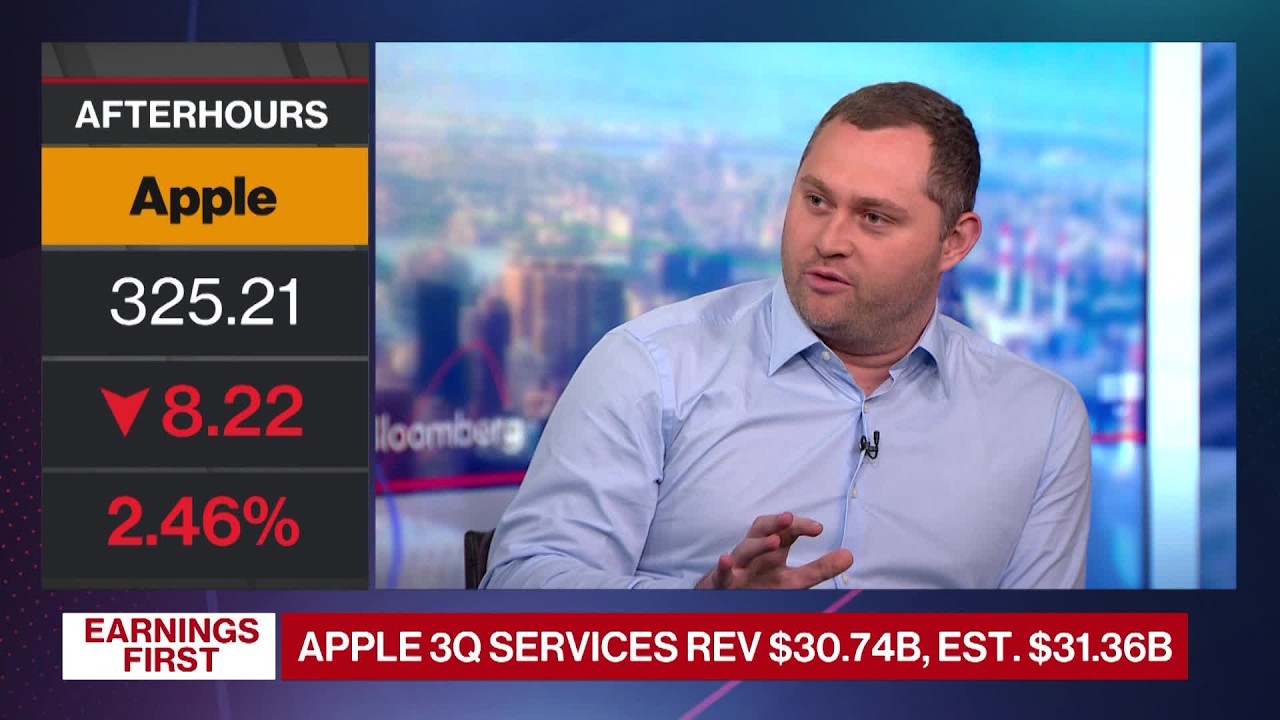
Qualcomm exposed another side of the same boom. The AI data-center race is tightening supplies and lifting input costs across semiconductors, memory and advanced packaging. That pressure is feeding into smartphones and consumer electronics, where higher bills of materials can depress unit volumes even when end-user interest has not disappeared. Apple then reported after the July 30 market close and demonstrated both the advantages and limits of its comparatively capital-light AI strategy: revenue and earnings beat expectations, yet shares fell in after-hours trading after management described meaningful supply constraints and issued a growth outlook below Wall Street’s target.
The result is a widening hierarchy of AI business models. Cloud platforms can monetize scarcity directly. Advertising platforms can earn indirect returns through better engagement and targeting, but must defend enormous infrastructure commitments. Semiconductor suppliers can benefit from new data-center products while suffering cost inflation and weaker device demand. Hardware companies with pricing power may pass through some costs, although they still depend on suppliers whose capacity has been redirected toward higher-value AI workloads.
Last updated: July 31, 2026, 3:51 a.m. EDT. Financial results, guidance and market reactions are current through that research cutoff.
Key Takeaways
- Microsoft showed the strongest near-term AI monetization evidence: fiscal fourth-quarter revenue rose 18% to $90.0 billion, Azure and other cloud-services revenue increased 43%, Microsoft Cloud revenue reached $59.3 billion, and Microsoft 365 Copilot surpassed 30 million paid seats.
- Meta’s core business remained powerful, but cash conversion deteriorated: second-quarter revenue rose 28% to $60.8 billion while free cash flow fell 91% year over year to $784 million as capital spending and other costs rose sharply.
- Investors rewarded proof, not merely ambition: Microsoft shares gained more than 15% in regular U.S. trading on July 30, their biggest daily percentage increase in 18 years, while Meta fell more than 9% after investors focused on its spending burden and uncertain external monetization path.
- Qualcomm demonstrated the physical cost of the AI boom: handset revenue declined 20% year over year as memory constraints and higher manufacturing costs pressured the smartphone market, even as automotive revenue grew 61%.
- Apple’s strong quarter did not eliminate supply concerns: fiscal third-quarter revenue rose 16% to $109.4 billion, but shares dropped in after-hours trading after a slower-than-expected outlook and warnings about component availability.
- The central investment test has changed: the market increasingly wants measurable utilization, revenue attachment, pricing power, cash-flow durability and credible financing—not just a larger capital-expenditure budget.
Fact Box
The four-company earnings split
- Microsoft: rising cloud growth, expanding paid AI products and a still-capacity-constrained Azure platform.
- Meta: rapid advertising growth and measurable AI benefits inside the core business, offset by exceptionally heavy infrastructure spending and thin quarterly free cash flow.
- Qualcomm: a contracting handset business under supply pressure, alongside fast-growing automotive and emerging data-center revenue.
- Apple: record June-quarter revenue and strong iPhone demand, but supply constraints and a softer forward growth rate.
Original sources: Microsoft fiscal 2026 fourth-quarter results, Meta second-quarter results, Qualcomm fiscal 2026 third-quarter release, and Apple fiscal 2026 third-quarter results.
The AI Spending Debate Has Moved From Scale to Proof
For much of the first phase of the generative-AI cycle, spending itself was interpreted as a sign of strategic seriousness. Companies announced larger clusters, more data centers, more accelerator purchases and more ambitious model road maps. The logic was understandable. Computing capacity was scarce, demand was difficult to forecast, and falling behind on infrastructure could leave a platform unable to train competitive models or serve customers when adoption accelerated.
That argument has not disappeared. What has changed is the market’s willingness to treat every dollar of AI capital expenditure as equally valuable. A data center is not an economic return. A graphics processor is not revenue. A model benchmark is not necessarily a product. The financial case begins when capacity is utilized, when customers pay for the resulting service, when the service strengthens retention or pricing, or when it reduces enough operating cost to justify the investment.
Microsoft’s quarter mattered because it connected several links in that chain. The company did not merely report that it had spent heavily. It showed faster Azure growth, more paid Copilot seats, expanding GitHub Copilot consumption and a large commercial backlog. It also said that recently added capacity was monetized quickly. Those disclosures do not prove that every future dollar of capital spending will earn an attractive return, but they make the return mechanism visible.
Meta’s quarter showed why visibility matters. The company can already demonstrate real AI benefits in its advertising system. Better recommendations can increase time spent, create more ad impressions and improve conversion. Generative tools can make it easier for small businesses to produce advertising creative. Business agents can automate customer interactions. Yet Meta’s infrastructure program is now so large that improvements inside the existing advertising franchise may not be enough to satisfy investors unless the company also builds material new revenue lines or restores a stronger free-cash-flow trajectory.
Qualcomm and Apple sit further down the supply chain. Neither owns a hyperscale public cloud. Their AI economics are therefore different. Qualcomm is attempting to move from a smartphone-centered royalty and chip model toward automotive, industrial edge computing and data centers. Apple is integrating AI into a device-and-services ecosystem while spending far less on owned AI infrastructure than the largest cloud operators. Both approaches can work, but each introduces a different dependency: Qualcomm must execute a product transition while managing customer and supply concentration, and Apple must retain product relevance while relying more heavily on external infrastructure and component partners.
At a Glance: What the Latest Results Actually Showed
| Company and period | Revenue | Key growth signal | Cash or spending signal | Central uncertainty |
|---|---|---|---|---|
| Microsoft Fiscal Q4 ended June 30, 2026 |
$90.0 billion, up 18% year over year | Azure and other cloud services up 43%; Microsoft 365 Copilot above 30 million paid seats | Quarterly capital expenditure of about $41 billion; free cash flow of $19.6 billion | Whether extraordinary infrastructure growth can sustain attractive returns as depreciation and operating costs rise |
| Meta Platforms Q2 ended June 30, 2026 |
$60.8 billion, up 28% | Advertising revenue up 27%; ad impressions up 14%; average price per ad up 12% | Capital expenditure including finance leases of $31.1 billion; free cash flow of $784 million | How quickly new agents, APIs, subscriptions or compute sales can supplement advertising returns |
| Qualcomm Fiscal Q3 ended June 28, 2026 |
$9.95 billion, down 4% | Automotive revenue up 61%; IoT revenue up 9% | Higher wafer, packaging, memory and materials costs pressured gross margin; pricing changes will arrive with a lag | Whether data-center and automotive growth can replace declining Apple and handset exposure on schedule |
| Apple Fiscal Q3 ended June 27, 2026 |
$109.4 billion, up 16% | iPhone revenue up about 22%; Mac revenue up about 29%; Services up about 12% | Nine-month operating cash flow of $117.0 billion; supply constraints expected to affect the September quarter | Whether a lower-owned-infrastructure strategy preserves margins without leaving Apple behind in AI experiences |
Figures are reported company results in U.S. dollars for the stated fiscal periods. Growth rates are year over year. Free cash flow definitions follow each company’s presentation and are not automatically comparable. Sources: company earnings releases, financial statements and earnings-call materials.
Microsoft Turned AI Capacity Into a Revenue Story
Microsoft’s fiscal fourth quarter provided the cleanest answer to the question investors have been asking about hyperscaler spending: where is the revenue? The company reported $90.0 billion in quarterly revenue, up 18% year over year, and $40.6 billion in operating income, also up 18%. Microsoft Cloud revenue rose 27% to $59.3 billion. Within the Intelligent Cloud segment, revenue increased 32% to $39.3 billion, while Azure and other cloud-services revenue grew 43%.
The distinction between total company growth and Azure growth matters. Azure is where Microsoft’s capital-intensive AI investment is most directly tested. The platform must absorb enormous spending on data centers, accelerators, CPUs, networking equipment and energy, then sell enough compute and software services at attractive prices to cover depreciation and operating expense. A 43% growth rate does not settle the long-term return question, but it is difficult to reconcile with a narrative of idle infrastructure or weak customer demand.
Management also guided to approximately 45% constant-currency Azure growth for the next quarter. Guidance is not an achieved result, and capacity timing can move revenue between periods, but the outlook indicated that the company expected momentum to continue rather than fade immediately after a strong quarter.
Copilot Became More Measurable
The most useful AI disclosures were not broad claims about productivity. They were product-level indicators. Microsoft said Microsoft 365 Copilot had more than 30 million paid seats, up from more than 20 million in the prior quarter. Net seat additions more than doubled sequentially. GitHub Copilot reached roughly 50 million users, and revenue accelerated after Microsoft expanded consumption-based billing.
Those metrics still require interpretation. A paid seat is not the same as a daily active user, and a user count does not reveal average revenue, retention or incremental margin. Enterprise customers may also purchase licenses ahead of broad deployment. Even so, paid-seat growth is more informative than a generic statement that customers are experimenting with AI. It establishes that companies are allocating budgets to the product and that Microsoft has multiple routes to monetize the technology: per-user subscriptions, consumption fees, cloud infrastructure and embedded functionality across existing software.
GitHub is particularly important because coding assistants are among the most mature generative-AI use cases. Developers can test output quickly, incorporate useful suggestions and reject poor ones. The economic value is easier to observe than for many consumer assistants. When Microsoft introduced usage-based monetization around GitHub Copilot, it created a mechanism through which heavier customer adoption could produce more revenue rather than merely more computing cost.
Demand Was Still Running Ahead of Supply
Microsoft said it added 31 data centers during the quarter and 88 during the fiscal year. It reduced the time required to bring newly delivered GPUs into live service by nearly 50% in its largest regions, added approximately one gigawatt of capacity in the quarter and remained on track to roughly double overall capacity in two years. Those are extraordinary physical expansion figures for a software company, and they explain why Microsoft’s capital expenditure has become a central part of the investment case.
The strongest point in management’s favor was that newly available capacity was quickly monetized. If capacity is brought online and immediately sold, the company can argue that capital spending is responding to observed demand rather than speculative hope. That does not guarantee attractive lifetime economics. The price of compute may fall, model efficiency may improve faster than demand, customers may optimize workloads, and competitors may expand supply. Yet high near-term utilization reduces one of the largest risks in a buildout: stranded assets.
Microsoft also emphasized its internal silicon and systems work. The company said its Maia 200 accelerator delivered about 30% better performance per dollar than the latest-generation hardware in its fleet for targeted workloads. Such company-reported performance claims should be treated as management assertions until independently benchmarked across comparable tasks. Strategically, however, the direction is clear. Custom hardware can reduce dependence on a single supplier, improve workload economics and give the cloud operator more control over the full technology stack.
Fact Box
Microsoft’s AI return signals
- Azure and other cloud-services revenue increased 43% year over year in fiscal Q4 2026.
- Microsoft 365 Copilot exceeded 30 million paid seats.
- GitHub Copilot reached approximately 50 million users.
- Commercial remaining performance obligations reached $678 billion, though a substantial portion reflected OpenAI-related commitments and long-duration contracts.
- Quarterly free cash flow was $19.6 billion after heavy capital investment.
Original source: Microsoft fiscal 2026 fourth-quarter earnings call and transcript.
The Backlog Is Powerful but Needs Careful Reading
Microsoft’s commercial remaining performance obligations reached $678 billion, an 84% year-over-year increase. RPO represents contracted revenue that has not yet been recognized, so it can provide visibility into future sales. It is not cash in the bank, and it should not be treated as completed revenue. Contract duration, cancellation provisions, implementation schedules and customer concentration matter.
The company specifically noted that growth excluding OpenAI was much lower than the headline increase. That does not make the backlog unimportant; it makes composition essential. A large OpenAI commitment can validate Microsoft’s infrastructure position while also concentrating risk in a strategically intertwined customer and partner. Investors should distinguish broad enterprise demand from unusually large, long-duration agreements.
Capital Expenditure Still Carries a Real Cost
Microsoft reported about $41 billion of capital expenditure in the quarter. Roughly two-thirds was directed toward short-lived assets such as CPUs and GPUs, with the remainder going to longer-lived assets including data-center buildings and infrastructure. Shorter-lived assets create a faster depreciation burden and can become technologically obsolete more quickly. That means revenue growth must remain high enough to absorb not only the initial cash outlay but also the later income-statement cost.
Free cash flow of $19.6 billion demonstrates that Microsoft remained a major cash generator despite the buildout. It also shows the trade-off. Operating cash flow was far larger, but capital expenditure consumed a significant share. Investors who focus only on revenue growth can miss the difference between an asset-light software expansion and a capital-heavy infrastructure expansion. Azure increasingly resembles both.
An accounting change added another layer. Microsoft extended the estimated useful life of data centers and office buildings from 15 years to 25 years, effective in fiscal 2027. Longer useful lives reduce annual depreciation for affected assets, all else equal, but management said the immediate operating-income benefit would be minimal because of the composition and timing of the assets involved. The change also affects whether certain leases are presented as finance or operating leases, which can change the reported capital-expenditure figure without changing the underlying economic commitment.
This is a useful warning against reading capex mechanically. A lower reported number can result from classification rather than reduced construction. Conversely, a rising capex figure can reflect lease accounting as well as new cash purchases. The economically relevant questions are how much capacity is being added, what it costs over its life, how fast it is utilized, and what revenue and cash flow the assets generate.
The Microsoft Bull Case and the Microsoft Skeptical Case
The supporting interpretation is straightforward. Microsoft has assembled a rare combination of infrastructure, enterprise distribution, developer tools, security products, data platforms and productivity software. It can monetize AI at several layers of the stack. A customer can rent Azure compute, use a model through Azure AI Foundry, deploy GitHub Copilot, purchase Microsoft 365 Copilot and add security or database services around the workload. That breadth increases the chance that Microsoft captures value even when the most popular model or application changes.
The skeptical interpretation begins with the size and duration of the spending program. Cloud demand can be strong while returns on incremental capital decline. Competition from Amazon Web Services, Google Cloud, specialized providers and customers’ own hardware can compress pricing. Model efficiency can reduce compute needed per task. Large customers can negotiate aggressively. And an infrastructure asset that is highly productive today can become less valuable after two or three accelerator generations.
Microsoft’s quarter therefore showed credible AI monetization, not immunity from capital-cycle risk. The evidence was strong enough to change the debate, but the company must repeat the performance as depreciation, energy costs and capacity continue to rise.
Meta’s Advertising Engine Worked, but the Infrastructure Bill Arrived Faster
Meta’s second-quarter results were not weak in the ordinary sense. Revenue rose 28% to $60.8 billion. Advertising revenue increased 27% to $59.4 billion. Ad impressions across the company’s services grew 14%, while the average price per ad rose 12%. Daily active people across Meta’s family of apps reached 3.60 billion, a 3% increase from the prior year. A platform of that scale growing revenue in the high twenties is a formidable business result.
The problem was not the absence of AI benefits. Meta presented several credible examples of AI improving the existing franchise. Recommendation systems can place more relevant content into Facebook and Instagram feeds, increasing engagement and inventory. Automated campaign tools can help advertisers select audiences, generate creative and optimize budgets. Meta said more than nine million small businesses had used its generative-AI ad-creation tools, and it described its Advantage+ AI advertising products as operating at a $75 billion annual revenue run rate.
Those figures support the argument that AI is already monetized inside Meta’s core business. The harder question is whether the incremental profit generated by those improvements can finance an infrastructure program whose scale is moving closer to the largest cloud companies—even though Meta lacks a mature public-cloud business through which spare capacity can be sold routinely.
The Income Statement Was Distorted, but Not Enough to Remove the Concern
Meta’s total costs and expenses rose 55% to $42.0 billion. Operating income fell 8% to $18.8 billion, and the operating margin contracted to 31% from 43% a year earlier. Net income declined 14% to $15.8 billion.
Two large charges complicated the comparison. Meta recorded approximately $2.4 billion related to legal proceedings and $1.18 billion of severance expense associated with a May headcount reduction. Excluding those items would produce a stronger picture of the underlying operating business. It would not eliminate the core issue, because depreciation, data-center operations, cloud usage, model-serving costs and other AI-related expenses are recurring components of the strategy rather than isolated events.
The distinction between one-time charges and structural costs is crucial. A legal charge can be excluded when evaluating the operating trajectory if it is genuinely nonrecurring. But regulatory and legal exposure can recur, especially for a global platform facing youth-safety, privacy, competition and content-related proceedings in multiple jurisdictions. Similarly, severance is often called one-time, yet repeated reorganizations can make restructuring a periodic cost of operating the business.
Meta’s core advertising economics remained strong enough to absorb much of the pressure. That is a source of resilience. It is also why investors have become more demanding: a business growing advertising revenue at 27% would ordinarily be expected to generate abundant incremental cash. When that cash instead disappears into infrastructure, the burden of proof rises.
Free Cash Flow Became the Quarter’s Most Important Number
Operating cash flow was $31.9 billion, but capital expenditure including finance leases reached $31.1 billion. Free cash flow fell to $784 million from $8.55 billion a year earlier, a 91% decline. Free cash flow is not the only measure of economic value, and a company can rationally sacrifice near-term cash to fund high-return growth. Still, the figure captures the immediate financing tension better than revenue or adjusted earnings.
Meta ended the quarter with $90.3 billion in cash and marketable securities and $83.7 billion in long-term debt. That balance-sheet position gives the company flexibility, but the gap between cash generation and infrastructure commitments is narrowing. Meta expects 2026 capital expenditure of $130 billion to $145 billion, after raising the lower end of the range. It also expects substantial additional investment beyond the current year.
The company is not waiting for operating cash flow alone. It announced a strategic venture with BlackRock to finance and develop a one-gigawatt data-center campus in El Paso, Texas. Such partnerships can reduce the amount of capital that must sit directly on Meta’s balance sheet and can spread project risk. They do not make the infrastructure free. The economics eventually appear through lease payments, contractual obligations, partner returns or other financing costs.
That is why investors should look beyond the accounting label attached to a data center. Whether Meta owns an asset outright, enters a joint venture, signs a long-term lease or purchases cloud capacity, the company is committing future resources to obtain compute. The financing structure affects liquidity, risk allocation and reported capital expenditure, but the ultimate return still depends on how productively the capacity is used.
Fact Box
Meta’s capital-intensity warning
- Second-quarter revenue: $60.8 billion, up 28% year over year.
- Second-quarter capital expenditure including finance leases: $31.1 billion.
- Second-quarter free cash flow: $784 million, down from $8.55 billion a year earlier.
- Full-year 2026 capital-expenditure guidance: $130 billion to $145 billion.
- New financing structure: a strategic venture with BlackRock for a one-gigawatt data-center campus in El Paso, Texas.
Original sources: Meta’s second-quarter results and the Meta-BlackRock venture announcement.
Meta Has Evidence of AI Revenue—Just Not Yet at the Required Scale
It would be inaccurate to say Meta has no AI monetization. Its advertising business is the most immediate route. Better ranking and recommendation can increase user time and ad inventory. Better prediction can raise advertiser conversion and willingness to pay. Generative creative tools can attract smaller advertisers that previously lacked design resources. Business messaging can turn WhatsApp and Messenger conversations into paid commercial interactions.
Meta also said more than one million businesses were using its business agents each week. The company described a model in which agents answer customer questions, recommend products and handle support, eventually earning revenue through subscriptions, usage-based pricing or results-based auctions. That approach fits Meta’s existing strengths: billions of users, hundreds of millions of businesses on its platforms and a mature system for matching commercial demand with attention.
The gap is timing. Advertising improvements are already contributing, but Meta’s new agent, API, subscription and compute businesses remain at an earlier stage than Microsoft’s cloud and enterprise-software products. Meta’s management said it sees a large enterprise opportunity, including model APIs, business agents, productivity tools and potentially direct compute sales. It also acknowledged that serving large enterprise customers requires a capability the company has not historically developed to the same extent as Microsoft, Amazon or Google.
Enterprise software is not won by model quality alone. Large customers expect procurement support, security certifications, contractual service levels, data-governance tools, integration partners, account management, compliance features and predictable pricing. Meta can build those functions, but doing so takes time and changes the operating model. A consumer platform can distribute a new feature to billions of users quickly; an enterprise platform must earn trust one deployment at a time.
Renting Compute Is a Financial Option, Not a Complete Strategy
Mark Zuckerberg said Meta had received offers to rent computing capacity at a meaningful premium to its cost and could monetize compute directly when appropriate. That statement highlights the scarcity value of the infrastructure. It also exposes a strategic tension.
If Meta rents too much capacity, it may constrain its own model training and product development. If it holds capacity for internal use, it forgoes near-term external revenue. If it builds enough for both, it increases the risk of oversupply if model efficiency improves or demand slows. Cloud companies manage this problem through a broad portfolio of customers and workloads. Meta is attempting to create similar optionality while its primary economic engine remains advertising.
The most favorable interpretation is that Meta owns scarce infrastructure at a time when demand exceeds supply. It can use that capacity to improve the core business, launch agents and sell selected services externally. The least favorable interpretation is that the company is building a quasi-cloud platform without the mature sales organization, customer base or unit-economics disclosure needed to show that the returns will match the spending.
Advertising Strength Does Not Automatically Prove Incremental Return
Meta’s 27% advertising growth is compelling, but attribution is difficult. Revenue growth can reflect several factors simultaneously: user engagement, ad load, pricing, economic conditions, product changes, currency movements and comparisons with the prior year. Management can provide experiments and internal measurement, yet outside investors cannot isolate exactly how many revenue dollars came from each AI investment.
A useful analytical discipline is to separate three questions. First, is AI improving the product? Meta’s engagement and ad performance suggest yes. Second, is that improvement producing incremental revenue or cost savings? The advertising growth and adoption of automated tools suggest it is. Third, is the incremental return high enough to justify the full infrastructure program? The quarter did not answer that question because capital expenditure and free-cash-flow deterioration accelerated faster than new non-advertising revenue was disclosed.
Meta’s Regulatory Risk Complicates the “One-Time” Narrative
Meta continues to face legal and regulatory proceedings in the United States and Europe. The company’s second-quarter charge related to legal matters was large enough to affect operating-income comparisons. Investors should neither assume every such charge will recur nor dismiss the category as irrelevant.
Regulatory outcomes can affect more than a single quarter’s expense. They can alter data usage, advertising targeting, app distribution, product design and the cost of compliance. Those consequences are particularly relevant to AI because training, personalization and recommendation systems depend on data. Meta’s scale gives it resources to absorb compliance costs, but it also makes the company a frequent target of scrutiny.
The Meta Bull Case and the Meta Skeptical Case
The bullish case rests on distribution and monetization skill. Meta has more than 3.6 billion daily users across its apps, a large advertising marketplace, a growing business-messaging ecosystem and the ability to deploy AI features quickly. If agents become a major interface for consumers and businesses, WhatsApp, Instagram, Facebook and Messenger could provide immediate reach. The company does not need to win a conventional enterprise-cloud contest if it can create a new commerce and agent economy inside its own platforms.
The skeptical case is that management is committing capital on the assumption that several unproven markets—personal agents, enterprise AI, direct compute sales and new hardware—will become very large. The core advertising business may continue to improve, yet depreciation and infrastructure expense can rise for years before those new revenue lines mature. Meta has made a similarly ambitious long-duration bet before with the metaverse, and investors remember that strategic conviction does not guarantee financial return.
The quarter therefore did not show an AI strategy that had failed. It showed an AI strategy whose operating benefits were visible but whose total financial return remained under-documented relative to the amount of capital being deployed.
Why Microsoft and Meta Received Opposite Market Reactions
Microsoft shares rose more than 15% in regular U.S. trading on July 30, 2026, producing the company’s largest daily percentage gain in 18 years and adding roughly $450 billion in market value. Meta shares fell more than 9%. The divergence was unusually dramatic because both companies reported strong revenue growth and both are spending heavily on AI.
The market reaction appears to have reflected four differences.
- Microsoft attached AI demand to mature revenue channels. Azure consumption, paid Copilot seats, GitHub usage and commercial backlog all sit inside established products with known enterprise buyers.
- Microsoft retained substantial free cash flow. Its $19.6 billion of quarterly free cash flow did not eliminate concern about spending, but it showed the company could fund expansion while continuing to generate cash.
- Meta’s spending consumed nearly all quarterly operating cash flow after capital expenditure. Free cash flow of $784 million made the financing burden difficult to ignore.
- Meta’s next revenue layers were described more as opportunities than as established businesses. Agents, APIs, subscriptions and compute sales may become important, but current disclosure did not show a revenue base comparable with Azure or Microsoft 365.
A one-day stock move is not a final judgment on corporate value. Share prices incorporate expectations, positioning, valuation and recent performance. Microsoft’s gain also occurred during a broad rebound in semiconductor and technology shares after several days of weakness. Meta’s decline may reverse if future quarters show stronger cash flow or faster monetization. Still, the immediate contrast was economically coherent: investors paid more for visible utilization and punished a less certain path from infrastructure to cash.
AI Return on Investment Is Not One Number
Companies frequently discuss AI return on investment as though it were a single percentage. In practice, the calculation differs by business model and often cannot be observed directly from public accounts. A cloud provider, an advertising platform, a chip designer and a device company create value through different mechanisms.
For a Cloud Provider: Utilization, Revenue and Gross Profit
A cloud provider can measure how much installed capacity is used, what customers pay per unit of compute, how quickly the hardware is depreciated and how much electricity, networking and support cost is required. The most useful public indicators include cloud revenue growth, remaining performance obligations, capacity constraints, segment operating income and free cash flow after capital expenditure.
High utilization is necessary but not sufficient. A provider can fill capacity at prices that earn poor returns. It can also sell long-duration contracts that create backlog but require future spending. Investors should look for evidence that incremental cloud revenue is growing at least as quickly as the economic cost of new capacity over time.
For an Advertising Platform: Incremental Engagement and Conversion
An advertising platform earns AI returns indirectly. Better recommendations may increase sessions and time spent. Better targeting and prediction may raise conversion rates. Generative tools may increase the number of advertisers or campaigns. The relevant measures include impressions, price per ad, advertiser adoption, revenue growth, engagement and operating margin.
Attribution is harder because the platform rarely reports a clean line item called AI revenue. Experiments can isolate internal effects, but public shareholders must infer the contribution from management disclosures and business trends. The test becomes stricter when infrastructure spending is so large that ordinary advertising growth no longer covers it comfortably.
For a Semiconductor Company: Design Wins, Content and Product Cycles
A semiconductor supplier creates value by winning sockets in devices and data centers, increasing chip content per system, charging for intellectual property and delivering better performance or power efficiency than alternatives. Revenue may lag a design win by years. Automotive programs, for example, can have long development cycles but remain in production for extended periods.
Useful measures include design-win pipelines, segment revenue, customer concentration, gross margin, inventory, manufacturing commitments and the schedule for new products. Forecasts such as Qualcomm’s $5 billion of fiscal 2027 data-center revenue are meaningful management targets, not completed sales.
For a Device Company: Pricing, Retention and Services
A device company can monetize AI by selling more hardware, charging higher prices, increasing replacement demand, reducing customer churn or expanding services usage. It can also use AI to improve internal operations without exposing the technology as a separate product.
The danger is that an integrated experience can be strategically important but financially invisible. Apple may benefit from AI features that protect iPhone demand without creating a separate AI revenue line. Investors must then evaluate device growth, average selling prices, gross margin, installed-base activity, services revenue and research-and-development spending.
A Practical Five-Part AI Return Framework
Across business models, five questions help separate genuine economics from presentation:
- Adoption: Are paying customers or active users increasing, and is the metric defined clearly?
- Monetization: Does greater usage produce incremental revenue, pricing power, retention or measurable cost savings?
- Utilization: Is expensive capacity being used productively, or is the company building ahead of uncertain demand?
- Cash conversion: After capital expenditure and working-capital needs, does the business still generate cash?
- Durability: Can the company maintain returns as competitors expand supply, technology improves and prices change?
Microsoft scored well on adoption, monetization and utilization in the latest quarter, though durability remains unproven. Meta scored well on adoption and core-business monetization, but cash conversion weakened. Qualcomm offered a credible future revenue road map while current handset economics deteriorated. Apple demonstrated pricing power and ecosystem demand, but its AI strategy remains harder to measure directly.
The Memory Shortage Is Turning AI Demand Into a Device-Sector Tax
The AI boom is often described as a contest among software platforms, but its constraints are physical. Models require accelerators, high-bandwidth memory, conventional DRAM, storage, advanced packaging, networking equipment, cooling systems, power and data-center construction. Capacity cannot be expanded instantly. When suppliers prioritize higher-margin AI infrastructure, downstream products can face higher prices or fewer available components.
Qualcomm’s quarter made that transmission mechanism unusually visible. Chief Executive Cristiano Amon said the smartphone market was being suppressed by unprecedented memory prices and shortages rather than a simple collapse in consumer interest. Qualcomm’s chief financial officer described broad-based cost increases across wafer fabrication, assembly, testing, advanced packaging, memory and other materials. The company is raising prices, but the increases take effect only as contracts and product cycles roll forward.
That lag matters. A chip company can face higher input costs today while selling products under pricing negotiated months earlier. Gross margin compresses until updated prices reach customers. Device manufacturers then decide whether to absorb the increase, raise retail prices, reduce component specifications or shift to older-generation chips. Consumers may respond by delaying upgrades or choosing prior-year models.
The result is an AI-driven transfer of economics through the supply chain. Memory manufacturers and advanced packaging providers benefit from scarcity. Cloud operators pay more to secure capacity. Chip designers face higher production costs. Smartphone manufacturers must manage bills of materials. Consumers encounter higher prices, reduced configurations or fewer discounts.
Why Memory Became the Bottleneck
AI accelerators need exceptionally fast access to data. High-bandwidth memory places multiple memory dies close to the processor and connects them through advanced packaging, allowing far more data to move in parallel than conventional configurations. As accelerator demand rises, memory producers allocate fabrication and packaging resources toward those high-value products.
The effects extend beyond high-bandwidth memory itself. Manufacturing tools, substrates, packaging capacity and engineering resources are shared across product lines. A supplier maximizing AI-related output may have less flexibility for mobile or consumer products. Tight conditions can also lift prices for conventional memory used in phones, PCs and tablets.
This is why the AI capital cycle can produce winners and losers inside the same company. Samsung, for example, can benefit through its memory business while experiencing higher component costs in mobile devices. Apple can enjoy strong hardware demand while facing constraints that limit how many products it can ship. Qualcomm can pursue data-center accelerators and CPUs while its largest established segment suffers from weaker handset volumes.
Scarcity Can Create Revenue Without Creating More Units
In a constrained market, semiconductor revenue can rise because prices increase even when unit shipments do not. That distinction is essential. Higher average selling prices improve supplier revenue, but they can reduce end-market demand and invite customers to redesign products. A memory upcycle driven by AI infrastructure is therefore different from broad-based consumer electronics growth.
Investors should distinguish volume, price and mix. A supplier may report strong growth because it sells a larger share of premium AI components. A device company may report weaker units but stable revenue because it raises prices. A chip designer may experience lower handset revenue because customers select older, cheaper products. Those outcomes can all occur simultaneously.
Qualcomm’s Quarter Was a Transition Test, Not Just a Phone Warning
Qualcomm reported fiscal third-quarter revenue of $9.95 billion, down 4% from a year earlier. GAAP net income fell 25% to $2.00 billion, and GAAP diluted earnings per share declined 23% to $1.87. On a non-GAAP basis, earnings per share were $2.21, down 20%.
The headline weakness came from handsets. Qualcomm CDMA Technologies handset revenue fell 20% to $5.09 billion. That decline reflected the memory-constrained smartphone market, a less favorable product mix and the continuing reduction in revenue associated with Apple as the iPhone maker increases its use of internally designed components.
Yet Qualcomm’s other businesses moved in the opposite direction. Automotive revenue rose 61% to a record $1.59 billion. Internet-of-things revenue increased 9% to $1.83 billion. Combined automotive and IoT revenue grew 28%. Those segments are central to management’s effort to reduce dependence on smartphones and licensing.
Automotive Growth Is Real, but Its Economics Differ From Phones
Qualcomm has spent years building a portfolio for digital cockpits, connectivity and advanced driver-assistance systems. Automotive programs usually involve long qualification periods, safety requirements and multiyear production schedules. Once a platform is selected, revenue can persist across a vehicle generation, creating greater visibility than a consumer-phone cycle.
The latest quarter showed the benefit of that model. Increasing computing content per vehicle and broader adoption of driver-assistance systems pushed automotive revenue sharply higher. Qualcomm also announced an expanded relationship with BMW covering next-generation advanced driver-assistance and cockpit systems.
Design-win announcements should not be confused with current revenue. A pipeline can contain programs scheduled years into the future, and vehicle production volumes can change. Still, the 61% reported revenue growth demonstrated that at least part of the earlier pipeline had entered production. This is stronger evidence than a target alone.
The Data-Center Forecast Is Large Enough to Change the Company
Qualcomm expects data-center revenue to reach $5 billion in fiscal 2027 and $15 billion in fiscal 2029. It projects total non-handset QCT revenue of $40 billion by fiscal 2029, nearly double its previous target. Management expects non-handset revenue to exceed half of QCT revenue in fiscal 2027 and approach two-thirds by fiscal 2029.
Those projections, if achieved, would fundamentally alter Qualcomm’s earnings mix. The company would be less exposed to smartphone replacement cycles and to Apple’s component strategy. It would also compete in markets dominated by entrenched suppliers and increasingly by custom silicon designed by hyperscalers.
Management said the majority of the initial $5 billion in fiscal 2027 data-center revenue would come from custom products for two hyperscale customers, one in the United States and one in China. Customer concentration is therefore both a launch advantage and a risk. A small number of large contracts can produce a rapid revenue ramp, but delays, redesigns, export restrictions or customer decisions can materially affect the target.
Qualcomm’s road map includes custom application-specific integrated circuits, AI accelerators, connectivity products and server-class CPUs. The company said its first high-bandwidth-compute product had completed tape-out, an engineering milestone before silicon evaluation and production. It expects to demonstrate performance in coming quarters and launch the first solution in mid-2027.
Tape-out does not guarantee commercial success. A new chip must return from manufacturing, meet performance and power targets, work with memory and networking systems, pass customer validation and be supported by software. Data-center customers evaluate total cost of ownership, not isolated benchmark speed. They care about performance per watt, rack density, reliability, developer tooling, model compatibility and supply continuity.
Fact Box
Qualcomm’s diversification scorecard
- Fiscal Q3 2026 handset revenue: $5.09 billion, down 20% year over year.
- Automotive revenue: $1.59 billion, up 61%.
- IoT revenue: $1.83 billion, up 9%.
- Management forecast: $5 billion of data-center revenue in fiscal 2027 and $15 billion in fiscal 2029.
- Management target: $40 billion of non-handset QCT revenue in fiscal 2029.
Original sources: Qualcomm’s fiscal third-quarter earnings release and the fiscal third-quarter earnings-call transcript.
Modular Addresses the Software Problem
Qualcomm completed its acquisition of Modular, an AI software company whose technology is intended to simplify development across different hardware platforms. The strategic logic is important. Data-center chips do not compete only on silicon. Developers need compilers, libraries, frameworks, debugging tools and stable interfaces. Nvidia’s software ecosystem has long been a major competitive advantage because it reduces the friction of deploying workloads on its hardware.
Qualcomm wants Modular to support an open, hardware-agnostic environment spanning data centers and edge devices. An open approach can appeal to customers seeking alternatives to proprietary ecosystems, but openness alone does not produce adoption. The platform must be reliable, performant, well documented and compatible with the tools developers already use. Building that ecosystem requires sustained investment before revenue arrives.
The acquisition also increases near-term operating expense. Qualcomm guided to approximately $2.7 billion of non-GAAP operating expense in the next quarter, reflecting Modular and continued data-center product development ahead of the revenue ramp. That creates the same timing problem visible elsewhere in AI: spending is immediate, while the commercial result depends on future execution.
Apple Concentration Is Declining Faster Than Expected
Qualcomm said supply constraints would accelerate the reduction in Apple-related product revenue, with its share of the upcoming iPhone launch materially below the prior estimate of 20%. The company expects non-handset growth in fiscal 2027 to replace the total Apple product revenue generated in fiscal 2026.
This is an unusually concrete transition claim. It provides investors with a bridge: revenue lost from a major customer is expected to be replaced by automotive, IoT and data-center growth. The risk is that the two sides of the bridge do not move on the same timetable. Apple revenue can decline quickly because one product cycle changes. Automotive and data-center revenue can be delayed by customer validation, manufacturing or software readiness.
Customer loss is not always evidence of weak technology. Apple has a long history of internalizing strategically important components to improve integration and reduce supplier dependence. For Qualcomm, the financial issue is replacement speed and margin quality. New data-center and automotive revenue could ultimately be more diversified and durable, but it may also require heavier research-and-development spending and customer-specific engineering.
China Is Both a Market and a Policy Risk
Qualcomm expects Chinese Android handset revenue to recover sequentially from a fiscal third-quarter bottom. China is also expected to contribute to its data-center business. That exposure offers scale but introduces policy risk. U.S. export controls, Chinese localization efforts and geopolitical tensions can change the products that may be sold and the customers willing to buy them.
Management said its current data-center engagements were not restricted. That statement describes the present status, not a guarantee. Semiconductor rules can change, and products can be reclassified as performance thresholds evolve. A long-range forecast that includes China should therefore be evaluated with a policy discount rather than treated as equivalent to contracted, unrestricted U.S. revenue.
The Qualcomm Bull Case and the Qualcomm Skeptical Case
The favorable case is that Qualcomm is using its power-efficiency expertise, connectivity portfolio and edge-computing position to enter markets that need alternatives. Automotive revenue is already scaling. Industrial and robotics demand is expanding. Data-center customers increasingly seek custom silicon and open software. If the company meets its 2027 and 2029 targets, the handset decline becomes a smaller part of a larger platform story.
The skeptical case is execution concentration. Qualcomm must manage memory-related margin pressure, a shrinking Apple contribution, China exposure, two large hyperscaler programs, a new accelerator road map and the integration of Modular at the same time. Its fiscal 2029 targets are management forecasts several years into the future. The company has identified a plausible replacement engine, but investors still need evidence that the revenue arrives on schedule and earns acceptable margins.
Apple’s Results Added a Critical Post-Broadcast Test
Apple reported after the July 30 closing bell, turning an anticipated earnings event into a useful test of the broader thesis. The company delivered its strongest June quarter on record. Revenue rose 16% to $109.4 billion, operating income reached $35.7 billion, and net income increased to $29.8 billion. Diluted earnings per share rose 29% to $2.02.
Product demand was strong. iPhone revenue increased approximately 22% to $54.3 billion. Mac revenue rose about 29% to $10.4 billion. Services revenue grew 12% to $30.7 billion, although it came in below the consensus figure cited by Reuters. iPad revenue declined, while wearables revenue increased modestly.
The quarter also benefited from tariff refunds. Apple reported a 50.1% gross margin, including a favorable effect of roughly two percentage points from those refunds. Earnings per share included approximately $0.11 of benefit. That does not invalidate the result, but it matters when comparing the reported margin with expectations or projecting the next quarter. A refund is different from a recurring improvement in product economics.
Why the Stock Fell Despite a Strong Quarter
Apple shares fell in after-hours trading. Reuters reported a decline of 5.5% as investors focused on the forward outlook and supply constraints. Management expected September-quarter revenue growth of 9% to 11%, below the approximately 12% growth anticipated by analysts surveyed by LSEG. Gross margin guidance of 47% to 48% was also below the tariff-refund-assisted June-quarter level.
This reaction illustrated a basic earnings principle: a company can beat backward-looking estimates while disappointing forward expectations. The market had already priced in strong June-quarter demand. The more important new information was that component availability could limit sales and that growth was likely to decelerate.
Apple’s case is especially sensitive to supply because product launches are concentrated. If constrained components delay shipments during an iPhone or Mac introduction, some demand may shift into a later quarter, but not all of it is guaranteed to remain. Competitors can win buyers, and consumers can postpone upgrades.
Apple Is Capital-Light Relative to the Hyperscalers, Not Cost-Free
Apple has been treated by some investors as an AI “safety” trade because it does not spend at the same scale on owned data centers as Microsoft, Meta, Alphabet or Amazon. The company can purchase cloud services, use partners and integrate AI features into high-margin hardware and services. That approach protects near-term free cash flow and avoids part of the infrastructure depreciation burden.
The strategy also creates dependencies. Apple still pays for external compute. It still funds substantial research and development. Fiscal third-quarter research-and-development expense rose 32% to $11.7 billion. It still relies on semiconductor foundries, memory suppliers, networking partners and cloud capacity. Lower capital expenditure does not mean lower total economic cost; some of the cost appears in operating expense, supplier pricing or revenue-sharing arrangements.
The strategic risk is underinvestment in capabilities that become essential to the user experience. If AI agents, search, voice interfaces or personalized services determine device choice, Apple must deliver competitive functionality regardless of whether it owns the underlying infrastructure. Outsourcing can be efficient, but it can also reduce control over economics, availability and product differentiation.
Pricing Power Helped, but It Has Limits
Apple’s premium brand and installed base give it more flexibility than lower-priced device makers. It can raise prices, steer buyers toward higher-margin configurations, negotiate large component commitments and spread development costs across hundreds of millions of devices. That advantage helps the company manage memory inflation.
Pricing power is not unlimited. Higher prices can extend replacement cycles, especially when the functional improvement from one generation to the next is modest. Consumers may choose a prior-year model, as Qualcomm said was occurring in parts of the premium market. Apple’s ability to preserve unit demand while passing through costs will be a central measure of the next product cycle.
Tim Cook’s Final Earnings Call Shifted Attention to Continuity
The quarter was Tim Cook’s final earnings call as Apple chief executive. Apple announced in April that Cook would become executive chairman and that hardware-engineering chief John Ternus would become CEO effective September 1, 2026. The board approved the transition unanimously.
Cook leaves the CEO role after transforming Apple’s scale, supply chain, services business and capital-return program. Ternus inherits a company with extraordinary cash generation and brand strength, but also with a demanding transition agenda: foldable hardware, AI integration, supply constraints, regulatory pressure around the App Store and the need to maintain iPhone relevance as computing interfaces evolve.
The succession matters to the AI investment debate because Ternus comes from hardware engineering. Apple’s likely response to AI will be judged through integrated products rather than through a standalone cloud business. The central question is not whether Apple matches Microsoft or Meta dollar for dollar. It is whether the company can combine internal chips, external models, software and device design into experiences valuable enough to protect its ecosystem.
Fact Box
Apple’s post-close update
- Fiscal third-quarter revenue: $109.4 billion, up 16% year over year.
- Net income: $29.8 billion; diluted EPS: $2.02.
- iPhone revenue: $54.3 billion; Services revenue: $30.7 billion.
- Gross margin: 50.1%, including an approximately two-percentage-point tariff-refund benefit.
- CEO transition: John Ternus is scheduled to succeed Tim Cook on September 1, 2026, with Cook becoming executive chairman.
Original sources: Apple’s fiscal third-quarter release, Apple’s consolidated financial statements, and Apple’s succession announcement.
The Apple Bull Case and the Apple Skeptical Case
The supportive interpretation is that Apple does not need to own the largest model or data-center network to create value from AI. Its advantage is distribution through devices, control of silicon and operating systems, customer trust, and a services ecosystem. If AI improves the usefulness of the iPhone, Mac, Watch and Vision products, the return can appear through hardware demand and retention rather than a separately reported AI business.
The skeptical interpretation is that Apple’s capital discipline may partly reflect a late or dependent position. External models and cloud partners can narrow the gap quickly, but they may also capture more of the economics. If competitors create compelling agent-driven experiences first, Apple may have to spend more, accept lower margins or compromise on integration. The strong June quarter showed the franchise remains powerful; the supply-constrained guidance showed that operational excellence does not eliminate exposure to the same AI-driven component market affecting the rest of the industry.
The Broader Hyperscaler Context: Microsoft’s Result Does Not End the Spending Debate
Microsoft and Meta are not operating in isolation. Alphabet, Amazon and specialized cloud providers are also expanding infrastructure, while semiconductor vendors and utilities invest to meet the same demand. The competitive environment can support rapid growth for several companies at once, particularly while supply remains constrained. It can also produce a classic capital cycle in which today’s scarcity encourages enough construction to create tomorrow’s excess capacity.
Alphabet’s latest results offered a mixed comparison. Google Cloud reported exceptionally fast growth, but the company also increased its 2026 capital-expenditure forecast to between $195 billion and $205 billion. Investors were therefore asked to weigh a strong cloud business against an even larger spending requirement. Amazon’s economics depend heavily on Amazon Web Services, yet its group cash flow also reflects retail logistics, fulfillment and other investments. Cross-company capex comparisons can mislead unless lease accounting, owned buildings, equipment purchases and business mix are aligned.
The central competitive question is not which company spends the most. It is which company can build capacity at the lowest all-in cost, fill it with the highest-value workloads and keep customers attached to profitable software and services. A cloud operator that pays more for hardware but earns more through databases, security and application software may generate better returns than a lower-cost provider selling commodity compute. A platform that owns custom chips can reduce cost, but only if the software ecosystem makes those chips useful.
Capacity Scarcity Gives Today’s Leaders Time
When demand exceeds supply, customers have fewer alternatives. Cloud providers can maintain pricing, prioritize strategic workloads and monetize capacity as soon as it becomes available. That environment favors companies such as Microsoft, which already possess enterprise relationships and can bundle AI with broader contracts.
Scarcity can also mask weaker economics. If every accelerator is sold because the market lacks capacity, it is difficult to know how a provider will perform once customers can choose among abundant alternatives. The lasting winners will be identified after supply improves, when software quality, switching costs, reliability and total cost of ownership matter more than simple access to hardware.
Efficiency Is Both a Threat and an Opportunity
AI models are becoming more efficient through better architectures, quantization, distillation, caching and specialized inference. Efficiency can reduce compute required for a given task, potentially lowering demand for capacity. It can also make AI cheap enough to be used far more often, expanding total demand. The outcome depends on whether usage growth exceeds the efficiency gain.
For Microsoft, better efficiency can improve margins if customer prices do not fall as quickly as costs. For Meta, it can lower the expense of serving recommendations and agents to billions of users. For Qualcomm, efficient inference supports the company’s argument that more AI will run on devices and edge systems. For Apple, it can make private, low-latency on-device experiences more practical.
This is another reason to avoid treating accelerator purchases as a permanent proxy for AI leadership. The economic prize belongs to the platform that converts falling unit costs into more valuable products, not necessarily the company that owns the most chips at one point in time.
Private Capital Is Funding Infrastructure When Milestones Are Visible
The same demand for concrete proof is appearing in private markets. Satellite manufacturer K2 Space raised $500 million at a reported $6.8 billion valuation, according to Reuters. The round was led by Kleiner Perkins and ICONIQ, with CapitalG joining and existing investors participating. K2 builds large, high-power satellites designed to take advantage of lower launch costs and new heavy-lift rockets.
The company’s relevance to the AI spending debate is not that satellites are identical to data centers. It is that investors are willing to fund capital-intensive technology when they can connect engineering milestones to a market need. K2 has flown hardware, is developing higher-power platforms and is targeting communications, national-security and space-computing applications. The valuation remains a private-market assessment rather than a continuously tested public price, and future revenue depends on production, launch availability and customer contracts.
Infrastructure investing becomes more defensible when three elements are present: a technical milestone that reduces execution risk, identified customers or contracts, and a cost advantage that changes the economics of deployment. Microsoft’s earnings effectively offered a public-market version of the same pattern: capacity came online, customers used it, and revenue accelerated. Meta’s challenge is to show that its much larger buildout can be connected to equally clear external revenue or cash-flow milestones.
Cash Flow Reveals What Earnings Headlines Can Hide
Revenue and earnings per share dominate earnings coverage because they are familiar and easy to compare with analyst estimates. In a capital-intensive AI cycle, cash flow often carries more information.
Depreciation spreads the cost of equipment over its estimated useful life. Capital expenditure, by contrast, records the cash commitment when the asset is purchased or constructed, subject to lease and accounting presentation. A company can report strong operating income while cash is being consumed by new data centers. It can also report weak free cash flow during a rational investment phase that later produces durable profits.
Why Free Cash Flow Is Useful
Free cash flow generally starts with cash generated from operations and subtracts capital spending. It estimates the cash available after maintaining and expanding the asset base. Companies define and present the measure differently, so comparisons require care. Microsoft’s free cash flow after heavy spending remained $19.6 billion. Meta’s fell to $784 million. The contrast helps explain why similar enthusiasm about AI produced different investor reactions.
Free cash flow is not a complete valuation measure. A company can increase it temporarily by underinvesting. Working-capital movements can distort a quarter. Finance leases may not appear in the same way as cash purchases. Stock-based compensation adds another complication because it is noncash in the operating statement but economically dilutive to shareholders.
Still, a multiyear AI buildout must eventually produce cash. If revenue grows but free cash flow remains structurally depressed, investors should ask whether suppliers, employees, landlords and financing partners are capturing more value than shareholders.
Depreciation Is the Delayed Bill
The cash outflow for an accelerator may occur when it is purchased, but the income-statement expense appears over several years. As successive waves of equipment enter service, depreciation can rise even if capital expenditure stops accelerating. This creates a delayed margin test for hyperscalers.
Equipment used for AI can also have a shorter economic life than a building. New generations deliver better performance per watt and can make older hardware less competitive. Companies may continue to use older chips for less demanding inference, but their revenue-generating value can decline. Useful-life estimates therefore deserve scrutiny, particularly when a company changes them during a major investment cycle.
Financing Structure Changes Risk, Not the Need for Return
Meta’s partnerships with asset managers, cloud companies’ lease arrangements and project-level financing can reduce upfront cash needs. They can also create long-term fixed obligations. A joint venture may protect the parent from some construction risk while requiring it to share upside. An operating lease can keep some spending outside reported capex while adding future rent expense.
Investors should examine total contractual commitments, not just one quarter’s capital-expenditure number. The economic questions remain the same: what is being built, who bears overruns, who controls capacity, how long the agreement lasts, and what happens if demand changes?
A Historical Comparison: Cloud Computing Offers Both Encouragement and Warning
The current AI buildout resembles the early expansion of public cloud computing in one important respect: companies are spending before demand is fully mature because infrastructure lead times are long. Amazon, Microsoft and Google invested for years to create cloud platforms that eventually became major profit engines. That history supports the argument that near-term free-cash-flow pressure can be rational.
The comparison is imperfect. Early cloud computing replaced or supplemented corporate data centers and created a broad, recurring market across nearly every industry. Generative AI may become similarly pervasive, but its unit economics are less settled. Model providers, application developers and cloud operators are still experimenting with pricing. Some AI services are bundled into existing subscriptions. Others are offered below cost to gain adoption. Customers are learning which workloads generate enough value to justify sustained usage.
The infrastructure also depreciates differently. A conventional data center can host changing generations of servers, but accelerators purchased at premium prices may lose relative value quickly. Power availability and advanced packaging add constraints that were less central in earlier cloud phases. The resulting market may favor vertically integrated operators, yet vertical integration requires even more capital.
Past technology cycles also warn that a transformative industry can still produce poor returns for some participants. Fiber-optic networks built during the internet boom eventually became essential, but many investors in the original buildout lost money because capacity arrived before profitable demand. Railroads transformed commerce while repeatedly bankrupting owners. The economic importance of a technology does not ensure that every company financing it earns an attractive return.
What the Market Reaction Did—and Did Not—Prove
On July 30, the S&P 500 rose 1.66%, the Nasdaq Composite gained 2.78% and the Dow Jones Industrial Average increased 1.19%, according to Reuters. Semiconductor shares rebounded sharply, and Microsoft’s gain accounted for an unusually large amount of market value. The rally followed a difficult stretch for technology stocks, so part of the move reflected positioning and relief as well as company-specific fundamentals.
Microsoft’s stock gain did not prove that its capital expenditure will earn an attractive return over the full life of the assets. It showed that the reported results and guidance exceeded the expectations embedded in the share price. Meta’s decline did not prove its strategy will fail. It showed that the combination of current spending, free-cash-flow compression and limited disclosure about new revenue fell short of what investors required.
Market reactions are most useful as information about expectations. A company can report excellent absolute results and fall because investors expected more. Another can report modest results and rise because the downside was already priced. That is why earnings analysis should begin with the financial statements and business model, then use the share move as evidence of the expectation gap rather than as proof of corporate quality.
The Strongest Supporting Interpretation
The most constructive reading of the earnings cycle is that AI has moved beyond experimentation into real monetization. Microsoft is selling cloud capacity and paid assistants. Meta is improving advertising performance and expanding business agents. Qualcomm is receiving data-center design commitments while growing automotive computing. Apple is integrating AI spending into a device ecosystem that continues to generate extraordinary revenue and cash.
Under this interpretation, rising capital expenditure is a response to genuine demand. Supply is constrained because customers want more computing than the industry can currently provide. Memory prices are high because AI infrastructure competes for scarce production capacity. Companies with distribution, capital and engineering depth can build platforms whose revenue expands for many years.
Microsoft’s quarter is the strongest evidence for that case. Azure growth accelerated despite the company’s already enormous base. Paid Copilot seats increased. GitHub usage expanded. Capacity was absorbed quickly. Those are the characteristics expected when a new technology is becoming a business rather than remaining a research project.
The Strongest Credible Concern
The skeptical interpretation is not that AI has no economic value. It is that companies may overpay to capture it. Competitive fear can produce simultaneous overinvestment. Each hyperscaler has an incentive to build enough capacity to avoid losing customers, even if the industry collectively creates more supply than future demand can support at current prices.
Meta’s quarter illustrates the risk. The advertising business grew rapidly, yet free cash flow nearly vanished because capital spending rose so sharply. The company may ultimately earn attractive returns through agents, APIs and compute sales. Until those businesses are reported at material scale, investors are financing a forecast.
Qualcomm’s targets carry a related risk. Data-center revenue can grow rapidly from a small base, but product schedules are long and customer concentration is high. Apple’s strategy avoids some infrastructure exposure but creates a different risk: dependence on partners and the possibility that cost discipline becomes strategic delay.
The common concern is that every participant is making decisions under uncertainty while technology and pricing change quickly. A few quarters of strong demand do not settle the lifetime economics of assets expected to operate for years.
What Investors and Business Leaders Should Measure Next
The earnings cycle offers a practical monitoring framework for readers evaluating AI-heavy companies. The goal is not to predict a stock price from one metric. It is to identify whether reported progress is keeping pace with economic commitments.
1. Revenue Directly Attached to AI Products
Paid seats, consumption revenue, API sales and cloud growth are more useful than user anecdotes. Microsoft’s Copilot disclosures improved because they included paid-seat counts and usage-based monetization. Meta’s business-agent adoption is encouraging, but investors still need material revenue disclosure before comparing it with established enterprise products.
2. Capacity Utilization
Management should explain whether new data-center capacity is filled, how quickly it is brought online and whether demand remains constrained by supply. High utilization supports the near-term case. Falling utilization, delayed customer deployments or aggressive discounting would indicate a weaker balance.
3. Incremental Margin
Revenue growth should eventually translate into operating profit. Rising depreciation and energy costs can cause cloud revenue to grow while incremental margin falls. For advertising companies, better targeting should improve profit unless infrastructure and research expense rise faster.
4. Free Cash Flow After Leases and Partnerships
Reported free cash flow should be adjusted conceptually for financing structures that move spending outside conventional capex. Long-term leases, joint ventures and purchase commitments all represent economic obligations. A company should not receive full credit for lowering reported capex if future fixed payments rise by a similar amount.
5. Customer Concentration
Large contracts can validate a product but create dependence. Microsoft’s backlog composition, Qualcomm’s two hyperscaler programs and Meta’s partner structures all deserve attention. Investors should ask how much growth comes from the broad customer base rather than one strategic relationship.
6. Pricing and Contract Duration
AI demand can look strong when customers sign long-term contracts during scarcity. The quality of those contracts depends on price escalation, minimum commitments, cancellation rights and the provider’s obligation to buy future equipment. Backlog should be evaluated alongside the cost required to deliver it.
7. Software Adoption Around the Hardware
Hardware road maps need developer ecosystems. Qualcomm’s Modular acquisition is relevant because software can determine whether customers adopt its silicon. Microsoft’s advantage is that its infrastructure connects to a mature software portfolio. Meta must build enterprise controls and sales capabilities around its models and agents.
8. Evidence That Efficiency Expands Use
Companies should show whether lower inference cost leads to more queries, more agents or higher revenue. Efficiency that merely reduces the amount customers spend can pressure providers. Efficiency that makes new applications economical can enlarge the market.
9. Supply-Chain Normalization
Qualcomm and Apple provide direct indicators of whether memory and component constraints are easing. Improvement would support device volumes and margins. Continued shortages would favor memory suppliers but could suppress smartphones, PCs and consumer hardware.
10. Management’s Willingness to Disclose Unit Economics
As AI businesses mature, broad statements about opportunity should be replaced by revenue, margin, retention and utilization data. Companies that provide clearer metrics allow investors to distinguish investment from speculation. Companies that continue to emphasize only model capability or total users invite a larger uncertainty discount.
What Comes Next for Microsoft, Meta, Qualcomm and Apple
Microsoft
The next test is whether Azure can deliver the approximately 45% constant-currency growth management forecast for fiscal 2027’s first quarter while capital expenditure rises above $50 billion under the company’s updated presentation. Investors will also watch whether Copilot paid-seat growth converts into sustained revenue and whether Microsoft can maintain cloud margins as depreciation increases.
Backlog composition will remain important. Growth excluding OpenAI commitments offers a better view of broad commercial demand. Any sign that customers are optimizing workloads faster than new use cases expand would challenge the assumption that capacity remains structurally scarce.
Meta
Meta’s immediate task is to show that the advertising engine can keep funding infrastructure without leaving free cash flow near zero. The company guided to third-quarter revenue of $61 billion to $64 billion and expects full-year expenses of $165 billion to $169 billion. Readers should watch depreciation, infrastructure operating costs, capital partnerships and any new disclosure on agents, model APIs, subscriptions or compute sales.
The BlackRock venture will also be a template. If Meta can finance projects while preserving operational control and acceptable economics, it may reduce balance-sheet strain. If off-balance-sheet commitments grow without clear revenue, the structure could delay rather than solve the return question.
Qualcomm
Qualcomm expects fiscal fourth-quarter revenue of $9.7 billion to $10.5 billion and non-GAAP earnings per share of $2.05 to $2.25. The company expects Chinese Android handset revenue to improve sequentially, but memory constraints and lower Apple revenue will remain headwinds.
The larger milestones are technical and commercial: silicon evaluation for its high-bandwidth-compute product, progress with the two hyperscalers, software integration after the Modular acquisition and continued automotive revenue conversion. The $5 billion fiscal 2027 data-center target will become more credible as the company identifies production milestones, customer concentration and margin expectations.
Apple
Apple’s next phase begins with the September 1 CEO transition and the coming product cycle. The financial questions are whether price increases can offset component inflation, whether constrained supply shifts or destroys demand, and whether new AI features strengthen hardware replacement and services usage.
John Ternus will also need to clarify how Apple balances internal development with external AI partners. The company’s lower infrastructure ownership is financially attractive if it preserves product differentiation. It becomes a weakness if Apple pays partners while delivering an experience users view as interchangeable or delayed.
Frequently Asked Questions
Why did Microsoft stock rise after earnings?
Microsoft shares rose more than 15% in regular U.S. trading on July 30, 2026, after the company reported faster Azure growth, increasing paid Copilot adoption, strong commercial backlog and an upbeat cloud outlook. The results gave investors more evidence that heavy AI infrastructure spending was producing revenue. The move also occurred during a broad technology-sector rebound, so it should not be attributed to one metric alone.
Did Microsoft prove that AI spending is profitable?
Microsoft provided strong evidence of monetization, including 43% Azure and other cloud-services growth, more than 30 million paid Microsoft 365 Copilot seats and rapid use of new capacity. It did not prove the lifetime profitability of all AI spending. Future returns depend on pricing, utilization, competition, depreciation, energy costs and how quickly hardware becomes obsolete.
Why did Meta stock fall despite 28% revenue growth?
Meta’s revenue and advertising growth were strong, but costs rose 55%, capital expenditure including finance leases reached $31.1 billion, and free cash flow fell to $784 million. Investors focused on the widening gap between immediate spending and the still-developing revenue from agents, APIs, subscriptions and direct compute sales.
Is Meta already making money from AI?
Yes, although much of the return is indirect. Meta says AI improves recommendations, engagement, ad targeting and campaign creation. Advertising revenue rose 27%, and automated products are widely used. The unresolved issue is whether those gains and future new businesses will generate enough incremental cash to justify the full infrastructure program.
What caused Qualcomm’s handset weakness?
Qualcomm attributed the weakness primarily to unusually high memory prices, supply constraints, rising manufacturing costs and a softer product mix. Handset revenue fell 20% year over year. The company also expects a faster reduction in Apple-related product revenue as Apple uses more internally designed components.
How important is Qualcomm’s data-center plan?
It is central to Qualcomm’s diversification strategy. Management forecasts $5 billion of data-center revenue in fiscal 2027 and $15 billion in fiscal 2029. Those are forward-looking targets, not reported sales. Execution depends on product performance, software support, manufacturing, customer validation and policy conditions, including exposure to China.
Did Apple beat earnings expectations?
Apple reported fiscal third-quarter revenue of $109.4 billion and diluted earnings per share of $2.02, both above the consensus figures cited in market reporting. The quarter benefited from tariff refunds, which added roughly two percentage points to gross margin and about $0.11 to earnings per share, so the reported result should be interpreted with that benefit in mind.
Why did Apple shares fall after a record quarter?
The market focused on the outlook rather than the backward-looking beat. Apple expected September-quarter revenue growth of 9% to 11%, below the approximately 12% consensus cited by Reuters, and described significant component constraints. Reuters reported that the shares fell 5.5% in after-hours trading.
Who is replacing Tim Cook as Apple CEO?
John Ternus, Apple’s senior vice president of Hardware Engineering, is scheduled to become CEO on September 1, 2026. Tim Cook will become executive chairman. Apple said its board approved the succession unanimously.
What is the best way to judge AI return on investment?
No single metric is sufficient. Useful indicators include paid adoption, usage-based revenue, cloud utilization, incremental operating margin, free cash flow after capital expenditure, customer concentration, contract quality, software ecosystem growth and evidence that lower computing costs expand profitable usage.
Does strong AI demand guarantee strong semiconductor returns?
No. Demand can raise revenue while higher manufacturing, memory and packaging costs reduce margin. Suppliers may also overbuild capacity, customers may design their own chips, and new generations can make existing products less competitive. The technology can expand rapidly while returns remain uneven across the supply chain.
What is the most important development to watch next?
The most important signal will be whether revenue and free cash flow keep pace with infrastructure commitments. Microsoft must repeat its cloud performance, Meta must show new monetization or stronger cash conversion, Qualcomm must meet product milestones, and Apple must navigate supply limits while delivering competitive AI features under new leadership.
Final Assessment
The July earnings cycle changed the AI investment argument because it separated technological ambition from financial proof. Microsoft showed the most complete chain from capital expenditure to capacity, customer adoption, revenue growth and cash generation. Azure accelerated, paid Copilot seats expanded, and new infrastructure was absorbed quickly. That combination justified a more favorable market response than a spending announcement alone.
Meta demonstrated that AI can improve a vast advertising platform, but it also revealed the cost of trying to build a new infrastructure and enterprise layer at hyperscale speed. Revenue growth of 28% and advertising growth of 27% are substantial achievements. Free cash flow of $784 million against $31.1 billion of capital expenditure is an equally substantial warning. The company’s agents, APIs, subscriptions and compute offerings may close that gap, but the latest disclosure described potential more clearly than established scale.
Qualcomm showed that the AI boom is not simply a software revenue story. Scarcity in memory, manufacturing and packaging can suppress devices, compress margins and alter customer behavior. Its automotive growth and data-center road map offer a credible route away from handset dependence, yet the transition rests on forecasts, concentrated programs and products still moving through development.
Apple’s post-close result completed the picture. The company produced a record June quarter without matching the hyperscalers’ owned-infrastructure spending. Its pricing power, installed base and cash generation remain exceptional. Supply constraints, softer guidance and dependence on external capacity demonstrate that a capital-light approach avoids some risks while creating others.
The strongest supporting interpretation is that AI demand is real and increasingly monetized. The strongest concern is that fear of falling behind is causing companies to commit capital faster than lifetime returns can be measured. The difference between those views will be resolved through utilization, margins and cash flow—not model announcements or spending totals.
What changed is the standard of evidence. Investors are no longer treating every AI dollar as equally strategic. Microsoft was rewarded for showing a functioning economic engine. Meta was penalized for asking the market to finance a larger bridge between current cash flow and future products. Qualcomm and Apple showed how the same infrastructure cycle reaches suppliers and devices. The next phase will favor companies that can explain, with increasingly specific numbers, who is paying, how much capacity is being used and what cash remains after the bill.
Sources
- Microsoft: Fiscal 2026 Fourth Quarter Earnings Release
- Microsoft: Fiscal 2026 Fourth Quarter Earnings Call and Transcript
- Meta Platforms: Second Quarter 2026 Results
- Meta Platforms: Second Quarter 2026 Earnings Call Transcript
- Meta and BlackRock: El Paso Data Center Strategic Venture
- Qualcomm: Fiscal 2026 Third Quarter Earnings Release
- Qualcomm: Fiscal 2026 Third Quarter Earnings Call Transcript
- Apple: Fiscal 2026 Third Quarter Results
- Apple: Fiscal 2026 Third Quarter Consolidated Financial Statements
- Apple: Tim Cook and John Ternus Leadership Transition
- Reuters: Wall Street Ends Sharply Higher, Lifted by Soaring Microsoft
- Reuters: Meta Cash Flow Falls as AI Buildout Expands
- Reuters: Meta’s AI Spending and Compute Monetization Challenge
- Reuters: Apple Results, Guidance and After-Hours Reaction
- Reuters: K2 Space Raises Funding at a $6.8 Billion Valuation
- Reuters: Alphabet Raises Capital-Spending Forecast as Cloud Grows
Affiliate disclosure: Businessfinance.news may earn compensation from qualifying actions completed through selected links on this website, at no additional cost to the reader. Affiliate relationships do not influence our editorial reporting, analysis, or conclusions.