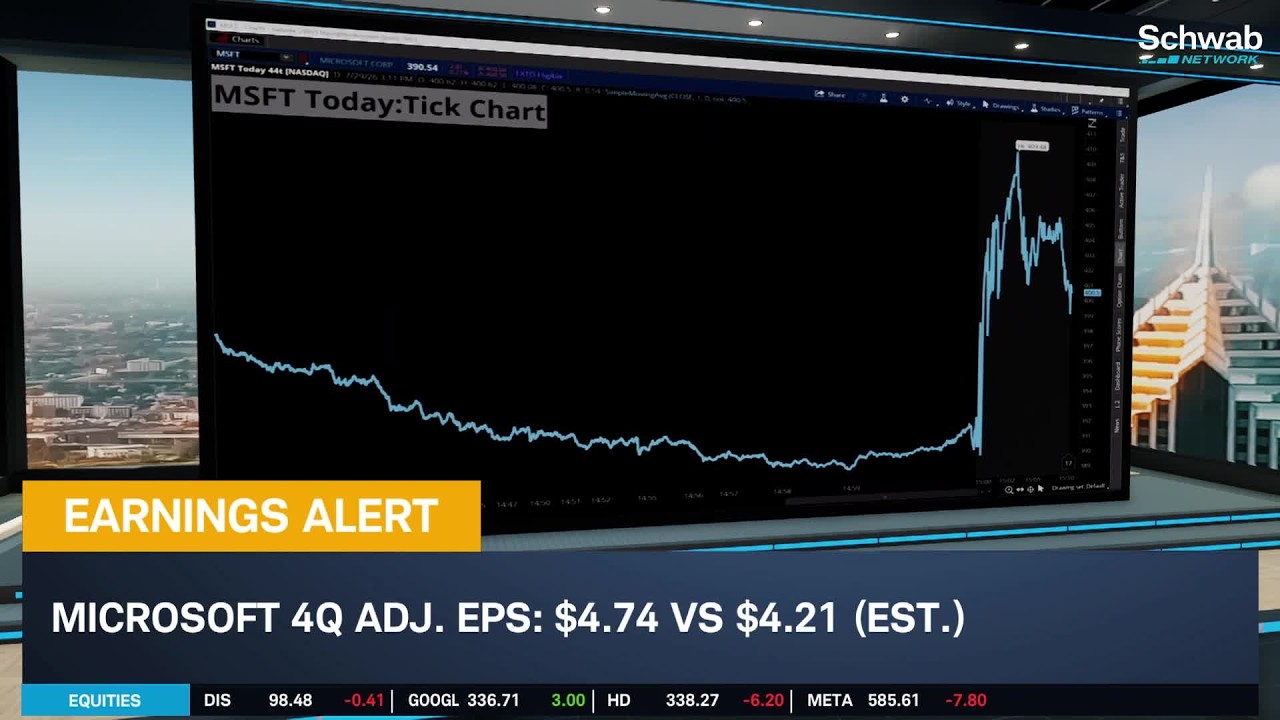
Five closely watched companies reported results within the same post-market window, and the first few minutes appeared to deliver a simple verdict. Amazon surged on a powerful acceleration in Amazon Web Services. Reddit slipped despite beating expectations. Coinbase fell after a broad revenue miss. Rivian edged higher on improving gross profit. Strategy barely moved after reporting a multibillion-dollar loss tied mainly to Bitcoin accounting.
By the end of the next trading day, that snapshot had been rewritten. Amazon shares closed Friday, July 31, 2026, at $271.58, up approximately 15.3% from the previous close. Reddit finished at $140.67, down about 21.0%. Rivian fell about 9.6% to $15.22. Coinbase declined roughly 10.6% to $146.26. Strategy dropped about 4.6% to $93.28. The changes were not simply larger versions of the initial after-hours moves. In Rivian’s case, the direction reversed. In Reddit’s case, a respectable early decline became a severe repricing after investors absorbed management’s comments about unstable search referrals and slowing U.S. user growth.
The deeper lesson is that an earnings release is not one event. It is a sequence. Headline figures hit first, followed by segment detail, cash-flow disclosures, management guidance, the conference call, analyst revisions and finally a full trading session in which investors decide which numbers are durable and which are temporary. Amazon offered the market what it wanted most: accelerating cloud growth, expanding operating profit and evidence that enormous artificial-intelligence spending was being matched by customer demand. The other four companies each produced at least one encouraging statistic, but they also exposed a structural dependency that investors were less willing to overlook.
For Reddit, the dependency was traffic from external search engines. For Coinbase, it was the continuing sensitivity of revenue to crypto trading activity despite progress in stablecoins, subscriptions and new products. For Rivian, it was the difference between consolidated gross profit and the economics of manufacturing vehicles, along with the capital required to scale the R2. For Strategy, it was the increasingly complex interaction among Bitcoin prices, common-stock issuance, preferred dividends, debt, cash reserves and the possibility of selling Bitcoin to meet capital obligations.
Last updated: August 1, 2026, 1:40 p.m. ET. Market prices refer to the July 31, 2026 U.S. close unless otherwise stated.
Key Takeaways
- Amazon delivered the night’s clearest high-quality beat: second-quarter revenue rose 20% to $200.6 billion, AWS revenue rose 37% to $42.2 billion and operating income increased 43% to $27.5 billion.
- Amazon’s $5.75 diluted EPS was not a clean operating measure: net income included $53.4 billion of non-operating pre-tax income, primarily related to the company’s Anthropic investment.
- Amazon’s central risk did not disappear: trailing-12-month free cash flow fell to an outflow of $7.6 billion as property-and-equipment spending increased sharply, mainly for artificial-intelligence infrastructure.
- Reddit reported excellent financial results but weak traffic quality signals: revenue grew 61% to $805 million, yet U.S. daily active unique growth slowed to 6% and management described search referrals as choppy.
- Coinbase’s diversification helped but did not offset the crypto slowdown: subscription and services represented 48% of net revenue, while transaction revenue fell and the company recorded a $359 million net loss.
- Rivian’s consolidated gross profit masked an unfinished automotive turnaround: software and services generated substantial profit while the automotive segment still posted a gross loss.
- Strategy’s reported loss was mostly an unrealized Bitcoin mark, but the market focused on financing complexity: preferred dividends, cash-reserve needs and possible Bitcoin monetization now matter alongside the price of Bitcoin itself.
- The next-day close mattered more than the first after-hours tick: investors used the calls and disclosures to distinguish headline beats from sustainable economics.
Market Reaction
The verdict changed after investors had time to read and listen
- Amazon: $271.58, up approximately 15.3% on July 31.
- Reddit: $140.67, down approximately 21.0%.
- Coinbase: $146.26, down approximately 10.6%.
- Rivian: $15.22, down approximately 9.6%.
- Strategy: $93.28, down approximately 4.6%.
Context: Closing-price changes are measured against the prior regular-session close. Initial after-hours reactions were less complete and, for Rivian, pointed in the opposite direction.
The Earnings Night Was Really a Test of Business Quality
It is tempting to describe an earnings season by counting beats and misses. That approach is useful for understanding the first price movement, because automated systems and event-driven traders respond immediately to deviations from consensus estimates. It is much less useful for explaining why a stock remains higher or lower after a full day of trading.
A company can beat revenue expectations and still fall if the market concludes that the beat relied on a lower-quality source, that future growth will slow, that cash conversion is deteriorating or that management revealed a new strategic risk. A company can miss a headline estimate and rise if the market believes the miss is temporary and the underlying unit economics are improving. The crucial question is not only whether the company exceeded the median forecast. It is whether the result changed the probability of a better long-term outcome.
That distinction was visible across all five reports. Amazon’s reported EPS was extraordinary, but the stock’s rally was not fundamentally about the $5.75 figure. Most of the year-over-year increase in net income came from a large non-operating gain linked primarily to Anthropic. Investors instead focused on AWS growth of 36.7%, AWS operating income of $16.6 billion, a $496 billion AWS backlog reported by Reuters and management’s claim that customer demand still exceeded available capacity. In other words, the market looked through a low-quality headline number and rewarded the higher-quality operating evidence beneath it.
Reddit showed the reverse pattern. The company produced a quarter that would normally be described as exceptional: revenue up 61%, a 31% net margin, free cash flow of $261 million and third-quarter guidance above consensus. Yet its stock collapsed because the conference call and shareholder commentary raised questions about the mechanism feeding its user funnel. A platform that depends partly on Google search referrals must persuade investors that it can turn occasional visitors into habitual users and that changes in search algorithms or AI-generated answers will not weaken the top of the funnel. The profit figures were strong. The uncertainty around future audience acquisition was stronger.
Coinbase demonstrated that diversification can be real without being sufficient. Subscription and services revenue reached $555 million and represented 48% of net revenue, a major change from the company’s earlier dependence on spot trading. Coinbase also claimed a record share of crypto trading volume and continued to build businesses around USDC, derivatives, prediction markets, lending and the Base network. Even so, transaction revenue fell to $599 million, subscription and services revenue declined from the prior year, total revenue missed expectations and the company recorded its third consecutive quarterly loss. Diversification reduced the damage; it did not eliminate cyclicality.
Rivian’s quarter contained a similar quality-of-earnings debate. Consolidated gross profit reached $179 million, an impressive improvement from a $206 million gross loss a year earlier. But software and services—helped significantly by the Volkswagen joint venture—generated the profit that offset an automotive gross loss. Investors therefore had to decide how much credit to give the consolidated figure before the core vehicle business proves that R2 can be produced at positive gross margin at scale.
Strategy presented the most unusual case. Its $8.22 billion net loss was dominated by an unrealized digital-asset loss, which means the accounting result did not represent an equivalent cash outflow during the quarter. Yet dismissing the loss as “only accounting” would also miss the point. The decline in Bitcoin affected Strategy’s asset value, its financing flexibility and the economics of a capital structure that includes multiple preferred securities, convertible debt and recurring dividend obligations. The company’s operating software revenue is small relative to its Bitcoin holdings, so the quality of its result is inseparable from its treasury and funding model.
From the First Print to the Friday Close: A Timeline
The sequence began after the U.S. market closed on Thursday, July 30. Amazon, Reddit, Coinbase, Rivian and Strategy released results within a compressed window. Market-data terminals immediately highlighted the largest deviations from consensus: Amazon’s AWS revenue and operating income beat, Reddit’s revenue and earnings strength, Coinbase’s misses, Rivian’s narrower losses and Strategy’s Bitcoin-related accounting loss.
In the first minutes, Amazon rose roughly 7% to 9%, Reddit moved from a small gain to a decline, Rivian traded modestly higher, Coinbase fell around 5% and Strategy remained close to flat. Those moves reflected the fastest available information. They did not yet incorporate a careful reading of footnotes, segment tables, cash-flow statements or management’s answers.
As the calls progressed, the information set changed. Amazon explained why capital spending would rise to approximately $220 billion in 2026 and argued that much of its 2027 AWS capacity was already reserved. Reddit acknowledged volatility in search referrals and a slowdown in U.S. daily active unique growth. Coinbase emphasized market-share gains and the “Everything Exchange” strategy, but its guidance and revenue mix still showed pressure from a weak crypto environment. Rivian discussed R2 economics, manufacturing scale and the contribution from software. Strategy described its preferred-stock framework, U.S. dollar reserve and willingness to monetize Bitcoin under certain conditions.
By Friday morning, analysts had updated models and investors had compared the reports with expectations that were often higher than published consensus. That matters because a stock price reflects the marginal investor’s expectations, not merely the average analyst estimate. Amazon’s AWS acceleration cleared both the formal consensus and a more demanding informal threshold created by strong cloud results from Microsoft and Alphabet. Reddit’s revenue beat exceeded consensus, but the market was already pricing in rapid monetization and durable user growth. Rivian’s result beat published estimates, yet the stock had recently rallied on the R2 launch and delivery guidance, leaving less room for an ordinary good quarter. Coinbase and Strategy were exposed to a Bitcoin and crypto market that had retreated significantly from 2025 highs.
The Friday close therefore represented a second verdict. Amazon’s gain expanded to approximately 15.3%. Reddit’s decline deepened to about 21.0%. Coinbase and Rivian each lost roughly one-tenth of their value. Strategy fell more moderately, partly because investors were already accustomed to treating its earnings statement as a derivative of Bitcoin prices and financing activity rather than a conventional software-company report.
Why the First After-Hours Price Was an Incomplete Verdict
The movement immediately after an earnings release is useful information, but it is not the same as the market’s final interpretation. Extended-hours trading usually has less liquidity than the regular session, wider bid-ask spreads and fewer participants willing to commit large amounts of capital. A stock can move sharply when the first headline crosses even though many investors have not yet read the release, reconciled adjusted figures with GAAP results or heard management answer questions.
The first phase is dominated by machine-readable data and a small set of headline comparisons: revenue versus consensus, earnings per share versus consensus, guidance versus consensus and one or two closely watched operating metrics. That phase explained Amazon’s immediate surge, Coinbase’s decline and Rivian’s modest early gain. The numbers were directionally clear. AWS growth exceeded expectations, Coinbase missed several important revenue measures and Rivian’s revenue, loss and consolidated gross profit looked better than forecast.
The second phase begins when investors open the tables and footnotes. This is where Amazon’s $5.75 EPS was separated from the $53.4 billion non-operating pre-tax gain, Rivian’s consolidated gross profit was separated from automotive gross profit and Strategy’s net loss was separated into a fair-value Bitcoin mark and the company’s recurring capital obligations. These distinctions rarely fit in a headline, but they determine whether the result is repeatable.
The third phase is the conference call. Management can improve a market reaction by explaining demand, capacity and guidance with credible detail. It can also undermine a strong release by acknowledging a new risk. Reddit is the clearest example from this group. The financial statements showed exceptional growth and profitability, yet commentary about choppy search referrals changed the interpretation of the user figures. Rivian’s call similarly forced investors to focus on the R2 ramp, automotive economics and capital needs rather than treating consolidated gross profit as the end of the turnaround.
The fourth phase occurs overnight and before the next opening bell. Analysts update models, compare disclosures with peers and speak with clients. Portfolio managers consider whether a price move creates an attractive entry or whether it merely brings the valuation closer to a more realistic level. Options dealers adjust hedges, premarket liquidity develops and the opening auction incorporates a much larger pool of orders than the first after-hours trades.
Regular-session trading then adds broader-market context. A company can report good news on a weak market day or disappointing news during a broad rally. Sector ETFs, index funds, quantitative strategies and risk-management rules can amplify or offset company-specific demand. On July 31, the major U.S. indexes rose, which makes the declines in Reddit, Coinbase, Rivian and Strategy more notable: those stocks underperformed a positive market rather than being pulled lower by a general selloff. Amazon’s gain also contributed materially to the technology-heavy indexes, so its move cannot be interpreted independently from the benchmarks it helped lift.
None of this means that after-hours prices should be ignored. They show which numbers the market’s fastest participants considered important and can reveal whether a result was dramatically outside expectations. The mistake is to describe that first movement as the definitive response. A more accurate earnings workflow records at least three observations: the initial extended-hours move, the regular-session opening and the next closing price. When the directions differ, as they did for Rivian, the reversal itself becomes evidence that the deeper disclosures changed the thesis.
This approach also reduces the temptation to invent a single cause. Amazon did not rise solely because it “beat earnings,” and Reddit did not fall solely because user growth missed one forecast. Each price reflected an updated bundle of probabilities involving future revenue, margins, capital intensity, competitive position and valuation. The market is not a person with one opinion. It is an auction in which participants with different time horizons and information sets express views through prices.
For readers evaluating future reports, the practical lesson is to delay strong conclusions until the company has completed its call and the full filing is available. Identify which headline figure may contain a one-time item. Check whether growth is organic, constant-currency or acquisition-driven. Compare operating income with cash flow. Read segment results rather than relying on consolidated totals. Note whether guidance covers revenue, profit or both. Finally, compare the next-day close with the first extended-hours print. That sequence does not remove uncertainty, but it produces a much more reliable explanation of what the market actually learned.
Amazon Q2 2026 Earnings: AWS Turned Spending Into Evidence
Amazon’s second-quarter report answered the most important question facing the company: whether its unprecedented infrastructure spending was producing enough growth to justify the cash outlay. The answer was not complete, because free cash flow remained negative. It was nevertheless much stronger than investors had received in recent quarters.
Net sales rose 20% year over year to $200.6 billion. North American segment sales increased 16% to $116.2 billion. International segment sales increased 15% to $42.2 billion. AWS sales increased 37% to $42.2 billion. Operating income rose 43% to $27.5 billion, producing a 13.7% operating margin compared with 11.4% a year earlier. AWS operating income climbed to $16.6 billion from $10.2 billion, which means the cloud segment generated more than 60% of Amazon’s total segment operating income before corporate-level items.
The AWS acceleration was the central fact. Growth had improved from 17% in the second quarter of 2025 to 20% in the third quarter, 24% in the fourth quarter, 28% in the first quarter of 2026 and 37% in the second quarter. That progression changed the narrative from “Amazon is spending heavily to avoid losing ground” to “Amazon is spending heavily into visible demand.” The difference is fundamental. Capital expenditure looks reckless when utilization is uncertain. It looks strategic when customers are reserving capacity years in advance.
According to Reuters’ report on Amazon’s results, AWS backlog reached $496 billion at quarter-end, up from $364 billion in the preceding quarter. Chief Executive Andy Jassy said Amazon still lacked enough computing capacity to meet all demand even after raising its annual capital-spending plan by roughly 10% to $220 billion. He also said the majority of AWS compute capacity for 2027 had been reserved, with additional commitments extending into 2028.
Those statements are management claims rather than guarantees. Backlog can be affected by contract timing, customer usage, cancellations and the pace at which capacity comes online. Even so, a backlog increase of that magnitude provides a more concrete argument for spending than general enthusiasm about artificial intelligence. It indicates that customers have made commitments, not merely that management expects demand to appear.
The $5.75 EPS Figure Requires a Major Qualification
Amazon reported net income of $62.6 billion, or $5.75 per diluted share, compared with $18.2 billion, or $1.68 per share, a year earlier. Read without context, that would suggest an unprecedented surge in operating profitability. The company’s release makes clear that it did not.
Second-quarter 2026 net income included $53.4 billion of non-operating pre-tax other income, primarily from Amazon’s investments in Anthropic. That gain dramatically increased reported net income and EPS. It should not be ignored, because a higher valuation for an investment is economically relevant to Amazon’s balance sheet. It should also not be treated as recurring operating earnings from cloud computing, advertising or retail.
A cleaner way to assess the quarter is to emphasize operating income, segment income and cash flow. Operating income of $27.5 billion exceeded the prior-year figure by $8.3 billion. AWS operating income increased by $6.4 billion. North American operating income rose to $9.1 billion from $7.5 billion, while the International segment generated $1.7 billion compared with $1.5 billion. Those figures show genuine operating improvement independent of the Anthropic revaluation.
The distinction also explains why comparing Amazon’s reported P/E ratio mechanically with peers can be misleading for the period. A one-time investment gain raises trailing earnings and lowers the apparent earnings multiple even though it does not represent a repeatable stream of operating profit. Analysts typically adjust valuation models to separate these items.
Fact Box
Amazon’s Q2 2026 result at a glance
- Net sales: $200.6 billion, up 20% year over year.
- AWS sales: $42.2 billion, up 37%.
- Operating income: $27.5 billion, up 43%.
- AWS operating income: $16.6 billion.
- Reported diluted EPS: $5.75, including a large non-operating gain primarily tied to Anthropic.
- Trailing-12-month free cash flow: negative $7.6 billion.
Original source: Amazon’s second-quarter 2026 earnings release
Free Cash Flow Is the Price of the AI Buildout
Amazon’s strongest operating quarter arrived with its weakest near-term cash-flow optics. Operating cash flow for the trailing 12 months increased 33% to $161.4 billion. Purchases of property and equipment, net of proceeds from sales and incentives, increased to $169.0 billion from $103.0 billion a year earlier. As a result, the company’s definition of free cash flow fell from an inflow of $18.2 billion to an outflow of $7.6 billion.
This is not a contradiction. A company can generate more cash from operations while producing less free cash flow if capital expenditures grow faster. The central investment question is whether the new assets will earn sufficient returns over their useful lives. Amazon argues that data centers and power infrastructure require spending well before revenue is recognized, while servers can recover their cost over a shorter period and continue generating revenue afterward. That timing mismatch creates a period in which free cash flow looks weak even as contracted demand grows.
The bullish interpretation is that Amazon is building scarce, high-return infrastructure into a capacity-constrained market. The skeptical interpretation is that all major cloud providers are expanding simultaneously, AI hardware depreciates rapidly, model efficiency may reduce compute intensity and customer commitments may not translate into attractive long-term margins. Both interpretations can be true at different stages of the cycle. The second-quarter report strengthened the bullish case because AWS growth and operating income accelerated together. It did not eliminate the risk that capital intensity could remain elevated longer than investors expect.
Advertising and Retail Added Important Support
AWS drove the revaluation, but Amazon’s other businesses improved the quality of the result. Advertising services revenue increased 26% to $19.8 billion. Third-party seller services increased 16% to $46.8 billion. Online-store sales grew 15% excluding foreign-exchange effects. Subscription services rose 12% to $13.7 billion. Worldwide paid units increased 17%.
Advertising matters because it is typically a higher-margin revenue stream than first-party retail. Amazon can monetize commercial intent close to the point of purchase, and it can distribute advertising across sponsored listings, display inventory, video and Prime properties. The 26% growth rate suggests that the company’s profit engine is broader than AWS.
Retail improvement also supports the investment thesis because faster delivery can increase purchase frequency, strengthen Prime retention and make grocery and everyday essentials more competitive. Amazon said it delivered more than 40% more items on the same day or overnight during the first half of 2026 and that grocery and everyday essentials grew faster than the rest of the business. These claims are not substitutes for segment disclosure, but they help explain why North American operating income increased even as shipping costs rose 19%.
Guidance Was Softer Than the Quarter, but Not Soft Enough to Break the Story
Amazon guided third-quarter net sales to between $197 billion and $202 billion, representing growth of 9% to 12% from the prior year. The upper end was below some published consensus estimates, and the company expected an approximately 80-basis-point foreign-exchange headwind. Operating income guidance of $22.5 billion to $26.5 billion compared with $17.4 billion in the third quarter of 2025.
Ordinarily, a revenue outlook below consensus could cap a post-earnings rally. Two factors reduced its importance. First, Amazon noted that Prime Day timing affected the year-over-year comparison; excluding Prime Day effects in both years, underlying growth would be nearly four percentage points higher. Second, AWS momentum and the backlog provided a stronger forward signal than the consolidated revenue midpoint alone.
The guidance still deserves attention. Amazon’s consolidated growth rate may slow after a 20% quarter, and the company faces uncertainty related to tariffs, foreign exchange, energy prices, memory-chip costs and consumer demand. The rally therefore reflected a judgment that cloud acceleration and operating leverage outweighed a less dramatic near-term sales outlook—not a conclusion that every part of the forecast was perfect.
Why Amazon’s Rally Was Different From an Ordinary Earnings Pop
A large post-earnings move can reflect a temporary short squeeze, an options-market imbalance or a low starting valuation. Amazon’s 15.3% Friday gain had a more substantive foundation because it changed three assumptions at once.
The first assumption concerned AWS market position. Investors had worried that Microsoft Azure and Google Cloud were capturing a disproportionate share of AI workloads. AWS growth of 37%, its fastest in 18 quarters, suggested that Amazon was not merely participating in the AI cycle but accelerating within it. Growth remained below some informal “whisper” expectations following Microsoft’s results, yet the combination of revenue, margin and backlog was strong enough to reduce market-share anxiety.
The second assumption concerned the relationship between capital expenditure and revenue. Before the report, $200 billion-plus of annual spending could be interpreted as defensive: Amazon might have been forced to spend simply to keep pace. After the report, management could point to capacity shortages, multiyear commitments and rapidly growing AI and custom-chip businesses. Investors became more willing to view the spending as demand-led.
The third assumption concerned Amazon’s ability to fund the buildout. Free cash flow was negative, but operating cash flow reached 1.4 billion on a trailing basis and operating income expanded across all three segments. That does not make the investment program self-financing in a strict free-cash-flow sense, but it shows a much stronger operating base than a company borrowing to fund a speculative expansion.
The risk is that these assumptions can reverse. If AWS growth decelerates before capital spending does, if backlog conversion weakens or if chip and power costs rise faster than pricing, free cash flow could remain under pressure. The appropriate conclusion is not that Amazon has solved the AI return-on-investment question. It is that Amazon provided the strongest evidence of the five companies that current spending is connected to present demand and present profit.
Reddit Q2 2026 Earnings: Great Numbers, Fragile Traffic
Reddit’s second-quarter report looked exceptional on a conventional scorecard. Daily Active Uniques increased 18% to 130.3 million. Weekly Active Uniques increased 24% to 514.6 million. Revenue rose 61% to $805 million, marking the eighth consecutive quarter above 60% growth. Ad revenue increased 64% to $762 million. Net income rose to $253 million, representing a 31.4% margin. Adjusted EBITDA more than doubled to $343 million, and free cash flow reached $261 million.
The company also issued guidance above expectations. It projected third-quarter revenue of $860 million to $870 million and adjusted EBITDA of $385 million to $395 million. Reddit repurchased 1.5 million shares during the quarter for $235 million at an average price of $157.57, demonstrating confidence in its cash generation and valuation.
Yet the stock fell approximately 21% the next day. The decline was not a rejection of the reported quarter. It was a reassessment of how reliably Reddit can acquire and retain users.
Search Referrals Became the Dominant Issue
Chief Executive Steve Huffman said search referrals were choppy during the quarter and traffic became more volatile late in the period. Reuters reported that U.S. daily active unique visitors increased only 6%, down from 7% in the first quarter, while international daily active uniques increased 28%. Chief Operating Officer Jen Wong said search-engine optimization headwinds more than offset Reddit’s user-acquisition work in the quarter.
This matters because Reddit has benefited from a common search behavior: users append “Reddit” to a query to find firsthand experiences, product opinions, troubleshooting advice and community discussions. Traditional search results can send those users directly to a thread. AI-generated overviews may answer the question on the search page without producing a click. Search algorithm changes can also alter how often Reddit appears and which pages receive traffic.
External search traffic is valuable because it introduces Reddit to people who may not open the app habitually. It is also lower quality than direct traffic because the relationship belongs partly to the search engine. Reddit must convert those visitors into registered users, app users and recurring participants. Management’s statement that it is not building for “drive-by traffic” describes the correct strategic objective, but it also acknowledges the challenge.
The stock’s decline suggests that investors had assumed a smoother conversion from Reddit’s content advantage into owned audience growth. The quarter showed that the advertising machine can perform extremely well even when referral traffic is unstable. It did not prove that U.S. user growth can remain strong if external search sends fewer visitors.
Fact Box
Reddit’s Q2 2026 result at a glance
- Revenue: $805 million, up 61%.
- Ad revenue: $762 million, up 64%.
- Daily Active Uniques: 130.3 million, up 18%.
- Net income: $253 million; diluted EPS: $1.25.
- Free cash flow: $261 million.
- Third-quarter revenue guidance: $860 million to $870 million.
Original source: Reddit’s second-quarter 2026 earnings release
The Geographic Mix Created a Monetization Question
Reddit’s international growth is strategically valuable. A global community platform should not depend indefinitely on the United States, and international users can expand inventory for advertisers and data partners. The near-term economics are less attractive because average revenue per user is much lower outside the United States.
Reuters reported U.S. average revenue per user of $11.85 compared with $2.26 internationally. That gap means user growth can remain impressive while revenue growth becomes more dependent on pricing, ad load and advertiser expansion. It also means a slowdown in U.S. users carries more financial weight than the headline DAUq figure implies.
Reddit partly offset that risk through advertiser growth. Wong said the number of advertisers increased 70% year over year, with particular strength among mid-market, small and midsize, and international clients. AI-powered tools helped advertisers create Reddit-specific copy, identify relevant communities and improve campaign performance. These capabilities can increase demand and pricing even if audience growth slows.
The market’s concern is not that Reddit lacks an advertising business. The quarter proved the opposite. The concern is that high revenue growth and high margins may have encouraged investors to value the company as if its user-acquisition engine were both durable and controllable. Search volatility reminded them that part of the engine belongs to another platform.
Reddit’s Profitability Is Real, but Expectations Became the Problem
Reddit’s 31.4% GAAP net margin and 42.6% adjusted EBITDA margin are unusually strong for a company growing revenue above 60%. Free cash flow of $261 million on $805 million of revenue shows high cash conversion. The business has relatively low capital requirements compared with cloud infrastructure or vehicle manufacturing, and its community-created content provides an enormous supply of inventory without Reddit paying professional creators for every post.
Those advantages explain why the stock had attracted a premium valuation. They also explain why any question about user durability can produce a violent reaction. When a company is valued for both rapid growth and high margins, merely good results may not be enough. Investors must believe the growth runway remains unusually long.
The buyback adds another layer. Reddit repurchased shares at an average price of $157.57 during the quarter. The stock closed July 31 at $140.67, below that average. A buyback can reduce dilution and signal confidence, but it does not establish intrinsic value. The next question is whether management continues repurchasing shares after the decline or prioritizes investment in product, search and international monetization.
The Bull and Bear Cases for Reddit
The bullish case begins with the uniqueness of Reddit’s corpus. The platform contains human discussions across highly specific topics, often with a level of detail that is difficult to reproduce in professionally edited content. That makes Reddit valuable to users, advertisers, search engines and AI developers. The company is improving ad tools, expanding its advertiser base and converting a growing share of revenue into profit and cash.
The bear case is that Reddit’s content is highly valuable to intermediaries that can extract answers without delivering traffic. Search engines and AI assistants can summarize community discussions, reducing the need for users to visit the original thread. Meta and other platforms can also copy community features, while Reddit must preserve the trust of volunteer moderators who make the product function.
The evidence supports neither extreme. Reddit is not merely a search-dependent website; it has more than 500 million weekly active uniques and a rapidly growing direct advertising operation. It is also not fully insulated from search. The July selloff repriced that uncertainty rather than disproving the business model.
Coinbase Q2 2026 Earnings: Diversification Met a Hard Market Test
Coinbase has spent several years trying to become less dependent on spot trading. The second quarter showed both how far that transformation has progressed and how far it still has to go.
Total revenue was approximately $1.22 billion, down 14% sequentially and 19% year over year. Transaction revenue was $599 million. Subscription and services revenue was $555 million and represented 48% of net revenue. Adjusted EBITDA was $208 million, the company’s fourteenth consecutive positive quarter on that non-GAAP measure. GAAP net loss was $359 million.
Coinbase said its share of crypto trading volume reached a third consecutive all-time high and that net revenue excluding Bitcoin spot trading represented 88% of the total. It highlighted growth in derivatives, prediction markets, USDC, lending and the Base blockchain. Average USDC held in Coinbase products reached $20 billion, and the company said it captured approximately half of USDC economics over the preceding year.
Those achievements are meaningful. They show that Coinbase is no longer a simple exchange whose revenue rises and falls only with Bitcoin spot volume. Yet the quarter also showed that the company remains connected to the overall level of crypto activity. Coinbase’s own presentation said total market crypto spot trading volume declined 25% sequentially, total crypto market capitalization fell 11% and volatility reached multiyear lows. Lower volatility reduces the incentive to trade and therefore pressures both consumer and institutional transaction fees.
Subscription and Services Was a Buffer, Not a Growth Engine This Quarter
The phrase “subscription and services” can create an impression of recurring software-like revenue. Coinbase’s segment is more complex. It includes stablecoin revenue, blockchain rewards, interest and finance fees, Coinbase One subscriptions and other services. Several of those lines remain sensitive to crypto prices, token balances, interest rates and customer activity.
Subscription and services revenue declined 12.2% from the prior year to $555.1 million, according to Reuters. Stablecoin revenue benefited from higher USDC balances but faced pressure from interest rates and off-platform balances. Blockchain rewards depend partly on asset prices and staking yields. Interest and finance income depends on rates and loan balances.
The segment therefore makes Coinbase more diversified, but not fully defensive. It can soften a decline in spot trading without producing the stable growth profile of a conventional subscription software company. That distinction helps explain why investors reacted negatively despite management’s claim that the “Everything Exchange” strategy is working.
The GAAP Loss and Adjusted EBITDA Told Different Stories
Coinbase reported adjusted EBITDA of $208 million while recording a GAAP net loss of $359 million. Adjusted EBITDA excludes several expenses and non-cash items, making it useful for comparing operating performance across quarters but insufficient as a complete measure of shareholder economics.
The company’s results included expenses related to technology, administration, sales and marketing, stock-based compensation, restructuring and changes in crypto-asset values. Coinbase maintained positive adjusted EBITDA through a weak market, which supports management’s claim of cost discipline. The GAAP loss, however, shows that the company did not generate an accounting profit for common shareholders.
Investors must decide which measure is more informative for the future. If the market recovers and revenue rises without a proportional increase in expenses, adjusted EBITDA can convert into substantial net income. If trading activity remains depressed, recurring costs and asset-value volatility can continue to produce GAAP losses.
Market Share Gains Cannot Fully Offset a Smaller Market
Coinbase’s trading-volume market share reached 10.3%, according to the company. Gaining share is strategically positive because it indicates product strength and can position the company for greater revenue when activity returns. But market share is a fraction. A larger fraction of a smaller market can still produce lower revenue.
That was the central tension in the quarter. Coinbase outperformed the decline in total market spot volume and expanded in derivatives and prediction markets. Transaction revenue nevertheless fell because the overall opportunity contracted. The market’s reaction suggests investors wanted either a faster diversification payoff or evidence that crypto activity had stabilized.
Management pointed to third-quarter stabilization in Bitcoin exchange-traded-fund flows and expressed optimism about U.S. market-structure legislation. Those developments could improve sentiment and activity. They remain external variables. Coinbase can build products and lower costs, but it cannot control crypto prices, volatility, legislation or investor risk appetite.
Regulation Is Both Opportunity and Delay Risk
Coinbase has argued that clearer U.S. rules would encourage institutions, token issuers and consumers to use regulated platforms. Chief Executive Brian Armstrong said he was optimistic that the Clarity Act could reach a Senate floor vote. A market-structure law could define regulatory responsibilities and reduce uncertainty around token classification, exchange registration and trading rules.
The potential benefit is significant because Coinbase has invested in compliance, custody and institutional infrastructure. Clear rules could favor a large public company over offshore competitors. The risk is timing. Legislative negotiations can stall, change or produce obligations that increase costs. Investors therefore cannot treat prospective regulation as current revenue.
The second-quarter report demonstrated that the diversification strategy is credible but incomplete. Stablecoins, subscriptions, derivatives and onchain infrastructure are large enough to matter. They are not yet large or independent enough to prevent a weak crypto market from driving a revenue miss and a substantial stock decline.
Strategy Q2 2026 Earnings: The Bitcoin Treasury Model Became More Complicated
Strategy’s second-quarter income statement cannot be interpreted like the earnings report of a conventional software company. The company still sells enterprise analytics software, but the value of its assets, its access to capital and the behavior of its common stock are dominated by its Bitcoin treasury strategy.
Strategy reported revenue of $122.4 million, up 6.9% year over year. Gross profit was $81.6 million. Those figures were small beside an $8.33 billion operating loss that included an $8.32 billion unrealized loss on digital assets. Net loss was $8.22 billion, or $24.45 per diluted share, compared with net income of $10.02 billion, or $32.60 per share, in the prior-year quarter.
The accounting swing followed Bitcoin’s decline during the quarter. Under fair-value accounting, changes in the market price of Bitcoin flow through the income statement even when Strategy does not sell the asset. That makes quarterly net income extraordinarily volatile. A rising Bitcoin price can create a multibillion-dollar accounting profit; a falling price can create a multibillion-dollar loss.
The correct interpretation lies between two simplistic views. It is wrong to treat the $8.22 billion loss as if Strategy paid out that amount in cash during the quarter. It is also wrong to dismiss the loss as irrelevant. The lower Bitcoin value reduced the market value of the company’s asset base and affected the financing system through which Strategy issues securities, pays dividends, manages cash and seeks to increase Bitcoin per common share.
The Difference Between 846,000 Bitcoin and 843,775 Bitcoin
Strategy’s release used more than one Bitcoin-holdings figure because the dates differed. Management said the company grew holdings by 11% to approximately 846,000 Bitcoin during the quarter. The detailed Bitcoin summary stated that, as of July 26, 2026, digital assets consisted of approximately 843,775 Bitcoin. The lower later figure reflected subsequent activity, including limited Bitcoin sales used to support cash needs.
As of July 26, the company reported an original cost basis of $63.69 billion and a market value of $54.77 billion, based on a Bitcoin price of $64,915. The average cost was approximately $75,476 per Bitcoin. Those numbers meant the treasury position was below cost at the cited market price.
Strategy also reported a $3.75 billion U.S. dollar reserve, which it said covered more than 2.1 years of preferred-stock dividends and interest obligations. It had reduced convertible debt by repurchasing $1.5 billion of 0% convertible senior notes due in 2029 for approximately $1.38 billion, an 8% discount to par. At the same time, preferred-stock dividends had become a much larger claim on the company’s cash resources. Net loss attributable to common stockholders was $8.62 billion after $400.7 million of preferred dividends, compared with $49.1 million of preferred dividends a year earlier.
These figures show why Strategy’s common stock is no longer simply a leveraged proxy for Bitcoin. Common shareholders sit beneath several layers of financing. The company can issue common stock, convertible debt and preferred securities to fund Bitcoin purchases and obligations. That structure can increase Bitcoin per share when the securities are issued at favorable valuations and capital is deployed efficiently. It can also dilute common shareholders or create cash demands when the market value of Strategy’s securities falls.
Preferred Stock Changed the Risk Profile
Strategy has promoted a family of “digital credit” securities designed to appeal to investors seeking income rather than direct Bitcoin exposure. The company raised the dividend rate on STRC to 12% and authorized a billion repurchase program intended to support the preferred stock near its 0 stated amount. During the week ended July 26, Strategy repurchased approximately $25 million of STRC at an average price of $86.53.
From one perspective, repurchasing preferred shares below stated value can be economically attractive because it reduces future dividend obligations at a discount. From another, the need to support a preferred security illustrates that the financing model is sensitive to investor demand. A treasury company that relies on repeated capital-market access must preserve confidence across common stock, convertible debt and preferred instruments.
The company’s reserve policy is therefore central. Cash held for dividends and interest cannot simultaneously be used to buy Bitcoin. If cash needs increase while securities trade at unattractive prices, Strategy may have to slow Bitcoin purchases, issue more expensive capital or sell Bitcoin. Reuters reported in July that the company had already sold approximately $218 million of Bitcoin during 2026 to fund dividends and rebuild its dollar reserve. The amount was small relative to total holdings, but it challenged the earlier perception that the treasury strategy meant continuous accumulation under all conditions.
The Accounting Loss Was Not the Only Reason the Stock Fell
Strategy shares declined about 4.6% on July 31, a smaller move than Reddit, Coinbase or Rivian. The modest reaction reflected the fact that the Bitcoin-price decline and resulting fair-value loss were largely visible before the report. Investors could estimate the direction of the mark using public Bitcoin prices.
The more important information concerned capital allocation. Strategy had paused large Bitcoin purchases for several weeks, increased its reserve, raised preferred dividends and discussed mechanisms that could involve further Bitcoin monetization. Those decisions suggested that the company had moved from a pure accumulation phase into a balance-sheet-management phase.
The bullish interpretation is that Strategy is building a diversified capital stack that allows it to hold more Bitcoin per share over time while serving different investor groups. Management argues that preferred securities can create durable demand and that disciplined repurchases below par improve economics. The skeptical interpretation is that each additional security introduces a claim, covenant, dividend or refinancing need that makes the common stock more complicated and potentially less responsive to Bitcoin on the upside.
Strategy’s second-quarter report did not prove that the model is unsustainable. The company remained the largest corporate holder of Bitcoin and maintained a multibillion-dollar cash reserve. It did show that the relevant analysis has expanded. Investors must now track Bitcoin prices, Bitcoin per share, common-stock premium or discount to asset value, preferred dividend coverage, debt maturities, issuance terms and the possibility of asset sales.
Fact Box
Strategy’s Q2 2026 balance-sheet signals
- Quarterly net loss: $8.22 billion, driven mainly by an unrealized Bitcoin loss.
- Bitcoin held as of July 26: approximately 843,775.
- Average reported Bitcoin cost: approximately $75,476.
- U.S. dollar reserve: $3.75 billion after the quarter.
- Convertible debt reduced to approximately $6.7 billion.
- Preferred dividends attributed against common earnings: $400.7 million in the quarter.
Original source: Strategy’s second-quarter 2026 financial results
Rivian Q2 2026 Earnings: Better Results Did Not Resolve the Core Manufacturing Question
Rivian’s report contained several improvements that would normally support the stock. Revenue increased 27% to $1.658 billion. The company reported consolidated gross profit of $179 million, compared with a $206 million gross loss a year earlier. Its adjusted EBITDA loss narrowed substantially. Deliveries of 12,194 vehicles exceeded expectations, and the company raised full-year delivery guidance to between 65,000 and 70,000 vehicles.
The stock initially rose in after-hours trading. It closed the next day down approximately 9.6%. The reversal reflected a distinction that is easy to miss in the headline: Rivian’s consolidated gross profit did not mean the automotive segment had completed its turnaround.
Software and services revenue increased 37% to $515 million, including $308 million associated with Rivian’s joint venture with Volkswagen. That segment produced $215 million of gross profit at a 42% margin, according to the company’s release. The automotive segment therefore remained in gross loss, approximately negative $36 million, even though the consolidated company was profitable at the gross level.
The Volkswagen relationship is strategically important and economically real. Rivian contributes electrical architecture and software expertise, while the joint venture provides revenue, funding and validation of its technology. The issue is not that software profit should be excluded. The issue is that investors value Rivian primarily as an automaker expected to scale the R2. Until vehicle manufacturing produces sustained positive gross profit without unusually favorable credits or one-time items, the core thesis remains unfinished.
R2 Is Both the Opportunity and the Execution Test
The R2 midsize SUV is intended to expand Rivian beyond the expensive R1 platform and address a much larger market. Deliveries began during the second quarter, and Chief Executive RJ Scaringe said reservation-to-order conversion for the Launch Edition exceeded internal expectations. Rivian hosted a record number of R2 demonstration drives and expected the vehicle to achieve positive gross margin in the second half of the year.
R2 can improve Rivian’s economics in several ways. Higher production volume can spread fixed factory costs across more units. A simpler platform and lower bill of materials can reduce cost. A broader customer base can improve utilization at the Normal, Illinois, plant. Software, services and autonomous-driving features can generate revenue beyond the initial vehicle sale.
The launch also creates new risks. Ramping a new vehicle requires supplier coordination, manufacturing yields, working capital and service capacity. The R2 must reach volume without repeating the cash burn associated with the R1 launch. Lower pricing can increase demand but also leaves less room for cost overruns. Rivian’s claim that R2 will reach positive gross margin is guidance, not an achieved result.
The company raised its annual delivery outlook from 62,000–67,000 vehicles to 65,000–70,000. It also lowered planned capital expenditure to $1.7–$1.8 billion from $1.95–$2.05 billion and forecast a narrower adjusted EBITDA loss. Those changes suggest better cost control and demand. The market’s negative reaction indicates that investors wanted stronger evidence that the improvement would persist beyond software contributions and launch-period effects.
Gross Profit Needs to Be Decomposed
Gross profit is revenue minus the direct cost of producing goods and services. For an automaker, it provides an early measure of whether each additional vehicle contributes to covering operating expenses. Positive consolidated gross profit is a necessary milestone, but it is not sufficient when the company has materially different segments.
Rivian’s software and services business is attractive because it has higher margins and lower capital intensity. The automotive business requires factories, tooling, inventories, warranties, logistics and service infrastructure. A dollar of software gross profit is economically different from a dollar of vehicle gross profit because the reinvestment requirements differ.
The automotive gross loss narrowed sharply from the prior year, which is genuine progress. Cost reductions, supplier negotiations, plant efficiency and product redesign appear to be working. But a negative automotive gross margin means the company still lost money before research, sales, administration and other operating costs on the vehicles and related activities in that segment.
Investors also scrutinized the sources of gross-profit improvement. Regulatory credits, tariff refunds, supplier settlements or launch-related accounting can make a quarter better without establishing a repeatable unit margin. Rivian’s long-term value will depend on normal vehicle revenue exceeding normal manufacturing and warranty costs at sustainable volume.
Capital and Dilution Remain Part of the Story
Rivian’s cash and equivalents were approximately $3.6 billion at quarter-end, but the company also had access to additional capital and financing arrangements. In July it raised approximately $1.5 billion through a share sale to help fund equity contributions connected to a U.S. Department of Energy loan for the planned Georgia factory.
The capital raise strengthened liquidity but diluted existing shareholders. That trade-off is common for growth-stage manufacturers. A new factory can increase future capacity and lower long-term cost, but the benefits arrive years after the cash and dilution. Rivian said the Georgia plant could support future R2 and R3 expansion, with production expected later in the decade.
The market therefore faced two competing facts. Rivian had improved its operating trajectory and reduced near-term capital-spending guidance. It had also recently issued shares and remained on course for a full-year adjusted EBITDA loss of roughly $1.8–$2.0 billion. Investors were not being asked to value a profitable automaker. They were being asked to value a credible path to profitability.
Why Rivian Fell After Initially Rising
The first reaction rewarded the headline beat: better revenue, lower losses, higher deliveries and improved guidance. The next-day reaction focused on expectations and composition. Rivian shares had already responded positively to the early-July delivery announcement and R2 enthusiasm. The earnings report confirmed much of what investors knew rather than adding a new upside surprise of equal magnitude.
The software contribution also raised questions about the durability of consolidated gross profit. The core automotive business was improving but still negative at the gross level. Meanwhile, the R2 ramp, future Georgia plant and autonomy program required continued investment. A good quarter reduced risk without removing it.
The strongest case for Rivian is that it has crossed the most difficult part of the cost curve, launched a higher-volume product and built a valuable software partnership with Volkswagen. The strongest skeptical case is that automotive gross profitability, scale and cash generation remain unproven, while shareholders continue to fund the transition through dilution and retained losses.
Five Reports Compared: What the Market Rewarded and Punished
| Company | Headline strength | Underlying concern | July 31 move | Market verdict |
|---|---|---|---|---|
| Amazon | AWS growth accelerated to 37%; operating profit expanded | Negative free cash flow and $220 billion spending plan | +15.3% | Demand evidence justified greater investment tolerance |
| 61% revenue growth, high margins, strong guidance | Choppy search referrals and slower U.S. user growth | -21.0% | Traffic durability mattered more than the quarterly beat | |
| Coinbase | Record trading share and diversified revenue mix | Revenue miss, third straight loss and crypto cyclicality | -10.6% | Diversification buffered the downturn but did not overcome it |
| Rivian | Record consolidated gross profit and higher delivery guidance | Automotive gross loss, cash burn and dilution | -9.6% | The market wanted proof of vehicle-level profitability |
| Strategy | Large Bitcoin treasury and lower convertible debt | Preferred obligations, reserve needs and possible Bitcoin sales | -4.6% | Financing complexity reduced the appeal of a simple Bitcoin proxy |
The comparison reveals a consistent framework. The market rewarded growth when it was paired with expanding operating profit, visible demand and an ability to finance investment. It punished growth when a key input remained outside management’s control or when the path to cash generation was still uncertain.
1. Growth Quality Mattered More Than Growth Speed
Reddit grew revenue faster than Amazon, yet Amazon rose and Reddit fell. The difference was not the percentage. It was the perceived durability of the engine. Amazon’s AWS growth came with increasing operating income and contractual backlog. Reddit’s growth came with high margins but a warning that external search traffic had become volatile. Investors concluded that Amazon’s acceleration reduced a known risk, while Reddit’s commentary introduced or enlarged one.
Coinbase gained market share but operated in a shrinking market. Rivian increased revenue but relied on a profitable software segment to offset automotive losses. Strategy increased Bitcoin holdings during the quarter but faced a declining Bitcoin price and a more complicated funding structure. In each case, the headline growth statistic required a second question: what created it, and can it repeat?
2. Cash Flow Was Judged in Context
Amazon reported negative free cash flow and still rallied because operating cash flow increased, AWS profitability expanded and management linked capital spending to reserved capacity. Reddit generated strong free cash flow, but the stock fell because traffic risk threatened future growth. This does not mean cash flow was irrelevant. It means investors interpreted cash flow together with reinvestment needs and strategic control.
Rivian and Coinbase remained more vulnerable because their cash-generation stories were less settled. Rivian required capital to scale manufacturing. Coinbase generated positive adjusted EBITDA but reported a GAAP loss and remained exposed to market activity. Strategy had a large cash reserve, but the reserve existed partly to serve preferred dividends and debt interest rather than ordinary operations.
3. Management Control Was a Hidden Valuation Variable
Amazon cannot control chip prices, power availability or customer demand, but it controls the pace and design of its infrastructure buildout and can point to direct customer commitments. Reddit cannot control Google’s search algorithms or the presentation of AI overviews. Coinbase cannot control crypto volatility or the legislative calendar. Rivian cannot control broad EV demand or incentive policy, though it can control product cost and manufacturing execution. Strategy cannot control Bitcoin’s price and must manage securities whose market values affect its access to capital.
Companies receive higher valuations when management appears to control the variables that determine outcomes. External dependencies increase the discount rate investors apply to forecasts, even when the latest quarter is strong.
4. Expectations Were More Important Than Consensus
Published analyst estimates are an incomplete benchmark. Amazon’s formal AWS consensus was around 31% growth, but investors had heard informal expectations in the mid-30% range after strong results from cloud peers. AWS still exceeded that higher bar. Reddit’s revenue and guidance beat consensus by a wide margin, yet the valuation embedded confidence in durable user growth. Rivian beat estimates after the stock had already rallied on delivery data. The relevant surprise was therefore smaller than the headline comparison suggested.
This is why “beat and raise” is not a trading rule. A company can beat stale or conservative estimates and fall if the market expected more. It can miss a narrow estimate and rise if feared outcomes do not occur. The price reaction measures the difference between results and the expectations embedded in the stock, not the difference between results and a single spreadsheet average.
How to Read These Reports Without Being Misled by Headline Numbers
The five releases illustrate why financial statements cannot be interpreted by selecting the largest number on the first page. Each company has one or two metrics that explain its economic engine, but those metrics work only when they are paired with a second measure that exposes quality, durability or cost. Revenue growth without cash conversion can be expensive growth. User growth without direct engagement can be rented traffic. Gross profit without segment detail can conceal a loss in the core operation. A non-cash accounting loss can still reveal a weaker balance sheet. The analytical task is to identify the pair of numbers that must be read together.
Amazon: Read AWS Growth Beside Capital Intensity
For Amazon, AWS revenue growth is the clearest measure of demand, while free cash flow and capital expenditure reveal the cost of serving that demand. Looking at only one side produces an incomplete conclusion. The 37% increase in AWS sales and the rise in AWS operating income to $16.6 billion show that the cloud business was not merely booking more contracts; it was turning additional revenue into substantially more segment profit. The reported backlog of $496 billion adds visibility, although backlog is not the same as recognized revenue and can be affected by contract structures and customer consumption.
The counterweight is Amazon’s trailing property-and-equipment spending of approximately $169.0 billion and free cash outflow of $7.6 billion. That outflow does not mean the operating businesses stopped producing cash. Operating cash flow increased to $161.4 billion. It means investment spending exceeded the cash generated from operations over the measurement period. The quality question is therefore not whether Amazon has cash, but whether the incremental infrastructure will produce returns above the company’s cost of capital after accounting for depreciation, energy, networking, chips and ongoing replacement requirements.
Investors should also avoid using reported EPS as the sole earnings measure for this quarter. The $53.4 billion non-operating pre-tax gain, primarily associated with Anthropic, was economically meaningful but not a repeatable result from selling cloud services or retail goods. Operating income provides a cleaner basis for comparing the performance of Amazon’s ongoing businesses. The appropriate reading is that Amazon reported both an unusually large investment-related gain and a genuinely strong operating quarter; neither fact cancels the other.
A useful future test is whether AWS revenue and operating income continue to expand as new capacity enters service. If growth remains strong while capital spending stabilizes, free cash flow could recover rapidly because the infrastructure would begin producing revenue after much of the cash cost had already been incurred. If growth slows before spending normalizes, investors may conclude that Amazon overbuilt or that competitive pricing reduced returns. The second-quarter result moved that debate in Amazon’s favor, but it did not settle it permanently.
Reddit: Read User Growth Beside Traffic Source and Monetization
Reddit’s defining operating measure is daily active uniques, but the number becomes meaningful only when separated by geography and interpreted alongside average revenue per user and traffic source. Total DAUq increased 18% to 130.3 million. That is a healthy expansion for a platform of Reddit’s size. Yet U.S. daily-user growth slowed to 6%, while international growth was substantially faster. Because U.S. users generated much more revenue per user than international users, the geographic mix matters directly to the company’s near-term monetization.
Traffic source matters for a different reason. A user who arrives from a Google result to answer one specific question may contribute to the daily count without developing the habit, account history or community attachment of a direct Reddit user. Search traffic can still be highly valuable: it expands reach, creates advertising inventory and introduces new users to the platform. But it is more exposed to changes outside Reddit’s control, including search-ranking adjustments and the expansion of AI-generated answers that may satisfy a query before a user clicks through.
That is why Reddit’s disclosure that search referrals were choppy outweighed several excellent financial statistics. Revenue grew 61%, advertising revenue rose 64%, net income reached $253 million and free cash flow reached $261 million. Those figures demonstrate that the company has developed a profitable advertising model. The unresolved question is whether the audience funnel supporting that model is sufficiently direct and repeatable.
Average revenue per user provides the second half of the picture. Higher ARPU can compensate for slower user growth if advertising demand, targeting, formats and auction efficiency improve. Reddit’s U.S. ARPU remained far above international ARPU, which creates both an opportunity and a risk. International monetization can rise from a low base, but a larger share of lower-monetizing users can dilute blended ARPU until local advertising markets mature. Investors should therefore track direct logged-in usage, search referral stability, U.S. DAU growth and international ARPU together rather than treating any one metric as decisive.
Coinbase: Read Diversification Beside Total Crypto Activity
Coinbase’s central claim is that it is becoming an “everything exchange” rather than a business dependent on spot-trading fees. The evidence supporting that claim is substantial. Subscription and services generated $555 million and represented 48% of net revenue. Stablecoin economics, custody, staking, interest and other services give Coinbase recurring or balance-sensitive revenue streams that differ from retail transaction fees. The company also reported that 88% of net revenue came from activities other than Bitcoin spot trading.
Those figures should not be interpreted to mean that Coinbase has escaped the crypto cycle. Subscription and services can be affected by crypto asset prices, interest rates, USDC balances, staking activity and custody assets. Transaction revenue remains large, and it responds to market volatility, participation and trading volume. In the second quarter, total crypto spot volume declined, Coinbase transaction revenue fell to $599 million and both transaction and subscription-and-services revenue came in below market expectations.
Market share is another number that requires a companion measure. Coinbase said it achieved a third consecutive record quarter for crypto trading-volume share. Gaining share is strategically valuable because it can strengthen liquidity, institutional relationships and network effects. But a larger percentage of a smaller market can still produce less revenue. A retailer with 12% of a market may sell less than it did with 10% if the market itself contracts by more than the share gain. Coinbase’s quarter offered exactly that lesson: stronger competitive position did not prevent cyclical pressure from reducing activity and profitability.
The adjusted EBITDA figure of $208 million and the GAAP net loss of $359 million also should be read together. Adjusted EBITDA can illuminate operating performance before selected non-cash and non-recurring items, but it is not a substitute for net income or cash flow. Stock-based compensation, investment marks, restructuring and other excluded items still affect shareholders or the company’s financial position. The most balanced interpretation is that Coinbase remained operationally resilient while reporting a statutory loss and weaker-than-expected revenue. That is more informative than declaring either the adjusted result or the GAAP result to be the only “real” number.
Rivian: Read Consolidated Gross Profit Beside Automotive Gross Profit
Rivian’s $179 million consolidated gross profit was one of the quarter’s strongest improvements, especially compared with a $206 million consolidated gross loss a year earlier. Yet the composition matters. The software-and-services segment generated $215 million of gross profit, supported in part by revenue associated with the Volkswagen joint venture. That implies the automotive segment remained in gross loss even though the consolidated company was profitable at the gross level.
This does not make the consolidated figure misleading. Software, services and technology partnerships are legitimate parts of Rivian’s business, and their profit can fund product development and manufacturing. It does mean that the figure does not prove the vehicle operation has reached sustainable positive unit economics. For an automaker, automotive gross profit must eventually cover manufacturing overhead, warranties, logistics, incentives and the direct cost of producing vehicles before research, selling and corporate expenses are considered.
R2 is therefore the metric bridge between current results and the investment case. The lower-priced platform is intended to broaden demand, increase factory utilization and spread fixed costs across more units. Rivian says it expects positive R2 gross margin in the second half of 2026, but early production is often less efficient than mature production. Launch costs, supplier learning curves, labor efficiency, scrap, warranty experience and sales mix can all affect the margin trajectory.
Delivery volume should consequently be interpreted alongside gross profit per vehicle, cash use and capital expenditure. Higher deliveries are helpful only if each incremental vehicle moves the company toward—not away from—sustainable economics. Rivian’s improved adjusted EBITDA loss and lower capital-spending plan showed better discipline. The next proof point is whether that discipline survives the R2 ramp without production bottlenecks, quality problems or an increase in incentives.
Strategy: Read Fair-Value Accounting Beside Liquidity Obligations
Strategy’s financial statements require a different framework because the software operation is small relative to the Bitcoin treasury. The $8.22 billion net loss was driven mainly by an $8.32 billion unrealized digital-asset loss. “Unrealized” means the loss primarily reflected a lower quarter-end fair value rather than the sale of the entire Bitcoin position. It therefore did not represent an $8.22 billion quarterly cash payment.
That accounting distinction is essential, but it does not render the result irrelevant. A lower Bitcoin price reduces the market value of Strategy’s principal asset and can affect the premium or discount at which its securities trade relative to that value. It can also influence the company’s ability to raise common equity, issue preferred securities or refinance debt on favorable terms. Fair-value volatility is non-cash in the period, yet it can change future financing choices.
The second measure is liquidity. Strategy reported $1.71 billion of cash and cash equivalents, $736.1 million of short-term investments and a $3.75 billion U.S. dollar reserve intended to support preferred dividends and interest obligations. It also reported $400.7 million of preferred dividends attributable to the quarter’s common-shareholder loss calculation. Those obligations make the capital structure more demanding than a simple “Bitcoin goes up or down” model.
Bitcoin holdings should also be measured on a consistent date. Strategy reported approximately 846,000 Bitcoin at quarter-end but 843,775 Bitcoin as of July 26. The difference reflects activity after the reporting date and illustrates why a single holdings figure can be wrong if its measurement date is omitted. The relevant questions are how many Bitcoin the company owns, the average acquisition cost, the market value on the same date, the amount of debt and preferred capital outstanding, and the recurring cash obligations attached to that financing.
A final metric is Bitcoin per diluted share, not simply total Bitcoin. Strategy can increase its holdings while issuing securities that increase the claim count or senior obligations ahead of common equity. Accretive financing can raise Bitcoin exposure per share; dilutive financing can increase headline holdings while offering less benefit to existing common shareholders. The treasury strategy therefore should be evaluated as a capital-allocation system, not as a scoreboard based only on the number of coins held.
Valuation Without a Price Target: What Expectations Were Embedded in Each Stock
A stock’s response to earnings depends on the gap between reported reality and the expectations already reflected in its price. Consensus forecasts provide one estimate of that hurdle, but they are incomplete. Options pricing, recent share performance, analyst revisions, peer results and investor positioning can create a “whisper” expectation that is higher or lower than the published average. This helps explain why Amazon’s softer revenue guidance did not derail its rally while Reddit’s broad beat produced a 21% decline.
Amazon entered the report under pressure to demonstrate that AI spending was producing cloud growth comparable with the strongest large-platform competitors. AWS growth of 37%, expanding AWS operating profit and a sharply higher backlog gave investors evidence that the company was clearing that demanding hurdle. The result did not need to be flawless. It needed to improve confidence that the spending cycle had an economic return. Because the most important uncertainty moved favorably, the market tolerated weaker free cash flow and a third-quarter revenue range below the prior consensus.
Reddit faced the opposite setup. Rapid revenue growth, expanding margins and strong guidance were already central to the bullish thesis. A normal beat could therefore be insufficient if it arrived with evidence that a key acquisition channel was unstable. The stock’s decline suggests that investors assigned a higher value to the durability of user growth than to one quarter of exceptional monetization. That does not mean the market concluded Reddit’s business was broken. It means the probability attached to uninterrupted high growth was reduced.
Coinbase and Strategy both carry substantial optionality, but the source differs. Coinbase offers exposure to trading, stablecoins, custody, derivatives, payments and on-chain financial products. Strategy offers leveraged corporate exposure to Bitcoin through a complex financing architecture. In favorable crypto markets, optionality can support valuations that appear disconnected from current-period earnings. In weaker markets, the same optionality becomes uncertainty: Coinbase’s product investments may not monetize quickly, and Strategy’s funding costs can become more visible as its asset value falls.
Rivian’s valuation depends less on the reported quarter than on the future production curve. The company’s existing R1 platform, commercial vans, software revenue and partnership income matter, but the R2 is expected to determine whether Rivian can reach a larger market and use its manufacturing base efficiently. A quarter can beat estimates and still disappoint if investors conclude that the path to scaled automotive profitability has not shortened. The 9.6% decline after an initially positive reaction indicates that the market wanted more than an accounting improvement; it wanted stronger proof that the next phase of the ramp would be self-financing or at least less capital intensive.
These distinctions are also why price-to-sales comparisons across the five companies are not useful without context. Amazon combines low-margin retail with high-margin cloud and advertising. Reddit is an advertising platform with substantial gross margins but traffic concentration risk. Coinbase’s revenue is cyclical and includes transaction, balance-linked and service components. Rivian is a capital-intensive manufacturer with a growing software segment. Strategy is primarily a Bitcoin treasury with a comparatively small software business. A single multiple cannot make those economics comparable.
A disciplined investor can avoid false precision by asking what operational assumptions must be true to support the current narrative. Amazon requires sustained cloud demand and eventual cash conversion. Reddit requires durable direct engagement and international monetization. Coinbase requires diversified products to grow faster than transaction cyclicality erodes revenue in weak periods. Rivian requires R2 scale and positive automotive gross margin. Strategy requires access to capital on terms that increase value per common share after dividends, debt and dilution. Earnings matter because they update those assumptions, not because one quarter produces a definitive intrinsic value.
What Would Change the Verdict Over the Next Two Quarters
The July 31 closing prices were a snapshot, not a permanent judgment. Each thesis contains measurable conditions that could strengthen or weaken it. The most useful forward-looking analysis identifies those conditions in advance rather than explaining every price movement after it occurs.
Amazon: Capacity Conversion and Free-Cash-Flow Recovery
The bullish case would strengthen if AWS maintains growth well above its 2025 rate, operating income continues to expand and backlog converts into recognized revenue without a material deterioration in margin. Evidence that Trainium, Inferentia and other internally designed chips are reducing unit costs would also support the argument that Amazon can earn attractive returns despite the enormous infrastructure budget.
The skeptical case would strengthen if AWS growth decelerates rapidly while capital expenditure remains near the current elevated level, if energy or chip constraints delay revenue, or if competition forces Amazon to lower prices faster than efficiency improves. Free cash flow does not need to turn positive immediately for the thesis to work, but investors will eventually require evidence that operating cash flow is catching up with infrastructure spending. A persistent gap would make the AI buildout look less like a temporary investment cycle and more like a permanently lower-cash-return business model.
Reddit: Direct Engagement and International ARPU
Reddit can reverse the negative interpretation by showing that search volatility is temporary and that direct users continue to grow. Management’s product work around search, onboarding, personalization and translation should be judged by repeat visits and logged-in activity rather than by traffic alone. If U.S. DAU growth stabilizes while ad revenue and free cash flow remain strong, the July selloff may prove to have overemphasized one weak channel.
International ARPU is the second test. Faster growth outside the United States creates a large inventory opportunity, but the value of that inventory depends on local advertiser demand and Reddit’s ability to deliver relevant formats and measurement. A gradual rise in international ARPU, without sacrificing user growth, would make the geographic mix less concerning. Continued U.S. deceleration combined with stagnant international monetization would support the market’s skepticism.
Coinbase: Revenue Stability in a Lower-Activity Market
Coinbase’s diversification thesis will become more credible if subscription and services returns to growth even when crypto spot volume is subdued. USDC balances, institutional custody, derivatives, lending, Base activity and other services should collectively reduce the percentage of revenue that disappears when retail trading slows. The company does not need transaction revenue to become unimportant; it needs the rest of the platform to produce enough growth and margin to prevent each downturn from creating large losses.
Expense discipline will be equally important. Launching many products can expand Coinbase’s addressable market, but it can also create complexity and fixed costs before revenue arrives. Investors should compare the pace of new-product adoption with adjusted expenses, stock-based compensation and GAAP profitability. A stronger market could make every metric improve temporarily. The more demanding test is whether Coinbase can generate durable cash and earnings in an ordinary or weak crypto environment.
Rivian: R2 Unit Economics, Not Merely Deliveries
Rivian’s next two quarters will be judged primarily by the R2 ramp. Production and deliveries will be the visible figures, but the more important evidence will concern cost per unit, pricing, warranty assumptions, supplier stability and automotive gross margin. A clean ramp that moves the automotive segment toward positive gross profit would validate management’s manufacturing changes and could reduce concern about future capital raises.
A difficult ramp would have the opposite effect even if customer demand remains strong. Delays, discounting, quality costs or low initial utilization can turn high demand into additional cash burn. The software-and-services segment provides a valuable cushion, but it cannot indefinitely substitute for profitable vehicle production if Rivian is to become a scaled automaker. Investors will also watch whether the company stays within its reduced capital-expenditure plan while supporting the higher delivery outlook.
Strategy: Financing Accretion and Cash-Coverage Discipline
Strategy’s verdict will change with Bitcoin, but not only with Bitcoin. A higher Bitcoin price would increase asset value and could reopen favorable financing windows. The more important question for common shareholders is whether new capital raises increase Bitcoin exposure per share after accounting for preferred dividends, interest, issuance costs and dilution. Total holdings can rise while the economics for each common share weaken.
The company’s U.S. dollar reserve offers a buffer against having to sell Bitcoin solely to meet near-term cash obligations. Investors should watch the reserve balance, preferred dividend requirements, debt maturities and any additional Bitcoin sales. Occasional monetization does not automatically invalidate the treasury strategy, particularly when it supports contractual obligations. Repeated sales during weak markets, however, would challenge the idea that the structure can hold Bitcoin indefinitely without becoming a forced seller.
Across all five companies, the decisive evidence will come from repeated quarters rather than one release. Amazon must convert infrastructure into cash-producing cloud growth. Reddit must convert traffic into durable direct engagement. Coinbase must convert product breadth into less cyclical revenue. Rivian must convert demand into profitable production. Strategy must convert capital-market access into accretive Bitcoin exposure after all senior claims are considered. Those are the operating verbs behind the stock prices, and they provide a clearer framework than a simple list of earnings beats and misses.
The Common Denominator Was Control Over the Growth Engine
The most revealing difference among the five companies was how much control management appeared to have over the variable driving future results. Amazon cannot control every chip, energy or permitting constraint, but it owns the customer relationship, the cloud platform, much of the software stack and an increasing share of the hardware design. That control gives it several ways to respond when demand changes: adjust pricing, allocate capacity, optimize chips, shift workloads and use retail or advertising cash generation to support investment.
Reddit controls its communities, advertising products and recommendation systems, but it does not control Google’s search rankings or the extent to which AI answers reduce outbound clicks. Coinbase controls its product roadmap and compliance infrastructure, but it does not control crypto volatility or the willingness of customers to trade. Rivian controls product design and factory execution, yet supplier costs, consumer financing and the pace of EV demand can reshape the economics of a launch. Strategy controls its financing decisions, but the value of its main asset is set continuously in a global Bitcoin market.
This framework does not automatically make Amazon safer or the other companies unattractive. External exposure can create extraordinary upside when conditions are favorable. Reddit can benefit from enormous search visibility, Coinbase from a new crypto bull market, Rivian from accelerating EV adoption and Strategy from rising Bitcoin prices. The issue is that externally driven growth deserves a larger margin of safety because management may have fewer tools when the environment reverses.
The July earnings reactions therefore can be understood as a repricing of control. Amazon showed that its spending was producing demand and profit within a platform it largely operates. Reddit revealed that a portion of audience acquisition remained dependent on a volatile outside channel. Coinbase showed that product breadth had not yet neutralized the market cycle. Rivian showed that technology and partnership profit had not completed the automotive transition. Strategy showed that a falling asset price could interact with a capital structure containing obligations that must be met in dollars. The more the growth engine depended on an external variable, the more evidence investors demanded before rewarding the headline result.
The Broader 2026 Backdrop: AI, Crypto and Electric Vehicles
The five reports arrived at a moment when markets were separating business models within popular investment themes. Artificial intelligence, digital assets and electric vehicles remained strategically important, but investors had become less willing to reward spending or exposure without evidence of returns.
AI Infrastructure: The Burden of Proof Shifted to Revenue
Amazon, Microsoft, Alphabet and Meta were spending hundreds of billions of dollars on data centers, chips, networking and power. Earlier in the cycle, the announcement of greater AI investment often supported a stock because it signaled ambition. By 2026, the same announcement could trigger a decline if investors did not see proportional growth.
Amazon’s report succeeded because AWS revenue, operating income and backlog all accelerated. The company’s custom-chip and AI businesses each exceeded a $25 billion annualized run rate, according to management. Those figures gave the spending plan a measurable commercial basis.
The key risk for the entire sector is timing. Data centers can take years to build, while demand forecasts change quickly. Hardware may become obsolete before facilities are fully utilized. Customers may optimize models and reduce compute needs. Conversely, agentic applications, video generation and enterprise adoption may create far more demand than current infrastructure can serve. Amazon’s quarter supported the high-demand scenario but did not settle the industry debate.
Crypto: A Larger Industry Can Still Produce a Severe Downcycle
Coinbase and Strategy showed two different forms of crypto exposure. Coinbase earns fees and services revenue from activity, balances and infrastructure. Strategy holds Bitcoin and finances that position through capital markets. Both suffered when Bitcoin and broader crypto markets declined, but the transmission mechanisms differed.
For Coinbase, low volatility and lower spot volume reduced transaction revenue. Stablecoin balances and diversified products provided support, but not enough to maintain total revenue. For Strategy, the Bitcoin decline produced an unrealized accounting loss and weakened the market value of the treasury relative to cost, while financing obligations continued.
The industry’s regulatory outlook could alter both models. Clearer U.S. market-structure rules may increase institutional participation, support tokenization and favor compliant exchanges. Stablecoin regulation may expand payment use. Those potential benefits depend on final legislation, implementation and competitive response. They should not be counted as current earnings.
Electric Vehicles: Product Demand Is Not the Same as Profitable Scale
Rivian’s R2 launch arrived after U.S. electric-vehicle demand weakened following the expiration of a federal consumer tax credit. The company nevertheless reported strong interest and raised delivery guidance. That suggests a well-positioned product can gain share in a difficult market.
The harder question is whether volume creates profit. Automotive manufacturing combines high fixed costs, volatile input prices, warranty risk and intense price competition. A successful launch can increase revenue while temporarily worsening cash flow because inventories, tooling and service capacity must be funded in advance.
Rivian’s software relationship with Volkswagen provides a valuable second engine, but investors will ultimately judge the R2 by vehicle-level economics. Positive automotive gross margin, lower cash burn and reduced dependence on external capital would be more important than another delivery beat alone.
What the Immediate Earnings Commentary Got Right—and What It Could Not Yet Know
The first analysis correctly identified Amazon’s AWS acceleration as the most important positive development. It also recognized that Amazon’s free cash flow required closer examination, that Reddit’s daily active user trend could determine the reaction, that Rivian’s gross profit was an important milestone, and that Coinbase’s broad misses exposed continued trading dependence.
What the immediate commentary could not know was how management would frame the results on the calls and how investors would rank those explanations after a night of analysis. The first Amazon reaction underestimated the strength of the next-day rally. Reddit’s early decline underestimated the market’s concern about search referrals. Rivian’s initial gain failed to anticipate the scrutiny of automotive segment economics. Strategy’s near-flat reaction did not fully incorporate the debate about preferred obligations and Bitcoin sales.
This is not evidence that after-hours markets are irrational. They are incomplete. Liquidity is thinner, spreads are wider and only part of the information has been processed. Headline algorithms are good at reading whether revenue beat an estimate. They are less effective at deciding whether a profitable segment is subsidizing an unprofitable one, whether a traffic warning changes a long-term user model or whether a reserve policy alters the risk of a treasury strategy.
For readers evaluating earnings, the practical lesson is to separate four stages:
- The release: reported results, consensus comparisons and guidance.
- The reconciliation: GAAP versus non-GAAP figures, one-time gains, segment composition and cash flow.
- The call: management’s explanation, analyst questions and new qualitative risks.
- The full-session reaction: the market’s considered repricing after models and expectations are updated.
No stage is infallible. The next-day move can reverse later, and a stock-price reaction is not proof that management succeeded or failed. The sequence does produce a more complete picture than the first tick.
Company-by-Company Risks to Watch
Amazon
- Capital intensity: trailing property-and-equipment spending reached $169 billion, and management raised the annual plan to approximately $220 billion.
- Free-cash-flow duration: negative free cash flow may persist if infrastructure spending continues to rise faster than operating cash flow.
- AI demand conversion: backlog and reservations must convert into recognized revenue and acceptable returns.
- Hardware economics: chip, memory and power costs can pressure returns, while rapid technological change can shorten useful lives.
- Retail exposure: tariffs, consumer weakness, fulfillment costs and wage pressure can affect the lower-margin commerce business.
- Search dependence: algorithm changes and AI-generated answers can reduce referral traffic.
- U.S. user growth: slower growth in the highest-monetizing market could increase reliance on ad pricing.
- International monetization: international ARPU remains far below U.S. ARPU.
- Community health: volunteer moderators and user trust are essential to content quality.
- Competition: Meta and other platforms can develop forum and community products.
Coinbase
- Crypto cycle: low volatility and falling prices reduce trading activity and asset-linked revenue.
- Regulatory timing: delayed or unfavorable market-structure rules could slow institutional adoption.
- Revenue concentration: subscription and services is diversified internally but still affected by rates, token prices and balances.
- Competition: exchanges, brokers, decentralized platforms and traditional financial firms can compress fees.
- Expense discipline: positive adjusted EBITDA must translate into durable GAAP profitability.
Rivian
- R2 manufacturing: volume, quality and cost must improve simultaneously.
- Automotive gross margin: consolidated profitability is not enough if vehicle economics remain negative.
- Liquidity and dilution: continued losses may require additional capital.
- EV demand: weaker incentives and consumer affordability can affect orders.
- Execution breadth: the company is scaling vehicles, software, autonomy and a future factory at the same time.
Strategy
- Bitcoin price: the value of assets and financing flexibility remain highly sensitive to Bitcoin.
- Preferred dividends: recurring obligations can require more cash or asset sales.
- Common-stock dilution: issuing shares can fund Bitcoin purchases but reduce existing ownership.
- Premium-to-asset-value risk: a lower valuation premium makes accretive financing more difficult.
- Complexity: multiple securities make common-share outcomes harder to model.
What Happens Next
Amazon’s next test is whether AWS can sustain growth near the second-quarter rate while the company spends approximately 0 billion in 2026. Investors will watch AWS backlog conversion, operating margin, capital expenditure, free cash flow and whether management continues to describe capacity as constrained. The third-quarter revenue range of $197 billion to $202 billion will also test whether the Prime Day timing explanation accurately describes the underlying growth rate.
Reddit must show that search volatility does not become a persistent drag on U.S. users. The company’s third-quarter revenue and adjusted EBITDA guidance is strong, so the most important disclosures may be nonfinancial: direct traffic, logged-in behavior, app adoption, search-product usage and the relationship between traditional search and AI overviews. Continued advertiser growth could support revenue even if audience growth moderates, but a second quarter of weak U.S. user trends would reinforce the market’s concern.
Coinbase will be judged on whether third-quarter crypto activity stabilizes, whether subscription and services remains within its guided range of $500 million to $580 million and whether expense reductions protect adjusted EBITDA. Progress on U.S. market-structure legislation could improve expectations, while continued low volatility would keep transaction revenue under pressure.
Rivian’s most important milestone is positive R2 gross margin in the second half, as management projected. Investors will also track production quality, delivery volume, automotive segment gross margin, cash burn and the contribution from the Volkswagen joint venture. The higher full-year delivery forecast creates a clear operational benchmark.
Strategy must demonstrate that its preferred securities can trade and fund themselves without forcing unfavorable common-stock issuance or significant Bitcoin sales. The company’s dollar reserve provides time, but dividend coverage, debt reduction and Bitcoin per share will matter more than software revenue. Any change in Bitcoin purchases or sales will be closely watched.
Frequently Asked Questions
Why did Amazon stock rise after Q2 2026 earnings?
Amazon shares rose because AWS revenue increased 37% to $42.2 billion, AWS operating income reached $16.6 billion and management said customer demand continued to exceed available capacity. The market viewed the acceleration as evidence that heavy AI infrastructure spending was producing growth and profit.
Was Amazon’s $5.75 EPS entirely from operations?
No. Amazon’s $5.75 diluted EPS included $53.4 billion of non-operating pre-tax other income, primarily related to its Anthropic investment. Operating income of $27.5 billion is a cleaner measure of the quarter’s business performance.
Why was Amazon free cash flow negative?
Trailing-12-month operating cash flow increased to $161.4 billion, but net purchases of property and equipment rose to $169.0 billion, mainly because of AI infrastructure investment. Under Amazon’s definition, that produced free cash flow of negative $7.6 billion.
Why did Reddit stock fall despite beating earnings estimates?
Investors focused on management’s warning that search referrals were choppy and that U.S. daily active unique growth slowed to 6%. The concern was that changes in search algorithms and AI-generated answers could weaken Reddit’s user-acquisition funnel even while advertising revenue remained strong.
Is Reddit profitable?
Yes. Reddit reported second-quarter net income of $253 million, a 31.4% net margin, and free cash flow of $261 million. The stock decline reflected concerns about future user growth rather than a lack of current profitability.
Did Coinbase’s diversification strategy work?
It worked partially. Subscription and services represented 48% of net revenue, and Coinbase expanded in stablecoins, derivatives, prediction markets and onchain infrastructure. However, total revenue still fell and the company reported a $359 million net loss, showing that it remains sensitive to crypto market activity.
Why did Coinbase stock decline?
Coinbase missed revenue expectations, transaction revenue fell to $599 million, subscription and services revenue declined year over year, and the company recorded its third consecutive quarterly loss. Low crypto volatility and weaker trading activity outweighed market-share gains.
Was Strategy’s $8.22 billion loss a cash loss?
Most of the loss was an unrealized fair-value decline on Bitcoin, not an equivalent cash payment. It was still economically important because the lower Bitcoin value affected Strategy’s asset base, financing flexibility and the relationship between its securities and treasury holdings.
Did Strategy sell Bitcoin?
Strategy reported limited Bitcoin sales during 2026 as it managed preferred dividends and rebuilt its U.S. dollar reserve. The company still held approximately 843,775 Bitcoin as of July 26, but the sales showed that accumulation was no longer unconditional.
Why did Rivian stock fall after better-than-expected earnings?
Rivian’s consolidated gross profit depended heavily on software and services, including revenue from its Volkswagen joint venture, while the automotive segment remained in gross loss. Investors also considered cash burn, recent dilution and the execution risk of scaling the R2.
Is Rivian’s R2 profitable?
Rivian said it expected positive R2 gross margin in the second half of 2026. That is management guidance, not a completed result. Investors will need to see sustained vehicle-level profitability at higher production volumes.
What is the main lesson from these five earnings reports?
The market rewarded evidence that spending and growth were producing durable operating profit. It punished results that depended on external traffic, volatile trading activity, unproven manufacturing economics or a complicated financing structure. Headline beats mattered less than the quality and controllability of future earnings.
Final Assessment
The most important result from the July 30 earnings cluster was not that Amazon beat and Coinbase missed. It was that a full day of analysis separated five different types of business risk.
Amazon’s quarter strengthened the case that its AI spending is connected to real demand. AWS growth accelerated to 37%, operating income expanded and backlog rose sharply. The company still faces a significant cash-flow burden, and the reported EPS was inflated by a large non-operating gain. Even after those adjustments, Amazon produced the strongest evidence that investment was creating a profitable competitive advantage.
Reddit proved that it can monetize its audience at impressive rates, but it also exposed the risk of relying on traffic channels it does not control. The selloff was severe relative to the financial performance because the stock had been valued for both exceptional margins and exceptional growth. A warning about search referrals challenged the durability of the second assumption.
Coinbase showed that diversification is real but not complete. Stablecoins, subscriptions, derivatives and infrastructure made the company more resilient than in earlier crypto downturns. They did not prevent a revenue miss or a third consecutive loss. Coinbase remains a financial-infrastructure company whose results are heavily influenced by market activity.
Rivian delivered genuine operational progress, including record consolidated gross profit and higher delivery guidance. The market looked beneath the consolidated figure and found an automotive business that still needed to prove positive gross margin at scale. The R2 may provide that proof, but the launch remains an execution program rather than a finished achievement.
Strategy’s accounting loss was largely non-cash, yet the report showed that its Bitcoin treasury model now involves more than buying and holding Bitcoin. Preferred dividends, cash reserves, debt reduction, repurchases and selective Bitcoin sales have become essential to the analysis. The common stock offers exposure to Bitcoin plus a financing system, and that system can amplify both opportunity and risk.
The strongest common conclusion is that investors were not rejecting innovation. They were demanding evidence. Amazon received credit because growth, profit and customer commitments moved together. The other companies were asked to prove control over the variable that mattered most: Reddit over traffic, Coinbase over cyclicality, Rivian over unit economics and Strategy over financing obligations. Their next reports will be judged less by whether they beat a consensus number than by whether they reduce those specific uncertainties.
Sources
- Amazon.com Announces Second Quarter 2026 Results
- Amazon Q2 2026 Earnings Release PDF
- Reuters: Amazon lifts investment plans after strong cloud sales
- Reddit Reports Second Quarter 2026 Results
- Reuters: Reddit flags volatile search referrals as U.S. user growth slows
- Coinbase Q2 2026 Earnings Overview
- Coinbase Q2 2026 Earnings Presentation filed with the SEC
- Reuters: Coinbase logs third straight quarterly loss
- Rivian Releases Second Quarter 2026 Financial Results
- Reuters: Rivian beats estimates as R2 and software gain traction
- Strategy Announces Second Quarter 2026 Financial Results
- Reuters: Strategy Bitcoin sales and the changing treasury-company model
This article is provided for general informational purposes and does not constitute financial, investment, tax, or legal advice.
Affiliate disclosure: Businessfinance.news may earn compensation from qualifying actions completed through selected links on this website, at no additional cost to the reader. Affiliate relationships do not influence our editorial reporting, analysis, or conclusions.