Last updated: July 29, 2026, 09:25 CEST (03:25 EDT). The Federal Reserve’s decision had not been announced at this research cutoff.
The Federal Reserve entered the final day of its July policy meeting with a result that looked probable but no longer felt routine. The benchmark federal-funds target range remained at 3.50% to 3.75%, where it had stood since the start of 2026. Most economists and interest-rate traders still expected the Federal Open Market Committee to leave that range unchanged on July 29. Yet a meaningful minority of the market was pricing a quarter-point increase, and the possibility of dissenting votes made the meeting more consequential than a conventional hold.
The immediate search question—what will the Federal Reserve decide in July 2026?—therefore has a two-part answer. A hold remained the most likely outcome before the announcement, but the policy message could still amount to a tightening of financial conditions if Chair Kevin Warsh signaled that a September increase was likely, rejected the recent cooling in core inflation as insufficient, or framed higher energy and tariff costs as risks that monetary policy could not ignore. Conversely, an unexpected increase to 3.75%–4.00% would force investors to decide whether the move represented a one-time credibility statement or the beginning of a renewed hiking cycle.
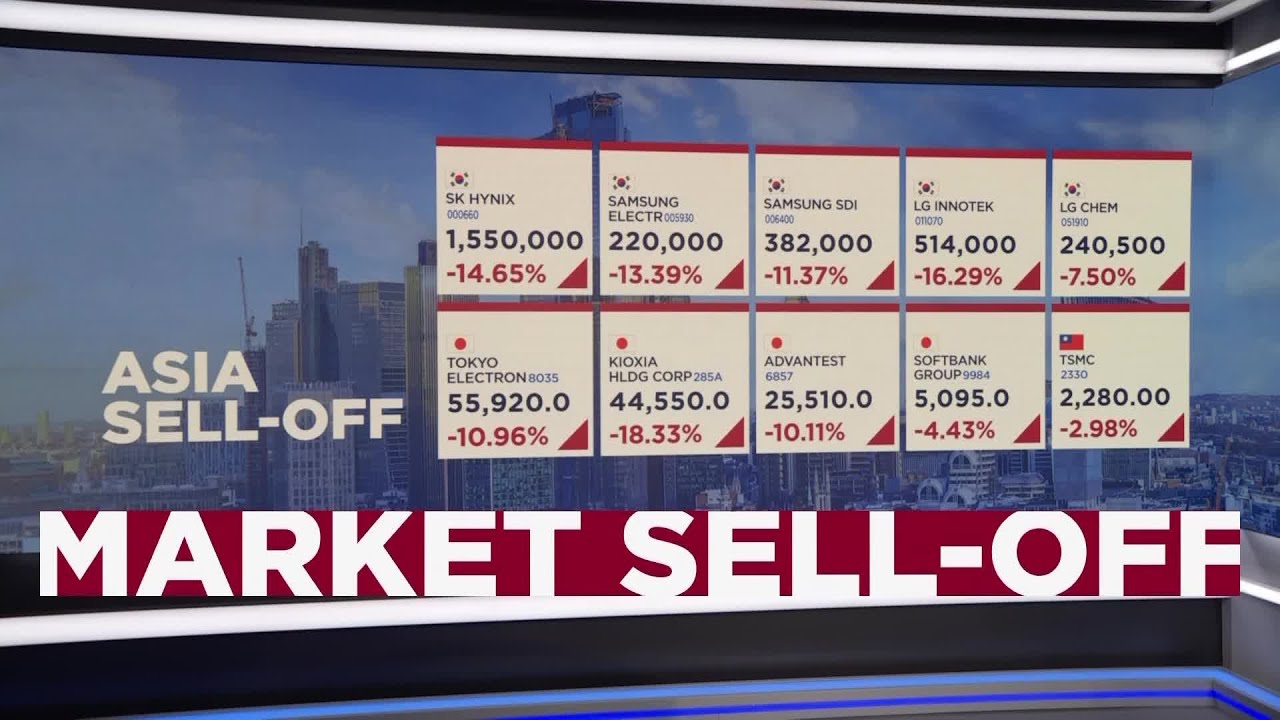
That distinction matters because the Fed decision lands in a market already negotiating several difficult transitions at once. Semiconductor shares have been hit by a sharp unwind after an extraordinary AI-led advance. Big technology companies are being asked to justify record capital spending. Long-term Treasury yields remain elevated. Mortgage rates are still restrictive. The dollar has strengthened from recent lows. At the same time, parts of the equity market outside the largest technology companies have improved, creating the possibility that market leadership is broadening rather than simply collapsing.
Paul Hickey, co-founder of Bespoke Investment Group, captured that tension in a July 28 market discussion. He argued that the passing of the baton from megacap technology to other sectors was healthier than a market in which everything declined together. He also cautioned against treating the first-day reaction to one prominent company’s earnings as a reliable forecast for the entire reporting season. That observation provides a useful framework for the Fed meeting as well: the first move after 2:00 p.m. EDT may be dramatic, but it will not necessarily be the market’s final judgment.
Key Takeaways
What matters at the July 2026 Fed meeting
- Most likely decision before the announcement: Keep the federal-funds target range at 3.50%–3.75%.
- Meaningful alternative: Raise the range by 25 basis points to 3.75%–4.00%.
- Inflation conflict: June CPI slowed sharply, but the Fed’s preferred PCE measure remained well above 2% in the latest available May data.
- Market pressure points: Treasury yields, the dollar, mortgage rates, AI and semiconductor valuations, small-cap financing costs and the VIX.
- Decision time: The statement is scheduled for 2:00 p.m. EDT on July 29, followed by Warsh’s press conference at 2:30 p.m. EDT.
- Next major evidence: GDP and June PCE inflation data are scheduled after the meeting, limiting how confidently the Fed can describe the current economy.
Original sources: Federal Reserve July 2026 calendar and June 2026 FOMC statement.
The July 2026 Fed Rate Decision Is About More Than One Quarter Point
A 25-basis-point change is small in arithmetic terms. One basis point equals one-hundredth of a percentage point, so a quarter-point increase would move the upper end of the Fed’s target range from 3.75% to 4.00%. The economic meaning, however, would be larger than the number suggests. The Fed would be reversing direction after a period in which investors had spent much of the previous cycle debating when policy might ease. A hike would communicate that inflation risks had become strong enough to justify renewed restraint even though some price measures had recently improved.
A hold could also tighten conditions. Central banks influence markets not only through the overnight policy rate but through expectations for the path of rates, the balance sheet and the language used to describe risks. If the FOMC leaves the target range unchanged but removes any residual easing bias, emphasizes that inflation risks are tilted upward, and makes clear that additional increases are under active consideration, short-dated Treasury yields could rise. Banks could reprice loans. The dollar could strengthen. Equity investors could apply higher discount rates to future profits. In that scenario, the Fed would have delivered a hawkish hold rather than a neutral pause.
The reverse is possible as well. A hold accompanied by confidence that the June inflation slowdown is durable, that energy pressures are receding and that AI-related investment will eventually lift productive capacity could reduce the perceived need for a September hike. Markets might then interpret unchanged rates as genuine patience rather than merely a delay. That would be most supportive for rate-sensitive assets, though the reaction would still depend on whether investors believed the Fed was underestimating inflation.
This is why the July decision cannot be reduced to “hike or no hike.” Investors need to evaluate at least four separate signals: the policy action, the vote, changes in the statement and the chair’s explanation. A unanimous hold would carry a different message from a hold with several dissents in favor of an increase. A hike described as insurance against inflation expectations would differ from a hike presented as the first step in a sustained campaign. The market will also compare Warsh’s words with the economic projections released in June, when the median FOMC participant projected a 3.8% federal-funds rate at the end of 2026.
What the Federal Reserve Had Already Said in June
The June meeting established the baseline for July. The FOMC voted 12–0 to maintain the target range at 3.50%–3.75%. The official statement described economic activity as expanding at a solid pace, productivity growth and capital investment as strong, and inflation as elevated relative to the 2% objective. The committee also removed language that had suggested an easing bias, an important change because it made the direction of the next adjustment less one-sided.
The accompanying minutes showed broad agreement on the immediate decision but substantial debate about the outlook. Participants generally expected inflation to remain elevated in the near term and then decline as the effects of tariffs, energy increases and supply disruptions faded. Yet the risks were judged to be tilted upward. Several officials cited cost pressures reported by businesses, and many worried that prolonged inflation above 2% could eventually alter wage-setting, price-setting and inflation expectations.
The discussion of artificial intelligence was especially relevant to financial markets. Most participants believed that strong AI-related business investment could push economic growth above potential and add to persistent inflation pressure before productivity gains became large enough to expand supply. Some officials expected AI adoption eventually to reduce costs and raise productive capacity, but they acknowledged that the disinflationary payoff might arrive later than the immediate demand boost from data-center construction, power equipment, semiconductors, networking and software.
The June projections quantified the tension. The median participant expected real GDP growth of 2.2% in 2026, an unemployment rate of 4.3%, headline PCE inflation of 3.6% and core PCE inflation of 3.3%. Compared with March, the inflation forecasts were revised markedly higher while the growth forecast was trimmed. The median projected federal-funds rate for the end of 2026 rose to 3.8% from 3.4%, implying that at least some officials considered one increase appropriate before year-end.
Those projections were not a promise. Each FOMC participant submitted an individual view based on an assumed appropriate policy path, and the dots do not reveal who supports which rate. Warsh also declined to submit his own projection, reducing the value of the median as a guide to the chair’s personal preference. Still, the June materials established that a year-end rate above the current midpoint was no longer an outlying idea inside the committee.
| June 2026 FOMC median projection | 2026 | March 2026 projection | Change in message |
|---|---|---|---|
| Real GDP growth | 2.2% | 2.4% | Slightly weaker growth |
| Unemployment rate | 4.3% | 4.4% | Labor market still resilient |
| PCE inflation | 3.6% | 2.7% | Large upward revision |
| Core PCE inflation | 3.3% | 2.7% | Underlying inflation still high |
| Federal-funds rate, year-end midpoint | 3.8% | 3.4% | Median shifted from easing to tightening |
Source: Federal Reserve Summary of Economic Projections, June 17, 2026. Inflation and GDP projections are fourth-quarter-to-fourth-quarter changes; the unemployment rate is the projected fourth-quarter average.
Why the Inflation Data Point in Opposite Directions
The strongest case for waiting is the June consumer-price report. The Bureau of Labor Statistics said the all-items Consumer Price Index fell 0.4% on a seasonally adjusted monthly basis and increased 3.5% over the twelve months through June. That annual rate was down from 4.2% in May. More important for officials trying to distinguish persistent inflation from volatile food and energy moves, the index excluding food and energy was unchanged in June and rose 2.6% from a year earlier, down from 2.9% in May.
Those figures are meaningfully better than the inflation environment described in the June projections. A zero monthly reading for core CPI is not compatible with an immediate acceleration in underlying consumer inflation. It gives officials who prefer to wait a straightforward argument: monetary policy works with lags, the core measure has cooled, and raising rates in response to earlier energy spikes could unnecessarily weaken housing, business borrowing and employment.
The strongest case for caution about that interpretation is that CPI is not the Fed’s preferred inflation gauge. The latest available Personal Consumption Expenditures price index, covering May, rose 4.1% from a year earlier. Core PCE inflation was 3.4%. Those numbers were well above the 2% target and showed that the composition and weighting of inflation mattered. The June PCE release was not scheduled until July 30, one day after the policy decision, leaving the committee without the most current version of its preferred measure.
The gap between headline CPI, core CPI, headline PCE and core PCE is not a statistical curiosity. Each index covers a different basket and uses different weights. CPI places greater weight on out-of-pocket consumer expenditures and shelter. PCE captures a broader range of spending, includes expenditures made on behalf of households and allows weights to shift as consumers change behavior. In normal periods, the measures usually tell a similar broad story. In a period of large relative-price changes, tariffs and energy volatility, they can produce different signals about the persistence of inflation.
The Fed must therefore decide how much weight to put on the latest monthly improvement versus the longer period of above-target inflation. One month of soft core CPI can be encouraging without proving that the trend has changed. Conversely, the May PCE reading can remain uncomfortably high without proving that June’s improvement was temporary. The uncertainty is real, not merely rhetorical.
Inflation Snapshot
The latest data available before the decision
- June CPI: -0.4% month over month; +3.5% year over year.
- June core CPI: 0.0% month over month; +2.6% year over year.
- May PCE price index: +4.1% year over year.
- May core PCE price index: +3.4% year over year.
- Fed objective: 2% inflation over the longer run, measured using PCE prices.
Original sources: Bureau of Labor Statistics June CPI release and Bureau of Economic Analysis PCE price index.
Energy Prices Complicate the Fed’s Job
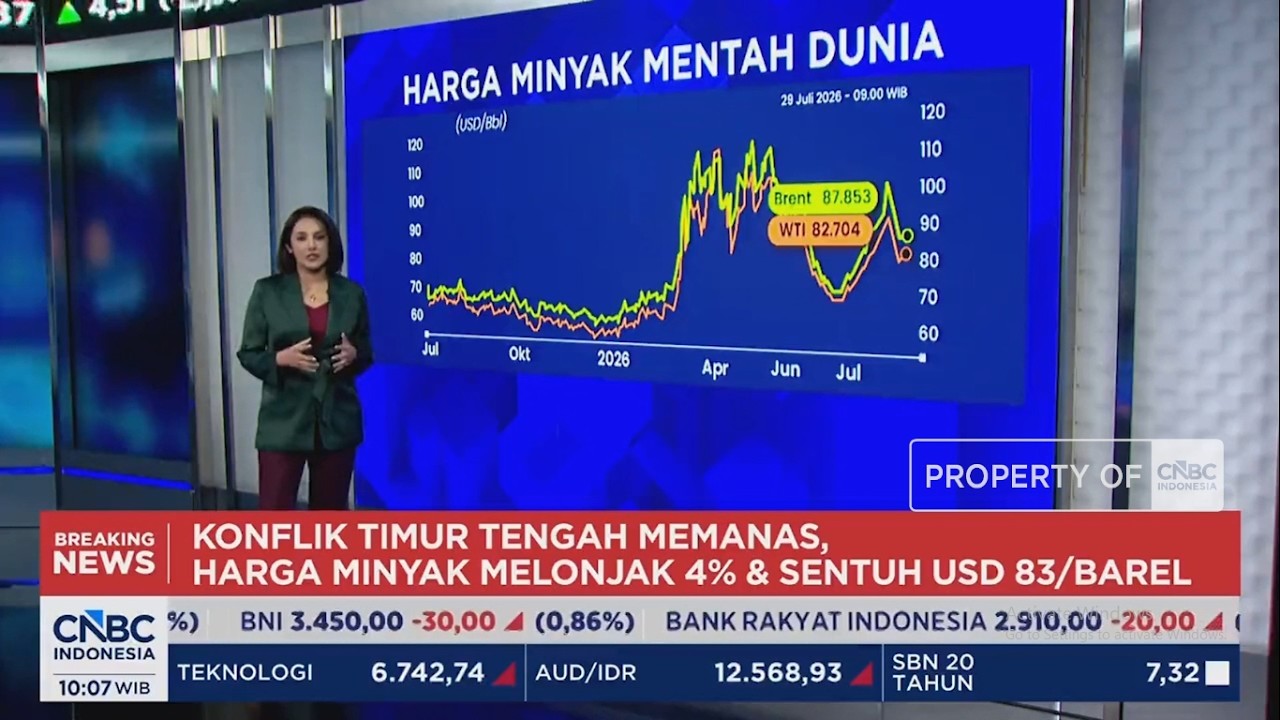
Energy inflation has been one of the largest sources of disagreement. The June CPI report showed energy prices up 15.7% from a year earlier and gasoline up 26.7%, even after the all-items index fell during the month. The year-over-year figures reflected the cumulative effect of geopolitical disruption and earlier supply fears. By late July, oil had retreated from recent peaks as diplomatic efforts reduced immediate concern about prolonged disruption, but prices and shipping risks remained sensitive to developments in the Middle East.
A central bank cannot produce more oil, reopen a shipping route or repair damaged infrastructure. Raising interest rates does not directly solve a supply shock. That is the main argument against tightening solely because gasoline or crude prices have risen. Higher rates would reduce demand across the economy, including sectors that did not cause the shock, while the energy constraint might resolve independently.
The counterargument is that the Fed is responsible for preventing a supply shock from becoming generalized inflation. If firms pass higher fuel, transport, electricity and materials costs into a wide range of prices, and workers then demand compensation for a higher cost of living, the initial shock can influence inflation expectations and wage-setting. Monetary policy cannot create supply, but it can restrain the demand that allows price increases to spread.
Warsh’s challenge is to explain where he believes the economy sits on that spectrum. If he treats energy as a temporary relative-price shock, the argument for waiting strengthens. If he emphasizes that inflation has already exceeded target for years and that another shock risks changing behavior, a hike or a distinctly hawkish hold becomes easier to justify.
The market’s response to oil before the meeting demonstrates why this distinction matters. Falling crude prices on July 28 helped Treasury yields ease and supported a rotation into parts of the equity market even while semiconductor shares weakened. A renewed oil spike after the decision could reverse that relief regardless of what the Fed says. Monetary policy and geopolitics are interacting, but neither fully controls the other.
Tariffs Add Another Supply Shock With a Different Timeline
Tariffs pose a similar but not identical problem. An import duty can raise the domestic cost of affected goods, encourage substitution toward alternative suppliers, compress company margins or produce some combination of those effects. The initial price change can be a one-time level adjustment, but repeated tariff rounds, retaliation and supply-chain reorganization can make the process persistent.
For the Fed, the relevant question is not whether tariffs raise some prices; they generally do. The question is whether the increase changes the underlying inflation process. If firms absorb the costs in margins, the effect on consumer prices is smaller but profits weaken. If firms pass the costs through, inflation rises. If tariffs prompt domestic investment and supply expansion, the long-run effect may differ from the short-run disruption. Those outcomes vary by sector and cannot be captured by one headline estimate.
Tariffs also complicate real-time data. A company may import inventory before a duty begins, temporarily boosting trade flows and delaying the price effect. It may renegotiate contracts or change product specifications. Consumers may shift purchases. These adjustments can make monthly inflation volatile and reduce the value of one release as a definitive signal.
A patient Fed would argue that it should not overreact before the pass-through is measurable. A more hawkish Fed would argue that waiting until inflation is visibly entrenched risks falling behind. The disagreement is ultimately about risk management: which error is more costly, tightening too soon into a supply disturbance or tightening too late after expectations have adjusted?
AI Investment Is Both an Inflation Risk and a Productivity Bet
The most unusual feature of the current policy debate is the role of artificial intelligence. Previous tightening cycles were often organized around household consumption, housing, wages and conventional business investment. In 2026, the construction of data centers and the race to secure computing capacity have become large enough to influence the macroeconomic discussion directly.
Warsh told Congress in July that business investment was the economy’s most striking feature. He said equipment investment had increased about 8% over the four quarters ending in the first quarter, while high-technology spending had risen nearly 25%. The spending encompasses more than advanced processors. It includes storage, networking, cooling systems, power generation, grid connections, construction, land, software and the financing required to build the infrastructure.
In the short run, that investment adds demand. Companies compete for scarce equipment, engineers, electricity, transformers, turbines, skilled construction labor and suitable data-center sites. When supply cannot expand quickly, prices rise. The June FOMC minutes noted that strong demand for AI infrastructure was likely to maintain upward pressure on technology products and electricity. The same minutes recorded a view that productivity gains would eventually lower costs and increase aggregate supply, but that those benefits would take time.
This timing mismatch is crucial. A productivity boom can support faster economic growth without inflation if the economy becomes capable of producing more goods and services per hour of labor. Yet the investment needed to create that capacity can be inflationary before the benefits arrive. The Fed must set policy for the transition, not for a hypothetical future in which the productivity gains have already been realized.
The uncertainty is amplified by the way AI spending is financed. The largest technology companies can fund capital expenditure from enormous operating cash flows, but suppliers, utilities, developers and smaller participants may depend more heavily on debt. Higher Treasury yields raise the discount rate applied to long-duration projects and can increase borrowing costs throughout the supply chain. A Fed hike intended to contain AI-related demand could therefore slow the very investment that is expected eventually to expand supply.
That does not mean monetary policy should exempt AI from normal economic constraints. It means policymakers must distinguish between investment that reflects durable demand and spending driven by competitive fear, leverage or unrealistic return assumptions. The equity market is making the same distinction. Storage companies such as Seagate can report strong demand and cash flow while semiconductor shares as a group sell off because investors are reassessing valuation, positioning and the sustainability of the broader capital-spending cycle.
Why Kevin Warsh’s Communication Style Raises Market Volatility
Fed meetings are easier for markets when the central bank has guided investors toward a narrow range of outcomes. That reduces the chance that the policy action itself will surprise. Warsh has deliberately moved away from relying heavily on forward guidance, arguing that the institution should preserve flexibility and improve the way it communicates. The result is a meeting at which the range of plausible outcomes is wider than investors had become accustomed to.
Reduced guidance has advantages. It can prevent financial markets from treating tentative forecasts as promises. It can encourage investors to price economic risk rather than assuming the Fed will validate a preannounced path. It also allows policymakers to respond to fast-changing events without appearing to reverse a commitment made weeks earlier.
The cost is higher event risk. When the chair does not signal a preferred outcome, futures, options, bonds and currencies must assign greater probability to several scenarios. That uncertainty can increase hedging demand and make the press conference as important as the policy statement. A single phrase about inflation persistence, financial conditions or the likelihood of further action can move the yield curve sharply.
Warsh’s institutional review adds another layer. He has created task forces to examine Fed communications, balance-sheet policy, data sources, productivity and employment, and inflation frameworks. Those reviews may improve policy over time, but during the transition investors have less confidence that the old communication conventions will continue unchanged. The market is not only estimating the next rate; it is learning how the new chair wants decisions to be made and explained.
For equity investors, the consequence is that implied volatility can remain elevated even when the expected policy rate changes little. The Cboe Volatility Index stood at 18.21 after the July 28 session. That was not a panic reading—the 52-week range extended from 13.38 to 35.30—but it reflected meaningful demand for protection ahead of the Fed decision, major earnings and geopolitical uncertainty. The VIX measures the market’s expectation of near-term S&P 500 volatility derived from options prices; it does not predict whether stocks will rise or fall.
A surprise hike would probably lift short-term volatility immediately, but even a hold could move the VIX if Warsh changes the perceived distribution of future outcomes. A clear explanation that narrows uncertainty could cause implied volatility to fall after the event. An ambiguous explanation, a divided committee or contradictory signals could keep it elevated despite no change in rates.
What a Divided Vote Would Tell Investors
The June decision was unanimous. July may not be. Several officials have expressed discomfort with persistent inflation, and the minutes showed a committee that agreed on the immediate action while holding different views about the timing and necessity of future increases. A dissent does not automatically mean the majority is about to change course, but it provides information about the strength and location of disagreement.
If the committee holds rates and one or more members dissent in favor of a hike, investors will ask whether those voters represent a small hawkish minority or a broader coalition that could become the majority by September. The chair’s press conference will matter because Warsh can acknowledge the dissent while explaining whether the majority saw the decision as close.
A hold with no dissent would not necessarily be dovish. The committee could agree unanimously that waiting six weeks is prudent while also agreeing that inflation risks justify an increase later. Conversely, a hike with dissent from officials preferring no change could reveal concern that the evidence for immediate action was not decisive.
Market participants often overinterpret the vote count. FOMC members may support a compromise statement even when their preferred policy differs slightly. Regional bank presidents who do not vote in a given year still participate in the discussion and influence the outlook. The Summary of Economic Projections includes voting and nonvoting participants. The visible vote is therefore one signal, not a complete map of the committee.
The wording around the vote will be especially important if the decision is unusual. If the Fed hikes, investors will want to know whether the action was framed as a recalibration, an insurance move or the beginning of a sequence. If the Fed holds, they will want to know whether the committee requires more data or simply prefers to move at a meeting with updated economic projections in September.
Three Plausible Fed Scenarios and Their Market Meaning
Scenario 1: A hawkish hold
The committee leaves the range at 3.50%–3.75% but emphasizes that inflation remains too high, risks are tilted upward and future adjustments may be needed. The statement could acknowledge the improvement in June CPI while refusing to treat one month as decisive. Warsh could say the committee is prepared to act if upcoming PCE, employment or expectations data confirm persistence.
This was the most plausible base case before the announcement. It would avoid surprising the majority of economists while preserving the option to hike in September. Short-term Treasury yields might rise if the press conference increases confidence in a later move. The dollar could strengthen. Equity reaction would depend on whether investors focus on the absence of an immediate hike or the prospect of tighter policy ahead.
Within equities, expensive long-duration growth stocks would be vulnerable to higher discount rates, but the effect would not be uniform. Companies with strong current cash flow and demonstrable AI demand could hold up better than speculative businesses dependent on distant profits. Banks might benefit from higher rates if the yield curve and credit quality remain supportive. Small caps could face pressure because many rely more heavily on floating-rate debt and refinancing.
Scenario 2: A surprise 25-basis-point increase
The committee raises the target range to 3.75%–4.00%. The initial reaction would likely include higher short-term yields, a stronger dollar and lower equity prices, particularly in rate-sensitive sectors. The VIX could spike as hedges are repriced. Mortgage and corporate borrowing rates might move higher even before lenders changed posted terms, because Treasury and swap markets transmit the shock rapidly.
The durability of the reaction would depend on the explanation. If Warsh describes the hike as a one-time response to accumulated inflation risk and signals no presumption of another increase, markets could recover after the first move. If he frames it as the start of a renewed tightening cycle, the repricing would be broader. The two-year Treasury yield would be especially sensitive because it reflects expectations for policy over the next several meetings.
A hike could also be interpreted positively in a narrow sense if investors believe decisive action reduces the risk of larger increases later. That outcome is possible but would require a highly credible explanation. The more immediate concern would be that the Fed tightened just before receiving GDP and PCE data that might have argued for patience.
Scenario 3: A patient or mildly dovish hold
The committee leaves rates unchanged and gives greater weight to the June core CPI improvement, falling oil prices and the risk of overreacting to supply shocks. Warsh could emphasize that the current rate is already restrictive and that the Fed can wait for additional evidence without abandoning its inflation objective.
Short-term yields would likely fall, the dollar could weaken and equities could rally. Rate-sensitive sectors such as housing, real estate investment trusts and smaller companies might outperform. Yet the response would be vulnerable to reversal if the market concluded that the Fed was tolerating too much inflation. Long-term yields could rise even as short-term yields fell if investors demanded more compensation for future inflation.
This is an important reminder that “dovish” does not always mean lower yields across the curve. The bond market distinguishes between the expected policy rate and inflation risk. A message perceived as too relaxed could steepen the curve, with longer maturities underperforming.
| Possible outcome | Likely first reaction | What could reverse it |
|---|---|---|
| Hawkish hold | Two-year yield and dollar higher; growth stocks mixed to lower | Warsh portrays September action as uncertain and data-dependent |
| 25-basis-point hike | Yields, dollar and VIX higher; equities lower | Hike framed as isolated rather than the start of a cycle |
| Patient hold | Short yields and dollar lower; rate-sensitive equities higher | Long-term inflation concerns push the back end of the curve higher |
The Treasury Market Will Read the Fed More Precisely Than the Headline
Treasury yields provide the clearest real-time measure of how the market interprets the decision. The U.S. Treasury’s July 28 closing data showed a two-year par yield of approximately 4.26%, above the upper end of the current federal-funds range. That gap indicated that investors already expected some probability of higher policy rates or a sustained period of restraint. Longer maturities also remained elevated, reflecting inflation risk, term premium, fiscal supply and uncertainty about the long-run neutral rate.
The two-year yield is likely to respond most directly to the expected path of the federal-funds rate. A surprise hike or a strong signal of September tightening would push it higher. A patient hold would likely pull it lower. The ten-year yield is more complicated. It incorporates expected short rates over a longer horizon, expected inflation and a term premium compensating investors for duration risk.
Suppose the Fed hikes but convinces markets that the move will prevent inflation from becoming entrenched. The two-year yield could rise while the ten-year rises less or even falls, flattening the curve. Suppose the Fed holds and appears tolerant of inflation. The two-year could fall while the ten-year remains high, steepening the curve. Those patterns convey more information than the direction of one yield in isolation.
Bond prices move inversely to yields. When yields rise, the present value of fixed future coupon and principal payments falls. Longer-duration bonds are generally more sensitive because more of their value arrives farther in the future. This is why a small change in the expected policy path can produce a large move in long Treasury bonds and in other assets priced relative to them.
Treasury yields also provide the base rate for much of the financial system. Corporate bonds, mortgages, auto loans, private credit and equity valuations are priced using a Treasury or swap benchmark plus a risk premium. A Fed decision that lifts the entire curve therefore affects financing even when the overnight rate itself changes by only a quarter point.
Why the Dollar Could Move Sharply
The dollar reacts to relative interest rates, not U.S. policy in isolation. A more hawkish Fed generally supports the currency when investors expect U.S. yields to remain above those available in other major economies. A surprise hike would widen the expected short-rate advantage unless foreign central banks were also repriced upward.
A stronger dollar can help contain U.S. inflation by reducing the dollar price of some imported goods and commodities. It can also tighten global financial conditions because many companies and governments borrow in dollars. For U.S. multinational companies, a stronger currency reduces the translated value of foreign revenue and profit when reported in dollars, though the actual economic effect depends on hedging and cost structure.
A weaker dollar after a patient hold would ease financial conditions and support exporters, commodity prices and some risk assets. It could also reduce the disinflationary help from imports. The Fed does not target the exchange rate, but the currency is one channel through which policy affects the economy.
The dollar’s reaction may be especially sensitive to Warsh’s discussion of future meetings. If the Fed holds but markets increase the probability of a September hike, the dollar can rise despite no immediate change. If the Fed hikes but signals that the action completes the adjustment, the currency’s first move could fade.
Mortgage Rates and Housing Are Already Carrying Restrictive Policy
Housing is one of the clearest examples of why the Fed must consider the cumulative effect of policy, not only the latest inflation reading. Freddie Mac reported that the average 30-year fixed mortgage rate was 6.58% for the week ending July 23, up from 6.55% a week earlier. The 15-year average was 5.96%. Those rates were below some prior peaks but remained high enough to constrain affordability and transaction activity.
Mortgage rates do not move one-for-one with the federal-funds rate. They are more closely linked to longer-term Treasury yields, mortgage-backed securities spreads, prepayment risk, lender capacity and credit conditions. Still, expectations for Fed policy influence all of those components. A hawkish decision can lift mortgage rates even if the policy rate is unchanged.
Higher mortgage rates affect more than homebuyers. Existing owners with low fixed-rate loans are reluctant to move because replacing the loan would increase their monthly payment. That “lock-in” effect reduces the supply of homes for sale and can support prices even as affordability deteriorates. Builders may offer rate buydowns or incentives, but those measures have costs and do not fully offset the financing burden.
Housing also feeds into inflation with long lags. Official shelter measures reflect rents and imputed owner costs rather than current home prices alone. Market rents can cool months before the change appears fully in CPI or PCE. Several FOMC participants expected housing-services inflation to continue slowing, providing a source of disinflation. Raising rates before that process is visible in the aggregate data could deepen the housing slowdown.
The counterargument is that persistent housing scarcity and high nominal income can keep shelter inflation firmer than expected. A Fed that waits for perfect confirmation may discover that the anticipated disinflation is too slow. The July decision must therefore balance visible weakness in housing activity against the gradual nature of shelter inflation.
Housing Finance Snapshot
Mortgage rates before the July Fed decision
- 30-year fixed mortgage: 6.58% average for the week ending July 23, 2026.
- 15-year fixed mortgage: 5.96% average.
- Transmission channel: Mortgage rates respond mainly to longer-term yields and mortgage-market spreads, not mechanically to the overnight policy rate.
- Key risk: A hawkish Fed can raise borrowing costs without changing the target range if Treasury yields rise.
Original source: Freddie Mac Primary Mortgage Market Survey.
Stocks Face a Policy Test After a Violent Rotation
The equity market reached the meeting in an unusual condition. The S&P 500 closed July 28 at 7,428.78, up 0.21% for the session, while the Dow Jones Industrial Average gained 1.03% and the Nasdaq Composite slipped 0.22%. Beneath those modest index moves, the divergence was severe. The Philadelphia semiconductor index fell sharply, while healthcare, consumer staples and materials advanced. Boeing and Coca-Cola helped the Dow, and several chip-related names remained under pressure.
That pattern matters because it suggests the market is not responding to one macro signal in a uniform way. Investors are reducing exposure to crowded AI and semiconductor trades while reallocating toward companies with different earnings drivers, valuations and sensitivity to interest rates. A rotation can be healthy if it broadens participation and reduces dependence on a handful of companies. It can also be a warning if the former leaders are falling because expected returns no longer justify capital spending or valuation.
Paul Hickey’s argument that a passing of the baton is preferable to a market in which everything deteriorates captures the constructive interpretation. The S&P 500 can remain resilient even when a major leadership group corrects if other sectors produce earnings growth and attract capital. Ford’s results, for example, offered evidence that parts of the commercial and consumer economy remained firm. Defensive sectors also benefited from investors seeking earnings that were less dependent on the AI cycle.
The skeptical interpretation is that broadening may be temporary. When investors sell the dominant leaders, they often move into lagging sectors as a tactical shelter. If bond yields continue rising or economic growth slows, those sectors may not provide durable leadership. Financials can be hurt by credit deterioration, industrials by weaker orders, and consumer staples by margin pressure. A rotation is not automatically a new bull-market foundation.
The Fed’s message will help determine which interpretation gains strength. A hawkish outcome that raises real yields could pressure expensive technology while supporting the dollar and financial shares. A dovish outcome could revive growth stocks but also raise concern that the Fed is allowing inflation to persist. A surprise hike could initially pull most sectors lower, testing whether the recent breadth is strong enough to absorb another shock.
The VIX Is a Measure of Expected Movement, Not a Directional Forecast
The Cboe Volatility Index is often called the market’s fear gauge, but that shorthand can mislead. The VIX uses S&P 500 options prices to estimate expected annualized volatility over roughly the next 30 days. A reading near 18 implies a larger expected range of movement than a reading near 13, but it does not tell investors whether the index will rise or fall. Options demand can increase because traders expect either a selloff, a rally or simply a wider distribution of outcomes.
Before the decision, the VIX reflected several overlapping events: the FOMC announcement, Warsh’s press conference, major technology earnings, oil-price uncertainty and the ongoing semiconductor unwind. Once an event passes, implied volatility can decline even if the market moves sharply, because uncertainty has been resolved. This is known as volatility compression or an event-volatility unwind.
The reverse can happen when the event creates new questions. A surprise hike accompanied by uncertain guidance could lift both spot volatility and future volatility. A hold with a divided vote could shift attention immediately to September, keeping protection expensive. A clear hold that reduces the probability of near-term action could push the VIX lower even if equities do not rally much.
Investors should also distinguish the VIX cash index from VIX futures and exchange-traded products linked to volatility. Futures prices reflect expectations for volatility at different maturities and can trade above or below the spot index. Products that roll futures can experience gains or losses that differ greatly from a simple change in spot VIX because of term structure, daily rebalancing and compounding. The index is useful as a market signal; it is not a direct asset that can be bought and held like a stock.
The July meeting is therefore a test of the entire volatility surface, not only the headline index. Short-dated S&P options should react most strongly to the immediate announcement. Longer-dated options will reflect whether the Fed changes the uncertainty around September, inflation and earnings. A one-day drop in the VIX would not prove that risks have disappeared, just as a temporary spike would not prove that a bear market has begun.
Semiconductor Deleveraging Is About Positioning as Well as Fundamentals
The chip trade had become one of the most crowded expressions of the AI investment boom. Strong earnings, expanding data-center demand and strategic concern about computing capacity attracted institutional and retail capital. In some markets, leverage amplified the advance. When the narrative weakened, the same leverage accelerated selling as investors reduced exposure, met margin requirements or protected gains.
Deleveraging can drive prices below levels justified by near-term fundamentals, but it can also expose valuations that depended on uninterrupted growth. The distinction is difficult to make during a fast selloff. A company can report excellent revenue and earnings while its shares fall because expectations were even higher, positioning was crowded or investors fear the cycle will peak. Another company can rally on results because the report disproves a specific concern.
Seagate’s fiscal fourth-quarter results illustrate the second case. The storage company reported revenue of $3.6 billion, GAAP gross margin of 52.3%, non-GAAP diluted earnings of $5.71 per share and free cash flow of $1.1 billion. Revenue rose sharply from the prior year, and management guided to approximately $4.1 billion of revenue for the following quarter. The shares rose in after-hours trading after a difficult period for the broader AI complex.
The report supported the view that demand for mass-capacity storage remained strong. AI systems generate and process enormous volumes of data, and not all of that data resides on the most expensive high-performance memory. Hard-disk drives remain important for large-scale, lower-cost storage. Seagate’s results therefore offered evidence that the infrastructure cycle was producing real orders and cash flow beyond the most visible processor companies.
Yet one earnings report cannot settle the broader debate. Investors still need to assess customer concentration, pricing, supply discipline, capital intensity and how long cloud demand can grow at current rates. Strong storage demand can coexist with overvaluation in other parts of the AI chain. It can also coexist with a market correction driven by leverage rather than by a collapse in end demand.
The Fed influences this process through financing and valuation. Higher rates increase the required return on capital-intensive projects and reduce the present value of future profits. They can also make leveraged positions more expensive to maintain. A hawkish decision could therefore extend deleveraging even if corporate results remain solid. A patient hold could relieve financing pressure but would not eliminate questions about returns on AI investment.
Seagate’s Earnings Show Why the AI Trade Is Not One Trade
It is convenient to speak of “the AI trade” as though every company had the same economics. In reality, the ecosystem includes chip designers, foundries, memory producers, storage manufacturers, networking suppliers, cloud platforms, data-center developers, power companies, software vendors and end users. Their margins, competitive advantages and capital needs differ sharply.
Seagate benefits when customers require more mass-capacity storage, but it is also exposed to the cyclical history of hardware demand. Cloud platforms can delay purchases, manage inventory or pressure pricing. A processor designer may capture very high margins when demand exceeds supply, while a utility may need years of investment before earning regulated returns. A software company may benefit from AI adoption without owning physical infrastructure, but it may face intense competition and uncertain willingness to pay.
Interest rates affect these companies differently. Cash-rich megacaps can continue investing even when borrowing costs rise, though their equity valuations may compress. Highly leveraged developers can face immediate refinancing pressure. Suppliers with strong order books may benefit from near-term scarcity but be vulnerable when capacity catches up. Investors who treat the entire group as a single factor risk missing these differences.
The July rotation may therefore be less about abandoning AI than separating businesses with current earnings from those priced mainly on future possibilities. Seagate’s positive reaction after earnings, despite weakness elsewhere in chips, is consistent with that interpretation. The same logic applies to data-center power, cooling and networking companies. Strong demand does not guarantee attractive investment returns at every valuation, but it does create real winners and losers.
A Fed hike would accelerate that differentiation. Projects with marginal returns would become harder to justify. Companies with strong cash generation and pricing power would be better placed. A hold would allow the cycle more time, but it would not answer the central question: whether the productivity and revenue generated by AI will ultimately exceed the enormous cost of building the infrastructure.
Big Tech Earnings Matter, but the First-Day Reaction Is a Poor Bellwether
Investors often search for one megacap company that can forecast the market’s direction. The temptation is understandable. The largest companies carry enormous weights in major indexes, spend heavily across the technology supply chain and provide information about advertising, cloud computing, consumer devices and enterprise demand. Their earnings can move index futures and influence hundreds of suppliers.
Hickey’s skepticism about the bellwether concept is still well founded. A stock’s reaction on the day after earnings reflects the difference between the report and expectations already embedded in the price. A company can deliver strong results and fall because guidance was not strong enough. It can miss a metric and rise because the market feared something worse. The reaction also depends on positioning, options activity, valuation and the broader macro environment.
Alphabet demonstrated this ambiguity after its July 22 results. The shares initially reacted negatively, then recovered in subsequent sessions. Investors were balancing strong operating performance against the scale of AI investment and questions about returns. The first move did not provide a durable verdict on the company or on the entire earnings season.
The Fed decision adds another layer. A company’s cash flows do not change instantly when the chair speaks, but the discount rate applied to those cash flows can. If Treasury yields rise, the market may reduce the valuation multiple even after strong earnings. If yields fall, a company can rally despite unchanged fundamental expectations. That makes it dangerous to attribute every post-earnings move to the corporate report alone.
Apple’s scheduled July 30 earnings call illustrates the sequencing problem. Investors must process the Fed decision before receiving Apple’s quarterly results. A move in Apple on July 29 may reflect rates, index flows and anticipation rather than new company information. The reaction after earnings will then combine the report with whatever the Fed has changed about the valuation environment.
Apple, Nvidia and the Limits of Simple Valuation Comparisons
The transcript’s comparison between Apple and Nvidia highlights a broader debate about market multiples. Apple was described as trading above 30 times earnings, while Nvidia was characterized as trading below the broad market multiple after a pullback. Such comparisons can be provocative, but they require careful definition. A price-to-earnings ratio can use trailing earnings, current-year estimates or forward estimates. Different data providers may exclude or include specific items. Rapid earnings growth can make a stock look expensive on trailing results and less expensive on forward estimates.
Apple’s valuation reflects the durability of its ecosystem, services revenue, installed base, capital returns and perceived quality. It also reflects expectations that the company can defend margins and monetize new products. The risk is that a premium multiple leaves less room for disappointment if device growth slows, competition rises or AI investment fails to produce incremental revenue.
Nvidia’s valuation reflects extraordinary growth and its central role in accelerated computing. A lower forward multiple than Apple would not necessarily mean lower risk. Nvidia’s earnings are more sensitive to the pace of data-center investment, customer concentration, export restrictions, competitive chips and the possibility that customers moderate spending after building capacity. High current earnings can make the multiple appear modest near the top of a cycle.
The market multiple itself is not a fixed benchmark. It changes with interest rates, profit margins, sector composition and growth expectations. When Treasury yields rise, investors generally demand a higher earnings yield, which corresponds to a lower price-to-earnings ratio. A stock can become cheaper relative to the market while the whole market remains expensive relative to bonds.
The Fed decision therefore matters more than a static comparison. A hawkish outcome would probably increase scrutiny of premium multiples, but the most exposed companies would be those whose cash flows are distant or uncertain. A company with strong current free cash flow may withstand higher rates better than a company with a similar headline multiple but weaker cash generation.
Oracle’s Swings Show How Markets Price Uncertain AI Returns
Oracle was cited in the market discussion as an example of extraordinary swings: a major 35-day rally followed by one of its largest 35-day declines. The exact ranking of those moves depends on the chosen historical series, but the broader point is credible. Investors have struggled to value companies that are simultaneously benefiting from AI demand and committing enormous capital to serve it.
Cloud infrastructure growth can support revenue, backlog and long-term strategic relevance. It can also require data-center leases, equipment purchases, power contracts and financing that reduce free cash flow in the near term. The market may initially reward bookings and then focus on capital intensity. It may later reverse again if capacity begins generating stronger margins.
Higher rates make the funding question more urgent. Even a large investment-grade company faces a higher opportunity cost when Treasury yields rise. Credit spreads can widen if investors worry that capital expenditure is increasing faster than cash flow. Equity holders may demand evidence that new capacity will earn returns above the cost of capital.
This is why AI-related stocks can experience violent reversals without a comparable change in the long-term technology thesis. The market is updating the timing, financing and distribution of returns. The Fed can alter those assumptions through the discount rate even though it has no special policy for AI.
Ford’s Results Support the Market-Broadening Case, With Qualifications
Ford’s second-quarter report gave investors a concrete example of economic strength outside the AI complex. The company reported revenue of $48.3 billion, adjusted earnings before interest and taxes of $2.5 billion and adjusted free cash flow of $2.1 billion. Ford raised its full-year adjusted EBIT guidance to $10 billion–$11 billion and adjusted free cash flow guidance to $6 billion–$7 billion.
The headline net result was less favorable. Ford reported a net loss of $1.3 billion, largely because of special charges that included a $3.6 billion mostly noncash charge related to the disposition of the BlueOval SK battery joint venture and additional charges tied to canceled electric-vehicle programs. The distinction between GAAP net income and adjusted EBIT is material. The adjusted result showed stronger ongoing operations; the statutory loss captured the economic cost of strategic decisions and write-downs.
Commercial vehicles, pricing and higher-margin products helped the outlook. Ford Blue’s EBIT improved despite lower wholesale volume, and Ford Credit produced solid pre-tax earnings. Those trends support the argument that parts of the U.S. economy remain resilient, particularly among higher-income consumers and business customers able to absorb expensive vehicles and financing.
There are important qualifications. Revenue declined year over year. Electric-vehicle operations continued to lose money. Strong demand among affluent buyers does not necessarily describe the financial position of lower-income households. Ford’s performance also depends on tariffs, supply constraints, incentives, residual values and credit quality. It is evidence of resilience, not proof that the whole economy is accelerating.
For the Fed, the report cuts both ways. Strong pricing and demand suggest the economy can tolerate restrictive rates and may require them to prevent inflation. At the same time, the large EV charges show how expensive capital allocation mistakes can become when financing conditions are tight and technology strategies change. A rate hike would increase pressure on auto affordability and could eventually weaken credit performance.
| Ford Q2 2026 measure | Reported result | Why it matters |
|---|---|---|
| Revenue | $48.3 billion | Large sales base, though lower year over year |
| GAAP net income | $1.3 billion loss | Includes major EV and battery-joint-venture charges |
| Adjusted EBIT | $2.5 billion | Shows stronger ongoing operating performance |
| 2026 adjusted EBIT guidance | $10 billion–$11 billion | Raised from the prior range |
| 2026 adjusted free cash flow guidance | $6 billion–$7 billion | Supports liquidity and investment capacity |
Sources: Ford investor-relations news and Reuters reporting on Ford’s guidance.
Corporate Credit Is Quietly Repricing the AI Buildout
Equity prices receive most of the attention, but the credit market can reveal a different judgment about investment risk. A company’s shares may rise because investors expect higher long-term earnings while its bond spreads widen because lenders are concerned about leverage, capital expenditure or the timing of cash returns. Those signals are not contradictory. Equity holders own the upside after debt claims are paid; bondholders focus more heavily on downside protection and repayment capacity.
In 2026, the scale of AI infrastructure spending has increased attention to the balance sheets of technology companies and their suppliers. The largest platforms retain substantial cash generation, yet the ecosystem also includes data-center developers, utilities, equipment lessors and smaller vendors that require external capital. Higher Treasury yields raise the all-in cost of new debt even if credit spreads do not change. If spreads widen as well, the financing burden increases further.
A surprise Fed hike would probably tighten this channel immediately. Investment-grade issuers might delay offerings or pay higher coupons. Lower-rated borrowers could face a larger increase in costs. Private-credit loans tied to floating benchmarks would reprice with short rates, reducing cash available for investment or distributions. Companies with near-term maturities would become more sensitive than firms that locked in long-term fixed-rate financing.
A hold would not necessarily provide relief. If Warsh’s explanation drives long Treasury yields higher, corporate borrowing costs can rise despite no change in the overnight target. Conversely, a credible anti-inflation message might lower long-term yields by reducing inflation risk even if the Fed increases the short rate. The shape of the yield curve and movement in spreads will therefore matter as much as the policy headline.
Small Caps, Banks and Cyclicals Need More Than a Megacap Pause
The recent improvement in market breadth has revived interest in smaller companies, banks, industrials and other cyclical sectors. These groups can benefit when economic growth is solid and investors rotate away from expensive megacaps. They also tend to be more sensitive to domestic financing conditions than the largest global technology companies.
Small-cap companies often carry more floating-rate debt, have less access to low-cost bond markets and generate thinner margins. A higher policy path can reduce earnings through interest expense even if revenue remains stable. A patient Fed could support the group by lowering expected borrowing costs, but only if the message does not imply a severe economic slowdown.
Banks face a more nuanced equation. Higher rates can improve asset yields, but funding costs, deposit competition and credit losses also matter. A steeper yield curve can support net interest margins, while an inverted or flat curve can compress them. Commercial real estate, consumer credit and leveraged borrowers become more vulnerable as restrictive policy persists. A rate hike is not automatically bullish for banks.
Industrials and materials can benefit from strong capital spending, infrastructure demand and a broader economic expansion. They can also be hurt by tariffs, input costs and a stronger dollar. Defensive sectors such as healthcare and consumer staples may outperform during a technology correction, but they are not immune to valuation or margin pressure.
The broadening thesis will be more credible if earnings estimates improve across sectors, credit remains stable and equal-weight indexes continue to participate. A one-week rotation driven by positioning is weaker evidence. The Fed decision may accelerate the test by changing the relative appeal of current earnings, dividends and long-duration growth.
Cryptocurrency Markets Will Read the Decision Through Liquidity and the Dollar
Digital assets are not part of the Fed’s statutory mandate, but they respond strongly to U.S. financial conditions. Bitcoin and other liquid cryptocurrencies trade around the clock and can react before traditional markets reopen. A surprise hike would likely support the dollar and raise real yields, conditions that have often pressured speculative assets. It could also trigger leveraged liquidations in derivatives markets where positions are automatically closed as collateral falls.
A dovish hold could support crypto by reducing expected rates and weakening the dollar. That relationship is not stable enough to treat as a rule. Bitcoin has idiosyncratic drivers, including ETF flows, regulatory decisions, network activity, corporate treasury demand and crypto-specific leverage. Some investors view it as protection against long-run currency debasement, but its short-run behavior often resembles a high-volatility risk asset rather than a reliable hedge against monthly inflation.
The market structure matters. Perpetual futures and offshore derivatives can amplify moves through leverage and forced liquidation. A Fed surprise arriving during U.S. trading can propagate into crypto continuously, including after equity and bond markets close. Thin liquidity in smaller tokens can produce moves that greatly exceed the change in macro fundamentals.
Readers should distinguish between a macro reaction and project-specific news. A broad decline across bitcoin, ether and high-beta tokens after a hawkish Fed would suggest a liquidity shock. A move isolated to one token may reflect an exploit, unlock, regulatory action or exchange issue. The Fed can change the tide of liquidity, but it does not determine the fundamentals of every digital asset.
Consumers Experience the Fed Through Payments, Not Policy Language
For households, the federal-funds rate is abstract. The transmission appears through mortgage quotes, credit-card annual percentage rates, auto financing, home-equity lines, deposit yields and job opportunities. Many consumer borrowing products use variable rates or are priced from benchmarks that respond quickly to the Fed. A quarter-point increase can raise payments modestly for one account, but the cumulative effect across years of restrictive policy is larger.
Higher-income households with financial assets and fixed-rate mortgages may be relatively insulated. They can earn more on savings and benefit from rising equity values. Lower-income households are more exposed to food, fuel, rent and revolving credit. The June FOMC minutes noted that lower-income consumers were increasingly relying on credit while facing disproportionate pressure from gasoline and grocery prices.
This unevenness makes aggregate spending data difficult to interpret. Strong consumption can coexist with stress in specific groups if affluent households account for a large share of discretionary spending. Ford’s success with higher-priced vehicles can therefore signal resilience without disproving household strain elsewhere.
A Fed hike would aim to reduce inflation that harms all consumers, especially those with little ability to hedge. It would also raise borrowing costs and could weaken employment. The policy trade-off is not between helping consumers and hurting markets; it is between different risks to household purchasing power, credit and jobs over time.
Businesses Will Focus on Demand, Pricing Power and the Cost of Capital
Companies hear a Fed decision through three channels. The first is demand: higher rates can reduce customer spending and delay projects. The second is financing: debt, leases and equity capital become more expensive. The third is pricing power: if demand cools, firms may find it harder to pass through tariffs, energy and wage costs.
For companies with strong balance sheets, a restrictive environment can create competitive opportunities. They may gain share from weaker rivals, acquire assets at lower prices or fund investment internally. For leveraged companies, the same environment can force cost cuts, asset sales or equity issuance.
The distinction between nominal and real performance is important. Revenue can rise because prices are higher even when unit volumes fall. Adjusted earnings can improve while GAAP results reflect restructuring or write-downs. Cash flow may lag accounting profit when inventory and receivables increase. A high-inflation, high-rate economy rewards careful analysis of the quality of earnings rather than headline growth alone.
Warsh’s message about the durability of demand will therefore matter. If the Fed sees economic activity as solid and inflation as persistent, companies may infer that restrictive policy will last. If the chair emphasizes cooling consumption and housing, businesses may prepare for weaker revenue even if rates do not rise immediately.
Historical Comparisons Help, but This Meeting Is Not a Replay
Investors often compare surprise rate decisions with earlier cycles. The value of history lies in identifying mechanisms, not in assuming the same outcome. A surprise hike usually strengthens the currency, raises short yields and pressures equities initially. Whether that becomes a lasting decline depends on inflation, growth, valuation, leverage and the credibility of the central bank.
The current setting differs from the early 1980s, when inflation was much higher and policy restraint was far more severe. It differs from 1994, when the Fed tightened rapidly into a strong economy and bond markets were caught off guard. It also differs from 2022–2023, when the central bank raised rates repeatedly from near zero after a broad inflation surge.
In July 2026, the policy rate is already restrictive by many estimates, core CPI has recently cooled, and the economy is being reshaped by unusually large AI investment. Energy and tariffs are important supply-side influences. The chair is new, the communication framework is under review, and market concentration remains high. No historical episode combines those conditions perfectly.
The most useful lesson is that the first market move often reflects positioning as much as economics. Investors who were heavily hedged may buy after a hawkish outcome if it is less severe than feared. Investors who expected calm may sell aggressively after a small surprise. The reaction over several weeks, including incoming data and earnings, is more informative than the first 30 minutes.
How to Read the FOMC Statement at 2:00 p.m. EDT
The policy statement is short, but small wording changes can carry substantial meaning. The first task is to confirm the target range. The second is to compare the description of economic activity, employment and inflation with the June language. Investors should look for whether the committee acknowledges the June CPI slowdown, falling energy prices or new evidence of broader price pressure.
The balance-of-risks sentence is critical. Language indicating that inflation risks remain tilted upward would support a hawkish interpretation. A more balanced description could signal patience. Any reference to the timing or extent of “additional adjustments” should be read carefully; the phrase can preserve flexibility without committing to a hike.
The vote appears at the end. Names of dissenters and their preferred action will reveal whether disagreement was about hiking now, waiting or the wording of the statement. The absence of dissent does not eliminate internal debate, but a visible dissent makes the debate harder to dismiss.
The implementation note provides technical details on reserve interest, repo operations and how the New York Fed will maintain the target range. For most readers, the policy range is the key number, but money-market professionals will examine the administered rates and operational instructions for signs of changes to reserve management.
How to Listen to Warsh’s Press Conference at 2:30 p.m. EDT
The press conference will likely determine whether the market’s first reaction persists. Warsh will begin with prepared remarks and then answer questions. The most important answers will concern the threshold for future action, the role of June inflation, the meaning of AI investment and whether a hike—if delivered—is part of a series.
Several questions deserve direct attention:
- Did the committee seriously consider both a hold and a hike?
- What evidence would justify action in September?
- Does the Fed view energy and tariffs as temporary level effects or risks to persistent inflation?
- How does Warsh balance the near-term demand from AI investment against future productivity?
- Is the current policy rate restrictive enough to return inflation to 2%?
- Would weaker labor data change the committee’s inflation-focused stance?
- How should investors interpret any dissents?
- Does the chair expect changes to the Fed’s communication or projection process?
Warsh may resist providing a roadmap. That itself would be information. If he repeatedly emphasizes meeting-by-meeting decisions, the market may preserve a wider probability distribution for September. If he provides a clearer reaction function—specific categories of data that matter—the uncertainty premium could decline even without explicit guidance.
The Data Arriving After the Meeting Could Quickly Change the Narrative
The timing of the meeting is awkward because several major releases are scheduled immediately afterward. The Bureau of Economic Analysis is due to publish second-quarter GDP and June personal income and outlays, including PCE inflation, on July 30. Weekly jobless claims will add information about labor-market momentum. The Employment Cost Index and other reports follow later in the week.
If the Fed holds and June PCE inflation is softer than expected, the decision will look prudent and the probability of a September hike may decline. If PCE is firm, the market may conclude that the committee delayed rather than rejected tightening. If the Fed hikes and the data weaken, criticism that it moved prematurely will intensify. If the data confirm strong growth and persistent inflation, a hike will appear better supported.
GDP must also be interpreted carefully. The headline annualized quarterly growth rate can be affected by inventories and trade. Strong business investment may coexist with moderate household consumption. Nominal growth can look impressive while inflation reduces real gains. Revisions can alter the picture later.
The Fed knows these releases are imminent. That is a strong procedural argument for waiting unless policymakers believe the risk of delay is unusually high. It is also why Warsh’s explanation may focus more on the accumulated evidence than on one missing report.
Balance-Sheet Policy Is the Meeting’s Less Visible Variable
The target range attracts the headlines, but the Fed also influences financial conditions through the size and composition of its balance sheet and the way it supplies reserves to the banking system. The June statement reaffirmed an ample-reserves framework, and the implementation note instructed the New York Fed to conduct operations needed to keep the effective federal-funds rate inside the target range. It also maintained standing repo and reverse-repo facilities and described how maturing securities would be handled.
These technical decisions matter because the policy rate is implemented through money markets. Banks hold reserve balances at the Fed, and administered rates help anchor overnight borrowing. If reserves become scarce relative to the financial system’s demand, money-market rates can become volatile even when the FOMC has not changed its intended stance. An ample-reserves regime seeks to avoid that outcome by supplying enough reserves that the policy rate remains controlled without daily fine-tuning.
Warsh has asked a task force to review balance-sheet policy, including the advantages and disadvantages of the current framework. The July meeting was not expected to produce a complete redesign, but any comment about reserve management, asset composition or the long-run balance sheet could affect Treasury-market expectations. Investors will want to know whether the review is operational, philosophical or a precursor to meaningful changes in the Fed’s footprint.
Balance-sheet tightening and rate increases are not identical. The policy rate influences overnight financing directly, while changes in the Fed’s securities holdings can affect duration supply, liquidity and term premiums. A central bank can hold rates steady while allowing its balance sheet to contract, producing some tightening through a different channel. It can also adjust reserve-management purchases without intending to stimulate the economy. The purpose and composition of transactions matter.
This distinction is especially relevant when long-term yields are already high. If the market expects greater net Treasury supply and less Fed demand for duration, long yields may remain elevated even if the next policy-rate move is delayed. That would keep pressure on mortgages, infrastructure financing and equity valuations. Conversely, technical purchases of short Treasury bills to maintain ample reserves should not automatically be interpreted as quantitative easing.
For most households and businesses, these mechanics remain invisible. Their importance appears in the stability of money markets and in the yields used to price credit. A well-communicated operational framework reduces the risk that technical liquidity problems are mistaken for a change in monetary policy.
Federal Reserve Independence and Political Pressure
The July decision also carries an institutional dimension. Warsh was appointed by President Donald Trump and took office in May 2026, but the Federal Reserve’s policy decisions are made by the FOMC under a mandate established by Congress. The chair must explain the decision to elected officials and the public while preserving the committee’s ability to act on economic evidence rather than short-term political preferences.
Political leaders often prefer lower interest rates because cheaper credit can support growth, housing and asset prices. Voters also dislike inflation, creating pressure in the opposite direction when prices remain high. A chair can therefore face criticism whether the Fed tightens or waits. The central bank’s independence does not mean freedom from accountability; it means operational space to pursue maximum employment and price stability without taking instructions on a particular meeting’s vote.
An unexpected hike could be interpreted as a demonstration that the new chair is willing to prioritize inflation control despite political costs. A hold could be interpreted by critics as reluctance to act, even if the committee believes waiting for data is the better policy. Neither interpretation proves the underlying motive. The evidence should come from the statement, vote, data and Warsh’s explanation.
Credibility matters economically because expectations influence behavior. If households and businesses believe the Fed will tolerate persistent inflation, they may set wages and prices differently. Bond investors may demand a higher inflation premium, raising long-term borrowing costs even without a policy-rate increase. Conversely, a central bank that tightens aggressively to prove independence can damage employment and investment if the inflation threat is overstated.
The best demonstration of independence is not theatrical toughness. It is a transparent, internally consistent decision that can be defended under more than one political scenario. Warsh’s reduced-forward-guidance approach raises the standard for the press conference because investors have fewer pre-meeting signals against which to judge consistency.
Productivity Is the Variable That Could Reconcile Growth and Lower Inflation
The most favorable medium-term outcome is that AI and other investment raise productivity enough to expand the economy’s supply capacity. Productivity measures how much output is produced for each unit of labor input. When it grows faster, wages and profits can rise without the same inflation pressure because the economy is producing more efficiently.
That possibility helps explain why the Fed does not want to suppress productive investment indiscriminately. Data centers, software, automation and advanced equipment can increase capacity, improve logistics, accelerate research and reduce administrative costs. If those gains spread beyond technology companies, the economy could sustain stronger real growth with less inflation than historical relationships imply.
The timing and distribution of gains remain uncertain. Building infrastructure raises measured investment immediately, while organizational changes and worker training can take years. Some companies may spend heavily without achieving an adequate return. Productivity improvements may benefit certain industries and workers while displacing others. Aggregate statistics can also be revised substantially, making real-time assessment difficult.
For monetary policy, the central question is whether current demand is running ahead of current supply. Future productivity does not eliminate present bottlenecks in electricity, construction, chips or specialized labor. Yet tightening enough to cancel high-return investment could reduce future supply and leave inflation more difficult to control later.
This is why Warsh’s productivity task force is more than an academic exercise. Traditional models may underestimate the economy’s potential if technology is raising efficiency rapidly. They may also overestimate it if investment spending is mistaken for realized productivity. The Fed needs evidence from output, labor hours, margins, prices and diffusion across sectors.
Markets will conduct the same test through corporate results. Companies that convert AI spending into revenue growth, lower costs and free cash flow will validate part of the productivity thesis. Companies that accumulate depreciation, debt and operating expense without commensurate returns will support the skeptical case. Seagate’s strong storage demand shows that infrastructure spending is real; it does not by itself prove the economy-wide return.
What Could Prove the Hawkish Case Wrong
The strongest hawkish argument is that inflation has remained above target for too long, demand is resilient, AI investment is adding pressure and another supply shock could change expectations. Several developments would weaken that case.
- Core PCE could decelerate more rapidly than expected.
- Oil and gasoline prices could continue falling as supply fears ease.
- Tariff pass-through could be absorbed mainly in margins rather than consumer prices.
- Market rents and shelter inflation could cool faster.
- Hiring, job openings or wage growth could weaken materially.
- AI investment could slow as companies scrutinize returns and financing costs.
- Long-term inflation expectations could remain firmly anchored.
If several of those developments occur together, a July or September hike could look unnecessary. Restrictive policy already in place might be sufficient to return inflation toward target with a lag.
What Could Prove the Patient Case Wrong
The patient argument relies on the idea that recent core inflation improvement is durable and that supply shocks will fade. It would be weakened by a different set of developments.
- Core PCE could remain above 3% or reaccelerate.
- Energy prices could rise again and pass through broadly.
- Tariffs could produce repeated price increases across goods categories.
- Inflation expectations could move higher.
- Wage and price-setting behavior could become more backward-looking.
- AI-related demand could continue growing faster than available power, equipment and labor supply.
- Financial conditions could remain loose because of high equity prices and strong credit creation.
Under those conditions, delaying action could require larger moves later. The Fed’s credibility would become part of the economic mechanism because households and businesses might doubt its willingness to return inflation to 2%.
Frequently Asked Questions
What is the expected July 2026 Fed rate decision?
Before the July 29 announcement, the most likely outcome was that the FOMC would keep the federal-funds target range unchanged at 3.50%–3.75%. Futures pricing and economist forecasts nevertheless assigned a meaningful probability to a 25-basis-point increase.
When will the Fed announce its July 2026 decision?
The policy statement is scheduled for 2:00 p.m. EDT on July 29, 2026, which is 20:00 CEST. Chair Kevin Warsh’s press conference is scheduled for 2:30 p.m. EDT, or 20:30 CEST.
What would a 25-basis-point hike mean?
It would raise the target range by 0.25 percentage point, from 3.50%–3.75% to 3.75%–4.00%. Consumer and business borrowing rates would not all rise by exactly the same amount, but Treasury yields, bank pricing and market expectations would adjust.
Why might the Fed raise rates when June core CPI was flat?
The Fed may give greater weight to persistent above-target PCE inflation, energy and tariff risks, strong demand and the possibility that AI investment is adding inflation pressure before productivity gains arrive. One soft monthly core CPI reading may not be enough to establish a durable trend.
Why might the Fed wait?
Core CPI improved, oil prices eased from recent peaks, housing is already weak and major GDP and PCE data are due one day after the meeting. Officials may prefer to gather more evidence before restarting a hiking cycle.
How could a hold still be hawkish?
The Fed could leave the current range unchanged while signaling that an increase is likely at a later meeting. Markets respond to the expected path of rates, so Treasury yields and the dollar can rise even without an immediate hike.
What does the Fed decision mean for stocks?
A surprise hike would probably pressure equities initially, especially expensive and rate-sensitive shares. A hold could support stocks, but the reaction will depend on Warsh’s guidance, bond yields and whether investors believe inflation is under control.
Why does the Fed matter for the AI trade?
AI infrastructure requires enormous capital spending. Higher rates increase financing costs and discount future profits, while restrictive policy can slow demand. At the same time, AI investment is supporting current economic growth and may eventually improve productivity.
What does the decision mean for mortgage rates?
Mortgage rates are tied more closely to longer-term Treasury yields and mortgage-market spreads than to the overnight policy rate. A hawkish hold can raise mortgage rates if bond yields increase; a credible anti-inflation message can sometimes lower long yields even after a hike.
What should investors watch after the meeting?
The two-year and ten-year Treasury yields, the dollar, the VIX, market breadth, semiconductor shares, corporate credit spreads and the July 30 GDP and PCE releases will help show whether the initial reaction is durable.
Does the VIX predict a stock-market decline?
No. The VIX measures expected near-term S&P 500 volatility derived from options prices. It indicates the expected magnitude of movement, not the direction.
Is this article an investment recommendation?
No. It explains the policy debate, market mechanisms and risks. It does not recommend buying or selling any security, bond, currency or digital asset.
Final Assessment
The July 2026 Fed meeting is unusually important because the most likely outcome—a hold—does not resolve the central policy question. Inflation has improved in the latest core CPI report but remains too high in the Fed’s preferred PCE data. Energy and tariffs create supply-side pressure that interest rates cannot directly repair, yet the central bank must prevent those shocks from spreading. AI investment is supporting growth and corporate earnings while simultaneously straining power, equipment and financing capacity before its productivity benefits are fully visible.
The strongest case for waiting is that the current rate is already restrictive, housing is weak, core CPI cooled and decisive GDP and PCE evidence arrives one day later. The strongest case for tightening is that years of above-target inflation have reduced the margin for patience, the economy remains resilient and the June FOMC projections already shifted toward a higher year-end policy rate.
Markets are entering the decision with less dependence on one leadership group than they had earlier in the AI rally. Ford’s guidance, defensive-sector strength and gains in parts of the Dow support the broadening argument. Seagate’s results show that real AI infrastructure demand remains strong even during a leveraged unwind. But the sharp semiconductor decline, elevated Treasury yields and violent swings in AI-linked companies show that investors are demanding more evidence on valuation and returns.
The decisive information will not be the quarter point alone. It will be whether Warsh convinces investors that the Fed has a coherent reaction function for inflation, supply shocks and technology-led investment. A clear hold can reduce uncertainty. A poorly explained hold can tighten conditions through higher long yields. A surprise hike can initially shock markets but later gain credibility if it is framed and supported well. The opposite is also true.
Readers should treat the first market move as a response to expectations and positioning, not a final economic verdict. The July 30 data, subsequent earnings and the behavior of the yield curve will determine whether the meeting marks the start of renewed tightening, a deliberate pause before September or another episode in which the headline decision mattered less than the path that followed.
This article is provided for general informational purposes and does not constitute financial, investment, tax, or legal advice.
Sources
- Federal Reserve Calendar: July 2026
- Federal Reserve June 17, 2026 FOMC Statement
- Minutes of the June 16–17, 2026 FOMC Meeting
- June 2026 Summary of Economic Projections
- Kevin Warsh’s July 2026 Monetary Policy Testimony
- Bureau of Labor Statistics: Consumer Price Index, June 2026
- Bureau of Economic Analysis: Personal Income and Outlays, May 2026
- Bureau of Economic Analysis: PCE Price Index
- U.S. Treasury Interest Rate Statistics
- Cboe Volatility Index Market Data and Methodology
- Freddie Mac Primary Mortgage Market Survey
- Associated Press: Fed Chair Warsh Faces Pressure to Combat Inflation
- The Wall Street Journal: What to Watch for at the Fed Meeting
- Reuters: Bar to a July Fed Hike Remains High
- Reuters: July 28 U.S. Stock-Market Close
- Reuters: U.S. Bond Market Ahead of the Fed Decision
- Reuters: Dollar and Fed-Hike Expectations
- Seagate Fiscal Fourth-Quarter and Fiscal-Year 2026 Results
- Ford Investor Relations: Second-Quarter 2026 Results
- Reuters: Ford Raises 2026 Profit Guidance
- Alphabet Second-Quarter 2026 Results
- Apple Investor Relations and July 30, 2026 Earnings Schedule
Affiliate disclosure: Businessfinance.news may earn compensation from qualifying actions completed through selected links on this website, at no additional cost to the reader. Affiliate relationships do not influence our editorial reporting, analysis, or conclusions.