Last updated: July 30, 2026, 11:15 a.m. EDT
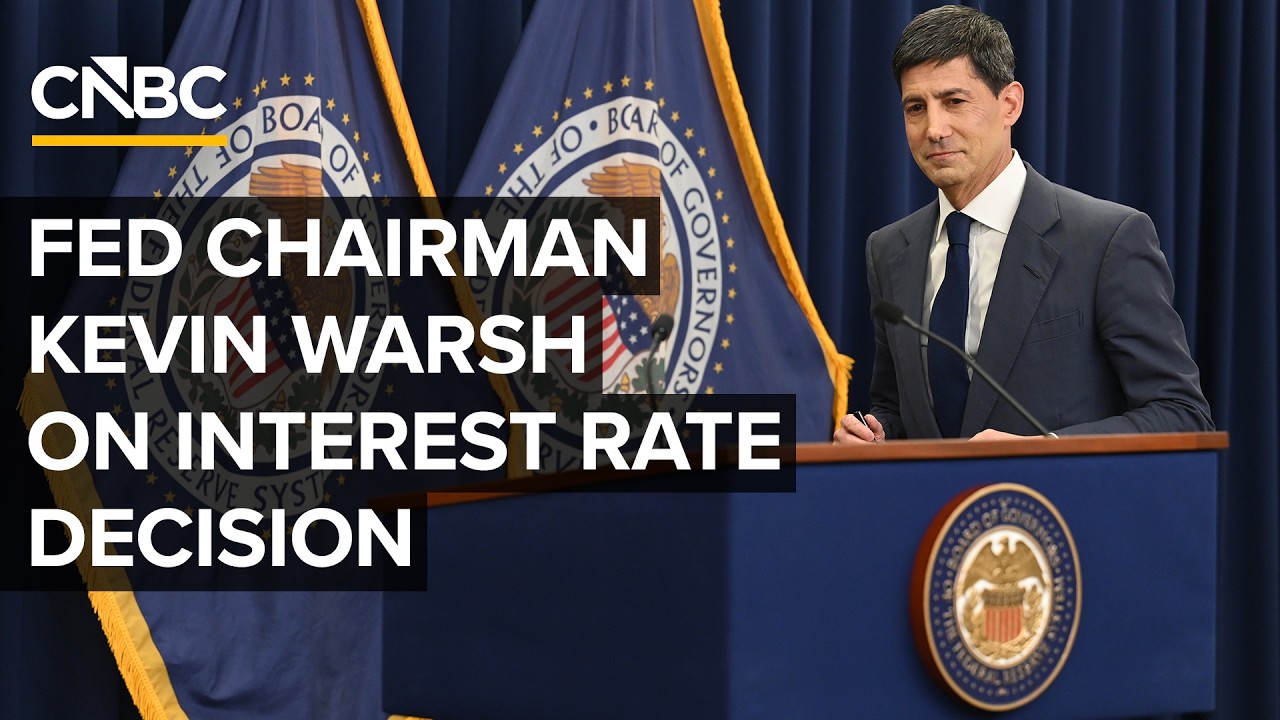
The Federal Reserve left its benchmark interest-rate target unchanged at 3.50% to 3.75% on July 29, but the decision did not deliver the calm that usually follows a widely expected hold. Three policymakers voted for an immediate quarter-point increase, Chair Kevin Warsh repeatedly promised to restore price stability, and yet his press conference stopped short of identifying a clear path toward higher rates. The result was an unusually uncomfortable combination: hawkish language, a divided committee and a market response that suggested investors were not convinced the Fed had explained how words would become policy.
Former Federal Reserve Vice Chair Roger Ferguson captured that tension in a CNBC interview the following morning. His interpretation was not that Warsh had abandoned the inflation fight. It was that the chairman sounded less hawkish than the vote and the opening rhetoric implied. Ferguson’s central point was practical: if inflation remains above target and the economy stays resilient, the Fed may eventually have to raise rates rather than rely on declarations of resolve or on bond markets to tighten financial conditions on its behalf.
Hours after the interview was published, new government data made the debate more consequential. The Bureau of Economic Analysis reported that the personal consumption expenditures price index rose 3.7% from a year earlier in June, while the core measure excluding food and energy rose 3.3%. Real gross domestic product expanded at a 1.5% annualized rate in the second quarter, but a measure of underlying private demand rose a much stronger 3.9%. Those figures did not settle whether the Fed should have raised rates in July. They did, however, reinforce the basic problem Ferguson identified: inflation remains too high, private demand is not collapsing and the Fed’s next move cannot be explained by one soft consumer-price report alone.
The dominant question for households, businesses and investors is therefore no longer simply why the Fed held rates. It is whether the July decision was a temporary pause before a September increase, a sign that Warsh intends to use balance-sheet policy and market-driven tightening as partial substitutes for rate hikes, or evidence that the central bank is willing to tolerate inflation above 2% for longer than its rhetoric suggests.
Key Takeaways
Federal Reserve Decision
The July 2026 “hawkish hold” in one view
- Policy rate: The FOMC maintained the federal funds target range at 3.50% to 3.75% on July 29, 2026.
- Vote: The decision passed 9–3; Beth Hammack, Neel Kashkari and Lorie Logan preferred a quarter-point increase.
- Inflation update: June headline PCE inflation was 3.7% year over year and core PCE inflation was 3.3%, according to data released July 30.
- Growth update: Second-quarter real GDP grew at a 1.5% annualized rate, while real final sales to private domestic purchasers rose 3.9%.
- Market signal: Long-term Treasury yields rose sharply after the decision, while traders reduced the probability they assigned to a September hike.
- Central issue: Warsh promised price stability but did not clearly state when or under what conditions the Fed would raise rates.
Original source: Federal Reserve FOMC statement, July 29, 2026
What the Federal Reserve Decided
The Federal Open Market Committee voted to keep the federal funds target range at 3.50% to 3.75%, where it had been since December. The official July 29 policy statement described economic activity as expanding at a solid pace, said productivity growth and capital investment were strong, and noted that job gains had kept pace with growth in the workforce. It also said inflation remained elevated relative to the Fed’s 2% goal, partly because of supply shocks affecting sectors such as energy.
On the surface, that combination supports patience. The economy was not in recession, the labor market was not deteriorating rapidly and the Fed had just received a surprisingly soft June consumer-price report. A central bank that had already raised borrowing costs substantially over previous years could reasonably wait for more evidence before tightening again.
The vote, however, made the hold look less comfortable than the statement did. Cleveland Fed President Beth Hammack, Minneapolis Fed President Neel Kashkari and Dallas Fed President Lorie Logan dissented in favor of a 25-basis-point increase. A basis point is one-hundredth of a percentage point, so their preferred action would have lifted the target range to 3.75% to 4.00%.
Three dissents in the same direction are rare enough to matter. They do not automatically mean the majority is wrong, and regional bank presidents may emphasize different risks than Board governors. But dissents show that the policy disagreement is not theoretical. A quarter of the voting committee believed the inflation and demand data already justified higher rates.
That is why the label “hawkish hold” fits only partially. The vote was hawkish. The statement’s promise to deliver price stability was hawkish. Warsh’s insistence that there was no hidden inflation target above 2% was hawkish. Yet the operational message—what the Fed would do next, which data would trigger action and how much weight it placed on rising market yields—was far less direct.
Roger Ferguson’s Argument: Resolve Eventually Requires Action
Ferguson served as a Federal Reserve governor from 1997 to 1999 and as vice chair from 1999 to 2006. His experience spans the late-1990s expansion, the bursting of the technology bubble, the September 11 attacks and the early stages of the housing-credit cycle. That background does not make his forecast infallible, but it gives his assessment unusual institutional weight. The Federal Reserve History profile confirms his service and tenure.
In the CNBC interview, Ferguson did not argue that every inflation shock must be met immediately with a higher policy rate. He accepted that the softer June CPI report gave the committee room to pause. His concern was the gap between Warsh’s repeated promise to be resolute and the absence of a clear strategy for turning that promise into measurable restraint.
That distinction is essential. Central-bank communication can influence financial markets before a rate decision occurs. If investors believe a central bank will raise rates whenever inflation threatens to become embedded, bond yields may rise, the currency may strengthen, risk assets may reprice and credit creation may slow. In that sense, credibility can reduce the amount of actual tightening required.
But communication works only when markets believe the central bank will follow through. If officials repeatedly describe inflation as unacceptable while leaving policy unchanged and avoiding specific guidance, investors may demand a larger inflation-risk premium. Long-term yields can then rise for the wrong reason—not because markets expect disciplined policy, but because they fear the central bank will allow inflation to persist.
Ferguson’s argument therefore has two layers. First, the economic data may eventually require higher short-term rates. Second, even before the data produce an obvious trigger, the Fed may need to demonstrate that its inflation rhetoric has consequences. Otherwise, the chairman risks creating a communication regime in which every forceful statement is discounted.
This is not a demand for theatrical toughness. A rate increase undertaken solely to prove resolve could be a policy error. The stronger version of Ferguson’s case is that the Fed should define its reaction function clearly enough that investors understand the circumstances under which a hike will occur. A reaction function is the set of economic conditions and risks that guide policy decisions. Warsh has deliberately reduced forward guidance, but less guidance places more pressure on each decision and each explanation to be coherent.
Why Warsh Sounded Less Hawkish Than the Vote
Warsh’s opening press-conference statement contained some of the strongest inflation language heard from a Fed chair in years. He said the committee’s target was 2%, rejected the idea of a softer implicit target and declared that the central bank would not waver. He also acknowledged that more than five years of above-target inflation could not be repaired in the first weeks of a new chairmanship.
The ambiguity emerged when he discussed the mechanism of restraint. Warsh emphasized that nominal and real Treasury yields had risen materially since the June meeting. He described some of those increases as among the largest inter-meeting moves of the previous two decades and suggested that markets were reacting to incoming information rather than waiting for continuous Fed guidance.
That observation is factually important. Financial conditions can tighten even when the overnight policy rate does not change. A higher 10-year Treasury yield can raise mortgage rates, corporate borrowing costs and discount rates used to value stocks. A higher real yield—the nominal yield adjusted for expected inflation—can restrain investment and consumption more directly than an equivalent move driven only by higher inflation expectations.
Yet Warsh did not clearly distinguish between market tightening that helps the Fed and market tightening that signals doubt about the Fed. If long yields rise because investors expect stronger growth and higher real returns, the effect differs from a rise caused by worsening inflation expectations, heavy Treasury supply or a larger term premium. The term premium is the extra compensation investors demand for holding longer-dated bonds rather than repeatedly investing in short-term securities.
Warsh also said interest rates could be part of the solution if inflation remained elevated, but he resisted presenting the policy rate as the only tool. That left room for balance-sheet policy, regulatory channels, communication changes and the possibility that supply-side improvements could lower inflation without a large increase in unemployment.
From Ferguson’s perspective, this was less hawkish than expected because the chairman did not elevate a September hike from possibility to default. The dissents suggested urgency. The rhetoric suggested urgency. The operational guidance suggested optionality.
Optionality is not inherently weak. A central bank facing war-related energy shocks, tariff increases, rapid AI investment and uncertain productivity gains should avoid binding promises. The communication problem arises when flexibility is not paired with a sufficiently clear framework. Markets then have to infer whether the Fed is genuinely data dependent or simply reluctant to tighten.
The Market Reaction Was a Credibility Test
Markets initially had several reasons to read the decision as hawkish. Three officials wanted an immediate hike, the statement repeated that inflation was elevated and Warsh used forceful language about the 2% target. Yet the press conference changed the interpretation.
Reuters reported that traders cut the probability assigned to a September rate increase to about 57% after the decision, down from almost full pricing before the meeting once a July hike was ruled out. At the same time, the Treasury curve steepened: shorter-dated yields fell while 10-year and 30-year yields rose. The 30-year yield moved above 5.20%, its highest level since 2007. That combination was especially revealing.
When short yields fall and long yields rise after a central-bank meeting, the market may be signaling that it expects less near-term policy tightening but more long-run inflation or borrowing risk. It can also reflect expectations of heavier government debt issuance, weaker demand for duration or a larger term premium. No single intraday move proves a specific interpretation, but the pattern was consistent with investors questioning whether the Fed’s current rate path would be enough to restore price stability.
U.S. equities also sold off sharply. According to Reuters’ July 29 market report, the S&P 500 fell 1.52% to 7,316.15, the Nasdaq Composite declined 1.74% to 24,442.94 and the Dow Jones Industrial Average dropped 2.19% to 51,594.14. The session included company-specific weakness and pressure on technology stocks, so the Fed was not the sole cause. Still, the post-press-conference move showed that Warsh’s communication added to the risk-off tone.
The market’s reaction should not be treated as a referendum that the Fed must obey. Central banks sometimes need to surprise investors, and markets can be wrong. But when a chair emphasizes credibility and the immediate response is a rise in long-term yields alongside lower expectations for near-term action, the communication deserves scrutiny.
The central question is whether the bond market was doing the Fed’s work or charging the Fed for not doing enough. Warsh appeared to lean toward the first interpretation. Ferguson and several private economists leaned toward the second.
What July 30 Data Added to the Fed Rate Hike Outlook
The most important post-video development came at 8:30 a.m. Eastern Time on July 30, when the Bureau of Economic Analysis released both the advance estimate of second-quarter GDP and June personal income and spending data. The releases arrived after the FOMC meeting and therefore were not available to policymakers when they voted.
The new information was mixed in exactly the way that makes monetary policy difficult. Headline inflation cooled from May but remained far above target. Core inflation eased only slightly. Top-line GDP slowed, but underlying private demand accelerated. Consumer spending continued to grow, while the saving rate remained low. None of those facts alone mandates a rate hike, but together they weaken the case that the economy is already restrictive enough to guarantee a return to 2% inflation.
Economic Data Update
Data released the morning after the Fed meeting
- June headline PCE price index: +3.7% year over year.
- June core PCE price index: +3.3% year over year.
- June personal consumption expenditures: +0.3% month over month in current dollars.
- June personal income: +0.2% month over month.
- Second-quarter real GDP: +1.5% annualized.
- Second-quarter real final sales to private domestic purchasers: +3.9% annualized.
- Second-quarter PCE price index: +5.1% annualized; core PCE: +3.4% annualized.
Original sources: BEA PCE price index and BEA second-quarter GDP release
Headline PCE Inflation Cooled, but Not Enough to Declare Victory
The headline PCE price index rose 3.7% in June from a year earlier, down from 4.1% in May. The core index rose 3.3%, down slightly from 3.4%. The direction was favorable, but the levels remained well above the Fed’s 2% objective.
The monthly pattern also matters. A one-month decline in energy prices can pull down headline inflation quickly even when the underlying trend remains too strong. That is why the Fed usually examines both headline and core measures, along with shorter annualized rates, housing costs, wages, inflation expectations and the breadth of price increases.
June’s PCE data did not replicate the full softness of the CPI report. The Consumer Price Index had fallen 0.4% from May, largely because energy prices dropped 5.7%, while core CPI was unchanged. Over 12 months, headline CPI rose 3.5% and core CPI rose 2.6%. Those were encouraging readings. But the PCE index uses different weights and incorporates a broader range of expenditures, including some spending made on behalf of households. The Fed formally defines its 2% objective in terms of PCE inflation, not CPI.
The divergence does not mean one measure is correct and the other is wrong. It means the composition of inflation matters. A central bank deciding whether to raise rates must ask whether June represented a durable change in underlying inflation or a temporary reversal in volatile categories.
GDP Slowed, Yet Private Demand Was Strong
Real GDP increased at a 1.5% annualized rate in the second quarter, down from 2.1% in the first quarter. A reader looking only at the headline could conclude that the economy was losing momentum and that a rate hike would be risky.
The details complicate that conclusion. BEA said consumer spending, investment and exports increased, while government spending declined and imports rose. Real final sales to private domestic purchasers—consumer spending plus private fixed investment—grew at a 3.9% annualized rate, compared with 1.7% in the first quarter. This measure strips out inventories, trade and government spending and is often used to assess underlying private demand.
That does not mean the economy is overheating. GDP data are revised, and one quarter can be distorted by trade flows and volatile investment. It does mean demand-sensitive parts of the economy were more resilient than the headline suggested. For a Fed worried that inflation is still above target, strong private demand reduces the urgency of easing and strengthens the argument for keeping a hike available.
The Price Component of GDP Was Uncomfortable
BEA reported that the price index for gross domestic purchases rose at a 5.7% annualized rate in the second quarter. The quarterly PCE price index rose 5.1%, while core PCE rose 3.4%. Quarterly annualized rates can be volatile and should not be confused with year-over-year inflation, but the figures show that price pressure during the quarter was not uniformly benign.
This is one reason Ferguson’s emphasis on eventual action remains relevant. A single soft monthly CPI report can justify a pause. It is less capable of resolving a multi-quarter inflation problem when other measures still show persistence.
CPI Versus PCE: Why the Fed Cannot Rely on One Inflation Report
The contrast between June CPI and June PCE is not a statistical curiosity. It goes to the core of the July policy dispute. The Bureau of Labor Statistics’ June CPI release showed the largest monthly decline in the headline index since April 2020. Energy prices accounted for most of that drop. Gasoline fell sharply, shelter inflation slowed and several service categories declined. Core CPI was flat for the month and 2.6% higher than a year earlier.
Those numbers gave the majority a defensible reason to wait. Monetary policy works with long and variable lags, and a central bank that reacts mechanically to every high year-over-year reading risks tightening after inflation has already turned. The Fed also faced uncertainty over whether elevated energy prices would persist and whether tariff-related price increases would represent a one-time shift in the price level or a continuing inflation process.
Yet the PCE data released after the meeting showed why a pause cannot become complacency. Core PCE at 3.3% was still more than a full percentage point above target. The headline measure at 3.7% reflected the continuing burden of energy and other supply shocks. Even if those shocks fade, the Fed must prevent them from changing wage-setting behavior, business pricing and inflation expectations.
The distinction between a price-level shock and sustained inflation is central. A tariff can make an imported good more expensive once. An oil shock can raise gasoline and transportation costs quickly. If households and businesses expect the shock to pass, inflation can fall without the Fed forcing the economy into recession. If firms repeatedly pass through higher costs, workers seek larger wage increases to protect purchasing power and expectations drift upward, the initial shock can become persistent.
Warsh’s language acknowledged this complexity. He asked whether price increases concentrated in energy, chips and AI infrastructure were signs of a broader inflation dynamic or simply the categories receiving the most attention. That is the right analytical question. The policy weakness was that he did not explain how the Fed would distinguish the two outcomes in time to act.
A useful reaction function would not require a rigid formula. It could identify a combination of evidence: core PCE failing to decelerate, short-term inflation expectations moving higher, wage growth remaining above productivity-adjusted rates, private demand continuing to expand and long-term inflation compensation rising. The Fed can preserve flexibility while still telling the public what would make a hike more likely.
The Labor Market Is Slowing, Not Breaking
The employment side of the Fed’s dual mandate gives the committee room to focus on inflation, but not unlimited room. The June employment report showed payroll growth of 57,000 and an unemployment rate of 4.2%. Payroll gains were modest, and the labor-force participation rate fell to 61.5%. Long-term unemployment was higher than a year earlier. Those details argue against treating the economy as uniformly strong.
At the same time, the labor market did not show the kind of deterioration that normally forces a central bank to abandon inflation concerns. Unemployment changed little, layoffs remained relatively limited and average hourly earnings rose 3.5% from a year earlier. Professional and business services, social assistance and health care added jobs, while leisure and hospitality employment declined.
The Fed must distinguish a normalized labor market from a collapsing one. After the extreme post-pandemic hiring surge, slower monthly payroll growth is not automatically recessionary. Population growth, participation and productivity all influence the pace of job creation needed to keep unemployment stable. Warsh said job gains had kept pace with the workforce, a description broadly consistent with the June data.
Ferguson’s case for eventual tightening rests partly on this resilience. Rate hikes are most difficult when unemployment is rising rapidly and credit stress is spreading. In July 2026, the committee faced a softer but still functioning labor market. That does not make a hike costless. It makes the trade-off less one-sided than it would be during a downturn.
The next employment reports will be especially important because the July data are scheduled for August 7 and the August data for September 4, before the September 15–16 FOMC meeting. Two weak reports could materially alter the balance of risks. Two reports showing stable unemployment and persistent wage growth would make another hold harder to justify if inflation remains above 3%.
Why Three Dissents Matter
FOMC dissents are sometimes treated as political theater, but they perform an institutional function. They reveal where the committee’s risk assessment differs and force the majority to confront an alternative policy case. In July, all three dissenters wanted tighter policy. That made the division directional rather than procedural.
Beth Hammack, Neel Kashkari and Lorie Logan each lead a regional Federal Reserve Bank and participate in the committee’s discussions. Their votes do not tell the public every reason behind their preference; fuller explanations generally come through subsequent speeches or interviews. Still, the official statement records that each preferred a quarter-point increase at that meeting.
The dissenters may have placed more weight on persistent PCE inflation, strong private investment, higher inflation expectations or the risk that another delay would weaken credibility. They may also have judged the current policy rate to be less restrictive than the majority did. Without their complete post-meeting explanations, those remain interpretations rather than confirmed motives.
What is confirmed is that the committee was not debating whether inflation mattered. It was debating whether existing restraint was sufficient. Warsh described the meeting as vigorous and constructive. That is healthy, but it creates a communication obligation. When three members want immediate action, the chair must explain why waiting offers a better risk-adjusted outcome.
The strongest argument for the majority is that June CPI materially changed the near-term evidence and that long-term rates had already tightened. The strongest argument for the dissenters is that inflation had exceeded target for more than five years, core PCE remained above 3% and the economy was resilient enough to absorb a modest increase. Neither argument is frivolous. The credibility problem arises when the public hears the strength of the second argument but not a sufficiently concrete rebuttal from the chair.
September Is the Next Real Decision Point
The Fed’s next scheduled meeting is September 15–16, 2026, and it will include an updated Summary of Economic Projections. That makes September more important than a routine meeting. Policymakers will publish new forecasts for growth, unemployment, inflation and the appropriate federal funds rate. The distribution of those projections will show whether the committee’s internal center of gravity has shifted toward a hike.
Before then, officials will receive two CPI reports, two employment reports, additional PCE data, retail sales, housing data and business surveys. They will also see whether the bond-market tightening that Warsh highlighted persists or reverses.
Market pricing is not a promise. Reuters reported that the probability assigned to a September increase fell to roughly 57% after the July meeting. Such probabilities can move sharply with each data release. They reflect prices in interest-rate futures and are sensitive to liquidity, hedging and assumptions about the effective federal funds rate.
The more useful question is what would make September action likely. A reasonable evidence-based threshold would include several of the following:
- Core PCE inflation remains near or above 3% on a year-over-year basis.
- Monthly core inflation runs at a pace inconsistent with a return to 2%.
- Unemployment remains near current levels and payroll growth stays positive.
- Consumer and business demand remain resilient.
- Short- or medium-term inflation expectations continue to rise.
- Energy or tariff pressures broaden into service prices and wages.
- Financial conditions ease despite the Fed’s rhetoric.
A hold would be easier to defend if core inflation clearly slowed, energy prices continued to fall, wage growth moderated, unemployment rose and private demand weakened. The committee could also hold if long-term yields remained high enough to produce significant restraint, though relying on that channel would require a clearer explanation of why those yields had risen.
Ferguson’s forecast that the Fed will eventually have to raise rates is therefore conditional, not mechanical. September is a plausible point, but the timing depends on whether the next six weeks confirm persistence or reveal genuine disinflation.
Warsh’s New Communication Regime
Kevin Warsh took office as Fed chair on May 22, 2026, after previously serving as a governor from 2006 to 2011. The Federal Reserve’s official biography notes that he also worked at the White House National Economic Council, Morgan Stanley, Stanford’s Hoover Institution and Duquesne Family Office.
His first months as chair have emphasized institutional change, less dependence on forward guidance and a broader review of how the Fed analyzes inflation, data and its balance sheet. That approach differs from the communication style that became common after the global financial crisis, when central banks often tried to reduce uncertainty by signaling the likely path of rates.
Forward guidance has benefits. It can lower borrowing costs when policy rates are near zero, reduce unnecessary volatility and make policy transmission more predictable. It also has costs. Markets can become overly dependent on each phrase, officials can appear committed to a path that later data make inappropriate and risk-taking can become anchored to assumptions about central-bank protection.
Warsh’s desire to make markets “play the ball, not the referee” reflects a legitimate concern that asset prices had become too focused on Fed forecasts and speeches. A market that responds to earnings, productivity, fiscal policy and inflation data rather than every official adjective is healthier in principle.
But less forward guidance does not mean less accountability. In fact, it raises the standard for explaining current decisions. If the Fed will not provide a projected path, it must be especially clear about its objectives, evidence and trade-offs. Otherwise, reduced guidance becomes indistinguishable from reduced transparency.
The July press conference showed both sides of Warsh’s approach. He clearly stated the target and acknowledged uncertainty. He refused to validate any specific market move. He also left investors uncertain about whether a rise in long-term yields was an acceptable substitute for a policy-rate increase.
Ferguson’s criticism is therefore best understood as a communication critique with policy consequences. A chair can be strategically noncommittal without sounding internally inconsistent. The Fed’s next statements will show whether July was an early-stage adjustment problem or a durable feature of the new regime.
Can Market Yields Do the Fed’s Work?
Monetary policy reaches the real economy through a chain of prices. The federal funds rate is an overnight interbank rate. Households and companies borrow at rates linked to Treasury yields, bank funding costs, credit spreads and expected future policy. A central bank can leave its target unchanged while financial conditions tighten substantially.
For example, a rise in the 10-year Treasury yield tends to increase mortgage rates and influence corporate debt pricing. A rise in the 30-year yield changes the discount rate applied to long-duration assets and raises the government’s future refinancing costs. Wider credit spreads can restrain speculative borrowing even if Treasury yields are stable.
That is why Warsh was correct to pay attention to the yield curve. The Fed would make a mistake if it ignored a large market-driven tightening and then mechanically added more restraint. Monetary policy should respond to the total financial environment, not only the overnight rate.
The difficulty is identifying the source and durability of the move. Long yields can rise because:
- Investors expect stronger real growth.
- Markets expect higher future policy rates.
- Inflation expectations increase.
- The term premium rises because uncertainty is greater.
- Treasury issuance increases relative to demand.
- Foreign or institutional demand for long bonds weakens.
- Investors require more compensation for fiscal risk.
Some of those channels help the Fed. Others represent a deterioration in credibility or fiscal conditions. If yields rise because investors believe the Fed will act decisively, the movement may reduce the need for an immediate hike. If yields rise because investors think inflation will remain high and policy will stay too loose, the Fed may need to tighten more, not less.
The post-meeting curve steepening leaned toward the less comfortable interpretation. Two-year yields, which are more sensitive to near-term policy expectations, declined while long yields rose. That did not prove a credibility crisis, but it suggested that investors were pricing less immediate action and more long-run risk.
The Fed needs a framework for separating these effects. Market-based inflation compensation, surveys of expectations, real yields and term-premium estimates can help, though none is perfectly observable. Warsh’s broad review may improve that analysis. Until then, saying that markets have tightened conditions is an incomplete justification for waiting.
The Balance Sheet Is Part of the Debate
Warsh repeatedly raised the possibility that the Fed’s balance sheet still provides accommodation. This is not a semantic issue. The central bank’s holdings of Treasury and mortgage-backed securities influence the supply of duration held by private investors, reserve levels in the banking system and broader financial conditions.
The Fed ended balance-sheet runoff in December 2025 and shifted to a policy of maintaining ample reserves. According to the H.4.1 balance-sheet release for July 23, 2026, total Federal Reserve assets were about $6.75 trillion on July 22. Securities held outright were approximately $6.46 trillion, including about $4.52 trillion of Treasury securities and $1.94 trillion of mortgage-backed securities.
Those holdings were smaller than the pandemic peak but remained historically large. A large balance sheet can suppress term premiums relative to a counterfactual in which more securities are held by the public. It can also make the stance of policy look more accommodative than the federal funds rate alone suggests.
This is one reason Warsh may resist treating rate hikes as the only instrument. The committee could change the composition or growth of its holdings, adjust reinvestment policy or allow some assets to mature without replacement. Such steps would affect longer-term yields more directly than a small increase in the overnight rate.
Balance-sheet tightening, however, is not a perfect substitute for rate hikes. Its effects are less predictable, can interact with Treasury market liquidity and may place disproportionate pressure on mortgage rates. The Fed also needs enough reserves to maintain effective control of short-term rates under its ample-reserves framework.
A policy mix involving both the balance sheet and the federal funds rate could be coherent. The Fed might hold the policy rate while allowing more securities to run off, or raise the rate while keeping the balance sheet stable. What markets need is clarity about the objective. Is the balance sheet being used to tighten overall conditions, improve market functioning, normalize the Fed’s footprint or manage reserve demand? Different goals imply different decisions.
Ferguson’s concern applies here as well. Mentioning multiple tools without specifying how they fit together can sound like flexibility, but it can also make the inflation strategy harder to evaluate.
Money Supply: Useful Context, Not a Mechanical Rule
The CNBC discussion also touched on money-supply growth and the post-pandemic inflation surge. The basic monetary intuition is straightforward: when nominal spending power expands much faster than the economy’s capacity to produce goods and services, prices tend to rise. Pandemic fiscal transfers, near-zero rates, asset purchases, supply constraints and reopening demand all contributed to that imbalance.
The Fed’s H.6 money-stock release tracks M1 and M2. M2 includes currency, checking deposits, other liquid deposits, small time deposits and retail money-market funds, with certain adjustments. It is a broad measure of liquid money available to households and businesses.
Money growth is informative, but modern monetary policy cannot be run by a single M2 rule. The relationship between money and nominal spending depends on velocity—the rate at which money changes hands. Financial innovation, shifts between deposits and money-market funds, precautionary saving and changes in payment behavior can alter that relationship.
During the pandemic, the scale and speed of money and fiscal expansion were exceptional. The later inflation cannot be attributed solely to one factor. Global production shutdowns, logistics bottlenecks, labor-market disruptions, energy shocks and changes in consumer demand all played roles. Ferguson’s account appropriately treated the episode as multi-causal: stimulative fiscal policy, monetary accommodation and supply constraints pushed in the same direction.
The current question is different. If money growth has normalized but fiscal demand, energy costs and capital spending remain strong, inflation can persist through other channels. A central bank that waits for an obvious monetary surge may react too late. Conversely, a central bank that assumes every increase in M2 will generate inflation may overtighten when velocity falls.
Warsh has long emphasized monetary causes of inflation and the importance of the balance sheet. That perspective can improve accountability by reminding the Fed that it cannot blame every inflation episode on external shocks. It becomes less useful if it is reduced to a claim that one aggregate provides a complete answer.
Fiscal Policy and Treasury Supply Complicate the Signal
Long-term Treasury yields are shaped by monetary policy, but the Fed is not the only actor. Federal deficits and debt issuance determine how much duration private investors must absorb. The Treasury projected in May that it would borrow $671 billion in privately held net marketable debt during the July–September quarter, assuming a $950 billion end-of-quarter cash balance. That estimate was published in the Treasury’s marketable borrowing announcement.
Heavy issuance can push yields higher even if inflation expectations and expected Fed policy are unchanged. Investors may demand more compensation when supply rises, particularly at longer maturities. Foreign reserve managers, banks, pension funds and asset managers all influence demand.
This matters for Warsh’s argument that higher market yields were already tightening conditions. If the rise reflected fiscal supply rather than monetary restraint, the economic impact could still be restrictive, but the policy interpretation changes. The Fed might welcome the restraint while worrying that fiscal pressure is increasing the term premium and weakening financial stability.
It also raises an institutional boundary. The Fed should not set rates to make government borrowing cheap. Its mandate is price stability and maximum employment. At the same time, abrupt increases in Treasury yields can affect market functioning, bank balance sheets and mortgage affordability. The central bank must separate its macroeconomic objective from its responsibility to maintain orderly markets.
Ferguson noted that fiscal policy remained relatively stimulative. That assessment supports the case for monetary restraint because strong public demand can offset the cooling effect of higher private borrowing costs. Yet fiscal policy is politically determined, and the Fed cannot guarantee a painless offset. If deficits stay large while inflation remains above target, interest rates may need to remain higher for longer, increasing debt-service costs and creating a difficult feedback loop.
Oil, Energy and the Difference Between a Shock and a Trend
Energy has been one of the largest sources of volatility in 2026 inflation. The Middle East conflict disrupted production and shipping, drove crude prices higher and pushed U.S. gasoline prices up sharply earlier in the year. June then delivered a large monthly decline in the CPI energy index, helping headline inflation fall.
The U.S. Energy Information Administration’s July Short-Term Energy Outlook projected that Brent crude would fall from an average of $103 per barrel in the second quarter to $70 in the fourth quarter, while U.S. gasoline prices would average about $3.80 per gallon in the third quarter, down from more than $4.20 in the second. Those forecasts depend heavily on assumptions about conflict, shipping, production and inventories.
If that path materializes, headline inflation could cool meaningfully without a rate hike. Lower gasoline prices also support household disposable income and reduce transportation costs for businesses. The Fed would then face a more favorable inflation mix, though stronger real spending could offset part of the benefit.
If oil prices spike again, the policy response becomes harder. Raising rates does not produce crude oil or reopen shipping lanes. A central bank generally should not try to reverse the first-round price effect of a supply shock. It should prevent the shock from becoming embedded in broader inflation and expectations.
This is why both Warsh and Ferguson can be partly right. Warsh is right that supply-driven inflation cannot be solved with a “magic wand.” Ferguson is right that repeated shocks do not excuse indefinite above-target inflation. After five years, the Fed must show that its framework can distinguish temporary volatility from persistence and act before expectations become unanchored.
Tariffs Can Raise Prices Without Creating Endless Inflation
Tariff increases add another layer of uncertainty. A tariff is a tax on imported goods, usually collected from the importer. The economic burden can be divided among foreign producers, importing companies, retailers and consumers depending on market power, exchange rates and supply alternatives.
A one-time tariff increase can raise the price level without causing permanently higher inflation. Once prices adjust, the year-over-year effect eventually drops out. But the transition can last many months, and repeated tariff changes can create a sequence of price increases. Companies may also use the disruption to reprice related products, rebuild margins or change suppliers at higher cost.
The Fed should “look through” tariff inflation only if expectations remain anchored and the shock does not spread. That judgment requires evidence. Core goods prices, producer prices, import prices, wage negotiations and business surveys can show whether pass-through is limited or broadening.
Warsh’s supply-side orientation may make him more willing to tolerate temporary tariff effects while emphasizing deregulation, productivity and investment. That can be reasonable if supply responds quickly. It is riskier when labor and capacity constraints prevent output from expanding enough to absorb demand.
Ferguson’s emphasis on action does not require the Fed to offset every tariff mechanically. It requires the committee to explain what evidence would convert a temporary price-level increase into a monetary-policy problem.
AI Investment Is Both Disinflationary and Inflationary
Artificial-intelligence investment sits at the center of Warsh’s economic narrative. In his opening statement, he said four-quarter growth in AI-related high-tech equipment and software was nearly 20%. He argued that the capital-spending boom was supporting manufacturing output and preparing the economy for future growth.
The long-run disinflationary case is strong. AI can raise worker productivity, improve logistics, automate routine tasks, optimize energy use and reduce the cost of producing services. Faster productivity growth allows wages and output to rise with less pressure on unit labor costs. If the economy’s supply capacity expands, a given level of demand produces less inflation.
The near-term effect can be the opposite. Data centers require chips, memory, networking equipment, power generation, transmission infrastructure, construction labor and financing. A sudden investment surge can bid up prices for scarce components and skilled workers. It can also increase electricity demand and capital-market borrowing.
This dual effect explains why Warsh asked whether price increases in chips and AI infrastructure were broad inflation or a concentrated boom. The answer may change over time. Early in an investment cycle, bottlenecks can be inflationary. Later, the completed capital stock can raise productivity and lower costs.
Monetary policy should not suppress productive investment merely because it raises some prices. The Fed’s task is to prevent economy-wide demand from exceeding supply while allowing relative prices to guide resources toward high-value uses. That requires distinguishing a healthy reallocation from generalized overheating.
Higher long-term yields already make that investment more expensive. Technology companies with strong cash flow can continue spending, while leveraged or speculative projects may be delayed. This is another channel through which the bond market can tighten conditions. It is also a reason the equity market reacted negatively to the Fed meeting: high-duration growth stocks are especially sensitive to increases in real yields.
Fed Credibility After More Than Five Years Above Target
Warsh repeatedly framed the problem as one of credibility. The Fed’s 2% target is intended to anchor expectations so that households and businesses do not need to plan for continuously rising inflation. Credibility allows a central bank to respond flexibly to shocks because the public believes inflation will return to target over time.
Credibility is not the same as hitting 2% every month. Inflation measures are noisy, and supply shocks are unavoidable. The relevant test is whether policy keeps medium- and long-term expectations anchored and brings inflation back over a reasonable horizon without unnecessary damage to employment.
The New York Fed’s June Survey of Consumer Expectations showed one-year inflation expectations rising to 3.7% and three-year expectations to 3.3%, while five-year expectations remained at 3.0%. Short- and medium-term expectations had moved higher, but the longest horizon was stable. That is not evidence of a complete de-anchoring. It is a warning that the public has become less confident about near-term relief.
Market-based measures also need careful interpretation because they include risk and liquidity premiums. Still, the rise in long yields after the Fed meeting indicated that investors wanted more compensation for holding duration. Whether that compensation reflected inflation, fiscal supply or uncertainty, it was not a vote of confidence in a painless return to 2%.
Ferguson’s critique becomes strongest when applied to the sequence of policy. A central bank can maintain credibility while pausing if it clearly explains why the pause improves the probability of hitting the target. It can lose credibility if each pause is justified by a different temporary factor while the medium-term outcome remains unchanged.
Warsh inherited the problem, but inheritance does not reduce responsibility. Markets judge the current chair on current decisions. His challenge is to avoid overreacting to the past while proving that the new regime is more than a change in tone.
Powell’s Legacy and Warsh’s Inheritance
Jerome Powell served as Fed chair from February 2018 until May 22, 2026 and remains a Board governor with a term ending in January 2028. His tenure included the pandemic recession, emergency asset purchases, the inflation surge and the subsequent tightening cycle.
Ferguson said the prolonged period of above-target inflation would be part of any assessment of Powell’s chairmanship. That is a fair conclusion, but the historical judgment must account for the extraordinary environment. The pandemic created simultaneous supply and demand shocks, fiscal policy was exceptionally large and the reopening produced rapid shifts in consumption and labor supply.
The strongest criticism of the Powell Fed is that it kept policy too accommodative for too long after demand had recovered, continued large-scale asset purchases while inflation broadened and treated price pressure as transitory after the evidence had become less reassuring. The strongest defense is that premature tightening during an uncertain recovery could have caused lasting labor-market damage and that many private forecasters also underestimated inflation persistence.
Warsh has emphasized a break with the previous communication and analytical framework. That creates opportunity and risk. He can improve accountability, reduce overreliance on forecasts and integrate the balance sheet more explicitly into policy. He also risks defining success mainly by contrast with his predecessor rather than by a transparent current strategy.
Once a new chair takes office, blaming the inherited starting point has diminishing value. The July meeting was Warsh’s second as chair. He did not create the five-year inflation history, but he now owns the reaction function. Ferguson’s point was that the market will judge whether he rectifies the problem, not merely whether he describes it accurately.
Historical Comparisons: What the 1970s Analogy Gets Right and Wrong
Whenever inflation stays above target for several years, comparisons with the 1970s become unavoidable. The analogy can be useful because that era showed how repeated supply shocks, accommodative policy and drifting expectations can reinforce one another. It also showed the cost of stopping inflation control too early. The Federal Reserve eventually had to accept a severe recession under Chair Paul Volcker to restore credibility.
But the comparison is imperfect. The structure of the U.S. economy, labor contracts, energy intensity, financial regulation and central-bank communication are different. Inflation expectations today are measured more frequently, the Fed has an explicit 2% target and many wages are not automatically indexed to inflation. The current unemployment rate is also lower than during several 1970s episodes, while productivity and technology investment are stronger.
The most relevant lesson is not that the Fed must reproduce Volcker-era rate levels. It is that credibility can deteriorate when policy repeatedly responds to each shock as temporary without ensuring that the cumulative inflation process is contained. A central bank should not overreact to one oil spike, but it should recognize when a sequence of “one-time” shocks has become the environment in which prices and wages are set.
The July 2026 debate sits precisely at that boundary. Headline CPI fell sharply in June, suggesting temporary energy relief. Core PCE remained above 3%, suggesting persistence. Long-term expectations had not fully broken, suggesting the Fed still had credibility to preserve. The cost of acting too soon was slower growth and higher unemployment. The cost of acting too late was a larger tightening later.
Ferguson’s position can be read as an argument for avoiding the second error. Warsh’s caution can be read as an attempt to avoid the first. The right policy depends less on historical analogy than on how the next data reveal the balance between demand, supply and expectations.
What Higher Rates Mean for Households
The federal funds rate does not directly set mortgage, auto-loan or credit-card rates, but it influences the cost of funding throughout the economy. The July debate therefore has immediate consequences even before the Fed changes its target.
Freddie Mac reported that the average 30-year fixed mortgage rate was 6.58% for the week ending July 23, up from 6.49% two weeks earlier. The Primary Mortgage Market Survey reflects conventional conforming loans and is not a quote available to every borrower, but it shows the direction of housing finance costs.
At a 6.58% rate, the principal-and-interest payment on a $400,000 30-year mortgage is approximately $2,549 per month, excluding taxes, insurance and fees. At 5.58%, the payment would be about $2,294. A one-percentage-point difference raises the monthly cost by roughly $255 and the cumulative interest burden substantially. That arithmetic illustrates why a rise in long-term yields can tighten the economy even when the Fed holds its overnight rate steady.
Existing homeowners with low fixed-rate mortgages are insulated from immediate increases, but that insulation creates a lock-in effect. Owners are reluctant to sell and give up favorable financing, reducing housing turnover and limiting supply for buyers. Higher rates therefore restrain activity without necessarily producing an immediate fall in home prices.
Credit-card rates respond more directly to short-term benchmarks and are often variable. A September hike would raise carrying costs for households with revolving balances. Auto loans and personal loans would also become more expensive, though lender competition and credit quality influence the final rate.
Savers experience the opposite effect. Money-market funds, certificates of deposit and high-yield deposit accounts can offer better returns when short-term rates stay high. The distributional effect is uneven: households with liquid assets benefit, while borrowers with variable-rate debt face higher costs.
This is why the Fed cannot reduce the decision to a symbolic inflation signal. A quarter-point increase affects millions of balance sheets. Ferguson’s argument is not that those costs are irrelevant. It is that allowing inflation to remain high also imposes costs, especially on households that cannot hedge rising food, energy, rent and insurance expenses.
What Higher Rates Mean for Businesses
For companies, the impact depends on debt structure, cash flow and sector. Large investment-grade issuers can borrow at spreads over Treasury yields, so the rise in long-term government rates increases their all-in cost even if credit spreads are stable. Smaller businesses often depend on bank loans tied to short-term benchmarks and therefore feel policy-rate changes more directly.
Companies with fixed-rate debt do not refinance every day. The effect arrives when bonds mature, revolving facilities reset or new projects require funding. A business that borrowed cheaply in 2021 may face a much higher coupon when debt comes due in 2026 or 2027. That refinancing wall can reduce capital expenditure, hiring and acquisitions.
Higher rates also change investment hurdles. A project expected to earn 8% looks attractive when financing costs 4% and much less attractive when financing costs 7%. Management teams may prioritize projects with faster payback, cut speculative expansion and demand stronger returns from research or infrastructure spending.
The AI investment boom complicates this mechanism. Cash-rich technology companies can continue spending despite high yields, while data-center developers, utilities and suppliers may rely on external finance. The result can be a two-tier economy in which the largest firms sustain demand even as smaller and leveraged companies slow.
Banks face mixed effects. Higher rates can support asset yields, but they can also increase deposit costs, reduce loan demand and create mark-to-market losses on securities. A sharp rise in long yields can pressure institutions holding long-duration assets, especially if deposits are unstable.
Commercial real estate is particularly sensitive. Office, apartment and industrial properties are valued using capitalization rates and financed with substantial debt. Higher Treasury yields and wider lending spreads can lower valuations and make refinancing difficult. Even without a Fed hike, the post-meeting rise in long yields can tighten this sector.
The Fed must weigh these channels against the risk of persistent inflation. Businesses benefit from predictable prices and stable long-term rates. A short-term decision that avoids a hike but raises the inflation-risk premium can be more damaging than a modest policy increase that anchors expectations.
Equity Valuations and the Cost of Capital
Stock prices reflect expected future cash flows discounted back to the present. When real yields rise, the present value of distant profits falls. This is why high-growth technology shares often react more strongly than mature companies to changes in long-term rates.
The July 29 selloff occurred amid company earnings, chip-sector weakness and concern about the economics of heavy AI spending. The Fed added another layer by allowing long yields to rise while offering limited guidance on the policy path. Investors had to price both a higher discount rate and more uncertainty.
A rate hike is not automatically bearish for equities. If it improves confidence that inflation will return to target, long-term yields and risk premiums can eventually stabilize. Conversely, a hold can be bearish if investors interpret it as a sign that the Fed is behind the curve.
Sector effects differ. Banks may benefit from wider interest margins but suffer credit losses. Utilities and real-estate investment trusts are sensitive to bond yields. Consumer discretionary firms face weaker demand when borrowing costs rise. Energy companies can benefit from high oil prices even as those prices worsen the inflation outlook. Technology companies depend on both financing conditions and the productivity returns from AI investment.
The appropriate conclusion is not that investors should buy or sell a sector based on one Fed meeting. It is that the July decision changed the distribution of risks. The market now must consider both a possible September hike and the possibility that long yields remain elevated even if the Fed continues to hold.
The Dollar, Gold and Global Spillovers
Federal Reserve policy affects the global economy because the dollar is the dominant reserve currency and U.S. Treasury securities are core collateral. A change in expected U.S. rates can move exchange rates, capital flows and borrowing costs far beyond the United States.
The dollar weakened after the July decision even as long Treasury yields rose. That combination can occur when investors expect less near-term Fed tightening but demand more compensation for long-term U.S. risk. It also reflects policy decisions by other central banks, geopolitical developments and relative growth expectations.
A weaker dollar can raise the cost of imported goods and work against disinflation. It can also support U.S. exporters and increase the dollar value of foreign earnings for multinational companies. Emerging-market borrowers with dollar debt may benefit if the currency weakens, though higher Treasury yields can offset that relief by increasing global financing costs.
Gold rose after the Fed decision, according to Reuters. Gold does not produce income, so higher real yields usually create a headwind. It can nevertheless gain when investors seek protection against inflation, currency weakness or geopolitical risk. The simultaneous rise in gold and long yields reinforced the sense that the market was focused on credibility and uncertainty rather than a simple dovish or hawkish label.
Global spillovers matter to the Fed because foreign weakness can feed back into U.S. trade and financial stability. But the Fed’s congressional mandate is domestic. It cannot keep U.S. inflation above target solely to ease global borrowing conditions.
Three Plausible Policy Scenarios
Scenario One: A September Rate Hike
Under the first scenario, July and August data show persistent core inflation, stable unemployment and resilient demand. The committee raises the target range by 25 basis points in September to 3.75% to 4.00%.
This outcome would validate Ferguson’s argument that words eventually required action. It would also bring the majority closer to the July dissenters. The updated projections could show one or more additional hikes depending on inflation.
The market reaction would depend on communication. A well-explained hike could lower long-term inflation risk even if short yields rise. An unexpected or poorly explained hike could intensify volatility. The Fed would need to emphasize that the move was data dependent rather than an attempt to perform toughness.
Scenario Two: Another Hold With a Clearer Tightening Bias
In the second scenario, inflation remains above target but shows enough improvement to justify patience. The Fed holds in September while making the conditions for a later hike more explicit.
This could involve a statement that policy will be tightened if core inflation does not continue to slow, or new projections showing that most participants expect a hike before year-end. The committee could also announce a balance-sheet adjustment that modestly tightens financial conditions.
This scenario preserves flexibility while addressing the communication gap. It would be credible only if the Fed specifies why waiting is preferable and what evidence would end the wait.
Scenario Three: Disinflation Removes the Need to Hike
In the third scenario, energy prices decline, tariff pass-through remains contained, core inflation slows and the labor market weakens. The Fed holds through September and perhaps the rest of the year.
This would not prove Ferguson wrong in principle; his forecast was conditional on the data requiring action. It would show that market tightening and supply improvement were sufficient. Warsh’s patience would look justified.
The risk is that one or two soft readings produce premature confidence. The Fed would need sustained evidence rather than another isolated monthly decline.
A Less Benign Fourth Possibility
A fourth scenario deserves attention: inflation stays high while growth weakens materially. That stagflationary mix would make every option costly. Raising rates would worsen employment risk, while holding could allow expectations to drift. Supply-side improvement, fiscal choices and energy policy would become even more important because monetary policy alone cannot produce an easy solution.
What to Watch Before the September FOMC Meeting
The following scheduled releases will shape the Fed rate hike outlook:
- August 7: July employment report.
- August 12: July Consumer Price Index.
- August 26: July PCE inflation and the second estimate of second-quarter GDP.
- September 4: August employment report.
- September 11: August Consumer Price Index.
- September 15–16: FOMC meeting and updated economic projections.
The calendar matters because the Fed will have two full rounds of employment and CPI data before deciding. It will have one additional monthly PCE report and revised GDP figures. Officials will also receive business surveys, retail sales, housing starts and inflation-expectation data.
Readers should focus on trends rather than headlines. A lower year-over-year inflation rate can result from base effects even when monthly inflation is firm. A weak payroll number can be revised. GDP can slow because inventories or trade subtract from growth even when domestic demand is strong.
The most informative combination would be core inflation, unemployment, wage growth, private demand and expectations moving in the same direction. If they conflict, the committee’s internal split may widen.
What Ferguson’s View Gets Right
Ferguson is strongest on the relationship between credibility and implementation. A central bank cannot repeatedly describe inflation as unacceptable while treating every available instrument as optional. At some point, its strategy must become visible in policy settings or in a clearly defined framework.
He is also right that the economy’s resilience matters. Strong private demand, continued capital investment and a stable unemployment rate reduce the case for tolerating inflation simply because growth might slow. Monetary policy is always forward looking, but current resilience provides insurance against modest tightening.
His criticism of the mixed message is supported by the market response. The decline in expected near-term tightening alongside a rise in long yields was not the reaction one would expect from a perfectly credible hawkish hold.
Finally, Ferguson correctly treats the post-pandemic inflation as multi-causal. Fiscal expansion, monetary accommodation and supply disruptions interacted. Reducing the episode to any single explanation would produce a weak policy lesson.
Where Ferguson’s View Could Be Too Hawkish
The strongest counterargument is that the Fed had just received meaningful evidence of disinflation. Core CPI was flat in June, shelter inflation slowed and energy prices fell. Raising rates immediately after that report could have looked backward rather than forward.
Financial conditions had already tightened. Mortgage rates were rising, long-term Treasury yields were high and equities were under pressure. Adding a policy-rate hike might have produced more restraint than the economy needed.
Supply shocks also complicate the effectiveness of rate hikes. Higher borrowing costs do not produce oil, semiconductors or electricity. If EIA’s forecast of lower energy prices proves correct and AI investment raises productivity, inflation could fall without a large increase in unemployment.
There is also a risk that the labor market is weaker beneath the surface. Payroll growth was modest, participation fell and long-term unemployment increased. Monetary policy acts with lags, so the full effect of existing restraint may not yet be visible.
These arguments support the July hold. They do not eliminate the need for a clearer strategy. Ferguson may be too confident about eventual hikes, but his communication critique remains valid even under a patient policy.
Frequently Asked Questions
What did the Federal Reserve decide in July 2026?
The FOMC kept the federal funds target range unchanged at 3.50% to 3.75% on July 29, 2026.
How many Fed officials voted for a rate hike?
Three voting members—Beth Hammack, Neel Kashkari and Lorie Logan—preferred a quarter-percentage-point increase.
Why is the decision called a hawkish hold?
The Fed held rates, but three officials dissented for a hike and Chair Kevin Warsh used strong language about restoring 2% inflation. The label is imperfect because his press conference did not clearly signal an imminent increase.
What did Roger Ferguson say about the Fed?
Ferguson argued that Warsh sounded less hawkish than expected and that the Fed may eventually need to raise rates to back its inflation rhetoric with action.
What is the current Fed rate?
As of the July 29 decision, the target range for the federal funds rate is 3.50% to 3.75%. The effective federal funds rate trades within that range.
What was the latest PCE inflation rate?
June 2026 headline PCE inflation was 3.7% from a year earlier, while core PCE inflation was 3.3%, according to BEA data released July 30.
Why was June CPI lower than PCE inflation?
CPI and PCE use different weights, data sources and coverage. June CPI was pulled down heavily by energy, while PCE gave different weight to categories and remained higher on a year-over-year basis.
Will the Fed raise rates in September 2026?
No increase is guaranteed. A September hike becomes more likely if core inflation remains persistent, unemployment stays stable and demand remains strong. Clear disinflation or labor-market weakness would support another hold.
When is the next FOMC meeting?
The next scheduled meeting is September 15–16, 2026. It will include updated economic projections.
Why did long-term Treasury yields rise after the Fed held rates?
Investors may have demanded more compensation for inflation, fiscal supply and policy uncertainty. The curve steepened as near-term hike expectations fell while long-term yields rose.
How does the Fed balance sheet affect interest rates?
Large holdings of Treasury and mortgage-backed securities can reduce the amount of duration held by private investors and influence longer-term yields. Changes in reinvestment or runoff can tighten or ease conditions independently of the policy rate.
Does a Fed rate hike automatically cause a recession?
No. The effect depends on the starting level of rates, financial conditions, household and business balance sheets, fiscal policy and external shocks. Hikes increase recession risk at the margin but do not guarantee one.
Final Assessment
The July 2026 Federal Reserve meeting was not a simple pause. It exposed a committee divided over whether inflation already required higher rates and a new chair still defining how his communication framework will translate into policy.
Warsh’s majority had a credible reason to wait. June CPI was unusually soft, energy prices had fallen and the labor market showed signs of moderation. Long-term yields had already risen enough to tighten mortgages, corporate finance and equity valuations. A mechanical rate increase would have ignored those developments.
Ferguson nevertheless identified the meeting’s central weakness. The Fed promised to deliver price stability but did not explain the sequence of decisions that would deliver it. Warsh treated higher market yields as evidence of restraint without clearly separating a healthy policy signal from a rise in inflation and term premiums. Three dissenters wanted action, while the chair preserved nearly complete optionality.
The July 30 data strengthened both sides of the debate but leaned against complacency. Headline PCE inflation cooled to 3.7% and core PCE eased to 3.3%, yet both remained above target. GDP growth slowed to 1.5%, but underlying private demand rose 3.9%. The economy was not uniformly strong, but it was resilient enough that the Fed could not assume inflation would solve itself.
The strongest supporting interpretation of Warsh’s strategy is that he is allowing markets and supply-side improvement to do part of the work while avoiding an unnecessary response to temporary shocks. The strongest concern is that investors are not sure whether the Fed is deliberately patient or simply reluctant to tighten. The post-meeting rise in long yields and decline in near-term hike expectations captured that uncertainty.
September will test the new framework. If inflation remains persistent and employment stable, a quarter-point increase would align action with the rhetoric and with the July dissenters. If disinflation broadens, another hold could be justified. In either case, the Fed needs to explain not merely what it decided, but how its policy rate, balance sheet and tolerance for market-driven tightening fit into one coherent strategy.
That is the practical meaning of Ferguson’s warning. Credibility is not created by aggressive language alone. It is earned when the public can see a consistent connection between the target, the evidence and the tools used to reach it.
Why a Quarter-Point Rate Increase Would Matter—and Why It Would Not Settle the Debate
A quarter-percentage-point increase in the federal funds target range would be small compared with the cumulative tightening delivered during earlier inflation-fighting cycles, but its importance would extend beyond the arithmetic. The immediate change would raise the overnight policy rate by 25 basis points. The larger message would be that the Federal Reserve had moved from warning about inflation to accepting the economic and market consequences of additional restraint.
That distinction helps explain Ferguson’s emphasis on credibility. Monetary policy works partly through the direct cost of short-term money and partly through expectations. Banks, corporations, households and investors make decisions based not only on the current policy rate but also on what they believe the central bank will do over the coming quarters. A rate increase can therefore influence financial conditions before its full effects move through loan books, corporate funding markets and household budgets. Conversely, a central bank that repeatedly invokes the possibility of tightening without acting may eventually find that its warnings carry less weight.
The transmission would not be uniform. Interest paid on credit-card balances and some floating-rate business loans can respond relatively quickly to changes in short-term benchmarks. Auto loans, mortgages and longer-term corporate bonds depend more heavily on Treasury yields, credit spreads, inflation expectations and lender risk appetite. A Fed hike can push those rates higher, but it does not mechanically determine them. The July meeting illustrated that complication: longer-term yields rose even though the policy rate was left unchanged, because investors revised their assessment of inflation risk, future policy and the supply of government debt.
For the Fed, the central question is not whether one additional increase would instantly return inflation to 2%. It would not. The question is whether the existing stance is restrictive enough, for long enough, to slow nominal demand and prevent renewed price pressure from becoming embedded. A single move could strengthen the signal, yet the economic effect would depend on what followed. A one-off hike accompanied by language suggesting that the cycle was finished might produce a different market response than the same hike accompanied by guidance that further action remained possible.
There is also a measurement problem. Policymakers often discuss whether rates are above, below or near a “neutral” level that neither stimulates nor restrains economic activity. Neutral cannot be observed directly and may change with productivity, demographics, fiscal policy, global capital flows and risk preferences. That makes claims about the precise degree of restriction inherently uncertain. Comparing the nominal policy rate with current inflation offers one rough perspective, but it is incomplete because businesses and households act on expected inflation, not merely the latest backward-looking reading.
The argument for raising rates rests on the combination of inflation above target, resilient private demand, expansionary fiscal pressures and the possibility that higher energy costs or tariffs will prolong price increases. The argument for waiting rests on the lagged effect of tighter financial conditions, weak headline job growth, the possibility that commodity shocks will fade and the danger of tightening into a slowing economy. Both arguments can be supported by recent data. What separates them is the weight assigned to the risks: persistent inflation on one side and an unnecessary loss of employment and output on the other.
That is why the September decision cannot be reduced to whether one inflation report is slightly hotter or cooler than expected. Officials will be evaluating the direction of core services inflation, wage growth, employment, consumer spending, credit conditions, inflation expectations and energy prices. They will also be judging whether the July hold tightened financial conditions sufficiently to substitute for an immediate rate increase. Ferguson’s skepticism is that market tightening generated by words may not persist unless the Fed demonstrates a willingness to use its principal instrument.
A quarter-point move would therefore be meaningful as evidence of reaction function—the pattern showing how the Fed responds when inflation and growth deviate from its goals. It would not, by itself, prove that inflation had been defeated, that a recession was imminent or that a long hiking cycle had begun. Those conclusions would require a broader sequence of data and decisions. The practical significance of the next move will lie in the combination of the rate action, the vote, the statement, Warsh’s press-conference explanation and any change in the committee’s projections.
How the Fed’s Choice Reaches Households, Businesses and Financial Markets
The debate over a September rate increase can sound abstract because the federal funds rate is an overnight rate used in transactions between financial institutions. Its economic importance comes from the chain of prices and decisions built around it. Changes in the policy rate affect the return available on cash-like assets, the cost of short-term funding, the value of future corporate earnings and the willingness of lenders to extend credit. Those channels operate at different speeds, which is one reason the consequences of a Fed decision cannot be judged from a single trading session.
Household borrowing and saving
For households carrying variable-rate debt, a higher policy rate can become visible relatively quickly. Credit-card annual percentage rates are commonly linked to the prime rate, which usually moves with the Fed’s target. Home-equity lines of credit and some private student loans can also reset as benchmark rates change. A 25-basis-point move may look modest, but its effect accumulates for borrowers with large balances, and repeated increases can materially change monthly interest expense.
Mortgage rates follow a less direct path. The 30-year fixed mortgage is influenced by longer-term Treasury yields, mortgage-backed-security spreads, expected inflation, prepayment risk and the cost of balance-sheet capacity. That means mortgage rates can rise when the Fed holds, fall when it hikes, or move before the decision if markets have already priced the expected action. For prospective homebuyers, the relevant question is therefore not simply whether the Fed raises rates in September. It is whether the entire expected path of inflation and policy causes longer-term yields to remain elevated.
Savers experience the other side of the transmission. Money-market funds, Treasury bills and high-yield deposit accounts can offer better returns when short-term rates are high. Banks do not pass through every policy move equally, and the pace depends on competition for deposits and each institution’s funding needs. Even so, a higher-for-longer policy stance tends to increase the opportunity cost of leaving cash in accounts that pay little or no interest.
Corporate finance and investment
Businesses encounter monetary policy through loans, bonds, leasing costs, customer demand and valuation. Smaller companies that rely on floating-rate bank credit may feel a policy increase sooner than large investment-grade issuers with fixed-rate bonds extending years into the future. Highly leveraged borrowers face another layer of risk when existing debt matures. Refinancing at a higher coupon can absorb cash that would otherwise support hiring, capital expenditure, acquisitions or shareholder distributions.
The effect on investment is not automatic. A company with exceptional demand, strong margins and a strategic need for capacity may proceed even when financing becomes more expensive. The current artificial-intelligence investment cycle is an example of why higher rates do not necessarily stop capital spending. Firms may conclude that the cost of delaying data centers, chips, power infrastructure or software capabilities exceeds the cost of capital. That resilience can support productivity over time, but it can also complicate the Fed’s near-term task by sustaining demand for labor, equipment, construction and electricity.
For weaker or more speculative companies, the hurdle is higher. When the risk-free rate rises, investors generally demand higher expected returns from equities, private investments and lower-quality debt. Projects with distant or uncertain cash flows become less attractive in present-value terms. That pressure can reduce venture funding, slow dealmaking and expose business models that depended on inexpensive refinancing. The effect is usually uneven: financially durable companies may gain competitive advantage while vulnerable firms retrench.
Banks and credit availability
Banks are not affected only by the level of short-term rates. The shape of the yield curve, deposit competition, loan losses and the value of securities portfolios all matter. A steepening curve can improve the potential spread between some borrowing and lending rates, but rapid yield changes can also create valuation losses and complicate asset-liability management. If banks become more cautious, they may tighten underwriting standards even without a dramatic change in the policy rate.
This credit channel matters because monetary restraint is partly about availability, not merely price. A borrower who can obtain credit at a higher rate may continue spending. A borrower who no longer qualifies must change plans. Warsh’s argument that financial conditions had already done some of the Fed’s work appears to recognize this broader mechanism. Ferguson’s concern is that such tightening may be unstable if markets conclude that the Fed will not follow through when inflation remains above target.
Equity and bond valuation
In financial markets, the policy outlook changes both expected cash flows and the rate used to discount them. Higher yields can reduce the present value assigned to future earnings, particularly for companies whose profits are expected far in the future. Yet stocks do not respond to rates in isolation. A hike motivated by strong growth may be interpreted differently from a hike caused by deteriorating inflation expectations. Similarly, a hold can hurt equities when it causes investors to fear that the Fed is falling behind the curve.
Bonds face the inverse relationship between price and yield. When yields rise, the market value of existing fixed-rate bonds generally falls. Longer-duration securities are more sensitive because more of their cash flow arrives in the distant future. The post-meeting rise in long Treasury yields therefore represented more than a technical market move. It increased benchmark borrowing costs used throughout the economy and signaled that investors were demanding more compensation for inflation, policy uncertainty or debt supply.
The cumulative effect matters most
No household, company or asset class experiences a Fed decision in isolation. The effect depends on the level of rates already in place, how long they remain there, prior refinancing decisions, income growth, inflation and confidence. A single quarter-point increase could have limited immediate macroeconomic impact while still producing a substantial change in expectations. Conversely, keeping rates unchanged could remain restrictive if long-term yields, credit spreads and lending standards continue to tighten.
That is the practical meaning of the argument between words and action. The Fed is trying to influence financial behavior without creating unnecessary damage. Ferguson’s warning is that verbal resolve has a finite shelf life. Warsh’s challenge is to preserve the option to wait for better information while convincing households, businesses and markets that the committee will act if inflation does not move convincingly toward 2%.
Sources
- CNBC Television: Fed Chairman Kevin Warsh didn’t sound as hawkish as expected, says Roger Ferguson
- Federal Reserve: FOMC statement, July 29, 2026
- Federal Reserve: Chairman Warsh’s July 29, 2026 press-conference opening statement
- Reuters: Warsh-led Fed leaves rates on hold and a bond market scratching its head
- Reuters: Wall Street closes down sharply after Fed holds rates
- Bureau of Economic Analysis: Personal Consumption Expenditures Price Index
- Bureau of Economic Analysis: Core PCE Price Index
- Bureau of Economic Analysis: GDP advance estimate, second quarter 2026
- Bureau of Labor Statistics: Consumer Price Index, June 2026
- Bureau of Labor Statistics: Employment Situation, June 2026
- Federal Reserve: June 2026 Summary of Economic Projections
- Federal Reserve: H.4.1 balance-sheet release
- Federal Reserve: H.6 money-stock measures
- Federal Reserve Bank of New York: Survey of Consumer Expectations
- Freddie Mac: Primary Mortgage Market Survey
- U.S. Treasury: Marketable borrowing estimates, May 2026
- U.S. Energy Information Administration: Short-Term Energy Outlook
- Federal Reserve: Kevin Warsh biography
- Federal Reserve History: Roger W. Ferguson Jr.
- Federal Reserve: FOMC meeting calendar
This article is provided for general informational purposes and does not constitute financial, investment, tax, or legal advice.
Affiliate disclosure: Businessfinance.news may earn compensation from qualifying actions completed through selected links on this website, at no additional cost to the reader. Affiliate relationships do not influence our editorial reporting, analysis, or conclusions.