Jeffrey Gundlach’s warning after the Federal Reserve’s July meeting was not simply that interest rates may rise again. His more consequential argument was that the Treasury market no longer fully believed the central bank’s inflation rhetoric.
The Federal Open Market Committee voted 9–3 on July 29, 2026, to leave the federal funds target range at 3.50% to 3.75%. Fed Chair Kevin Warsh then repeated an unambiguous commitment to the central bank’s 2% inflation goal. Yet the market response moved in two directions at once: yields on shorter-dated Treasuries declined while the 30-year yield surged above 5.20% intraday, reaching a level not seen since 2007. Stocks reversed an initial rebound, and the Dow Jones Industrial Average closed down more than 1,150 points.
Gundlach, the founder and chief executive of DoubleLine Capital, interpreted that sharp steepening of the Treasury yield curve as a credibility signal. In his reading, investors were effectively telling the Fed that a firm 2% objective requires more than forceful language, especially while oil, other commodities, government borrowing and AI-related capital spending are adding to inflation and financing pressures.
That interpretation is plausible, but it is not the only explanation for the long-bond selloff. Thirty-year yields can rise because of inflation expectations, real growth, Treasury supply, deteriorating fiscal confidence, a larger term premium, reduced demand from price-insensitive buyers or a combination of those forces. The movement did not prove that the Fed had lost credibility, nor did it establish that a September rate increase was inevitable.
It did reveal something important: the Fed held its policy rate steady, but financial conditions did not stand still. Long-term borrowing costs rose anyway.
Research cutoff: July 30, 2026, 4:25 a.m. EDT. The June personal-consumption-expenditures inflation report and the advance estimate of second-quarter GDP were scheduled for release after this cutoff.
Key Takeaways
- The Fed decision: The FOMC held the federal funds target range at 3.50% to 3.75% in a 9–3 vote. Beth Hammack, Neel Kashkari and Lorie Logan preferred a quarter-percentage-point increase.
- The market’s message: The two-year Treasury yield declined while the 30-year yield moved above 5.20% intraday, producing a rapid steepening of the yield curve.
- Gundlach’s central claim: A central bank that insists on a firm 2% inflation target may eventually have to raise rates if inflation remains elevated and commodity shocks spread through the economy.
- The strongest counterargument: June CPI data showed softer underlying inflation, and raising rates cannot directly produce more oil or resolve a geopolitical supply disruption.
- The broader risk: Long-term yields are being influenced by more than Fed policy, including federal deficits, Treasury issuance, Social Security funding pressure, AI-related borrowing and weakening demand for long-duration debt.
- Credit-market concern: The rapid expansion of AI infrastructure financing is increasing corporate bond supply and forcing investors to demand wider spreads from some issuers.
- Portfolio implication of Gundlach’s view: He favors high-quality bonds in roughly the two- to seven-year part of the curve, limited exposure to the longest maturities and little or no leverage.
- What comes next: Inflation reports, labor-market data, oil prices, Treasury auctions and the behavior of the yield curve will shape the September FOMC decision.
What the Federal Reserve Decided
The Federal Reserve’s July 29 policy statement maintained the federal funds target range at 3.50% to 3.75%. The Committee said economic activity was expanding at a solid pace despite elevated uncertainty connected partly to the Middle East conflict. It described productivity growth and capital investment as strong, job gains as broadly keeping pace with the workforce and unemployment as little changed.
Inflation remained elevated relative to the Fed’s 2% goal, the statement said, partly because supply shocks were lifting prices in sectors including energy. The language was concise, but the vote was unusually divided. Nine officials supported the hold, while Cleveland Fed President Beth Hammack, Minneapolis Fed President Neel Kashkari and Dallas Fed President Lorie Logan preferred a 25-basis-point increase.
A basis point is one-hundredth of a percentage point. A quarter-point increase would therefore have moved the target range to 3.75% to 4.00%.
The three dissents matter because they show that the debate was not merely theoretical. Some policymakers believed the available evidence already justified tighter policy. In June, the same target range had been approved unanimously. The July decision therefore marked a visible increase in concern about inflation, even though the Committee’s formal action did not change.
Warsh’s opening press-conference statement reinforced the inflation message. He rejected the idea of a flexible or implicit target above 2%, arguing that there was “only a target” and that it was 2%. He also said the Fed’s credibility rested on performing its duties rather than merely describing its intentions.
That made the market reaction more striking. The central bank’s language was firm, but investors did not respond by driving long-term yields lower. Instead, they sold long-dated Treasuries.
Fact Box
The July 2026 Federal Reserve Decision
- Decision date: July 29, 2026
- Federal funds target range: 3.50% to 3.75%
- Vote: 9 in favor of holding rates, 3 in favor of a 25-basis-point increase
- Dissenters: Beth Hammack, Neel Kashkari and Lorie Logan
- Next scheduled meeting: September 2026
Original source: Federal Open Market Committee statement
Why the Yield Curve Became the Main Story
The Federal Reserve directly controls a very short-term interest rate. It does not mechanically set the yield on a 10-year or 30-year Treasury bond. Those longer yields are determined in the market by expectations about future short-term rates, inflation, economic growth, government borrowing, investor demand and the compensation required for holding duration risk.
That distinction explains why a central bank can leave its policy rate unchanged while mortgage rates, corporate borrowing costs and long-term government yields move sharply.
During and after Warsh’s press conference, the two-year Treasury yield declined while the 30-year yield rose. Gundlach said the difference between two- and 30-year yields widened from approximately 77 basis points to about 94 basis points during the episode. Public market reports recorded the 30-year yield moving above 5.20%, while the two-year yield finished near 4.24% and the 10-year near 4.62%.
That is a steepening yield curve: the gap between shorter and longer maturities becomes larger.
A conventional steepening often occurs when investors expect stronger growth or higher inflation in the future. It can also occur when the market expects the Fed eventually to reduce short-term rates while long-term yields remain elevated because of fiscal or inflation risk. In this instance, the simultaneous decline in the two-year yield and rise in the 30-year yield conveyed two related judgments.
First, investors appeared to see less immediate tightening than they had feared before the announcement. The short end rallied because the Fed did not raise rates.
Second, investors demanded more compensation for lending to the federal government for three decades. The long end sold off because the combination of inflation uncertainty, oil risk, large deficits and heavy debt supply looked less comfortable.
That is the foundation of Gundlach’s argument. The Fed delayed action at the front end, and the market imposed tighter conditions at the long end.
What a 5.20% 30-Year Yield Represents
A 30-year Treasury yield above 5.20% does not simply mean that the government pays more on one bond. It affects the reference rate used across financial markets. Corporate debt, municipal bonds, mortgages, infrastructure projects, private-equity transactions and long-duration equity valuations are all influenced by the Treasury curve.
Higher long-term yields also reduce the present value of future cash flows. That is particularly important for growth companies whose valuations depend heavily on earnings expected many years from now. The same mathematics applies to long-duration bonds: when yields rise, prices fall, and the longer the duration, the larger the price sensitivity.
A newly issued 30-year Treasury with a duration near the high teens could lose substantially more value from a 50-basis-point increase in yield than a two-year note would lose from the same move. Duration is not identical to maturity, but it is a useful measure of a bond’s sensitivity to interest-rate changes.
For households, the connection is most visible in mortgages. The average U.S. 30-year fixed mortgage rate measured by Freddie Mac was 6.58% for the week ended July 23, up from 6.43% three weeks earlier. Gundlach cited private-market readings around 6.7% and argued that continued pressure on Treasury yields could push quoted mortgage rates toward 7%.
Mortgage rates do not track the federal funds rate one-for-one. They are more closely connected to longer Treasury yields, mortgage-backed-security spreads, prepayment expectations and lender economics. A Fed pause therefore does not guarantee relief for homebuyers.
Gundlach’s Argument: The Fed Cannot Promise 2% and Avoid the Cost
Gundlach’s criticism rests on an apparent contradiction. Warsh described 2% inflation as a firm objective, not a loose aspiration. The labor market, meanwhile, did not appear to be deteriorating rapidly enough to prevent tighter policy. If inflation remained well above target and employment was stable, Gundlach asked why the Fed was waiting.
His conclusion was that the central bank would eventually have to raise rates, perhaps as soon as September, to restore the credibility that the bond market had granted Warsh after his first press conference in June.
The argument has internal logic. A central bank cannot indefinitely insist that a target is non-negotiable while declining to use its primary policy instrument. If the public begins to believe that policymakers will tolerate higher inflation whenever the political or financial cost of tightening becomes uncomfortable, long-term inflation expectations could rise. Investors would then demand higher nominal yields, workers could seek larger wage increases, businesses might raise prices more readily and the path back to stability would become harder.
That is why central-bank credibility has economic value. Credibility can reduce the amount of tightening required because households and businesses believe the central bank will act before inflation becomes entrenched.
But credibility is not measured by one day’s price move. Treasury yields respond to many forces, and the July 29 session included a substantial oil-price shock, an escalating war, a severe semiconductor selloff, heavy corporate bond supply and growing concern about U.S. fiscal policy. Gundlach’s interpretation is best understood as a market-based warning, not a conclusive verdict.
The Fed’s Target Is PCE Inflation, Not CPI
One important technical correction concerns the inflation measure itself. The Federal Reserve’s formal 2% objective is defined by the annual change in the personal-consumption-expenditures price index, not the Consumer Price Index.
The distinction matters because the two indexes use different expenditure weights, formulas and coverage. CPI emphasizes consumers’ direct out-of-pocket spending and uses a more fixed basket. PCE covers a broader range of expenditures, including some services purchased on behalf of households, and adjusts more readily when consumers substitute between products.
The Fed’s longer-run strategy statement specifies 2% inflation as measured by the PCE price index. Policymakers also study core PCE, which excludes food and energy, because it can provide information about underlying inflation. Core PCE is not a separate official target, however.
As of the latest report available before the July meeting, headline PCE inflation was 4.1% in May from a year earlier, while core PCE was 3.4%. Both readings were materially above 2%.
That supports Gundlach’s argument. Yet the latest CPI report pointed in a less alarming direction, creating the ambiguity that helps explain the Fed’s decision to wait.
The Inflation Data Support Both Sides of the Debate
Inflation in mid-2026 was unusually difficult to summarize with a single number. Energy prices were elevated because of the Iran conflict and disruptions to oil shipping. Tariff effects remained visible in parts of the goods economy. AI investment was increasing demand for electricity, chips, construction equipment and data-center capacity. At the same time, several components of core consumer inflation were cooling.
| Indicator | Latest period available at cutoff | Reading | Interpretation |
|---|---|---|---|
| Headline PCE inflation | May 2026, year over year | 4.1% | Well above the Fed’s 2% longer-run objective |
| Core PCE inflation | May 2026, year over year | 3.4% | Underlying inflation remained elevated |
| Headline CPI inflation | June 2026, year over year | 3.5% | Elevated, with energy prices a major contributor |
| Core CPI inflation | June 2026, year over year | 2.6% | Closer to target and substantially below headline CPI |
| Monthly headline CPI | June 2026, seasonally adjusted | -0.4% | A monthly decline, though one month does not establish a durable trend |
| Unemployment rate | June 2026 | 4.2% | A stable labor market, but not an obviously overheating one |
| Nonfarm payroll growth | June 2026 | 57,000 | Modest hiring growth, consistent with a slowing but still expanding labor market |
Sources: Bureau of Economic Analysis, May personal income and outlays; Bureau of Labor Statistics, June CPI; and Bureau of Labor Statistics, June employment report.
The Hawkish Interpretation
The hawkish case begins with the distance between headline PCE inflation and the Fed’s objective. A 4.1% annual rate is more than twice 2%. Core PCE at 3.4% suggests that the problem is not confined to gasoline or one volatile commodity.
Energy shocks can also spread. Higher oil prices raise transportation, aviation, agricultural, manufacturing and distribution costs. Electricity prices affect households directly and increase the operating cost of data centers, factories and commercial buildings. Insurance premiums can rise when replacement costs and repair expenses increase. Workers may seek compensation for the loss of purchasing power.
The longer inflation remains above target, the greater the risk that temporary price shocks influence broader wage-setting and business behavior. A central bank may therefore need to respond even when it cannot produce additional oil. Its objective is not to reverse the original supply disruption; it is to prevent the disruption from generating persistent economy-wide inflation.
Warsh’s repeated insistence on a hard 2% target strengthens this interpretation. By defining success narrowly, he leaves less room to tolerate a long period near 3% or 3.5%. Gundlach’s criticism is that such language eventually requires policy action.
The Patient Interpretation
The case for waiting begins with June CPI. Headline prices declined 0.4% on a seasonally adjusted monthly basis, while core CPI rose 2.6% from a year earlier. Shelter inflation was 3.3%, and several categories that had been important sources of pressure showed moderation.
Monetary policy also operates with uncertain lags. Market interest rates had already risen substantially between the June and July meetings. Warsh noted that nominal and inflation-adjusted Treasury yields had increased across the curve even though the FOMC had not changed its target rate. Higher mortgage, auto, corporate and government borrowing costs were already tightening financial conditions.
Raising rates immediately after a supply shock could therefore produce unnecessary weakness if the shock fades on its own. Higher policy rates cannot reopen the Strait of Hormuz, increase refinery capacity or resolve military conflict. They can reduce demand, employment and investment, but that may be an inefficient response if the inflation is concentrated and temporary.
The labor market was stable but not exceptionally strong. Payrolls increased by only 57,000 in June. That was not a collapse, but it was far below the hiring pace associated with an overheating economy. The Fed also had another PCE report and a new GDP estimate due the morning after its decision. Waiting six weeks provided more information at a relatively modest cost if inflation expectations remained anchored.
This is why reasonable analysts can examine the same data and reach different conclusions. Gundlach places greater weight on the level of inflation, commodity momentum and the market’s long-end signal. The Fed’s more patient supporters place greater weight on improving core CPI, the supply-driven nature of the oil shock and the tightening already delivered by markets.
Oil and the Iran Conflict Complicate the Fed’s Job
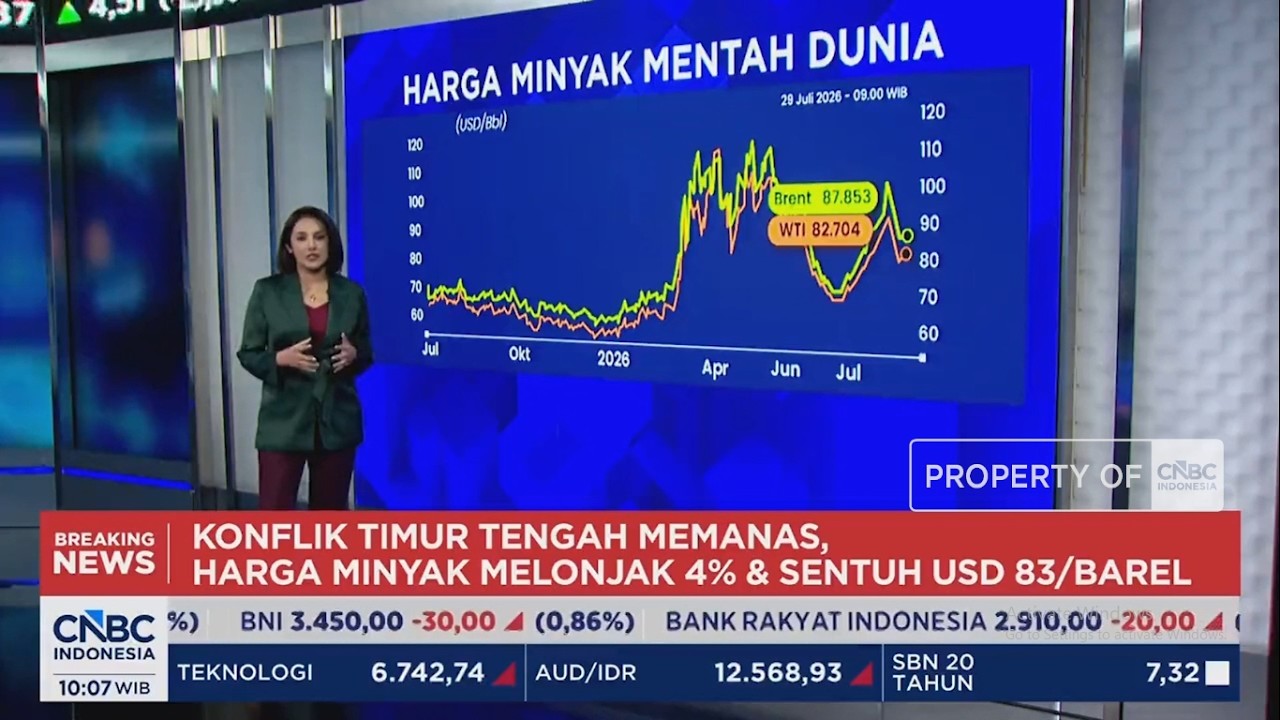
The July meeting occurred during renewed escalation in the Middle East. West Texas Intermediate crude rose roughly 7% on July 29 and settled around $84.46 a barrel, while Brent climbed close to $90.74. The move followed renewed military strikes, an Iranian attack on U.S. forces and concern about shipping through the Strait of Hormuz and other regional routes.
The price increase was not an isolated futures-market event. U.S. commercial crude inventories excluding the Strategic Petroleum Reserve fell by approximately 7.2 million barrels in the week ended July 24, to about 404.5 million barrels. That was roughly 7% below the five-year seasonal average. The Strategic Petroleum Reserve declined by another 3.8 million barrels to approximately 307.7 million.
The drawdown followed the U.S. government’s March authorization to release 172 million barrels from the reserve as part of a coordinated international response to the energy shock. Those releases cushioned the initial disruption, but they also reduced the amount available to respond to a prolonged emergency.
Gundlach’s commodity argument is therefore broader than a one-day oil move. He noted that a broad commodity index had been one of the strongest major asset classes since the previous Fed meeting and the leading performer since December. The precise return depends on whether the price or total-return version of the index is used and on the measurement dates, but broad commodity benchmarks had posted strong gains during 2026.
Commodity indexes are diversified across energy, metals and agriculture, so their performance can signal wider pressure than crude oil alone. Yet futures-based indexes are also affected by contract rolls and the shape of commodity curves. A rising index does not translate directly into an equal increase in consumer prices.
Why the Fed Might “Look Through” Part of the Oil Shock
Central banks often distinguish between the first-round effect of an energy shock and the second-round effect.
The first-round effect is the direct increase in gasoline, heating, electricity, airline and transportation prices. Raising interest rates does little to change the physical supply of energy.
The second-round effect occurs if higher energy costs spread into other prices and wages. Businesses may pass on freight and utility expenses. Workers may demand larger wage increases. Inflation expectations may rise. Those developments are more responsive to monetary policy because they involve aggregate demand, pricing power and expectations.
Warsh’s press conference emphasized questions about whether shocks were spreading beyond the sectors directly affected. Gundlach’s complaint was that the Fed appeared to be studying that question while commodity markets were already producing an answer.
The evidence was not decisive. Headline inflation was high, but June core CPI had moderated. Oil had risen sharply, but it remained volatile and sensitive to diplomacy. A durable move toward or above $100 would have different implications from a brief spike into the mid-$80s.
What to Watch
How an Oil Shock Becomes Persistent Inflation
- Gasoline, diesel, jet-fuel and electricity prices remain elevated for several months.
- Freight, food-production and manufacturing costs begin appearing in core goods prices.
- Service companies pass higher energy and insurance expenses to customers.
- Wage growth accelerates as workers seek compensation for lost purchasing power.
- Long-term household or market inflation expectations move materially higher.
Relevant data: U.S. Energy Information Administration weekly petroleum data
Why the Long End Can Rise Even When the Fed Does Nothing
The 30-year Treasury yield reflects the expected path of short-term interest rates over decades plus a term premium. The term premium compensates investors for uncertainty about inflation, growth, supply, liquidity and future monetary policy.
A simple interpretation of the July move would be that investors expected higher inflation. That is likely part of the explanation, but it is incomplete.
Long yields can rise even if expected average inflation changes little. Investors may demand more compensation because the range of possible inflation outcomes has widened. They may worry about the volume of bonds the Treasury must issue. Foreign reserve managers may be less willing to add long-duration exposure. Domestic banks may face balance-sheet constraints. Pension funds and insurers may decide that current yields are not yet sufficient relative to their liabilities and capital requirements.
Each of those changes can increase the term premium.
The market’s message may therefore be less specific than “the Fed must hike in September.” A more defensible interpretation is that investors required additional compensation to hold long-term government debt after hearing the Fed’s policy framework and observing the broader economic environment.
Real Yields Matter as Much as Inflation Expectations
A nominal Treasury yield can be divided conceptually into expected inflation and a real yield. The real yield is the return after inflation, although market measures also contain liquidity and risk-premium effects.
Thirty-year inflation-protected Treasury yields had approached 3% before the July meeting, among their highest levels since the financial crisis. That indicates that the selloff was not solely an inflation story. Investors were also demanding unusually high real compensation.
High real yields can reflect optimism about productivity and economic growth. Warsh highlighted strong investment in AI-related equipment, software and manufacturing. If that investment raises the economy’s productive capacity, equilibrium real interest rates may be higher than they were during the decade after the financial crisis.
The same real-yield increase can also reflect fiscal and supply concerns. When the government issues more debt than traditional buyers are willing to absorb at existing prices, yields rise until demand returns.
That ambiguity is central to interpreting the market. A 5.20% long bond can signal inflation fear, growth optimism, fiscal unease or all three.
Federal Deficits Are Becoming a Bond-Market Variable
Gundlach connected the long-end selloff to the federal budget. That concern is supported by official projections, although the timing and severity of any market response remain uncertain.
The Congressional Budget Office’s February 2026 outlook projected a federal deficit of approximately $1.9 trillion for fiscal 2026, equal to 5.8% of gross domestic product. CBO expected the annual deficit to reach $3.1 trillion by 2036, or 6.7% of GDP.
Those deficits are unusual because they are projected during a period without mass unemployment. Deficits normally expand sharply during recessions and contract during stronger periods. A persistent deficit near 6% of GDP when the unemployment rate is close to 4% leaves less fiscal capacity for a future downturn.
CBO projected debt held by the public at about 101% of GDP in 2026 and 120% by 2036. Net interest outlays were expected to become an increasingly important driver of the deficit, reaching approximately $2.1 trillion, or 4.6% of GDP, in 2036.
Treasury data showed total federal debt approaching $39.5 trillion by June 2026. The broader gross-debt figure includes intragovernmental holdings and should not be confused with debt held by the public, but both measures illustrate the scale of the financing requirement.
Higher yields compound the problem gradually. The Treasury does not refinance every bond immediately, so a one-day increase in the 30-year yield does not instantly reprice the entire debt stock. As existing securities mature and new deficits are financed, however, higher market rates raise interest expense.
That creates a feedback risk:
- Larger deficits require more Treasury issuance.
- Greater supply can require higher yields to attract buyers.
- Higher yields increase federal interest expense.
- Higher interest expense widens future deficits unless taxes rise or other spending falls.
- Wider deficits require still more issuance.
This is not an automatic debt crisis. The United States borrows in its own currency, has a deep capital market and remains central to global finance. Treasury securities continue to serve as the primary collateral and reserve asset of the dollar system.
But reserve-currency status does not guarantee a particular interest rate. Investors can continue buying Treasuries while demanding a higher yield.
Fact-Checking the Social Security Warning
Gundlach also argued that Social Security’s financing problem was no longer a distant issue. That is correct. His suggestion that the system could run out of money by 2029, however, was his own pessimistic estimate rather than the official projection.
The 2026 Social Security Trustees Report projected that the Old-Age and Survivors Insurance Trust Fund would deplete its reserves in the fourth quarter of 2032 under the intermediate assumptions. At that point, ongoing income would be sufficient to pay approximately 78% of scheduled retirement and survivor benefits.
The Disability Insurance Trust Fund was projected to remain solvent throughout the 75-year forecast period. On a hypothetical combined basis, the two funds’ reserves would be depleted in the third quarter of 2034, when approximately 83% of combined scheduled benefits could be paid.
“Depletion” does not mean Social Security would have no revenue or pay nothing. Payroll taxes and other income would continue. The shortfall means the program would be unable to pay all scheduled benefits under current law unless Congress changed taxes, benefits or transfers.
The official date is not a guarantee. It depends on fertility, immigration, productivity, wage growth, unemployment, interest rates and policy assumptions. A weaker economy or lower immigration could accelerate depletion; stronger productivity or legislative reform could improve the outlook.
Gundlach is therefore justified in treating Social Security as a near-term fiscal issue, but 2029 should be identified as his judgment, not the Social Security Administration’s forecast.
Fact Box
What the 2026 Social Security Report Actually Projects
- Retirement and survivor trust fund depletion: Fourth quarter of 2032
- Benefits payable after OASI reserve depletion: Approximately 78% of scheduled benefits
- Hypothetical combined OASDI depletion: Third quarter of 2034
- Combined benefits payable at that point: Approximately 83%
- Gundlach’s 2029 estimate: A more pessimistic personal forecast, not the trustees’ central projection
Original source: Social Security Trustees Report summary
Why the Fed’s New Task Forces Became a Target
Warsh began his chairmanship with a review of how the Federal Reserve conducts monetary policy. The central bank created five task forces examining communications, balance-sheet policy, data, productivity and jobs, and inflation frameworks.
The Fed’s July 9 announcement said the groups would be co-led by external advisers and supported by Federal Reserve staff. Participants included former central-bank leaders, economists, technology investors and business executives.
The communications group was tasked with reviewing how the Fed conveys decisions under uncertainty. The balance-sheet group would examine the costs and institutional implications of the current reserve regime. The data group would consider faster and more useful economic signals. The productivity group would study technologies including AI. The inflation-framework group would revisit how policymakers understand and respond to price pressures.
Gundlach’s objection was institutional. Monetary policy already emerges from a committee. Adding subcommittees, he argued, risks slowing decisions that require clear ownership.
That criticism reflects a real governance tradeoff. Committees can be slow, ambiguous and prone to compromise. They can also reduce the risk that one powerful official makes a large mistake based on a narrow model or personal conviction.
The Fed is deliberately structured as a committee because monetary policy affects millions of households and businesses. Regional bank presidents bring information from different parts of the economy, while governors provide a national and regulatory perspective. Dissent can improve decisions by forcing the majority to confront alternative evidence.
The July vote itself illustrates the value of that structure. Three policymakers publicly favored a different course, providing the market with information about the range of views.
The task forces could become a distraction if Warsh uses them to postpone choices that the existing data already justify. They could also improve policy if they identify weaknesses exposed by the pandemic, tariff shocks, AI investment and energy disruptions.
The proper test is not whether the Fed uses committees. It is whether the process produces clearer objectives, better evidence and timely decisions.
Was the Fed Really “Doing Nothing”?
Describing the July decision as inaction overlooks several channels through which policy was already restrictive.
The federal funds target range remained well above the average of the decade before the pandemic. Real short-term rates were positive using several inflation measures. Long-term Treasury yields, corporate yields and mortgage rates had risen. The Fed was maintaining its ample-reserves framework rather than launching a new easing program.
Warsh also reduced the emphasis on conventional forward guidance. He argued that markets should respond to economic information rather than trying to predict every word from the central bank. His phrase was that investors should play the ball, not the referee.
That communication shift can itself increase market volatility. Under detailed forward guidance, investors may believe the Fed will protect them from abrupt policy changes. With less guidance, prices respond more aggressively to data and changing risk assessments.
The July curve move may partly reflect that new regime. Investors were no longer being given a smooth forecast of future rates, so they demanded a larger uncertainty premium.
Gundlach agreed with the principle that markets should think independently. He disputed the implication that the resulting market judgment supported the Fed’s position. In his reading, the steepening curve was the market’s rejection of the policy narrative.
Both views can be true simultaneously. The Fed may want more independent price discovery, and that price discovery may produce an uncomfortable verdict.
The Stock-Market Reversal Amplified the Message
U.S. equities initially responded positively to the decision not to raise rates. That relief faded during Warsh’s press conference as long-term yields climbed.
The Dow Jones Industrial Average closed at 51,594.14 on July 29, down 1,153.18 points, or 2.19%. The S&P 500 declined 112.63 points, or 1.52%, to 7,316.15. The Nasdaq Composite fell 433.97 points, or 1.74%, to 24,442.94.
The session contained several overlapping shocks. Oil surged as the Middle East conflict escalated. South Korean semiconductor stocks experienced another severe selloff following SK Hynix’s earnings. U.S. chip shares declined, and investors continued questioning whether returns from AI would justify the scale of capital spending.
It would therefore be inaccurate to attribute the entire stock decline to Warsh’s press conference. The reversal nevertheless intensified as the 30-year yield moved higher, showing how sensitive equity valuations had become to long-term discount rates.
The effect is not uniform across the market. Banks can benefit from a steeper yield curve if it improves lending margins, though rapid yield increases can create securities losses and credit stress. Energy producers can benefit from higher oil. Highly leveraged companies and long-duration growth stocks generally face greater pressure.
That divergence helps explain why the equal-weighted S&P 500 had begun outperforming the capitalization-weighted index before the meeting.
Gundlach’s Equal-Weight Argument
A capitalization-weighted index assigns the largest weight to the companies with the greatest market value. When a small group of technology companies appreciates rapidly, its influence on the index increases automatically.
An equal-weighted index assigns roughly the same weight to each constituent and rebalances periodically. It therefore has less exposure to the largest companies and more exposure to the average stock.
Gundlach argued that investors relying on passive funds should consider equal-weighted exposure rather than a conventional capitalization-weighted S&P 500 fund. His reasoning was that capitalization weighting had become heavily dependent on a narrow group of AI-related and technology companies.
There was supporting market evidence. From the S&P 500’s early-June high through late July, the Magnificent Seven group had fallen more than 8%, while approximately two-thirds of S&P 500 companies had gained. The equal-weighted S&P 500 rose nearly 4% over that interval, while the standard index declined by more than 2%.
That broadening does not guarantee continued equal-weight outperformance. Equal-weight strategies have their own risks:
- They have greater exposure to smaller and often more cyclical companies.
- They require rebalancing, which creates turnover and potential tax consequences.
- They can underperform for years when megacap growth companies dominate.
- Their sector weights differ materially from those of the standard S&P 500.
- They are not valuation strategies in a strict sense; an expensive smaller company can receive the same weight as a cheaper one.
The strongest case for equal weighting is diversification rather than a certainty of superior returns. It reduces dependence on the largest names but does not eliminate equity risk.
Passive Assets Have Overtaken Active Assets
Gundlach’s warning also reflected the growing scale of index-based investing. According to the Investment Company Institute’s May 2026 data, indexed U.S. mutual funds and exchange-traded funds held approximately $21.82 trillion, compared with $18.75 trillion in active funds and ETFs.
Passive funds are not a single coordinated investor. They track different benchmarks, rebalance at different times and receive offsetting inflows and outflows. Yet their combined scale means index eligibility and weighting rules can influence demand for individual securities.
The criticism that passive investors are completely insensitive to price is directionally useful but too absolute. An index fund must generally hold securities according to benchmark rules, but investors can withdraw from the fund, index committees can change methodology and arbitrageurs trade around expected additions and deletions. Prices still influence market capitalization, portfolio weights and subsequent flows.
The deeper concern is that a capitalization-weighted system allocates more money to a company after its market value rises. That can reinforce momentum when new cash enters index products. It can also work in reverse when prices fall.
SpaceX and the Debate Over Accelerated Index Inclusion
Gundlach used SpaceX as an example of how a very large initial public offering could be absorbed by passive funds. The company completed its public offering in June 2026 after filing a registration statement with the Securities and Exchange Commission.
SpaceX received accelerated treatment from some index providers. Nasdaq used a fast-entry mechanism for a very large eligible company, while Russell also developed accelerated treatment for certain major IPOs. The S&P 500 retained a longer seasoning requirement, meaning immediate inclusion was not uniform across benchmarks.
The distinction matters. “Passive investors bought SpaceX” does not describe one transaction or one set of rules. Nasdaq-100 funds, Russell funds, total-market funds and S&P 500 funds faced different obligations.
Index providers argue that fast-entry rules allow benchmarks to represent the investable market more accurately after an unusually large IPO. Critics argue that accelerated inclusion creates forced demand before a company has established a long public trading history and before insiders’ lockups expire.
Gundlach’s concern was that founders and early investors could obtain liquidity while index funds became predictable buyers. That risk is greatest when an IPO is enormous relative to the market, the free float is limited and multiple indexes add the stock quickly.
Yet passive funds do not necessarily buy an IPO at any price on the offering date. Some additions occur later, and the required amount depends on free-float capitalization and index methodology. Active investors and arbitrageurs also anticipate index demand, which can cause price adjustments before passive funds transact.
The episode illustrates a legitimate structural issue without proving that passive investing is inherently a dumping ground. Index inclusion can support demand, but it cannot make a weak business model profitable or permanently prevent a stock from falling.
The AI Debt Boom Is Moving From Equities Into Credit
One of the most important parts of Gundlach’s interview concerned corporate credit rather than Treasury bonds.
AI infrastructure requires enormous amounts of capital. Data centers need land, construction, semiconductors, networking equipment, cooling systems, electricity generation and transmission. Even companies with strong cash flows are increasingly issuing debt to fund these projects while maintaining dividends, acquisitions and share repurchases.
Amazon, Alphabet, Meta, Microsoft, Oracle and other large technology companies issued approximately $194 billion of bonds through July 7, 2026, according to market data reported by Reuters. That represented a 79% increase from the comparable 2025 amount. Goldman Sachs analysts projected that hyperscaler issuance could reach roughly $250 billion in 2026 and $400 billion in 2027.
Morgan Stanley separately estimated that global AI-related debt issuance could approach $570 billion in 2026 when financing beyond the largest technology companies was included.
The central issue is not that these companies are immediately unable to repay their debts. Most of the largest hyperscalers began the investment cycle with strong balance sheets, substantial recurring revenue and investment-grade ratings.
The issue is supply. Bond investors have a limited amount of capital. When a concentrated group of issuers sells hundreds of billions of dollars of new securities, prices must become attractive enough to absorb the supply.
Evidence That Investor Demand Is Cooling
Order-book coverage for hyperscaler bonds declined from nearly five times the amount offered in February to below two times by July. Amazon’s July bond offering reportedly attracted orders equal to about 1.6 times the issue size, compared with 3.4 times for an offering in March.
Coverage above one means the offering received more orders than bonds available, but a lower ratio reduces the issuer’s bargaining power. Investors can demand a larger concession relative to outstanding bonds or Treasuries.
Median spreads widened across maturity ranges. In two- to four-year hyperscaler bonds, median spreads increased from approximately 30 to 40 basis points. Seventy-eight of 91 recently issued bonds were subsequently trading at higher yields than at issuance, according to the Reuters analysis.
Those movements do not constitute a credit crisis. A 10-basis-point increase in an investment-grade spread is materially different from the hundreds or thousands of basis points associated with distress. They do show that the market is no longer treating every AI financing package as interchangeable high-quality paper.
Investors are beginning to ask whether individual companies will earn sufficient returns on AI capital expenditure, how quickly data-center assets could become obsolete and whether electricity, regulatory or construction constraints will delay revenue.
Why Credit-Default Swaps Are Receiving Attention
A credit-default swap, or CDS, functions economically like insurance against a borrower’s default, although its legal and trading structure is more complex. The buyer pays a periodic premium, and the seller compensates the buyer if a defined credit event occurs.
When CDS spreads rise, the market is demanding more compensation to assume the credit risk. Gundlach said spreads on several hyperscaler and technology issuers had moved substantially during July, though he stopped short of describing the change as a blowout.
That qualification is important. Large technology companies can experience meaningful CDS widening while retaining low market-implied default probabilities. A move from an exceptionally tight spread to a merely modest spread can be dramatic in percentage terms without signaling imminent failure.
The credit signal still matters because bond investors often react before equity investors fully reconsider a capital-spending narrative. Equity holders participate in the upside if AI investment produces extraordinary growth. Bondholders generally receive only their contractual interest and principal. Their incentive is therefore to focus heavily on downside protection.
When bond investors demand more yield, they may be signaling that the distribution of possible outcomes has widened even if the average forecast remains favorable.
The Ratings Question: Formal Grade Versus Market Price
Gundlach also criticized the disconnect between ratings assigned to some newly issued bonds and the yields at which those securities traded. He suggested that certain bonds sold with investment-grade ratings quickly traded at spreads more consistent with speculative-grade risk.
A credit rating is an opinion about the borrower’s ability and willingness to meet its obligations. It is not a guarantee, and it is not intended to predict a bond’s market price. Two bonds with the same rating can trade at different spreads because of maturity, structure, liquidity, sector risk, covenants, collateral and investor demand.
A market spread also contains more than default risk. It compensates for liquidity, volatility, uncertainty and the difficulty of selling a position during stress.
Still, a persistent gap between ratings and market prices deserves attention. Insurance companies, banks and other regulated investors may receive different capital treatment depending on a security’s rating. If an issuer can obtain a more favorable rating from one agency than another, the resulting bond may be treated as safer for regulatory purposes than its market spread suggests.
Rating shopping is a longstanding concern in structured finance and corporate debt. The issuer typically pays the rating agency, creating a potential conflict that agencies seek to manage through methodology, disclosure and internal controls.
Gundlach referred to suspicious behavior, but the available evidence does not establish broad misconduct across the rating industry. A market disagreement with a rating is not proof of an improper rating process. It is a reason for investors and regulators to examine assumptions, structures and incentives more closely.
Private Credit Adds a Less Transparent Layer of Risk
Public bond markets provide frequent prices. Private loans are valued less often and frequently rely on models, comparable transactions and manager judgment. That can reduce visible volatility, but it does not eliminate economic risk.
The global private-credit market expanded rapidly as banks reduced some forms of lending and institutional investors sought higher yields. Private lenders financed leveraged buyouts, software companies, healthcare businesses and other borrowers that might otherwise have issued syndicated loans or high-yield bonds.
MSCI estimated the market at approximately $3.5 trillion in 2026. Its analysis found that private-credit funds had marked more than 10% of loans down by at least half, a level associated with deep distress or restructuring risk.
Publicly traded business-development companies also showed pressure. A Reuters and S&P analysis found that 28 of 53 listed credit funds reported losses in the first quarter of 2026. Direct-lending volume fell to approximately $33.6 billion in the second quarter from $74.7 billion in the first, the lowest quarterly level since 2023.
Software exposure became a particular concern. Some private loans were underwritten when recurring software revenue was considered unusually stable. Generative AI created uncertainty about whether customers would continue paying for established products or replace them with cheaper tools.
Higher base rates compounded the pressure because many private loans carry floating rates. The lender receives more income when rates rise, but the borrower’s interest burden also increases. Eventually, a higher coupon can weaken the borrower enough to reduce the value of the loan.
The BlackRock Valuation Investigation
Federal prosecutors were reported to be examining valuation practices at a BlackRock private-credit fund. The existence of an investigation does not establish wrongdoing, and no allegation should be treated as a finding.
The scrutiny followed steep markdowns and concerns about how quickly valuations changed in an opaque market. BlackRock TCP Capital reported a roughly 5% decline in net asset value per share during the first quarter, while other private-credit vehicles also reduced portfolio values.
The case illustrates Gundlach’s broader point about leverage and transparency. Private-credit assets may be held by funds connected to insurers, asset managers and private-equity sponsors. If valuations fall, the effects can appear through redemption limits, lower net asset value, capital pressure or reduced lending rather than through an immediate exchange-traded crash.
It does not follow that the entire private-credit industry is insolvent. Many funds have long-duration capital, diversified portfolios and contractual protections. The concern is that a period of higher rates and technological disruption is testing underwriting assumptions that were made when financing was easier.
Why Gundlach Prefers the Two- to Seven-Year Part of the Curve
Gundlach’s stated approach was to avoid the longest Treasury maturities, remain high in credit quality and focus approximately on the two-, five- and seven-year portions of the curve.
That part of the market offers a compromise between income and duration risk. A two-year security is closely connected to expected Fed policy and has limited price sensitivity. A five- or seven-year bond offers more yield and potentially more appreciation if rates decline, but less duration than a 30-year bond.
His preference does not mean intermediate bonds cannot lose money. If the Fed raises rates more than the market expects, two- to seven-year yields can increase. If inflation remains high for several years, the real purchasing-power return could disappoint. Corporate bonds also carry credit and liquidity risk.
The approach reflects a specific asymmetry: Gundlach sees limited compensation for accepting the uncertainty embedded in a 30-year promise when investors can earn substantial income at shorter maturities.
That judgment depends on the curve. When long bonds offer a very large premium over intermediate bonds, the additional yield may justify the volatility for some liability-matching investors. When the premium is modest and fiscal uncertainty is high, the longest maturities can look unattractive.
Why He Emphasized Quality
Credit quality becomes more important when financing conditions tighten. Investment-grade borrowers generally have stronger balance sheets, more diverse revenue and better access to capital than triple-C-rated companies.
Triple-C debt can deliver high returns when defaults remain low and the economy expands. It can also suffer severe losses when refinancing becomes difficult. The quoted yield may overstate the return an investor ultimately receives because some borrowers will restructure or default.
Gundlach was willing to consider some double-B exposure but wanted to avoid the lowest-quality segment. That stance is consistent with his concerns about AI disruption, private credit and widening loan spreads.
A double-B rating remains speculative grade. It should not be described as safe. It generally indicates greater capacity to withstand stress than a triple-C borrower, but outcomes vary widely among companies and industries.
Why “No Leverage” Was Part of the Message
Leverage magnifies gains and losses. A fund that borrows to buy bonds can earn the difference between the asset yield and the financing cost. If the bond price falls or financing becomes more expensive, the losses can exceed those of an unleveraged investor.
Leverage is especially dangerous when liquidity deteriorates. A position that appears economically sound over several years may be sold at a poor price if lenders demand additional collateral.
The July market environment combined rising long yields, widening credit spreads and high volatility. That is precisely the type of environment in which leveraged strategies can experience forced deleveraging.
Gundlach’s recommendation should be understood as his market view rather than individualized advice. A pension fund, bank, insurance company and household investor have different liabilities, regulations and liquidity needs.
Could a September Rate Increase Restore Credibility?
A September increase could demonstrate that the Fed was willing to act, but credibility is not restored by raising rates for symbolic reasons. The decision would need to be supported by inflation, employment and financial data.
If June and July PCE inflation remained near 4%, oil stayed elevated and measures of inflation expectations increased, a hike would be easier to justify. Continued curve steepening and widening credit spreads might reinforce the sense that financial markets expected persistent inflation.
If core inflation continued falling, oil retreated and payroll growth weakened, raising rates primarily to satisfy the bond market could create a different credibility problem. The Fed would appear reactive to one market move rather than guided by its dual mandate.
There is also no guarantee that a 25-basis-point hike would lower long-term yields. If the market viewed the move as too small, long yields could continue rising. If investors believed the Fed was tightening into a weakening economy, recession expectations could increase. If the action improved inflation credibility, the curve might flatten as long yields declined or short yields rose.
The path of the curve would reveal how investors interpreted the decision, but it would not by itself determine whether the policy was correct.
The Strongest Case for Gundlach’s View
The strongest version of Gundlach’s argument does not rely on predicting one September meeting. It focuses on the inconsistency between a strict target and an indefinitely patient reaction function.
Inflation had exceeded the Fed’s objective for more than five years. Headline PCE was 4.1%. Oil inventories were tight, the Strategic Petroleum Reserve had been substantially reduced and the Middle East conflict showed no reliable path to resolution. Broad commodity prices had risen, and federal borrowing requirements remained large.
At the same time, the Fed described the economy as resilient, productivity and investment as strong, and unemployment as stable. Three policymakers believed a hike was already appropriate.
Under those conditions, a continued hold requires confidence that inflation will fall without additional demand restraint. Gundlach did not share that confidence. The long-bond market’s reaction suggested that at least some investors agreed.
Warsh’s communication made the inconsistency more visible. A softer formulation—such as aiming to move inflation toward 2% over time while balancing employment risks—would allow more patience. By insisting there was no soft target and no tolerance for persistently elevated inflation, he raised the burden of explaining why the Fed did not act.
The Strongest Case Against Gundlach’s View
The skeptical case begins with the nature of the shock. Interest-rate increases suppress demand; they do not increase energy supply. Tightening into a geopolitical oil disruption can deepen economic weakness while leaving the original price problem unresolved.
June CPI also provided evidence that underlying inflation was improving. Core CPI was 2.6%, headline CPI declined on a monthly basis and several service categories softened. The labor market was stable, but payroll growth was modest.
Financial conditions had tightened without a Fed hike. Thirty-year yields, mortgage rates and corporate financing costs were already higher. The central bank could allow that market tightening to work before adding another increase at the short end.
There is also a risk in overinterpreting the 30-year bond. Fiscal supply, declining foreign official demand and AI-related corporate issuance can raise long-term yields independently of the Fed’s inflation credibility. Raising the federal funds rate would not resolve the budget deficit or reduce Treasury issuance.
Finally, Gundlach has a professional focus on fixed-income risks and has frequently taken cautious macroeconomic positions. His analysis is valuable, but investors should distinguish a well-informed forecast from an official projection or certain outcome.
The Dollar’s Conflicting Signals
The dollar index declined approximately 0.5% after the Fed decision, moving near 100.9. The short-term reaction reflected lower front-end yields and reduced expectations of an immediate increase.
Gundlach described a tug-of-war. War and global risk can support the dollar because investors seek liquidity, Treasury bills and dollar funding. Higher U.S. yields can also attract capital.
Over a longer period, large fiscal deficits and questions about debt sustainability could weaken the currency. A delayed Fed response to inflation could reduce the real return on dollar assets. Changes in foreign-reserve management and global trade settlement could also reduce marginal demand.
Those forces can operate on different horizons. The dollar can strengthen during a crisis while weakening over several years. A fiscal concern can raise Treasury yields and still reduce the currency if investors demand more compensation for holding U.S. assets.
Gundlach continued to avoid structurally bullish dollar positions, but he acknowledged that geopolitical conditions could keep the currency firm in the near term.
Why the Volcker Comparison Has Limits
Gundlach argued that the modern Fed often follows market rates rather than leading them and suggested that investors would need to return to Paul Volcker’s era to find a central bank that decisively forced the market to follow.
Volcker’s campaign against inflation involved exceptionally high interest rates, severe recessions and a very different economic structure. Inflation had reached double digits, wage and price behavior was deeply entrenched, and the Fed’s operating framework changed substantially.
The comparison is useful as a reminder that credibility sometimes requires painful action. It is not a direct policy template for 2026.
Headline CPI was 3.5%, not the inflation rate of the early 1980s. The economy had much higher public and private debt, making it more sensitive to rates. Financial markets were larger and more globally integrated. Monetary policymakers had better real-time information but faced new shocks involving AI, global supply chains and energy infrastructure.
A 200-basis-point surprise increase, of the kind Gundlach said would have been appropriate during the earlier inflation cycle, would have enormous consequences for banks, housing, credit funds and the federal budget. The threshold for such a move would be far higher than the threshold for a conventional quarter-point increase.
What the Market Needs From Warsh
The July press conference exposed a communication challenge. Warsh wanted to reduce dependence on Fed forecasts and encourage investors to respond to economic facts. Yet markets still needed to understand the central bank’s reaction function.
A reaction function does not require a promise about the next meeting. It requires clarity about how policymakers weigh different developments.
For example:
- How much evidence of second-round energy inflation would justify tightening?
- Would the Fed respond to headline PCE near 4% if core measures continued falling?
- How does it distinguish productive AI investment from inflationary excess demand?
- How much tightening from long-term market rates substitutes for a higher federal funds rate?
- Would widening credit spreads reduce the need to raise rates, or would they be interpreted as evidence that policy uncertainty had increased?
- What role does the balance sheet play while the Fed maintains ample reserves?
Warsh’s task forces may eventually improve those answers. The market’s frustration was that the answers were not available during a meeting at which the Chair repeatedly emphasized a precise inflation objective.
Gundlach’s phrase that the Fed was “planning on making a plan” captured that tension. A strategic review can improve future decisions, but inflation and bond markets continue moving while the review is underway.
What Investors Should Monitor Before September
The September decision will depend on several data streams rather than one headline.
PCE Inflation
The June PCE report was scheduled for release after this article’s research cutoff. Headline and core readings, revisions and monthly details will determine whether the May acceleration continued. Particular attention will fall on services, goods affected by tariffs and categories influenced by energy or technology investment.
Consumer Prices
The July CPI report will show whether June’s monthly decline was durable or a temporary reversal. A renewed increase in core inflation would strengthen the case for a hike. Continued moderation would support patience.
Employment
Payroll growth, unemployment, hours worked and wage inflation will indicate how much room the Fed has to tighten. Stable employment with stronger wages would support a hawkish decision. A marked deterioration would make an increase more difficult.
Oil and Shipping
The duration of military escalation matters more than one volatile settlement. Tanker traffic, refinery utilization, commercial inventories, OPEC+ supply and the pace of Strategic Petroleum Reserve releases will determine whether energy inflation persists.
Inflation Expectations
Market breakeven rates and household surveys can reveal whether the oil shock is changing longer-run expectations. A temporary jump in gasoline prices is less dangerous if expectations remain anchored.
Treasury Auctions
Weak demand at long-term auctions, larger yield concessions or declining participation by foreign buyers could support the fiscal-supply interpretation of the selloff.
The Two-Year-to-30-Year Spread
If the curve continues steepening because the long end rises while the two-year yield remains stable or declines, the market will be signaling persistent long-run concern. A reversal would suggest that the July move was partly event-driven.
Corporate Credit
Hyperscaler order books, new-issue concessions, CDS spreads, leveraged-loan prices and triple-C defaults will show whether the pressure is contained or spreading.
Scenarios for the September FOMC Meeting
Scenario One: The Fed Raises Rates by 25 Basis Points
This becomes more likely if headline and core PCE remain elevated, energy prices stay high, the labor market remains stable and long-term inflation expectations increase. Three July dissenters provide an existing coalition for tighter policy, and additional officials could join them.
A hike would move the target range to 3.75% to 4.00%. The market reaction would depend heavily on Warsh’s explanation. A clear statement that the Fed was preventing supply shocks from spreading could improve long-term credibility. A vague or divided presentation could leave the long end under pressure.
Scenario Two: The Fed Holds but Signals a Later Increase
The Committee could wait if inflation data are mixed but maintain a tightening bias. That would preserve flexibility while acknowledging that 2% remains distant.
The risk is that markets hear another promise without action. Warsh would need to identify more specific conditions for a hike than he did in July.
Scenario Three: The Fed Holds and the Inflation Threat Fades
If oil declines, core inflation softens and employment weakens, the July hold may look prudent. Long-term yields could retreat as investors reduce inflation and growth estimates.
This is the outcome most damaging to Gundlach’s near-term hike forecast, though his fiscal concerns could continue supporting long yields even with lower inflation.
Scenario Four: The Fed Holds While the Long End Keeps Rising
This would be the most difficult outcome for Warsh. It would suggest that market tightening was occurring without confidence in the central bank’s strategy. Mortgage and corporate rates would rise even though the policy rate remained unchanged.
The Fed would then face a choice between validating market pressure with a later hike or tolerating a tightening concentrated in long-term and private borrowing costs.
Frequently Asked Questions
What did the Federal Reserve decide in July 2026?
The FOMC kept the federal funds target range at 3.50% to 3.75%. The decision passed 9–3, with Beth Hammack, Neel Kashkari and Lorie Logan preferring a 25-basis-point increase.
Why did Jeffrey Gundlach criticize the Fed?
Gundlach argued that the Fed’s forceful commitment to exactly 2% inflation was inconsistent with holding rates steady while inflation, commodities and long-term yields remained elevated. He interpreted the steepening yield curve as evidence that the bond market wanted action rather than additional planning.
Did the bond market prove that the Fed had lost credibility?
No. The market move was consistent with concern about inflation credibility, but long-term yields also respond to fiscal deficits, Treasury supply, real growth, term premiums, oil prices and investor demand. One trading session cannot isolate a single cause.
What happened to Treasury yields after the decision?
The two-year Treasury yield declined while the 30-year yield rose above 5.20% intraday. That widened the gap between short- and long-term yields and produced a sharp steepening of the curve.
Why would long-term yields rise when the Fed held rates steady?
Investors may demand more compensation for future inflation, fiscal risk, uncertainty or heavy bond supply. The Fed controls a short-term target rate, not the entire Treasury curve.
What inflation measure does the Federal Reserve target?
The Fed defines its 2% longer-run inflation goal using the annual change in the headline PCE price index. It also monitors core PCE and many other inflation indicators.
What was the latest inflation rate before the meeting?
Headline PCE inflation was 4.1% in May 2026 and core PCE was 3.4%. June CPI was 3.5% from a year earlier, while core CPI was 2.6%. The June PCE report was scheduled for release after this article’s cutoff.
Does Gundlach expect a September rate increase?
He said a September hike had become more likely because the Fed may need to recover credibility. That was a forecast, not an announced Fed decision or market certainty.
Why is the 30-year Treasury yield important for homeowners?
Mortgage rates are influenced by longer-term Treasury yields and mortgage-backed-security spreads. A higher 30-year Treasury yield can contribute to higher mortgage rates even when the federal funds rate is unchanged.
What did Gundlach say about corporate credit?
He warned that spreads were widening in parts of the AI and technology credit market, that lower-quality loans were showing stress and that investors should question situations in which market pricing appeared much weaker than formal ratings suggested.
What is Gundlach’s preferred part of the bond market?
He favors high-quality securities in approximately the two- to seven-year maturity range, limited long-duration exposure and little or no leverage. That reflects his market view and is not a universal portfolio recommendation.
Why does Gundlach prefer equal-weighted stock exposure?
Equal weighting reduces dependence on the largest technology companies. The equal-weighted S&P 500 had recently outperformed as market leadership broadened, although the strategy can underperform and carries greater exposure to smaller and cyclical companies.
Final Assessment
The July Fed meeting was officially a decision to leave policy unchanged. In financial markets, it was anything but uneventful.
The 9–3 vote showed that inflation concern had moved from speeches into formal dissent. Warsh reinforced a strict interpretation of the 2% objective and rejected the idea that the Fed would quietly accept a higher rate. Yet the long end of the Treasury market sold off sharply, mortgage-rate pressure increased and equities reversed an initial relief rally.
Gundlach’s most persuasive point is that rhetoric creates obligations. A central bank that describes 2% as a firm destination must eventually explain how its instruments will deliver that outcome. Studying inflation frameworks, market signals and AI productivity may improve policy, but those reviews cannot indefinitely substitute for a decision.
His strongest evidence is not a forecast about September. It is the combination of inflation above target, a resilient economy, three dissenting policymakers, rising commodity prices and a yield curve that steepened as Warsh spoke.
The strongest objection is equally important. The Fed was confronting an energy-driven supply shock while underlying CPI inflation had moderated and payroll growth had slowed. A rate increase cannot create oil, reopen shipping lanes or repair the federal budget. Long-term yields may have risen because of fiscal supply and term-premium risk that a quarter-point policy move would not resolve.
The market has therefore not delivered a simple instruction. It has delivered a warning about the cost of uncertainty.
Long-term borrowing rates are now being shaped by several pressures at once: persistent inflation, war-related energy disruption, federal deficits, Social Security obligations, extraordinary AI capital spending, large corporate bond issuance and questions about leverage in private credit. The Fed controls only part of that system.
Warsh’s September challenge will be to show that the central bank understands the distinction. Raising rates merely to demonstrate toughness would be poor policy. Holding rates again without a clearer explanation of how 2% will be achieved would risk reinforcing the contradiction Gundlach identified.
The decisive evidence will come from inflation, employment, oil and credit markets over the next six weeks. Just as important will be the behavior of the Treasury curve. If long yields continue rising while shorter yields remain anchored, the market will be signaling that the problem extends beyond the next FOMC vote.
This article is provided for general informational purposes and does not constitute financial, investment, tax, or legal advice.
Sources
- Federal Reserve: July 29, 2026 FOMC statement
- Federal Reserve: Kevin Warsh’s July 29 press-conference opening statement
- Federal Reserve: Monetary-policy task-force leadership and objectives
- Federal Reserve: July 2026 Monetary Policy Report summary
- Federal Reserve: Statement on Longer-Run Goals and Monetary Policy Strategy
- Bureau of Economic Analysis: Personal Income and Outlays, May 2026
- Bureau of Labor Statistics: Consumer Price Index, June 2026
- Bureau of Labor Statistics: Employment Situation, June 2026
- Federal Reserve: H.15 Selected Interest Rates
- Freddie Mac and FRED: 30-Year Fixed Mortgage Rate Average
- Reuters: July 29 global markets and Treasury-curve recap
- The Wall Street Journal: U.S. markets after the Fed decision and Iran escalation
- U.S. Energy Information Administration: Weekly Petroleum Status Report
- U.S. Department of Energy: 2026 Strategic Petroleum Reserve release
- Congressional Budget Office: The Budget and Economic Outlook, 2026 to 2036
- U.S. Treasury Fiscal Data: Understanding the National Debt
- Social Security Administration: 2026 Trustees Report summary
- Reuters: Hyperscaler debt issuance and cooling investor demand
- Reuters: Morgan Stanley forecast for global AI-related debt issuance
- Reuters: Private-credit loan markdowns and borrower stress
- Reuters: Financial performance of publicly traded credit funds
- Investment Company Institute: Active and index fund assets, May 2026
- S&P Dow Jones Indices: S&P 500 Equal Weight Index
- Reuters: Broadening U.S. equity-market leadership
- SEC EDGAR: Space Exploration Technologies registration statement
- Northern Trust Asset Management: Mega-cap IPOs and index-investor implications
- DoubleLine: Company and leadership background
Affiliate disclosure: Businessfinance.news may earn compensation from qualifying actions completed through selected links on this website, at no additional cost to the reader. Affiliate relationships do not influence our editorial reporting, analysis, or conclusions.